Empower your business with airSlate SignNow's Pipeline management app for Planning
airSlate SignNow regularly wins awards for ease of use and setup




See airSlate SignNow eSignatures in action
Our user reviews speak for themselves











Why choose airSlate SignNow
-
Free 7-day trial. Choose the plan you need and try it risk-free.
-
Honest pricing for full-featured plans. airSlate SignNow offers subscription plans with no overages or hidden fees at renewal.
-
Enterprise-grade security. airSlate SignNow helps you comply with global security standards.
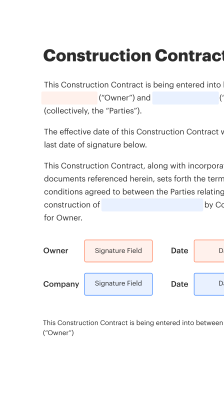
Pipeline Management App for Planning
Pipeline Management App for Planning How-To Guide
Experience the benefits of airSlate SignNow's seamless document management system and take your planning to the next level. airSlate SignNow offers a secure platform for efficient document signing, helping businesses save time and resources. Try airSlate SignNow today and revolutionize your document workflow!
Sign up for a free trial of airSlate SignNow now!
airSlate SignNow features that users love





Get legally-binding signatures now!
FAQs online signature
-
How do you create a pipeline plan?
How To Build a Sales Pipeline Identify and define your target market. ... Identify companies, opportunities, and projects in your target market. ... Research key contacts and roles in your target companies. ... Reach out to your key contacts. ... Segment data to develop and understand your pipeline. How To Build a Sales Pipeline | 7 Steps - Rathbone Results Rathbone Results https://.rathboneresults.com › resources › 7-steps-to... Rathbone Results https://.rathboneresults.com › resources › 7-steps-to...
-
What is pipe management?
Pipeline management refers to the ways in which companies organize, monitor, analyze, and ultimately optimize their various business processes. Since sales are the lifeblood of any business, I'll be diving more specifically into managing sales pipelines below.
-
How do I organize my pipeline?
8 Best Practices For Keeping An Organized Sales Pipeline Pick The Right Audience. Organize The Sales Pipeline Planning Stages. Review Your Pipeline Consistently. Start With Lead Scoring. Eliminate Inactive Deals From The Sales Pipeline. Create A Manual For Sales Pipeline Organisation. Tracking Field Sales Reps Effectively. 8 Best Practices For Keeping An Organized Sales Pipeline - Lystloc Lystloc https://.lystloc.com › blog › 8-best-practices-for-kee... Lystloc https://.lystloc.com › blog › 8-best-practices-for-kee...
-
How do I manage my pipeline?
12 best practices to manage your sales pipeline Remember to follow up. ... Focus on the best leads. ... Drop dead leads. ... Monitor pipeline metrics. ... Review (and improve) your pipeline processes. ... Update your pipeline regularly. ... Keep your sales cycle short. ... Create a standardized sales process. Sales Pipeline Management: 12 Ways to Manage Your Pipeline SuperOffice CRM https://.superoffice.com › blog › sales-pipeline-man... SuperOffice CRM https://.superoffice.com › blog › sales-pipeline-man...
-
What is pipeline management software?
Pipeline management helps the team monitor several sales performance metrics, from team performance to lead qualification. It gives you a reference point to identify who and which sales process stage is successful or holding your business back.
-
What is the difference between lead management and pipeline management?
Lead Scoring allows businesses to prioritize their efforts on leads with a higher potential for conversion, while Pipeline Management ensures a smooth flow through the various stages of the sales pipeline, ultimately leading to increased revenue and business growth.
-
What is a pipeline management tool?
Sales pipeline software is a tool you can use to shift, track, and analyze potential clients moving through the sales pipeline. It helps your sales crew track their customers and prospective leads. Sales pipeline management stools offer other essential features like tracking, reporting, and improving sales performance. Top 13 Sales Pipeline Management Tools - Zixflow Zixflow https://zixflow.com › blog › sales-pipeline-tools Zixflow https://zixflow.com › blog › sales-pipeline-tools
-
What is pipeline management in project management?
A pipeline is a tool in project management that allows project managers to track the status of all their ongoing projects in one window. This overview provides clarity to easily categorize projects into high and low impact and prioritize them ingly.
Trusted e-signature solution — what our customers are saying


How to create outlook signature
Are you taking a lead on a project and you need to create a project plan, by the end of this video, I'm going to share with you, my tried and true simple project planning steps. If you want to master your projects, guess what? Stay tuned at the end of this video. Cause I have something for you. That's going to be really cool, to ensure that you're successful when you're planning it out. Hi, if you're new here, welcome, for the best career and project management advice, please subscribe to my channel, hit that belt button, and a new video is going to come to you every Wednesday. I've planned tons of projects, in this exact way, that I'm about to share with you. So if you're excited, as I am give this video, a like, and let's get to it. Step one, project goals and deliverables. Congratulations, you've got the project, and you're probably told what it is. Now, you have to have an understanding what the project goals and deliverables are, and this you should get from the sponsor. This is the person who's in charge of the project. This is critical, because so many times this is not clearly understood, and this is how projects get in trouble. When you don't understand project goals, and deliverables, and you assume them, guess what it makes an ass out of you and me, and that is not a great way that you want to be starting off your project. Step two, Scope Statement, all right, you want to be creating this with the project sponsor, in the ideal world, they would have given this to you and said, Hey, I gave you this project. Here is a scope statement. Unfortunately, that doesn't really happen, so you need to create this. This is a very pivotal part of your project plan, because this is going to lay out for you. What exactly is it that you're delivering on, sort of the high level parameters, and by laying out what's in, and out of the project, this keeps everybody on the same page. And it's a very critical component of project planning. Step three, Team Confirmation, find out who you need to have on your project based on scope statement. Do you see how important this is? The scope statement is going to tell you who you need to have involved. Not only that, find out if you're going to have any full time people on the project, part time, people in the project, as well as, find out how that's going to impact on the work that they're doing. Because your team confirmation is critical as your subject matter experts, who are on the team, are really going to help you with the delivering of the project success Step four, Project Assumptions and risks. Okay. Remember we said earlier on about assume makes an ass out of you and me. Well, this really becomes very important here. You need to reach out to key people, sponsors, steering committee members, uh, your managers, subject matter experts. By the way, if you don't know the definition of all this, you can actually check out a video I have on definitions for projects, but that all being said, you need to mitigate the high level stuff. There are individuals who understand what's going on with this project, and will have assumptions. And if you don't get those assumptions out, then they're going to be working off of assumptions, and you're going to have no clue what they are, and that's how get a lot of issues and projects. Not only that, you want to know some high level of risks, yeah, the project hasn't started yet, and there's going to be new reset, come about when you start executing stuff, but you probably know some very high level risks, and they may not even be project related, they could be organizationally related, but will impact your project, like nine times out of 10, that's usually resourcing, do you actually get the resourcing that you need? So you've got to put some mitigation plans in place, and it's important that you at least touch upon them in the beginning of your project planning. Step five, Project Timing. Okay, this is an interesting one, and tell me if you ever experienced this in the comments below, but I find sometimes people say, Adrian, I can't give you timing on projects. I'm like, yes, you can, particularly when you have senior executives who are saying to the project manager, what's the timing of this? When can we expect to get it done, worse yet, when they have expectations of when it should be done in their eye, but yet, that doesn't match up with the reality. So it's really important at the beginning of the project, not for detailed timing of stuff, because you know what, you're going to get to that much later in the project life cycle, but you want to at least have some high level milestone, conceptual ideas of timing, and that's really important, and that stage, with all the information you've collected so far to date, you can do it. You can do things like your goal live date. You can then think about all the training you need to have, and the key to doing this is, by working backwards, but really important that you get a very high level milestone timing, cause you know, sometimes you have to go back to the sponsors at this stage and say, you know what? You want to get this done in six months, I've already did my work back schedule. There's no way it's going to happen. I need 10, and you want to do that negotiation now. That's why this is so important with part of project planning. Step six, Project Costs. Ah, why did I do that? You know why? Because sometimes people think money and project costs is scary. I don't know why, you know what, you're running a project. I've never come across a project that was free, because there's direct costs, indirect costs, whole bunch of things associated with it. You're probably going to have to spend something, even if it's just 10 bucks, that's okay. But it may not be, it may be a million dollars that you have to spend. But the thing is, it's your job, as a project lead, or project manager, to look at budget, how much money do you actually have to spend? Are there some assumptions made by some senior management that you can execute this project without spending money, guess what ain't going to have happen? So these are the clarity that you need by asking what is your budget? Because you may have to, in that planning stage, have to relook at your scope statement, and maybe you can, or can't deliver on some of those things because you now have a clear idea of what your budget is. So it's really important to ask for, what is your budget, and plan it in and cross reference it with the other stuff that you have. Can you actually deliver with what you're being asked to deliver, with the amount of money that you've been given? Step seven, Kickoff Meeting. Yay. Now this is an interesting one, because you notice how it's step seven, kickoff meeting, some people will make kickoff meeting step one, no never ever, ever, ever do it. Did you see how much work and preparation you had to do before we even got to this step seven of a kickoff meeting, look, kickoff meetings are critical. It's when you bring everyone together with all the necessary information, everything that we just spoke about, and that you collected, and you bring your team together because you've got that team confirmation, and you kick everything off, but you don't kick it off by just telling them there's a project. You kick it off by saying, you're on this project. I've already vetted this with your managers, and here's a package that I'm giving to you, because we are now at the end of this meeting, you're going to start executing. You're going to start getting into the project, and you're going to start establishing those rhythms. That's a big part of project planning. So you really have to do all of this legwork. This is why this is a very critical stage in any project. Step eight, this is your Project Tasks. All right, I love this actual part of project management. I find some times there's this impression that project managers have to come up with everything, and do everything, that is not your job. Your job is to guide, and lead a group of subject matter experts, and ensure that they have everything they need at their fingertips to deliver on scope, time, and budget, and ensure a successful project completion, and so part of that is, guiding them with tasks. So you want to be creating with your team, after your kickoff, based on all the information you gave to them, and particularly with their subject matter expertise, what is it we need to do to be successful, break them off, have them do it in pairs and groups that make sense to what they're going to be working on together. Now, why do I do this? It brings accountability. That is huge. I find too many times some project managers are chasing their project team members. Why? Because the team member doesn't feel accountable, but if I'm a subject matter expert and I'm telling you, Oh, we have to deliver on this ABC, and I know as a subject matter expert, who's going to be implementing this, and who's probably going to be in the heart of it, I need to do X, Y, Z. Then you know what, great, you tell me how you think that's going to have happen, and it's my job to collect all of that information, and put it in some sort of sequencing and flow to make sure that we can address it. Yeah, down the road, you bring an agility, you have the ability to work on things and have some flow and change things up, but you really do need at your first kick, what is all the high level stuff we all need to work on, from A to Z, to make sure that this is successful. Step nine, Project Plan Approval. What? Adriana? We just had a kick off. We did our thing, I just want everyone to go. Whoa, Whoa, Whoa, Whoa, Whoa, Whoa, Whoa. Unfortunately, projects are done within an organization. There's hierarchy within organizations, not only that, you have a sponsor and senior executives who are on your steering committee, who need to be aware of what's going on. There is a little bit of channel, a channel of command, a hierarchy of command that you do have to follow. So once you've created everything with your team, then you do want to present that back to those who are decision makers, really the ones that approved budgets, and are going to ensure that your team members can be successful, because they can remove roadblocks. So you want to go to them saying, Hey, do you approve what our plan is? They may have had some assumptions, and perhaps you did do your due diligence, and try to capture them, but now that you brought the plan to them, they're like, Whoa, what about this? I thought this was going to be done earlier. You can do lots of negotiation at this point, and you really do want to have that approved first kick at the can. Step 10, Project Plan Execution. Woohoo! Oh my gosh, you did it. You created a project plan, and how cool is that, and you've done it in the right sequencing event. You've gotten the right people involved you got all the approvals. It is time for you to now start executing, and how great is it that, you can just do it smoothly, because you've set it up correctly. So, you can see planning, there's a lot of effort and energy into it, but if you do it well in the beginning stages, as you should, with these steps, it's going to make execution and monitoring so much easier. Now that you know how to create a project plan with these key and very simple steps, you know what your next big thing is? You have to know what are the failures of project, because those doozies, come along and I have the answers for you here. So grab it in the link below. This is critical information with your project plan, so please grab it. Don't forget to subscribe to my channel, like this video, and share it with everybody that you know, if you're going to be using some of these tips, let me know in the comments below. Or if you have some stories you want to share with me about good project plan, or even bad project planning. I'd love to hear from you, until the next video. See you later.
Show more