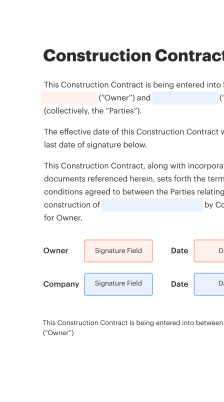
eSign Y Establecer Requisitos De Contraseña. Utilice Herramientas De Firma Electrónica Que Funcionan Donde Usted Trabaja.

eSign y establezca requisitos de contraseña, encuentre herramientas e inspiración para impulsar el progreso de su negocio. Puede trabajar en la oficina, acceder desde casa y colaborar en movimiento.

Solución de firma electrónica galardonada

What E-sign and Password Requirements Mean

E sign and set password requirements describes the combination of digital signing and access controls that protect electronic documents during signing and storage. It covers signer verification, password complexity and expiration rules, and how passwords are applied to access or open documents. In practice, this feature enforces minimum length, character variety, and reuse restrictions, and integrates with multi-factor authentication where available. Organizations use these controls to limit unauthorized access, preserve evidentiary value of signatures, and align internal IT security policies with legal standards such as ESIGN and UETA in the United States.

Why Combine E-signing with Password Controls

Requiring passwords for signing or opening signed files reduces unauthorized access and supports auditability while keeping signer workflows straightforward.

Why Combine E-signing with Password Controls

Common Challenges When Enabling Password Requirements

  • Balancing password complexity and user convenience can increase support requests and slow signature completion times.
  • Inconsistent password policies across systems create administrative overhead and potential security gaps for document access.
  • Lost or forgotten passwords can prevent access to legally important documents unless recovery processes are defined.
  • Applying passwords to PDFs or envelopes may break automated integrations that expect plaintext document access.

User Roles That Interact with Password Settings

Administrator

Administrators configure password policies, authentication requirements, and retention settings for the organization. They control enforcement scope, set complexity rules, and manage recovery or reset procedures to align security with business needs.

Signer

Signers receive documents, authenticate per policy, and may be required to set or enter passwords to access or finalize documents. Their actions are logged in the audit trail and subject to verification.

Who Typically Enables E-sign Password Policies

Organizations that handle sensitive data, regulated industries, and teams managing legal agreements commonly apply password rules alongside e-signatures.

  • Healthcare providers that need to meet HIPAA requirements for document access and patient records.
  • Educational institutions protecting student records and FERPA-covered documents during remote signing.
  • Small to mid-size businesses seeking low-cost controls to safeguard contracts and financial documents.

Implementing consistent password and authentication rules reduces risk across workflows while preserving signer accountability and audit trails.

Advanced Controls for Enterprise Password Policies

Enterprises often need broader controls to enforce organization-wide password standards and integrate them with identity infrastructure.

SSO Integration

Connect e-sign workflows to enterprise identity providers using SAML or OIDC so password requirements can be managed centrally and single sign-on eliminates separate password prompts for known users.

Granular Role Controls

Assign password and authentication rules by role, department, or template to ensure higher-risk signers face stricter controls while routine users retain efficient access.

Conditional Policies

Apply different authentication levels based on document type, signer location, or transaction value to balance risk and usability in automated workflows.

API Enforcement

Expose password and authentication settings through APIs so developers can enforce security rules within custom integrations and automated document pipelines.

Compliance Reporting

Generate audit-ready reports showing password policy enforcement, access events, and signer authentications for regulators or internal review.

Enterprise Key Management

Support customer-managed encryption keys for organizations requiring additional control over cryptographic materials and access to stored documents.

prepárate para obtener más

Elige una mejor solución

Core Features to Look for When Setting Password Rules

When assessing e-sign solutions for password control, prioritize options that balance security, usability, and auditability across signer workflows.

Password Policy

Granular password configuration that enforces minimum length, required character types, expiration intervals, and history checks to prevent reuse while allowing administrators to tailor rules to organizational risk tolerance.

Per-Document Protection

Ability to apply passwords to individual documents or envelopes so access requirements can vary by sensitivity and recipient, preserving ease of use for routine forms while locking down high-risk records.

Authentication Integration

Support for two-factor authentication and SAML/SSO integrations so passwords can be combined with federated identity providers and strong secondary verification methods for higher-assurance workflows.

Audit Trail

Comprehensive logging that records password events, access attempts, and signer confirmations to create an evidentiary record for compliance and dispute resolution.

How E-sign with Passwords Works in Practice

Understanding the signer flow clarifies where passwords are introduced and how they protect documents during signing and retrieval.

  • Document Preparation: Author attaches document and sets password policy.
  • Signer Notification: Recipient receives access link and instructions.
  • Authentication: Signer enters password or completes MFA as required.
  • Finalization: Document is sealed and access is logged.
Recoger firmas
24x
más rápido
Reduce los costos en
$30
por documento
Guardar hasta
40h
por empleado / mes

Quick Setup: Configure Password Requirements

A short sequence to enable and enforce passwords for signed documents in a standard e-sign platform.

  • 01
    Access Security: Open account security or admin settings.
  • 02
    Define Policy: Set complexity, length, and expiration rules.
  • 03
    Apply Scope: Choose user groups or templates to enforce.
  • 04
    Communicate: Notify signers about password expectations.

Step-by-Step: Signing Workflow When Passwords Are Required

Detailed signer sequence for documents protected by password policies and authentication controls.

01

Receive Invite:

Recipient gets secure link to the document.
02

Open Document:

Enter password or authenticate with SSO/MFA.
03

Review Content:

Signer reviews fields and attachments.
04

Sign:

Complete signing via e-signature field.
05

Document Sealed:

System applies tamper-evident seal and logs activity.
06

Access Later:

Password required to reopen or download document.
prepárate para obtener más

Por qué elegir airSlate SignNow

  • Prueba gratuita de 7 días. Elige el plan que necesitas y pruébalo sin riesgos.
  • Precios honestos para planes completos. airSlate SignNow ofrece planes de suscripción sin cargos adicionales ni tarifas ocultas al renovar.
  • Seguridad de nivel empresarial. airSlate SignNow te ayuda a cumplir con los estándares de seguridad globales.
illustrations signature

Configuration Table: Typical Password and Authentication Settings

Recommended baseline settings for password enforcement and related authentication controls in an enterprise e-sign workflow.

Setting Name Configuration
Password Complexity and Expiration Policy Minimum 10 chars, 90 days
Two-Factor Authentication Enforcement for Signers Optional, recommended for sensitive docs
Session Timeout and Idle Lock Policy 15 minutes
Reminder Frequency for Pending Signatures 48 hours
Document Retention and Backup Policy 7 years archival

Platform and Device Considerations for Passworded E-signing

Verify supported platforms and browser requirements to ensure password prompts and encryption work consistently for signers on any device.

  • Desktop: Windows and macOS supported
  • Mobile: iOS and Android apps available
  • Browsers: Modern browsers with TLS support

Test the full signer experience across desktop, tablet, and mobile clients and confirm that password entry, MFA flows, and document downloads behave as expected while preserving the audit trail and encryption integrity.

Security Controls Relevant to Password-Protected E-signing

Encryption at rest: AES-256 encrypted storage
Encryption in transit: TLS 1.2+ for data transfer
Password complexity: Configurable rules and expiration
Multi-factor: Optional MFA for signer access
Access logging: Detailed signer activity logs
Document sealing: Tamper-evident signature seals

Industry Examples of Password-Protected E-signing

Concrete scenarios show how password rules support compliance and secure workflows across sectors.

Healthcare Release Forms

A clinic sends an electronic release that requires a unique access password for patients

  • Password set by patient during validation
  • Protects PHI during remote access

Leading to secure records access and HIPAA-aligned auditability for each signed form

University Consent Documents

A university requires students to enter a campus password to open consent forms

  • Password ties access to institutional identity
  • Prevents unauthorized viewing of FERPA data

Resulting in clearer access controls and documented consent provenance

Best Practices for Secure and Usable Password Policies

Follow these recommended practices to keep e-sign workflows secure without creating unnecessary friction for signers.

Set reasonable complexity and expiration policies
Define minimum character sets and rotation intervals that deter brute-force attacks while avoiding overly frequent resets that lead to insecure workarounds. Combine complexity with account lockouts after multiple failed attempts and provide secure, auditable password recovery processes that verify identity before restoring access.
Use multi-factor authentication where possible
Layer passwords with a second factor such as SMS, authenticator apps, or email One-Time Passwords for transactions with legal or financial significance. Ensure MFA methods meet organizational threat models and maintain accessible fallback procedures for legitimate users who cannot complete secondary verification.
Apply policies selectively by document sensitivity
Classify documents by risk and require stronger controls only for high-sensitivity records. This targeted approach reduces signer friction for routine agreements while ensuring critical documents have robust protections, including longer retention, stricter access logs, and additional authentication steps.
Maintain clear documentation and signer guidance
Publish concise instructions for recipients explaining password expectations, recovery steps, and support contacts. Clear communication reduces failed access attempts and support load, and helps preserve evidentiary value by ensuring signers follow required procedures during execution.

FAQs About e sign and set password requirements

Common questions about applying password rules to electronic signing workflows, with concise answers focused on security and compliance.

Feature Comparison: Passworded E-sign Capabilities

A concise comparison of password and authentication features across common e-sign providers, focusing on availability and support details.

Feature signNow (Recommended) DocuSign Adobe Sign
Password-protected documents
Configurable complexity rules
Native MFA for signers Optional
SSO / SAML integration
prepárate para obtener más

¡Obtenga firmas legalmente vinculantes ahora!

Recommended Retention and Access Timeline Settings

Document retention and password expiration policies should align with legal obligations and business needs.

Short-term access window:

Temporary links expire after 14 days

Password expiration schedule:

Require resets every 90 days

Audit log retention:

Maintain logs for at least seven years

Document archival policy:

Archive signed files after 1 year

Legal hold procedures:

Suspend deletions when required

Risks and Penalties for Weak Controls

Regulatory fines: Monetary penalties possible
Data breaches: Unauthorized exposure risk
Contract disputes: Signatures challenged
Reputational damage: Loss of trust
Operational downtime: Access disruption impacts
Legal costs: Defense and remediation expenses

Pricing & Availability Snapshot for Password Features

High-level plan and feature availability across vendors; pricing and plan names are subject to vendor changes so verify current offerings directly.

Plan or Feature signNow (Recommended) DocuSign Adobe Sign HelloSign PandaDoc
Entry-level availability Included in Business plans Available in Standard Available in Small Business Included in Essentials Free eSign tier
API access Available with Business level Developer plan available API with Document Cloud Developer API available API with paid plans
Bulk Send support Included Add-on or higher tier Included Included Included
HIPAA-compliant offering Available via Business HIPAA add-on Available via enterprise Available via Business agreements Available on request Available on enterprise plans
Mobile app support Yes, native apps Yes, native apps Yes, native apps Yes, native apps Yes, native apps

La mejor manera de eSign y establecer requisitos de contraseña

Si está buscando una respuesta sobre cómo eSign y establecer requisitos de contraseña, podrá encontrarla aquí mismo, en la solución completa de firma electrónica de airSlate SignNow. Aproveche su lista de opciones para mejorar su flujo de trabajo diario. Produzca contratos rellenables y cierre acuerdos sin necesidad de salir de su lugar de trabajo o hogar. Puede trabajar en movimiento, ya que esta solución web está diseñada para ofrecer servicio desde cualquier dispositivo móvil con cualquier sistema operativo.

airSlate SignNow encaja perfectamente en varias industrias ya que ofrece una serie de ventajas que hacen que su documentación luzca ordenada y organizada. Además, cumple con las especificaciones oficiales que hacen que las copias firmadas sean legítimas de acuerdo con la ley. También podrá encontrar aquí campos rellenables para diferentes tipos de datos, crear espacios comunes para colaborar con colegas, regular el cálculo automático para diferentes cantidades de dinero, solicitar más documentos y pagos, establecer el orden de firma, distribuir contratos y formularios por correo electrónico o enlace de firma y mucho más.


walmart logo
exonMobil logo
apple logo
comcast logo
facebook logo
FedEx logo
esté listo para obtener más

¡Obtenga ahora firmas vinculantes desde el punto de vista jurídico!