











We spread the word about digital transformation
signNow empowers users across every industry to embrace seamless and error-free eSignature workflows for better business outcomes.






Free 7-day trial. Choose the plan you need and try it risk-free.

Honest pricing for full-featured plans. airSlate SignNow offers subscription plans with no overages or hidden fees at renewal.

Enterprise-grade security. airSlate SignNow helps you comply with global security standards.
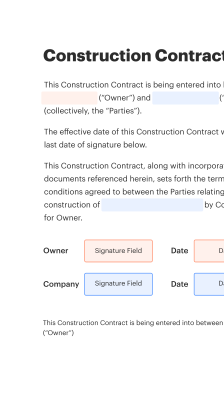

Place electronic signatures and send records in moments instead of hours. Our eSignatures have the identical legal power as wet-ink ones.

Take advantage of the signature tips function and improve your files without any concerns about the safety of your information.

Modify existing forms and save changes, and airSlate SignNow will immediately inform your entire crew that there are updated templates.

Place fillable areas, create or collect electronic signatures, get supplementary documents and payments, and discover different ways to boost your workflows.

Use airSlate SignNow API, the easiest way to create and collect eSignatures. Do so within your CRM systems, on your website, or even in specific apps.

Generate a public link for your template and collect signatures while not having to directly send your document to specific consumer email addresses.
Quick guide on how to use eSignature compliance feature
Is your company willing to decrease inefficiencies by about three-quarters or higher? With airSlate SignNow eSignature, weeks of contract negotiation become days, and hours of signature collecting turn into a few minutes. You won't need to learn everything from the ground up thanks to the intuitive interface and easy-to-follow instructions.
Complete the following steps below to use the eSignature compliance functionality in minutes:
- Open your browser and access signnow.com.
- Join for a free trial or log in utilizing your electronic mail or Google/Facebook credentials.
- Click on User Avatar -> My Account at the top-right corner of the webpage.
- Modify your User Profile by adding personal data and changing settings.
- Design and manage your Default Signature(s).
- Get back to the dashboard webpage.
- Hover over the Upload and Create button and choose the appropriate option.
- Click on the Prepare and Send option next to the document's name.
- Type the name and email address of all signers in the pop-up screen that opens.
- Make use of the Start adding fields option to begin to modify document and self sign them.
- Click SAVE AND INVITE when accomplished.
- Continue to customize your eSignature workflow employing extra features.
It couldn't be easier to use the eSignature compliance feature. It's accessible on your smartphones as well. Install the airSlate SignNow app for iOS or Android and manage your customized eSignature workflows even when on the go. Skip printing and scanning, time-consuming submitting, and costly papers delivery.
How it works


What is the esignature compliance
eSignature compliance refers to the legal and regulatory standards that govern the use of electronic signatures in business transactions. In the United States, eSignatures are recognized as legally binding under the Electronic Signatures in Global and National Commerce (ESIGN) Act and the Uniform Electronic Transactions Act (UETA). These laws ensure that electronic signatures hold the same weight as traditional handwritten signatures, provided they meet specific criteria.
To be compliant, an eSignature must be uniquely associated with the signer, created using a method that is under the signer’s control, and capable of being retained and accurately reproduced. Compliance also involves ensuring that the signing process is secure and that the signer's consent to use electronic signatures is obtained.
How to use the esignature compliance
Using eSignature compliance effectively involves understanding the steps necessary to create, send, and manage electronic signatures within a secure framework. First, ensure that your organization has established policies that align with eSignature laws. Next, select a reliable eSignature solution, such as airSlate SignNow, that adheres to compliance standards.
When preparing a document for eSignature, ensure that it is in a format compatible with electronic signing. Upload the document to the eSignature platform, specify the signers, and define the signing order if necessary. Once the document is prepared, you can send it for signature, allowing recipients to review and sign it electronically. After all signatures are collected, the completed document can be securely stored or shared as needed.
Steps to complete the esignature compliance
Completing eSignature compliance involves several key steps:
- Verify the document's eligibility for electronic signing.
- Choose an eSignature platform that meets compliance requirements.
- Obtain consent from all parties to use electronic signatures.
- Upload the document to the eSignature platform.
- Specify signers and their signing order, if applicable.
- Send the document for signatures.
- Ensure all parties complete the signing process.
- Store the signed document securely for future reference.
Legal use of the esignature compliance
The legal use of eSignature compliance is rooted in the recognition of electronic signatures as valid and enforceable. To ensure legal compliance, organizations must adhere to the guidelines set forth by the ESIGN Act and UETA. This includes obtaining explicit consent from signers to use electronic signatures and providing a way for them to retain copies of signed documents.
Additionally, it is important to maintain a secure signing process, which may involve using authentication methods such as email verification or two-factor authentication. Organizations should also keep detailed records of the signing process, including timestamps and IP addresses, to provide evidence of compliance if needed.
Security & Compliance Guidelines
Security and compliance are critical components of using eSignatures effectively. To ensure that your eSignature process is secure, consider the following guidelines:
- Use a reputable eSignature solution that complies with industry standards.
- Implement encryption to protect documents during transmission.
- Utilize secure authentication methods to verify the identity of signers.
- Maintain an audit trail that records all actions taken during the signing process.
- Regularly review and update your security practices to address emerging threats.
Examples of using the esignature compliance
eSignature compliance can be applied across various industries and use cases. For instance, in real estate, electronic signatures can streamline the signing of purchase agreements, lease contracts, and disclosures. In human resources, eSignatures can facilitate the signing of employment contracts, policy acknowledgments, and benefits enrollment forms.
Additionally, businesses in finance can use eSignatures for loan agreements, account openings, and disclosures. These examples illustrate how eSignature compliance enhances efficiency and security while ensuring that all parties adhere to legal requirements.
 Best ROI. Our customers achieve an average 7x ROI within the first six months.
 Scales with your use cases. From SMBs to mid-market, airSlate SignNow delivers results for businesses of all sizes.
 Intuitive UI and API. Sign and send documents from your apps in minutes.
Here is a list of the most common customer questions. If you can't find an answer to your question, please don't hesitate to reach out to us.
What is esignature compliance and why is it important?
Esignature compliance refers to the legal acceptance of electronic signatures in various jurisdictions. It is important because it ensures that your electronically signed documents are valid and enforceable in court, providing security and trust in digital transactions.
How does airSlate SignNow ensure esignature compliance?
airSlate SignNow ensures esignature compliance by adhering to industry standards and regulations such as the ESIGN Act and UETA. Our platform incorporates robust security measures, including encryption and audit trails, to maintain the integrity of your signed documents.
What features does airSlate SignNow offer for esignature compliance?
airSlate SignNow offers features such as customizable workflows, secure document storage, and detailed audit logs to support esignature compliance. These features help businesses manage their signing processes efficiently while ensuring that all signatures are legally binding.
Is airSlate SignNow suitable for international esignature compliance?
Yes, airSlate SignNow is designed to support international esignature compliance. Our platform is compliant with various global regulations, allowing businesses to confidently send and sign documents across borders while adhering to local laws.
What are the pricing options for airSlate SignNow?
airSlate SignNow offers flexible pricing plans to accommodate businesses of all sizes. Each plan includes features that support esignature compliance, ensuring that you can choose a solution that fits your budget while meeting your compliance needs.
Can airSlate SignNow integrate with other software for esignature compliance?
Absolutely! airSlate SignNow integrates seamlessly with various software applications, enhancing your workflow while maintaining esignature compliance. This allows you to streamline processes and ensure that all signed documents are easily accessible and compliant.
What benefits does airSlate SignNow provide for esignature compliance?
The benefits of using airSlate SignNow for esignature compliance include increased efficiency, reduced paper usage, and enhanced security. By digitizing your signing processes, you can save time and resources while ensuring that your documents remain compliant with legal standards.




airSlate SignNow is committed to protecting your sensitive information by complying with global industry-specific.

airSlate SignNow functionality for eSignature compliance
Feel the freedom of completing and signing forms electronically from any internet-connected device.


How to fill out and sign documents online
Getting powerful eSignature compliance capabilities can be difficult unless you have a airSlate SignNow account. Our tool with an intuitive interface enables you with the possibility to quickly fill out and electronically sign any document via any device.
Follow the step-by-step guide to use the eSignature compliance feature:
- Log in to the system or register for an account with airSlate SignNow.
- Click Upload or Create to add a file from your device, the cloud, or our form catalogue.
- Open the sample and use the tools from Fill Out Myself left sidebar to complete the blanks.
- Drop My Signature to eSign the doc by typing, drawing, or inserting an image of your signature.
- Add more fillable fields with assigned Roles for other people to complete.
- Click Save and Close or utilize the Invite to Sign option to request signatures from other individuals.
When finished editing and ultizing the eSignature compliance feature, you can download your document, export it to your cloud storage, or quickly transform it into a reusable template. Save time and manage your paperwork online with airSlate SignNow, from anywhere and whenever you need it!
All industries, companies and organizations regulated by the FDA that utilize electronic records must follow these regulations. In 1991 the FDA met with ...
1. Determine if and to what extent the financial institution electronically delivers compliance-related notices or disclosures subject to the consumer consent ...
E-signatures can also be used in regulatory compliance and allow electronic tracking for audit purposes including time stamping, and identity verification. Use ...
