Required fields
Make radio-button groups mandatory to prevent incomplete submissions and ensure downstream processes receive necessary decisions for approvals or routing.




Radio buttons improve form clarity, enforce single-choice answers, and simplify downstream data extraction for automated workflows and recordkeeping.

A Form Administrator designs templates, groups radio buttons into single-choice sets, and configures required settings. They ensure field naming conventions match downstream integrations and maintain template version control for consistency across teams.
A Signer interacts with radio buttons to provide single-choice responses during the signing process. Their selection is recorded in the audit trail and exported to integrations, ensuring accurate data capture for processing or compliance.
Organizations across sectors rely on single-choice controls to standardize responses, capture consent, and feed downstream systems with normalized values.
Effective implementation reduces manual review, ensures consistent data, and supports compliance and auditability in regulated environments.
Make radio-button groups mandatory to prevent incomplete submissions and ensure downstream processes receive necessary decisions for approvals or routing.
Configure default choices where appropriate to reduce signer friction, while ensuring defaults are lawful and do not bypass informed consent requirements.
Use selection-based rules to show or hide subsequent fields, route documents differently, or trigger notifications based on the single choice selected by the signer.
Map radio-button values to specific integration fields so receiving systems receive standardized codes or labels for automated processing and reporting.
Maintain controlled template versions so changes to radio-button groups are tracked and older documents remain auditable with their original field definitions.
Each radio-button selection and change is recorded in the audit trail with timestamps, signer identity, and event context for compliance and dispute resolution.
Selections are exportable as structured form fields that map to Google Sheets or Google Forms, enabling automated aggregation and reporting without manual transcription.
Mapped radio-button values populate CRM fields during the signing event, keeping contact records and opportunity stages updated in real time for sales and service teams.
Signed PDFs preserve radio-button values and can be routed to cloud storage providers with folder rules, ensuring consistent document retention and retrieval.
Webhooks can push radio-button data to endpoints immediately after signing, triggering backend processes or notifications in integrated systems.

| Setting Name | Configuration |
|---|---|
| Reminder Frequency | 48 hours |
| Conditional Routing | Enabled |
| Field Validation Rules | Required when used |
| Webhook Delivery | Immediate |
| Export Format | CSV or JSON |
Radio-button fields work across modern browsers and device types but require attention to responsiveness and field sizing for consistent signer experience.
Test templates on representative devices and browsers used by signers, and prefer vertical layouts for mobile to avoid mis-selection and to improve accessibility.
Employees complete benefit elections on a standard form, selecting plan level using grouped radio buttons
Leading to faster enrollment processing and cleaner payroll imports.
A clinic collects consent and single-answer intake items using radio buttons in a secure intake form
Resulting in more reliable records and fewer follow-up queries from staff.
| Feature Criteria Comparison | signNow (Recommended) | DocuSign | Adobe Acrobat Sign |
|---|---|---|---|
| Radio button field support | |||
| Conditional logic for fields | |||
| Mobile app and responsive signing | |||
| Enterprise HIPAA compliance option | Yes (enterprise) | Yes (enterprise) | Yes (enterprise) |
| E-signature Provider Names | signNow (Featured) | DocuSign | Adobe Acrobat Sign | Dropbox Sign | PandaDoc |
|---|---|---|---|---|---|
| Free plan availability | Yes (limited) | Yes (trial) | Yes (trial) | Yes (limited) | Yes (limited) |
| API access included | Included in Business plans | Available on Business plans | Enterprise plans include API | Available | Included with paid plans |
| HIPAA-support options | Available with BAAs on select plans | Available with agreements | Available with agreements | Available upon request | Available with enterprise |
| Team templates and shared libraries | Yes, template libraries included | Yes, team features available | Yes, library support | Yes | Yes |
| Enterprise single sign-on | SAML SSO available | SAML options available | SAML supported | SSO supported | SAML supported |
Create fillable forms with multiple choice questions and enable recipients to select one option from a list of choices using radio button groups.
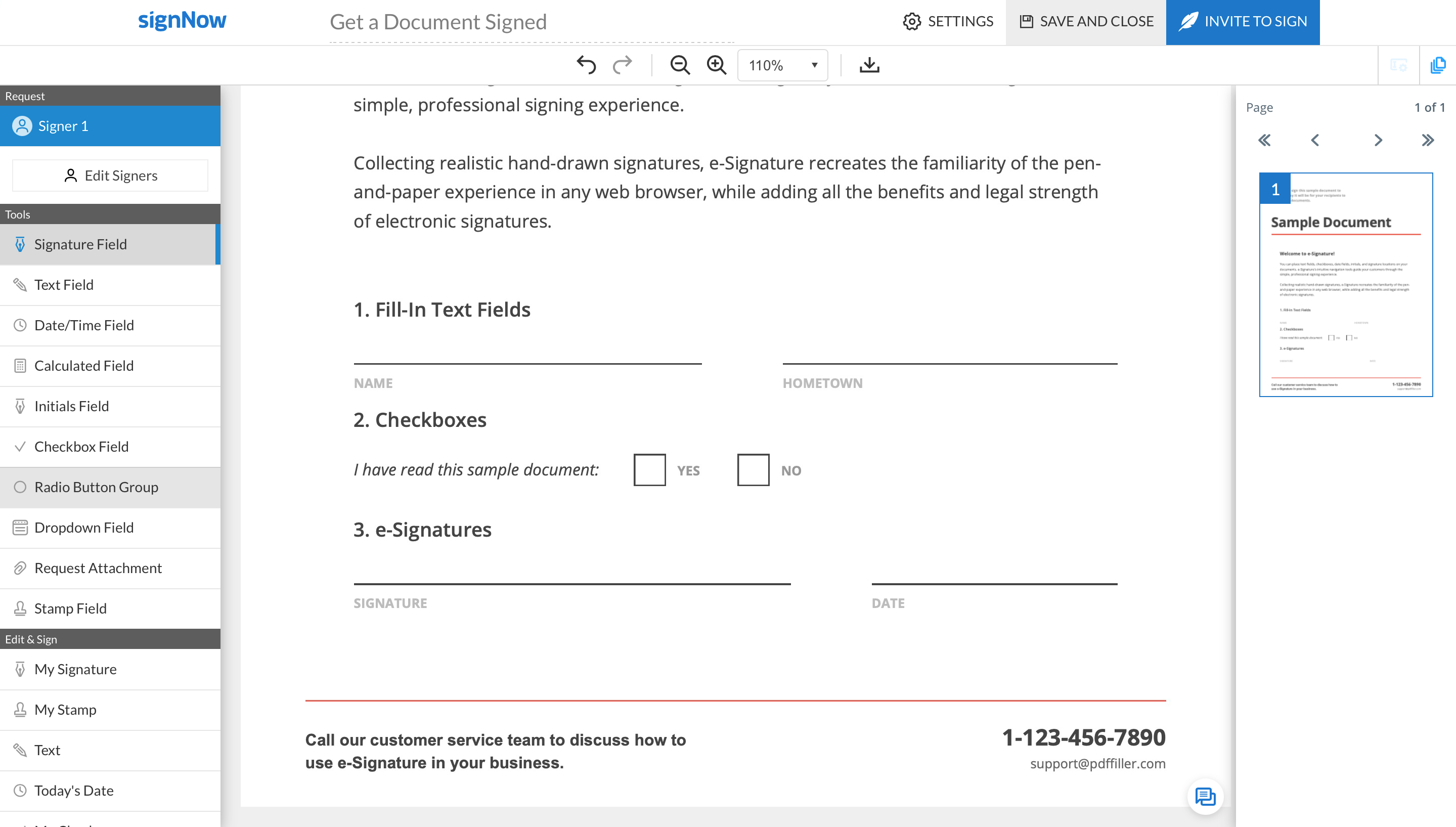
Open a document in the editor, select Radio Button Group from the toolbar on the left, and click anywhere on the document.
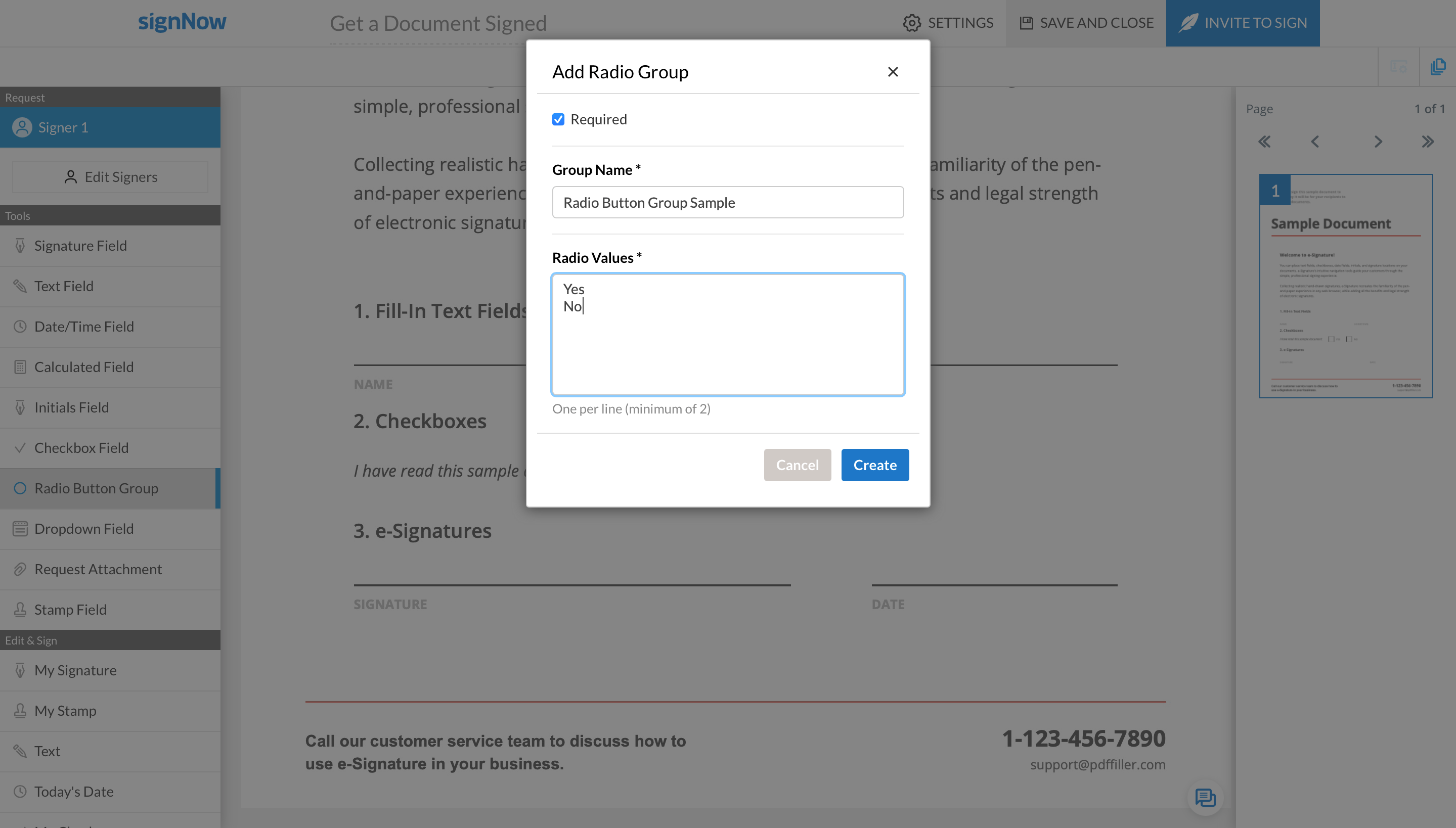
In the new popup window, enter the name of your radio button group and provide the required values in the box below. Then, hit Create.
Then, add standard fillable fields to the document. Sending bulk invites requires your documents to have at least one fillable field. Click Done once finished.
Once radio buttons appear on your document, you can adjust their size and position. To move a radio button across the page, drag and drop it to the desired location. To change the size, drag a radio button’s anchor point.
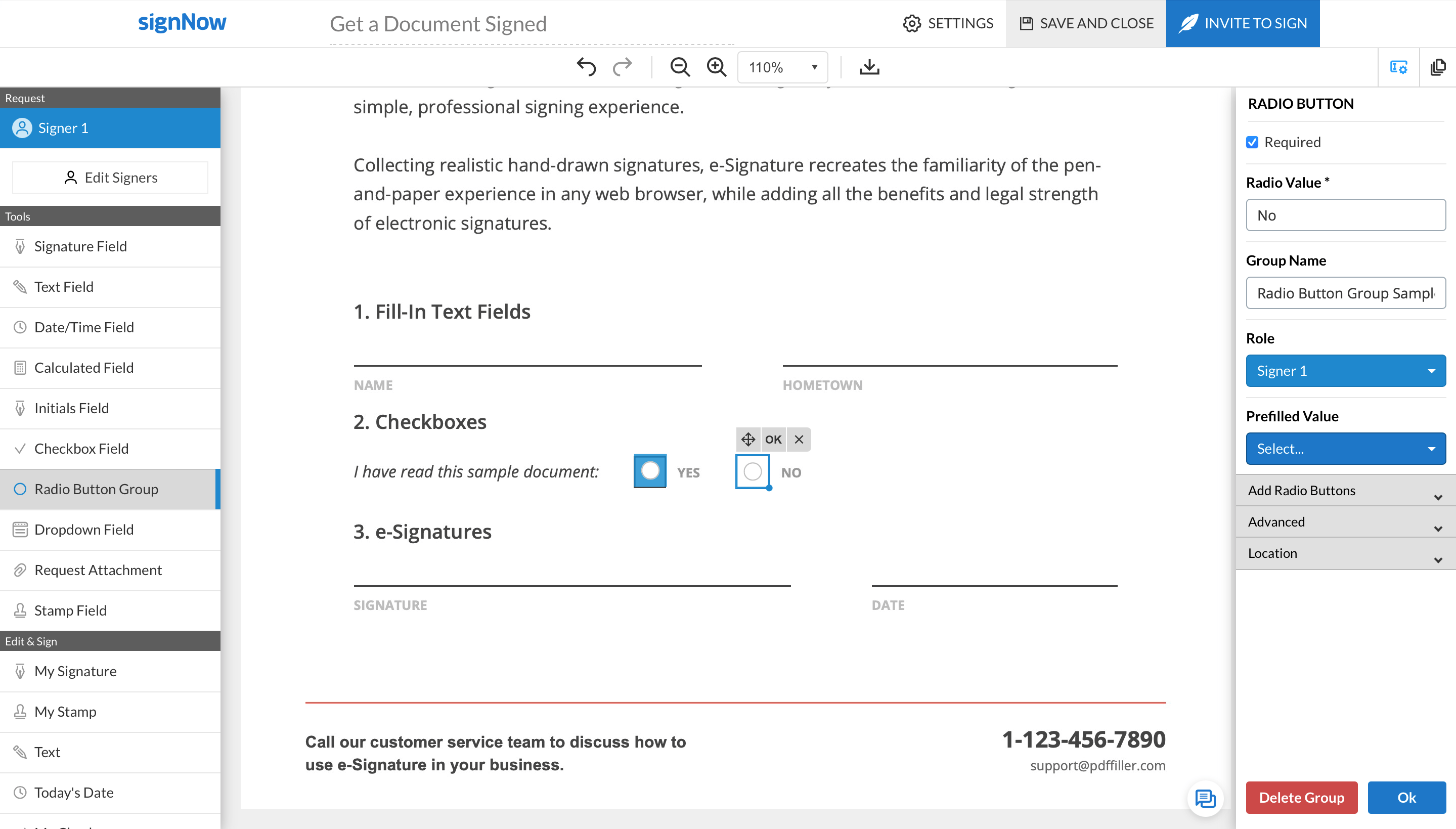
You can also configure radio button groups (e.g., change values, set pre-filled values, assign signer roles) using the menu on the right.