Best Proposal Apps for Organizations: SignNow

Streamline your document processes with airSlate SignNow's user-friendly and affordable eSignature solution, empowering businesses to send and sign documents effortlessly.

Award-winning eSignature solution

What best proposal apps for organizations do and why they matter

Best proposal apps for organizations are software tools that centralize proposal creation, collaboration, approval workflows, and electronic signing to accelerate deal cycles. They combine document templates, content libraries, eSignature capability, and integrations with CRM and file storage to reduce manual tasks. For organizations, these apps enforce version control, track changes, and provide audit trails for compliance. They also support role-based permissions, automated reminders, and reporting so teams can manage pipeline activity and measure proposal performance across departments.

Why organizations choose proposal apps

Proposal applications reduce turnaround time, standardize pricing and legal language, and improve visibility across teams, helping organizations reduce errors and shorten sales cycles while maintaining compliance and consistent branding.

Why organizations choose proposal apps

Common challenges addressed by proposal apps

  • Disjointed proposal creation across teams causes inconsistent terms and delayed approvals.
  • Manual signing and document exchange introduce security risks and slow closing times.
  • Lack of template governance leads to pricing errors and compliance gaps.
  • Fragmented storage and no audit trail make tracking past proposals difficult.

Typical user profiles and responsibilities

Proposal Manager

The Proposal Manager configures templates, maintains the content library, and oversees approval rules. They ensure pricing accuracy, apply standard legal language, and coordinate cross-functional reviews so proposals are consistent and compliant before sending.

IT Administrator

The IT Administrator handles integration with directory services, configures SSO, manages API keys, and enforces retention and backup policies. They validate the platform against organizational security and compliance requirements prior to rollout.

Teams and roles that benefit most

Sales, professional services, procurement, and legal teams typically lead adoption because they create and approve high volumes of proposals and contracts.

  • Sales reps who need fast, consistent proposals with eSignature-enabled workflows.
  • Legal and contracts teams that require version control and standardized clauses.
  • Operations and procurement groups focused on auditability and centralized storage.

IT and security teams evaluate integrations, authentication, and retention policies before enterprise deployment to meet organizational controls and regulatory needs.

Six advanced capabilities beneficial to enterprises

Beyond core features, the following capabilities support scale, customization, and integration needs for larger organizations.

Bulk Send

Send the same proposal to many recipients efficiently while tracking individual responses and signatures, useful for renewals or mass acknowledgments.


API and Webhooks

Programmatic access enables automated document generation, submission, and event-driven notifications to keep systems synchronized without manual steps.

Advanced authentication

Support for SMS codes, knowledge-based verification, and SAML SSO to meet higher assurance requirements for signer identity.

Conditional logic

Dynamic fields and conditional sections tailor proposal content based on selections, reducing clutter and ensuring relevant terms display only when applicable.

Custom branding

White-labeling options ensure proposals match corporate branding and present a consistent customer-facing experience.

Reporting and analytics

Dashboards and exportable reports track proposal status, time-to-sign metrics, and team performance for continuous improvement.

be ready to get more

Choose a better solution

Four essential features to evaluate

When comparing solutions, prioritize features that directly impact speed, consistency, and compliance across organizational proposals.

Template library

Centralized, reusable templates reduce drafting time, ensure consistent legal language and branding, and allow variables for pricing and client data to be merged automatically from CRM or spreadsheets.

Approval workflows

Configurable multi-step routing enforces internal reviews and sign-offs, tracks approver actions, and prevents documents from being sent until required stakeholders have approved.

eSignature

Integrated electronic signing captures signer intent with timestamps and audit trails, supports common authentication methods, and generates tamper-evident final documents for enforceability.

Integrations

Native connectors for CRM, cloud storage, and accounting systems reduce manual data entry and enable automatic updates to customer records and contract repositories.
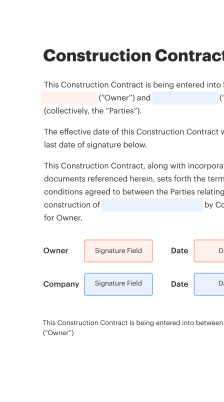
How a proposal app typically operates

A proposal app integrates content, approvals, and signing into a single flow so teams can produce and execute proposals without switching systems.

  • Template creation: Build reusable proposal templates and variable fields.
  • Data merge: Pull customer and product data from CRM.
  • Approval routing: Enforce multi-step internal approvals before sending.
  • eSignature completion: Securely collect signatures and log audit data.
Collect signatures
24x
faster
Reduce costs by
$30
per document
Save up to
40h
per employee / month

Quick setup: implementing a proposal app

Follow these initial steps to configure a proposal app for organizational use and ensure basic governance and user access are established.

  • 01
    Define scope: Identify teams, document types, and approval paths.
  • 02
    Create templates: Standardize sections, pricing, and legal language.
  • 03
    Configure access: Set roles, permissions, and SSO.
  • 04
    Test workflows: Pilot with a small user group and refine.

Daily workflow steps when using a proposal app

A typical daily workflow keeps proposals moving from drafting to signature with minimal manual handoffs.

01

Create draft:

Select template and populate variables.
02

Invite reviewers:

Route to legal or finance as required.
03

Apply approvals:

Capture required internal signoffs.
04

Send for signature:

Choose signing order and authentication.
05

Track status:

Monitor pending actions and reminders.
06

Archive executed:

Store final PDF with audit log.
be ready to get more

Why choose airSlate SignNow

  • Free 7-day trial. Choose the plan you need and try it risk-free.
  • Honest pricing for full-featured plans. airSlate SignNow offers subscription plans with no overages or hidden fees at renewal.
  • Enterprise-grade security. airSlate SignNow helps you comply with global security standards.
illustrations signature

Typical workflow settings and recommended configurations

Configure these common workflow settings to balance speed and control when deploying a proposal application across teams.

Setting Name Configuration
Approval threshold value User-defined amount
Reminder frequency 48 hours
Signature order Sequential or Parallel
Template permission levels Editor/Approver/View
Audit log retention 7 years

Supported platforms and minimum requirements

Proposal applications typically run in modern web browsers and provide native mobile apps for on-the-go signing and review.

  • Desktop: Chrome, Edge, Safari
  • Mobile: iOS and Android apps
  • API access: RESTful endpoints

For enterprise deployments, verify single sign-on compatibility, mobile device management support, and vendor compliance statements to ensure the platform meets internal security and operational standards before production use.

Core security and protection features

Encryption: AES-256 at rest
Transport security: TLS 1.2+ enforced
Access controls: Role-based permissions
Authentication options: SSO and 2FA
Audit logging: Tamper-evident records
Data residency: Region selection available

Industry examples of proposal app use

Real-world examples show how structured proposal tools speed approvals, reduce risk, and integrate with core systems across industries.

Case Study 1

A mid-market IT services firm centralized proposal templates and integrated eSignature into its CRM

  • Saved sales reps time with pre-approved pricing blocks
  • Reduced contract review cycles and human errors

Leading to faster closes and clearer audit trails for compliance and forecasting.

Case Study 2

A healthcare vendor adopted a proposal app with role-based approvals and enhanced authentication

  • Enforced standardized HIPAA-related clauses for every contract
  • Automated retention and encrypted storage for sensitive documents

Resulting in improved regulatory readiness and fewer manual compliance checks during audits.

Best practices for secure and accurate proposals

Adopt practical governance and process controls to maintain accuracy and compliance while keeping proposal cycles efficient.

Maintain approved template sets and version control
Keep a single source of truth for pricing and legal language with controlled template editing, change logs, and periodic reviews to reduce errors and speed approvals across teams.
Enforce role-based approvals and separation of duties
Define who can create, approve, and send proposals to prevent unauthorized pricing changes and ensure legal review when required by contract value or terms.
Log every action and keep immutable audit trails
Enable detailed activity logs that record document access, edits, approvals, and signature events to support dispute resolution and regulatory compliance.
Train users and run controlled pilots
Provide role-specific training, document walkthroughs, and small-scale pilots to identify process gaps and refine workflows before enterprise rollout.

FAQs about best proposal apps for organizations

Answers to common questions about implementation, compliance, integrations, and everyday use of proposal software.

Feature comparison: signNow and leading alternatives

Quick feature availability comparison among established eSignature and proposal vendors, focusing on capabilities relevant to organizational proposals.

Criteria signNow (Recommended) DocuSign Adobe Sign
Legal validity in U.S.
Bulk Send capability Limited
API availability
HIPAA support Optional Optional Enterprise
be ready to get more

Get legally-binding signatures now!

Retention and timeline considerations

Establish clear timelines for document retention, review cycles, and signature deadlines to align with legal and operational policies.

Retention period policy:

Define duration for storing executed proposals.

Signature deadline window:

Set automatic reminders and expiry for outstanding signatures.

Template review schedule:

Periodic review cadence for legal and pricing updates.

Backup frequency:

Daily or weekly automated backups.

Legal hold procedure:

Process to suspend deletions for disputes.

Risks and compliance consequences

Invalid signatures: Contract disputes
Data breaches: Regulatory fines
Unauthorized access: Business exposure
Retention failures: Legal hold issues
Template errors: Incorrect pricing
Noncompliance: Operational sanctions

Pricing and plan overview for popular providers

Representative starting prices and plan features; actual pricing varies by contract length, seat count, and add-ons. Confirm current rates with vendors.

Starting price (per user/month) $8 $10 $14.99 $19 $15
Free trial available Yes Yes Yes Yes Yes
API included in base plan Yes Add-on Add-on Yes Add-on
Bulk Send included Yes Add-on Add-on Yes Add-on
HIPAA-compliant option Available Available Enterprise only Available Available
Enterprise onboarding services Included Professional services Professional services Included Professional services
walmart logo
exonMobil logo
apple logo
comcast logo
facebook logo
FedEx logo
be ready to get more

Get legally-binding signatures now!