Insurance Proposal Software for Facilities

Unlock the power of airSlate SignNow to effortlessly send and eSign documents. Experience a user-friendly, budget-friendly solution tailored for your business needs.

Award-winning eSignature solution

What insurance proposal software for facilities does and why it matters

Insurance proposal software for facilities centralizes the creation, distribution, and signing of insurance documents used by facility operators, brokers, and risk managers. It typically combines templated proposal creation, role-based workflows, digital signature capture, and basic analytics to speed underwriting and client acceptance. For facility portfolios—such as healthcare sites, manufacturing plants, or multi-site office buildings—these tools reduce manual entry, standardize policy terms, track version history, and maintain auditable records required for claims and compliance. The result is a repeatable process that supports consistent proposals across locations while preserving evidentiary trails.

When facilities benefit from proposal automation

Facilities with recurring renewals, multiple locations, or third-party brokers benefit from proposal automation because it reduces administrative overhead and standardizes terms across policies.

When facilities benefit from proposal automation

Common operational challenges in facility insurance proposals

  • Inconsistent proposal language across locations increases underwriting confusion and processing delays.
  • Manual signature collection causes slow turnaround and lost or incomplete agreements.
  • Fragmented storage of proposals and endorsements hinders retrieval during claims or audits.
  • Insufficient signer verification can create compliance and admissibility concerns in disputes.

Representative user profiles for facilities insurance proposals

Facility Manager

Facility managers oversee multiple sites and coordinate renewals with brokers and insurers. They use proposal software to collect site-specific information, confirm coverages, and track signed proposals across locations. The role focuses on operational continuity and ensuring each site meets insurer requirements before binding.

Insurance Broker

Brokers create standardized proposal templates, map client details into policy forms, and route documents for signatures. They rely on workflow automation to manage multiple clients concurrently, reduce data entry errors, and maintain auditable chains of communication during negotiation and onboarding.

Teams and roles that typically use insurance proposal software for facilities

Facility operators, risk managers, insurance brokers, and procurement teams often collaborate using proposal tools to accelerate coverage placement and reduce administrative errors.

  • Facility managers coordinating multi-site renewals and documentation collection.
  • Insurance brokers preparing standardized proposals and sending them for electronic signatures.
  • Risk and compliance teams auditing proposal histories and retention records.

These roles use the software to enforce consistent terms, shorten negotiation cycles, and preserve auditable signatures and change history for regulatory needs.

Advanced features for larger facility portfolios and enterprise teams

Larger operations require capabilities that support scale, IT integration, and enhanced governance across distributed teams and external brokers.

Role-based access

Granular permissions allow administrators to restrict template edits, control who can send proposals, and limit access to sensitive attachments such as loss runs or engineering reports to authorized roles only.


API integrations

RESTful APIs enable automatic population of proposal fields from facility management systems or CRMs, streamlining data flow and reducing manual reconciliation across policy lifecycles.

Workflow automation

Conditional routing, reminders, and escalations reduce manual follow-up by automatically directing unsigned proposals to alternate approvers based on elapsed time or missing data.

Document versioning

Track edits and maintain prior proposal versions for audit purposes, preventing accidental overwrite of negotiated terms and preserving an authoritative history for claims or disputes.

Compliance controls

Features to support compliance include configurable retention schedules, exportable audit reports, and optional Business Associate Agreements for regulated sectors like healthcare.

Analytics and reporting

Reporting dashboards provide metrics on send-to-sign times, signer completion rates, and processing bottlenecks to inform process improvements and resource allocation.

be ready to get more

Choose a better solution

Core features to look for in facility-focused proposal tools

Select capabilities that reduce repetitive work, preserve compliance, and provide clear evidentiary records for facility insurance programs.

Template Library

Prebuilt, editable templates for proposals and endorsements help maintain consistent language across locations and policies while reducing drafting time and the risk of omitted clauses during renewals.

Bulk Send

Ability to send a single proposal instance to many recipients or many proposals to multiple locations at once, saving time during portfolio renewals and centralized quote collection.

Audit Trail

A tamper-evident log of actions, timestamps, and IP addresses that supports dispute resolution, claims validation, and regulatory audits with admissible event histories.

Signer Authentication

Multiple authentication options such as email OTP, SMS, knowledge-based checks, and SSO to meet client and regulatory requirements for signer identity verification.
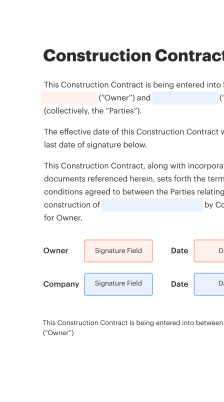
How a facility proposal moves from draft to executed

A typical lifecycle includes template selection, data merge, signer authentication, signature capture, and archival with an audit trail.

  • Template selection: Choose standardized proposal form
  • Data merging: Auto-fill site and policy details
  • Signer authentication: Apply chosen verification procedures
  • Execution and storage: Capture signatures and archive securely
Collect signatures
24x
faster
Reduce costs by
$30
per document
Save up to
40h
per employee / month

Quick setup: create your first facility insurance proposal

Follow these concise steps to prepare, route, and capture signatures on a facility insurance proposal.

  • 01
    Create template: Build a reusable proposal with standard clauses
  • 02
    Populate fields: Insert location data and coverage limits
  • 03
    Configure workflow: Set signer order and authentication methods
  • 04
    Send and track: Dispatch to signers and monitor completion
be ready to get more

Why choose airSlate SignNow

  • Free 7-day trial. Choose the plan you need and try it risk-free.
  • Honest pricing for full-featured plans. airSlate SignNow offers subscription plans with no overages or hidden fees at renewal.
  • Enterprise-grade security. airSlate SignNow helps you comply with global security standards.
illustrations signature

Recommended workflow configuration for facility proposals

Default workflow settings help ensure consistent processing, reminder cadence, and archival for facility insurance proposals.

Default Configuration Typical Value
Automatic Reminder Frequency for Signers 48 hours
Signer Authentication Requirement Level Email OTP
Template Edit Permissions for Roles Administrators only
Document Retention and Export Policy 7 years
Bulk Send Batch Size Limit 500 recipients

Platform and device compatibility for proposal workflows

Confirm supported platforms and minimum device requirements to ensure signers and administrators can access proposals across common endpoints.

  • Web browsers: Modern Chrome, Edge, Safari support
  • Mobile apps: iOS and Android native applications
  • Desktop integrations: Windows and macOS desktop connectors

Ensure IT and security teams validate SSO compatibility, supported browser versions, and mobile OS requirements before wide rollout to avoid access issues for site teams and external signers.

Security controls and protections typically included

Encryption at rest: AES-256 encryption for stored documents
Encryption in transit: TLS 1.2 or higher for data transfer
Access controls: Role-based permissions and SSO
Authentication options: Email OTP, SMS, and SSO
Audit logs: Immutable event trails for actions
Data isolation: Tenant separation for enterprise accounts

Practical facility use cases

Real-world examples demonstrate how institutions use proposal software to streamline insurance workflows for facilities and portfolios.

Regional Healthcare Network

A multi-site health system consolidates facility data into a single proposal template to ensure consistent indemnity clauses across hospitals

  • Template-driven proposals reduce manual variance in policy language
  • Automated routing shortens signature cycles across departments

Resulting in faster renewals, fewer insurer clarifications, and improved audit readiness during compliance reviews.

Manufacturing Campus Group

A manufacturer with several plants batches location-specific exposures into grouped proposals to present to underwriters

  • Bulk Send minimizes repetitive sends to multiple plant managers
  • Centralized attachments ensure technical loss control reports accompany each proposal

Leading to reduced administrative overhead, improved quote comparability, and a consolidated signature record for claims.

Best practices for secure and accurate facility insurance proposals

Adopt consistent controls and documentation practices to maintain legal validity, improve processing speed, and reduce downstream claims friction.

Verify signer identity before sending
Use at least one reliable authentication method tied to a signer's email or phone number, and require stronger verification for high-value policies or regulated facilities.
Use locked templates for standard terms
Protect standard clauses by limiting who can edit templates; apply fillable fields for site-specific data to reduce accidental changes to contractual language during proposal preparation.
Maintain retention policies and export capability
Define and enforce document retention schedules that match regulatory and internal audit requirements, and ensure the system supports secure exports for long-term archival.
Log and review audit trails regularly
Periodically review signature events, access logs, and administrative actions to detect anomalies, demonstrate compliance, and prepare for regulatory or claims-related inquiries.

FAQs About insurance proposal software for facilities

Common questions and troubleshooting guidance for teams deploying and using proposal software in facility contexts.

Feature availability: signNow compared with other major eSignature providers

A concise comparison of common capabilities related to facility insurance proposals and general eSignature needs across leading vendors.

Feature and Compliance Criteria Overview signNow (Recommended) DocuSign Adobe Sign
ESIGN and UETA compliance support
Bulk Send capability for many recipients
API access for integrations
HIPAA / BAA available Available Available Available
be ready to get more

Get legally-binding signatures now!

Document retention and legal deadlines relevant to facility proposals

Map retention durations to regulatory and operational needs to ensure proposals are available when needed for claims, audits, or compliance checks.

Standard retention period:

Seven years for most insurance-related documents

HIPAA-related records retention:

Six years from creation or last effective date

Claims documentation retention:

Retain through claim lifecycle plus statutory period

Audit and compliance extracts:

Maintain export capability for three to seven years

Contract negotiation records:

Retain final executed versions indefinitely or per policy

Compliance risks and potential penalties

Non-compliance fines: State or federal penalties
Failed audits: Regulatory findings and remediation
Invalid signatures: Contracts deemed unenforceable
Data breaches: Liability and notification costs
Loss of coverage: Policy rescission risk
Operational delays: Claims handling disruption

Pricing and plan snapshot for facility-focused eSignature use

Plan features and entry-level pricing differ; this snapshot shows common entry points and notable feature distinctions relevant to facilities and teams.

Vendor / Plan Snapshot Header signNow (Recommended) DocuSign Adobe Sign PandaDoc Dropbox Sign
Free trial or free tier availability Free trial available; no permanent free tier 30-day free trial available Trial included with Adobe subscriptions Free eSign plan with limited features Free trial available with limits
Starting monthly price (entry plan) Starts around $8 per user per month billed annually Starts around $10 per user per month Typically $9.99 per user per month Starts around $19 per user per month Starts around $15 per user per month
Template and document library Unlimited templates on business plans with library features Templates included with limits by plan Template support via Acrobat and Sign Template library included with paid plans Template support included with paid plans
API and developer access API available with developer keys on paid plans Robust API and SDKs available API available with Adobe Sign plans API access on business plans API access available with higher tiers
HIPAA readiness and BAA BAA available for eligible accounts BAA available for enterprise customers BAA available for qualifying enterprise agreements BAA offered for qualifying enterprise customers BAA available on request for qualifying accounts
Bulk Send and mass workflows Bulk Send included or available on standard business tiers Bulk Send available with limits and add-ons Bulk Send features available in enterprise configurations Bulk sending supported on paid tiers Bulk send supported with plan limits
walmart logo
exonMobil logo
apple logo
comcast logo
facebook logo
FedEx logo
be ready to get more

Get legally-binding signatures now!