Minnesota Notary Public Services with SignNow

Minnesota Notary Public services are essential for legal documents. signNow offers a secure and compliant eSignature solution tailored for various industries.

Award-winning eSignature solution

What a Minnesota notary public does and how digital notarization fits

A Minnesota notary public is an official appointed by the state to witness signatures, administer oaths, and certify certain documents. In Minnesota, notarial acts must follow state statutes regarding identification, impartiality, and recordkeeping. Digital notarization workflows can combine electronic signatures with verified identity checks and secure audit records to meet statutory and evidentiary needs. When used properly, an eSignature platform can streamline document preparation and signature capture while preserving required notary procedures, identity verification, and retention practices under Minnesota law and applicable U.S. electronic-signature standards.

Why a digital approach can help Minnesota notary public tasks

Electronic workflows reduce manual handling, speed signer interaction, and centralize records while preserving key notarial controls such as identity verification and tamper-evident logs. This supports consistent compliance and quicker turnaround for routine notarial transactions.

Why a digital approach can help Minnesota notary public tasks

Common challenges when handling Minnesota notary public matters digitally

  • Verifying signer identity remotely while meeting Minnesota statutory requirements can be complex for varied document types.
  • Matching state notary jurisdiction rules to cross-border or out-of-state signers creates procedural and legal complexity.
  • Ensuring document integrity and detecting tampering after notarization requires robust tamper-evidence and secure storage.
  • Maintaining detailed, auditable records and retention schedules adds administrative overhead for frequent notarial workflows.

Primary user roles in Minnesota notary public workflows

Notary Public

A commissioned Minnesota notary performs identity checks, witnesses signatures, and completes official notarial certificates. They must follow state rules on acceptable identification and keep required records. Digital tools help record the act, attach a tamper-evident certificate, and preserve the audit trail for future verification.

Title Officer

Title officers coordinate signings for real estate closings and ensure documents meet lender and county recording requirements. Digital notarization helps streamline multi-party signings, provides timestamped evidence of execution, and centralizes storage for auditing and recording workflows.

Typical organizations and professionals using Minnesota notary public digital workflows

Professionals who need reliable, auditable notarizations include legal offices, lenders, title companies and government agencies handling executed documents.

  • Legal firms managing client affidavits, powers of attorney, and closing documents requiring notarization.
  • Mortgage lenders and title companies processing loan closings, deeds, and settlement paperwork across multiple signers.
  • Healthcare and education administrators notarizing consent forms and records that require secure retention.

These groups prioritize identity verification, chain-of-custody records, and retention policies when moving notarization into digital workflows.

Core features to look for in a Minnesota notary public eSignature solution

The right mix of features supports compliant notarization, efficient signer experience, and robust recordkeeping for Minnesota transactions.

Remote Notarization

Support for remote or hybrid notarization workflows that combine identity proofing, live video witnessing, and a tamper-evident notarial certificate when permitted by state law.


Document Templates

Reusable notarial templates that pre-position notary blocks, signature fields, and required disclosures to reduce preparation time and ensure consistent compliance across repeated transactions.

Bulk Send

Ability to deliver identical documents to many recipients with individualized fields, track fulfillment status, and collect notarizations where parallel signature capture is appropriate.

Comprehensive Audit Trail

Complete, immutable logs of signer actions, ID checks, timestamps, and notarization events that support dispute resolution and regulatory review.

Mobile Signing

Mobile-friendly signing and notarization interfaces that preserve security controls and verification steps, enabling signers and notaries to complete acts from tablets or phones.

Developer APIs

APIs to automate generation, verification, and storage of notarized documents within existing systems, enabling integration with enterprise workflows and reporting.

be ready to get more

Choose a better solution

Common integrations that speed Minnesota notary public workflows

Integrations connect document sources and business systems to reduce manual steps and keep records in context for later notarization and audit.

Google Docs

Directly import and convert Google Docs to signable PDFs, retain document history, and update the source file metadata to reflect executed status for accurate recordkeeping and streamlined collaboration between preparers and signers.

CRM Systems

Embed signing flows into CRM records to prefill borrower or client details, track signature progress alongside transaction data, and centralize notarized documents with customer records for compliance and operational visibility.

Dropbox

Sync executed and notarized documents to Dropbox folders automatically, maintain version control, and ensure backups are available while keeping the notarized copy protected by the platform's encryption and access controls.

Custom API

Use the platform API to automate document generation, trigger verification routines, and push notarized results back into enterprise repositories or case-management systems for downstream processing and long-term retention.
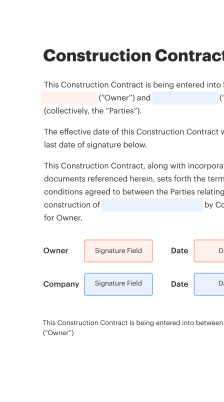
How to create and conduct a Minnesota notary public transaction online

This flow explains key actions from document preparation to completed notarization using an eSignature platform configured for notarial controls.

  • Document Assembly: Build or upload document and place notary block.
  • Signer Invitations: Send secure signing links to parties.
  • Identity Checks: Apply ID verification or in-person methods.
  • Finalize Notary: Notary completes certificate and saves record.
Collect signatures
24x
faster
Reduce costs by
$30
per document
Save up to
40h
per employee / month

Quick setup steps for a Minnesota notary public digital workflow

A concise sequence to prepare a document for notarization and capture the act within a compliant digital workflow.

  • 01
    Prepare Document: Upload and designate signer and notarization fields.
  • 02
    Verify Identity: Select appropriate ID and verification method.
  • 03
    Notary Signing: Notary witnesses and completes certificate digitally.
  • 04
    Store Record: Save tamper-evident copy and audit log.

Audit trail management steps for Minnesota notary public transactions

Follow these steps to assemble, preserve, and review notarization records for reliable evidence in audits or disputes.

01

Collect Evidence:

Capture ID and verification artifacts.
02

Timestamp Actions:

Record each event with time and IP.
03

Attach Notary Certificate:

Embed the completed notarial wording.
04

Create Tamper Seal:

Apply digital seal for integrity.
05

Archive Securely:

Store in encrypted, access-controlled repository.
06

Review Periodically:

Audit logs and retention compliance.
be ready to get more

Why choose airSlate SignNow

  • Free 7-day trial. Choose the plan you need and try it risk-free.
  • Honest pricing for full-featured plans. airSlate SignNow offers subscription plans with no overages or hidden fees at renewal.
  • Enterprise-grade security. airSlate SignNow helps you comply with global security standards.
illustrations signature

Recommended workflow settings for Minnesota notary public processes

Suggested initial configuration options to balance usability, compliance, and recordkeeping for frequent notarization activities.

Setting Name Configuration
Default reminder frequency for signers 48 hours, two reminders
Identity verification level for notarization Government ID and KBA
Document retention and archival period 7 years encrypted storage
API callback and webhook configuration Immediate delivery to backend
Notary routing and signature order settings Sequential notary-first routing

Device and platform requirements for Minnesota notary public digital workflows

Ensure devices and browsers meet security and compatibility needs before conducting notarizations to avoid interruptions and maintain evidence integrity.

  • Modern desktop browsers: Chrome, Edge, Safari, Firefox
  • Mobile and tablet support: iOS and Android apps available
  • Video notarization needs: Camera, microphone, stable internet

Maintain updated software, enable camera and microphone permissions for remote notarization, and use secure network connections; these precautions protect identity verification steps and preserve reliable audit trails for notarized transactions.

Security controls relevant to Minnesota notary public transactions

Encryption: AES-256 encryption at rest and TLS in transit
Access Controls: Role-based permissions and multi-factor options
Audit Logs: Comprehensive event timestamps and IP records
Tamper Evidence: Document seals that show alteration
Identity Verification: ID checks and knowledge-based methods
Data Retention: Configurable retention and secure backups

Representative use cases for Minnesota notary public digital workflows

Real-world scenarios illustrate how digital notarization supports different industries while aligning with Minnesota requirements.

Real Estate Closing

A title company coordinates multi-signer closings using an electronic package with embedded notarial blocks

  • Uses identity verification and sequential signing controls
  • Reduces in-person logistics and speeds closing timelines

Resulting in faster, auditable closings and clearer chain-of-custody for recorded documents.

Loan Document Execution

A mortgage lender issues loan documents to remote borrowers via a secure signing flow

  • Integrates ID proofing and a witnessed notarial certificate
  • Ensures lender compliance and consistent execution across jurisdictions

Leading to fewer errors, reduced courier costs, and a complete, time-stamped audit trail for underwriting.

Best practices for secure and compliant Minnesota notary public processes

Follow consistent procedures and controls to reduce risk, maintain evidence, and align with state notary rules when moving notarizations into digital workflows.

Verify signer identity with appropriate evidence
Use government-issued ID checks or approved remote identity proofing where allowed. Record the method, timestamp, and any verification artifacts in the audit trail to support the notarial act if challenged or audited.
Keep an immutable audit trail for every notarization
Ensure all events—uploads, identity checks, signer actions, and notary attestation—are logged with timestamps, IP addresses, and user IDs. This provides forensic evidence and preserves chain-of-custody for legal defensibility.
Use standardized notary certificates and local wording
Apply Minnesota-compliant notarial wording and certificate formats. Avoid generic templates; ensure the wording, venue statement, and notary signature block meet state statutory requirements and recording expectations.
Define retention and access controls clearly
Establish retention schedules and role-based access for notarized records, balancing evidentiary needs with privacy. Implement encrypted storage, periodic backups, and documented procedures for long-term retrieval.

Frequently asked questions about Minnesota notary public and digital notarization

Practical answers to common operational and compliance questions when using electronic notarization solutions for Minnesota documents.

Digital vs. paper signing: feature comparison across leading vendors

A concise feature comparison showing how three established eSignature providers align with typical notarization and integration needs.

Criteria signNow (Recommended) DocuSign Adobe Sign
Mobile apps
API access
Audit trail included
CRM integrations Salesforce integrations available Salesforce, Microsoft Salesforce, Microsoft
be ready to get more

Get legally-binding signatures now!

Regulatory and legal risks to consider

Improper identification: Unchecked identity can invalidate notarization
Jurisdiction errors: Act performed outside authority
Recordkeeping lapses: Missing logs hamper dispute defense
Document tampering: Alters evidentiary value
Privacy violations: Exposes regulated data
Unauthorized practice: Non-notary acts risk penalties

Understanding the Role of a Minnesota Notary Public

A Minnesota notary public plays a crucial role in the verification of documents and the prevention of fraud. They are authorized to witness the signing of important documents, administer oaths, and affirmations, and provide certified copies of certain documents. This ensures that the parties involved in a transaction are who they claim to be, adding a layer of security to the signing process.

In Minnesota, notaries are required to maintain a journal of their notarial acts, which helps in tracking and verifying the authenticity of the documents they notarize. This record-keeping is essential for legal purposes and can protect both the notary and the signers in case of disputes.

How to Prepare Documents for Notarization in Minnesota

Before seeking notarization, ensure that your documents are complete and ready for signing. This includes checking for any missing signatures or required information. When preparing documents for a Minnesota notary public, consider the following steps:

  • Gather all necessary documents that require notarization.
  • Ensure that all parties involved are present and have valid identification.
  • Do not sign the document until you are in the presence of the notary.

By following these steps, you can streamline the notarization process and ensure that your documents are properly executed.

Finding a Notary Public in Minnesota

Finding a Minnesota notary public can be straightforward. Notaries can be located in various settings, including banks, law offices, and private practices. Additionally, many notaries offer mobile services, allowing them to meet clients at convenient locations. To find a notary:

  • Check local directories or online listings for notaries in your area.
  • Ask for recommendations from friends or colleagues who have previously used notary services.
  • Contact local government offices, as they often maintain a list of licensed notaries.

Ensuring that the notary is properly licensed and familiar with Minnesota laws will help facilitate a smooth notarization experience.

The Importance of Electronic Notarization in Minnesota

In recent years, electronic notarization has gained traction in Minnesota, offering a modern solution for notarizing documents. This process allows documents to be signed and notarized digitally, enhancing convenience and efficiency. Electronic notarization is particularly beneficial for:

  • Individuals who need to complete transactions remotely.
  • Businesses seeking to expedite document workflows.
  • Those who require a secure and efficient method for handling sensitive documents.

By utilizing electronic notarization, users can save time and reduce the need for physical meetings, making it an ideal choice in today’s fast-paced environment.

Common Documents That Require Notarization in Minnesota

In Minnesota, various documents typically require notarization to ensure their authenticity. Some common examples include:

  • Wills and trusts
  • Power of attorney documents
  • Real estate transactions and deeds
  • Affidavits and sworn statements

Understanding which documents require notarization can help individuals and businesses prepare effectively and ensure compliance with legal requirements.

Steps to Complete the Notarization Process

Completing the notarization process in Minnesota involves several key steps. Here’s a straightforward guide to follow:

  • Identify the document that needs notarization.
  • Ensure all signers are present and have valid identification.
  • Sign the document in front of the notary.
  • The notary will complete the notarial certificate and affix their seal.

Following these steps ensures that the notarization is conducted properly, making the document legally binding and recognized in Minnesota.


walmart logo
exonMobil logo
apple logo
comcast logo
facebook logo
FedEx logo
be ready to get more

Get legally-binding signatures now!