Organize Documents Groups with SignNow

Keep your documents organized by arranging them into groups. Send a document group for signing, create signing steps across different documents and set editing permissions.

Award-winning eSignature solution

What organizing document groups means for teams

Organize documents groups refers to structuring related files into named collections that simplify distribution, signing, and storage within an eSignature workflow. Proper grouping reduces repetitive setup, clarifies ownership and access, and enables bulk actions such as sending templates or assigning signers. In regulated U.S. contexts, group-level controls support auditability and retention policies while helping meet ESIGN and UETA requirements. Implemented alongside role-based permissions and consistent naming conventions, grouped documents improve traceability across teams, speed up transaction cycles, and reduce manual errors during contract preparation and signature collection.

Why grouping documents improves operational consistency

Organizing documents into groups standardizes handling and reduces administrative overhead by enabling bulk actions, consistent permissions, and repeatable workflows that save time and improve traceability.

Why grouping documents improves operational consistency

Common obstacles when you don't group documents

  • Difficulty locating related files across folders increases time spent searching and risks using outdated versions.
  • Manual recipient assignment for each document creates repetitive work and increases signing delays.
  • Inconsistent naming and metadata make automated routing and reporting unreliable for compliance needs.
  • Fragmented permissions raise the chance of unauthorized access or incorrect signer visibility during transactions.

Representative user types and responsibilities

HR Manager

An HR Manager configures group templates for onboarding and benefits enrollment, assigns role-based access for recruiters, and monitors completion status to ensure timely compliance with company policies and legal requirements.

Sales Ops

A Sales Operations specialist organizes proposal collections, sets up Bulk Send for mass distribution, and maintains a shared template library so account executives can quickly prepare consistent, pre-approved documents for prospects.

Teams and roles that benefit from organizing document groups

Legal, HR, sales, and operations teams commonly use grouped documents to standardize agreements and approvals across recurring processes.

  • Legal teams managing contract versions and clause libraries for reuse across deals.
  • HR departments handling onboarding packets, policy acknowledgements, and consent forms.
  • Sales operations preparing proposal bundles, pricing schedules, and recurring client contracts.

Grouping also supports IT and compliance teams by simplifying auditing, retention scheduling, and centralized permission management across the organization.

Advanced capabilities to enhance group organization

Beyond core features, these capabilities help scale grouped-document workflows for larger teams and complex processes.

Automated Tagging

Auto-apply metadata tags to grouped documents based on naming conventions or field contents to enable faster search, filtering, and lifecycle management across repositories.

Conditional Fields

Use conditional logic within grouped templates so only relevant fields appear to specific signer roles, minimizing errors and improving the signer experience for complex forms.

Shared Folder Controls

Shared folder controls enforce consistent structure and permissions across document groups, allowing teams to maintain organization standards and centralized access management.

Audit Trail

Comprehensive audit logs at the group level record actions across all documents, including field edits, signature events, and access attempts for compliance and dispute resolution.

API Automation

APIs enable automated creation and population of document groups from external systems, supporting integration with CRM or HR platforms for seamless end-to-end processes.

Bulk Archival

Bulk archival and retention controls allow administrators to apply consistent retention policies and export grouped documents for long-term storage or legal hold when required.

be ready to get more

Choose a better solution

Core features that support organizing document groups

These practical features are fundamental for creating reliable grouped-document workflows that are repeatable and auditable across teams.

Shared Libraries

Centralized libraries let teams store grouped templates, reusable clauses, and common attachments so users can quickly assemble bundles with consistent content and formatting across transactions.

Bulk Send

Bulk Send enables distribution of the same grouped package to multiple recipients, reducing manual sends while preserving individualized paths and ensuring consistent field placement for each signer.

Role-Based Access

Granular permissions control who can view, edit, or send groups, allowing administrators to restrict sensitive documents and maintain separation between preparers, approvers, and signers.

Template Versioning

Version controls applied to grouped templates maintain a history of changes, making it easier to audit updates and revert to previous versions when regulatory or contractual adjustments are required.

How grouped document workflows operate

Organized groups streamline the lifecycle from template creation through distribution, signature, and archival by centralizing related assets and controls.

  • Assemble: Collect related documents into one group
  • Configure: Set fields, signers, and conditional logic
  • Distribute: Send group via bulk or individual workflows
  • Archive: Apply retention and export rules
Collect signatures
24x
faster
Reduce costs by
$30
per document
Save up to
40h
per employee / month

Quick steps to organize documents groups

Follow these concise steps to create, configure, and use document groups for efficient signing workflows.

  • 01
    Define scope: Identify which documents belong together
  • 02
    Create group: Establish a named folder or library
  • 03
    Assign access: Set roles and permissions
  • 04
    Use templates: Apply standardized templates for consistency
be ready to get more

Why choose airSlate SignNow

  • Free 7-day trial. Choose the plan you need and try it risk-free.
  • Honest pricing for full-featured plans. airSlate SignNow offers subscription plans with no overages or hidden fees at renewal.
  • Enterprise-grade security. airSlate SignNow helps you comply with global security standards.
illustrations signature

Configuration settings for grouped-document workflows

Recommended settings help standardize how document groups are named, accessed, and processed to support consistent operations and compliance.

Feature Configuration
Folder Structure Department/Year
Naming Convention Client_Name_Type
Access Level Role-based
Auto-Tagging Rules Enabled by metadata
Retention Period 7 years

Platform compatibility and device requirements

Ensure devices and browsers meet minimum requirements for a reliable experience when you organize documents groups across web and mobile clients.

  • Supported browsers: Chrome, Edge, Safari
  • Mobile platforms: iOS and Android
  • Minimum connection: Broadband or stable mobile data

For enterprise deployments, confirm single sign-on, API rate limits, and secure storage configurations before rolling out grouped-document workflows; baseline checks reduce integration friction and support consistent user access.

Security and authentication elements for grouped documents

Access Controls: Role-based permissions
Encryption: In-transit and at-rest
User Authentication: Multi-factor options
Audit Logs: Detailed transaction records
Document Integrity: Tamper-evident seals
Session Management: Timeout and revocation

Industry use cases for organizing document groups

Grouped documents streamline frequently repeated processes across verticals by bundling related forms, permissions, and templates for consistent execution.

Healthcare Onboarding

A clinic groups intake forms, consent documents, and privacy notices into a single onboarding package to reduce patient confusion and speed processing

  • Pre-built fields and conditional sections reduce manual entry
  • Ensures consistent collection of signatures and HIPAA-related acknowledgements

Leading to faster intake completion and auditable records for compliance.

Sales Proposal Bundles

A sales team compiles proposals, pricing schedules, and service agreements into a single group ready for approval and signature

  • Use of templates keeps commercial terms standardized across deals
  • This reduces negotiation time and administrative errors

Resulting in faster contract turnaround and clearer version control.

Practical best practices for organizing document groups

Follow these recommended practices to maintain consistency, security, and efficiency when you organize documents groups for signing workflows.

Adopt consistent naming conventions
Use clear, structured names that include department, client, and date to make groups immediately identifiable. Consistent names improve searchability, reduce duplicates, and support automated retention and reporting processes across large repositories.
Limit edit permissions to owners
Restrict template editing to a small group of administrators to maintain version control and reduce inadvertent changes. Use role-based access so preparers can assemble groups without altering core templates or legal clauses.
Standardize templates and fields
Maintain a library of approved templates with predefined fields and conditional logic to ensure consistent data capture. Standardization minimizes signer confusion and reduces manual corrections during post-signature processing.
Document retention and archival plans
Define retention schedules for each group type, align them with legal and regulatory requirements, and automate archival to secure storage. Regularly review retention settings to reflect changes in compliance obligations.

FAQs: Troubleshooting common issues with grouped documents

Answers to frequent questions about creating, sending, and maintaining document groups, focused on practical resolution steps and configuration checks.

Feature availability across leading eSignature platforms

A concise comparison of selected capabilities that matter when you organize documents groups across eSignature providers, with signNow listed first as a Featured option.

Criteria signNow (Featured) DocuSign Adobe Sign
Group folders
Bulk Send
HIPAA compliance option Available Available Available
API access REST API REST API REST API
be ready to get more

Get legally-binding signatures now!

Compliance risks from poor document grouping

Unauthorized access: Regulatory fines
Retention lapses: Legal exposure
Incomplete audit trails: Evidence gaps
Data breaches: Notification costs
Misapplied templates: Contract disputes
Incorrect signers: Invalid transactions

Comparing plans and entry-level offerings

High-level plan names and typical positioning to help evaluate cost tiers when grouping documents; signNow is shown first and marked as Featured in this comparison.

Plan signNow (Featured) DocuSign Adobe Sign PandaDoc HelloSign
Entry plan signNow Business DocuSign Personal Adobe Acrobat Standard PandaDoc Essentials HelloSign Starter
Mid-tier plan signNow Business Premium DocuSign Standard Adobe Acrobat Pro PandaDoc Business HelloSign Business
Enterprise plan signNow Enterprise DocuSign Business Pro Adobe Sign Enterprise PandaDoc Enterprise HelloSign Enterprise
Bulk send included Yes Add-on Add-on Yes Add-on
API access Available Available Available Available Available

How to create Document Groups in airSlate SignNow

The airSlate SignNow Document Groups feature has been developed for those business cases when a sender has several documents that need to be delivered and eSigned in one batch. Document Groups allow the sender to minimize the amount of time required to prepare and deliver the documents in a group.

User-friendly interface

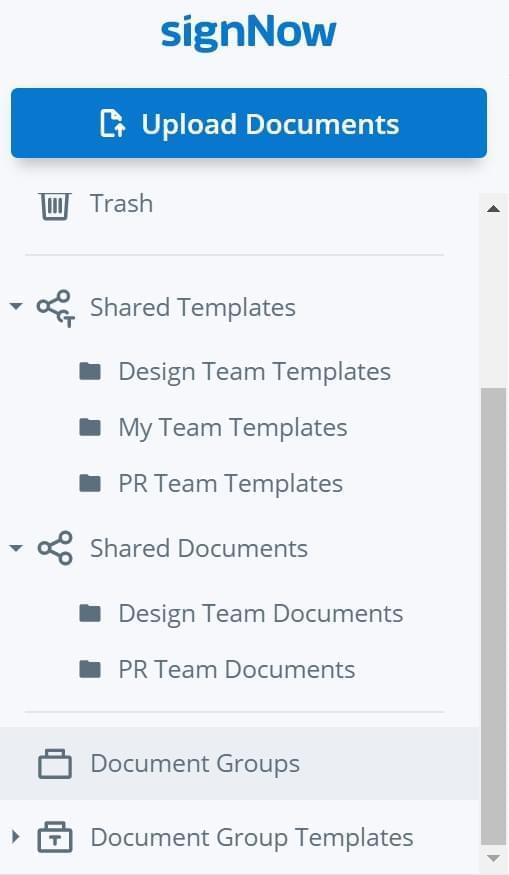
The Document Groups folder is located in the left-hand menu of your airSlate SignNow account, right under the shared team folders.
fill-guide-illustration

Ease of operations

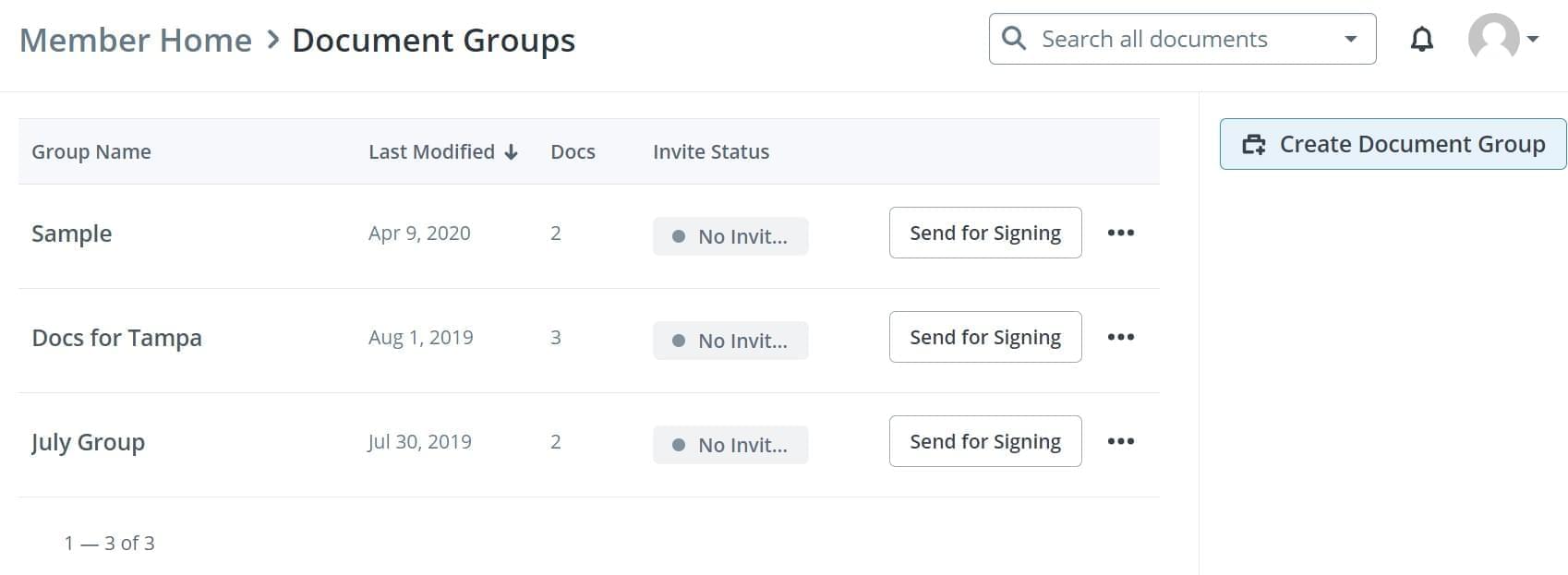
Inside the Document Groups folder, you will see the list of existing groups (if any). Click Create Document Group to set up a new one.
fill-guide-illustration

Quick to set up

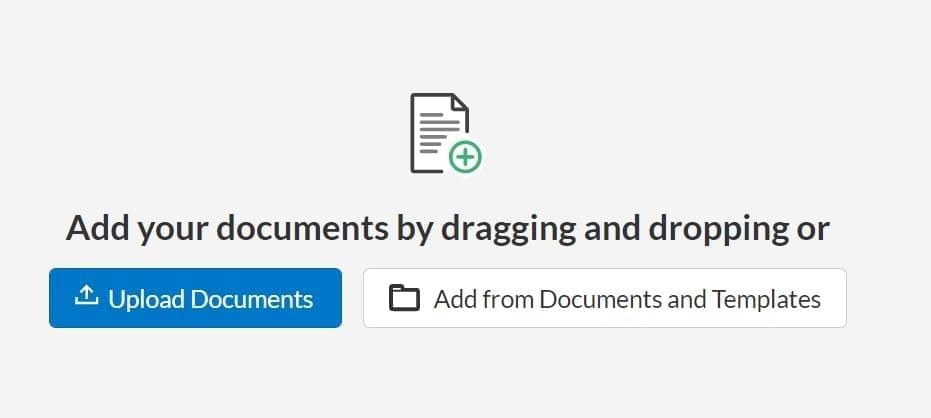
To form a new Document Group, you can use either the documents/templates you already have in your airSlate SignNow account or you can upload new ones from your computer.
fill-guide-illustration

Intuitive design

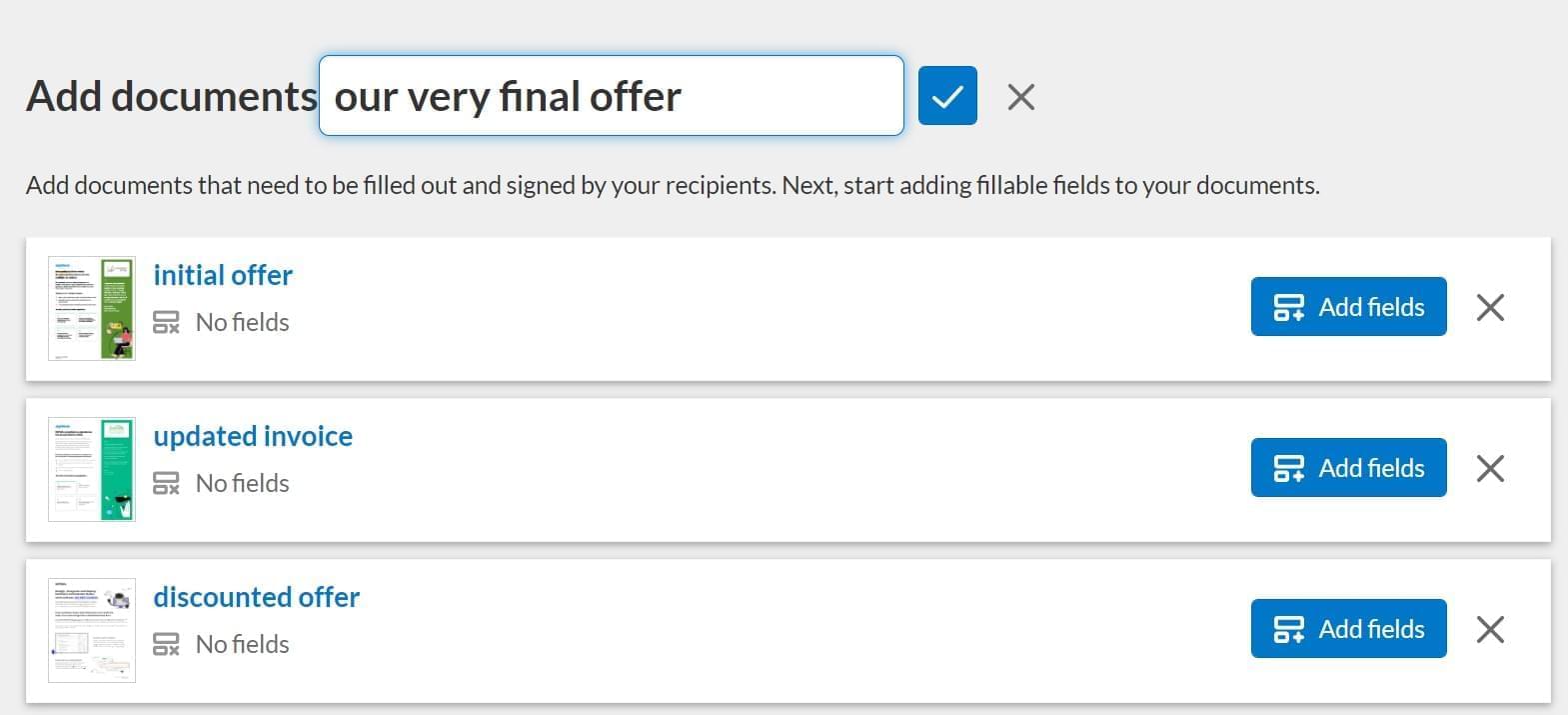
Once the documents are uploaded, you can name the newly created Document Group. Click on the blue checkmark icon, once your name is ready. If you’ve just uploaded your documents and they do not contain fillable fields yet, add fields using the airSlate SignNow editor with its drag & drop tool.
fill-guide-illustration

Everything on one page

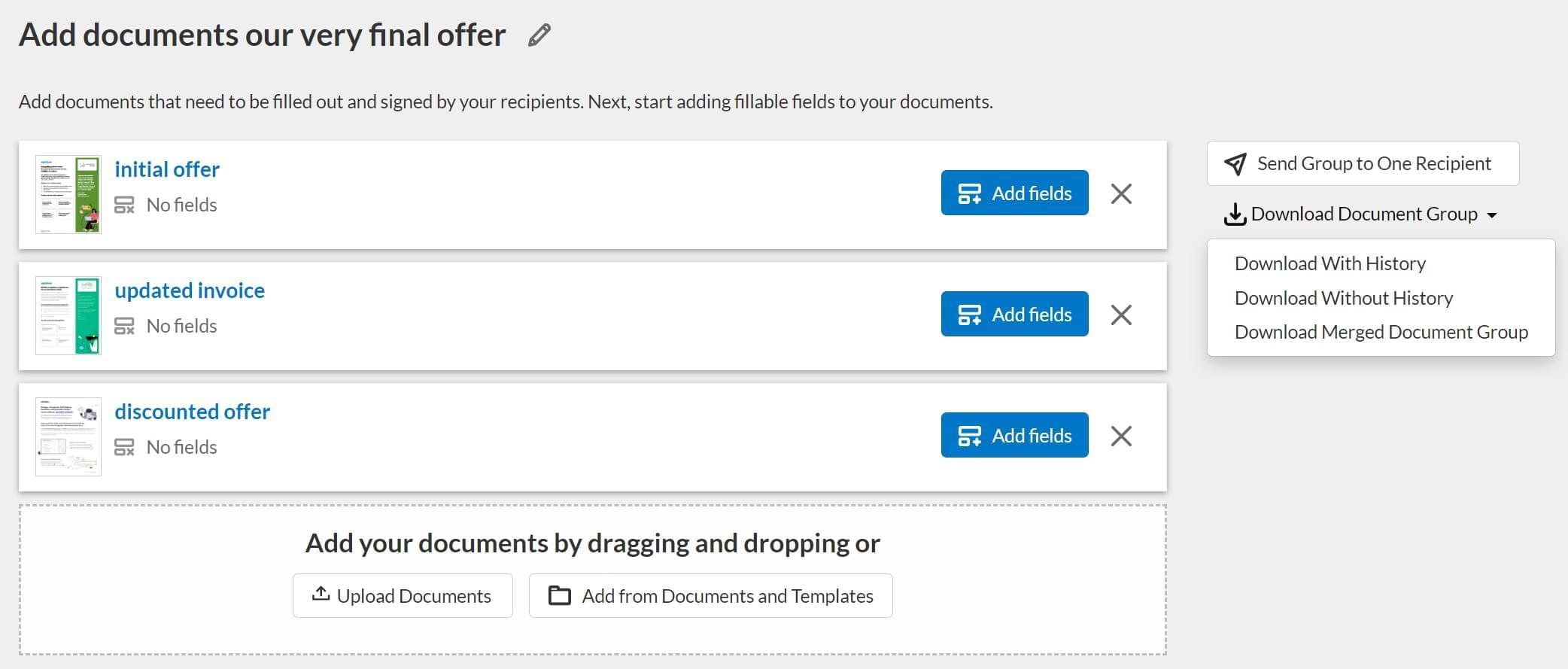
The process of managing Document Groups in airSlate SignNow is very flexible. You can rename a group any time you need (click on the small pencil icon near the name). You can add more documents from other airSlate SignNow folders or from your device. You can download the Document Group — as separate files or as one merged file, with or without the audit log. Finally, you can send the Document Group to your recipient(s).

fill-guide-illustration
walmart logo
exonMobil logo
apple logo
comcast logo
facebook logo
FedEx logo
be ready to get more

Get legally-binding signatures now!









