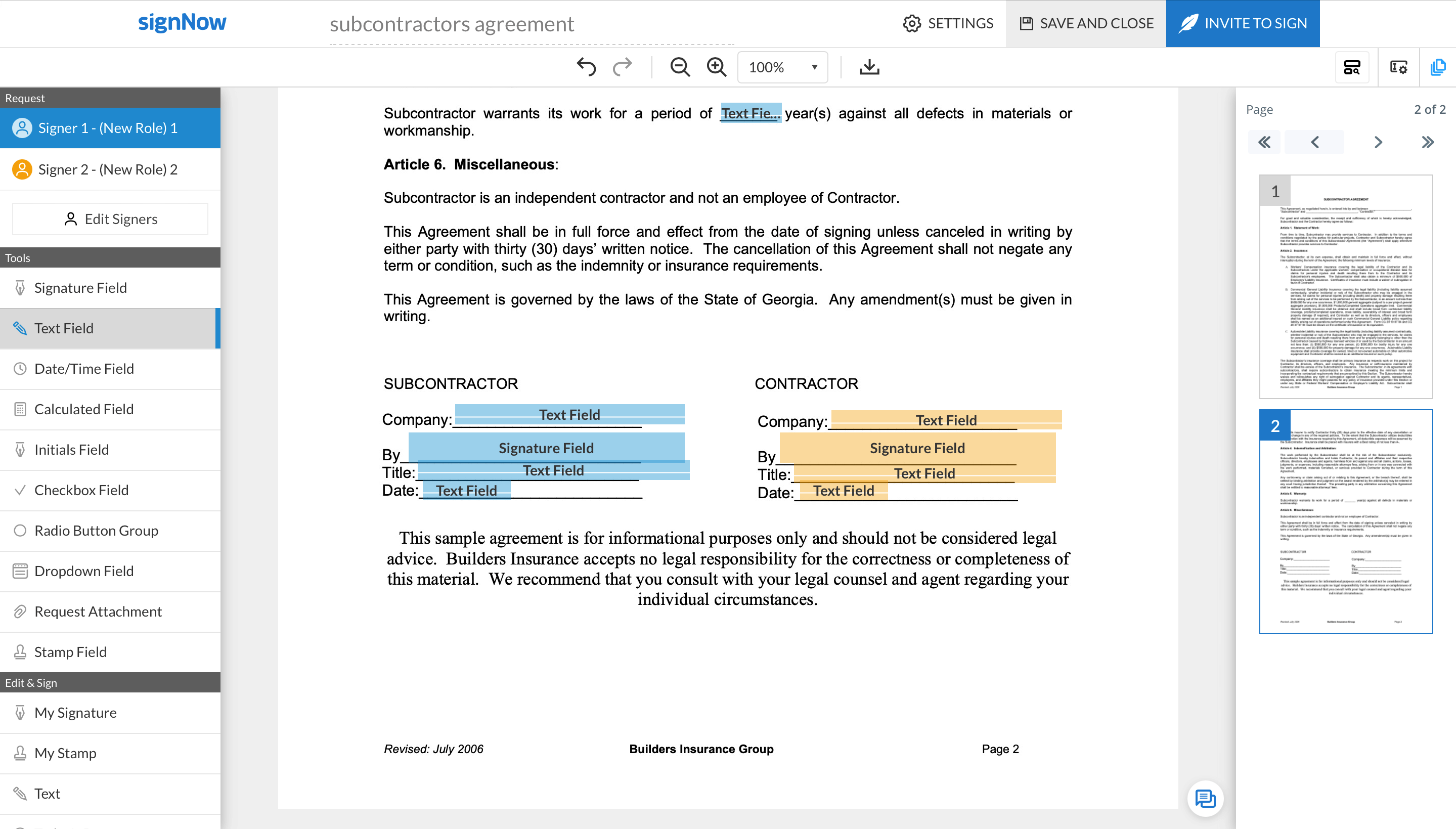
Field Mapping
Map source columns to document fields with auto-match and manual override to ensure each row populates the correct placeholders reliably in generated documents.




Importing structured data into a new document cuts repetitive tasks, decreases signature cycle time, and improves accuracy by removing manual transcription. It streamlines batch document creation while preserving auditability and integrates with templates to ensure consistency across records.

An HR Manager uses data import to generate standardized offer letters, onboarding forms, and benefit enrollment packets from applicant tracking exports, reducing manual edits and ensuring consistent field placement across employee documents.
An IT Administrator configures templates and field mappings centrally, sets authentication and access controls, and manages API keys so automated imports can run securely and reliably for multiple business units.
Teams that process recurring forms or batch agreements gain the largest efficiency improvements from automated imports.
Using imports reduces time spent on repetitive entry and allows teams to focus on review and approval rather than manual assembly.
Map source columns to document fields with auto-match and manual override to ensure each row populates the correct placeholders reliably in generated documents.
Support for common spreadsheet formats ensures compatibility with exports from payroll, CRM, and ERP systems and reduces the need for data reformatting.
Show, hide, or alter fields based on data values so templates adapt to each record without requiring separate template versions for minor variations.
Generate multiple documents from a single import operation to scale processes such as mass offers, invoices, or vendor agreements with consistent settings.
Combine imports with Bulk Send workflows to distribute individualized documents to many recipients while tracking each transaction separately for auditing.
Programmatically trigger imports and document generation through APIs to integrate document creation into backend systems and scheduled workflows.
Direct integration with Google Sheets lets you import rows from a spreadsheet, auto-map headers to template fields, and trigger document generation without manual downloads or reformatting.
Connectors for major CRMs pull contact and account data into templates, reducing duplicate entry and keeping documents aligned with current customer records for accuracy and timeliness.
Dropbox and similar storage integration allow imports from stored CSV/XLSX files and support saving generated documents back to a folder for centralized retention and access control.
Templates with saved field mappings and conditional logic enable repeated imports with consistent formatting, making batch generation and signing predictable and auditable.

| Workflow Setting and Configuration Names | Default configuration applied to new imports |
|---|---|
| Field Mapping and Auto-Match Rules | Auto-match by header then manual override |
| Duplicate Row Handling and Validation | Skip duplicates or flag for review |
| Signer Authentication and Verification | Email plus optional SMS or ID check |
| Notification and Reminder Frequency | Daily reminders until signature or 7 days |
| Document Storage and Retention Policy | Automatic save to archive folder with retention tags |
Import workflows are accessible from modern desktop browsers and mobile apps, though complex mapping and bulk operations are best performed on a desktop.
For large CSV/XLSX files and multi-step mapping, using a desktop environment minimizes errors; mobile workflows support quick review, signing, and small imports when needed.
A staffing firm generates offer packages from applicant CSV exports using mapped templates
Resulting in faster candidate acceptance and consistent recordkeeping across hires
A mid-market finance team imports invoice line items from ERP exports into invoice templates
Leading to quicker invoice dispatch and more reliable payment tracking
| Feature Criteria and Vendor Comparison | signNow (Featured) | DocuSign | Adobe Sign |
|---|---|---|---|
| Bulk Send Support | |||
| API Availability | REST API | REST API | REST API |
| HIPAA Compliance | Optional | ||
| CSV/XLSX Import | CSV and XLSX | CSV only | CSV and XLSX |
30 to 90 days for operational review
3 to 7 years depending on record type
Follow industry-specific mandates for records
Encrypted archival with access logs
Scheduled purge after retention period
| Pricing and Feature Matrix | signNow (Recommended) | DocuSign | Adobe Sign | HelloSign | PandaDoc |
|---|---|---|---|---|---|
| Starting Monthly Price | From $8 per user per month | From $10 per user per month | From $9 per user per month | From $13 per user per month | From $19 per user per month |
| Bulk Send Limits | Up to 1,000 sends monthly on select plans | 100 sends monthly on entry plans | 500 sends monthly on most plans | 100 sends monthly | 200 sends monthly |
| API Access | Included in paid plans, with REST API access | Available on elevated plans with API keys | Included with enterprise API access | Included in business plans | Available via paid integration |
| HIPAA Support | Available with business agreements and BAAs | Available with specific plans and agreements | Available as enterprise option with agreements | Not broadly advertised | Optional via add-on |
| Free Trial Availability | 14-day trial available for evaluation | 30-day trial or developer accounts | 30-day trial commonly available | 30-day trial available | 14-day trial offered |
If you have already created a fillable document with multiple pre-configured fields, you can easily transfer those fields to a new or similar document using the Import Fields feature.
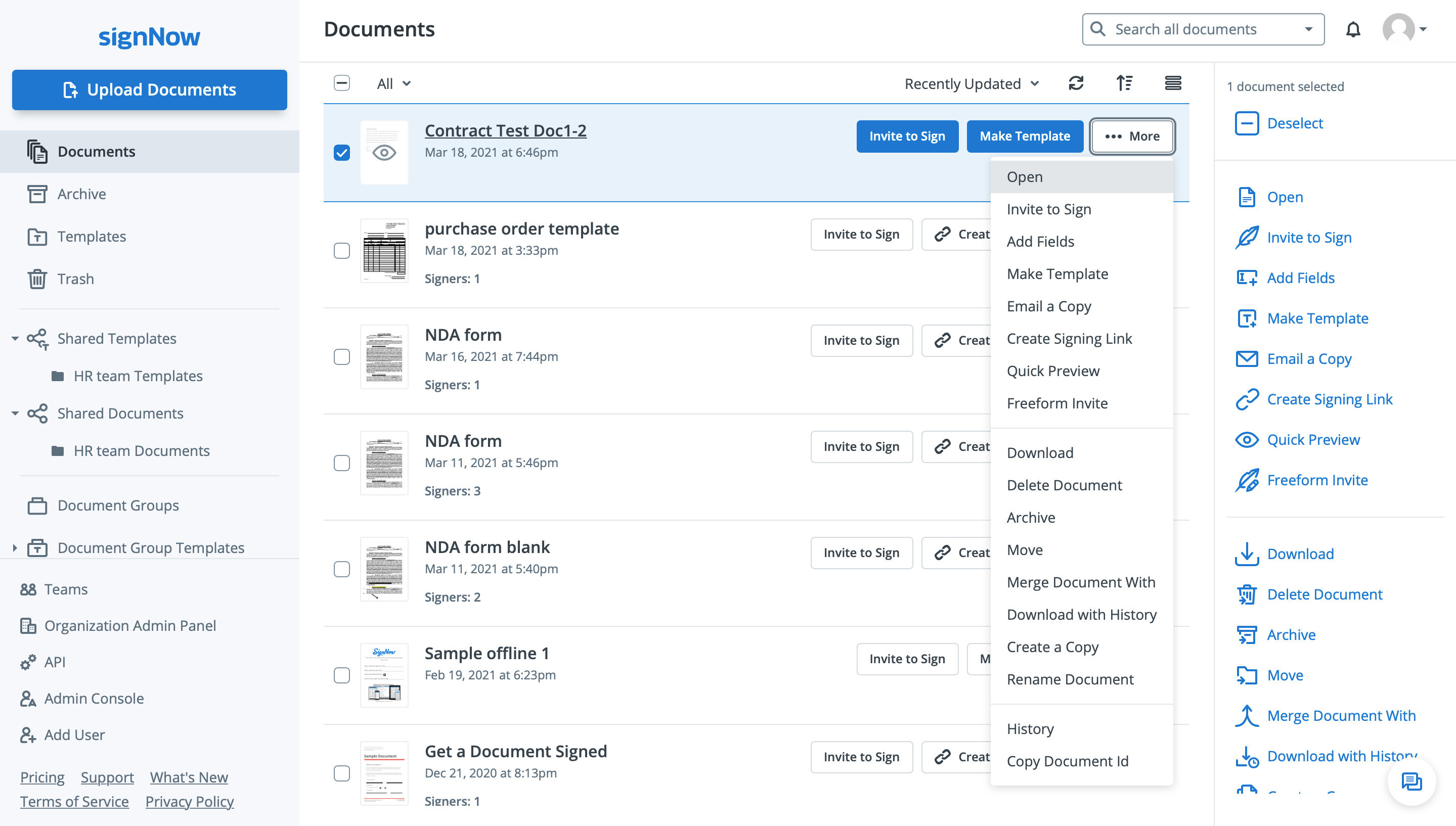
In the airSlate SignNow web app, click the Upload Documents button and browse your device for the document you need to be signed. Then, open it in the editor by clicking More > Open.
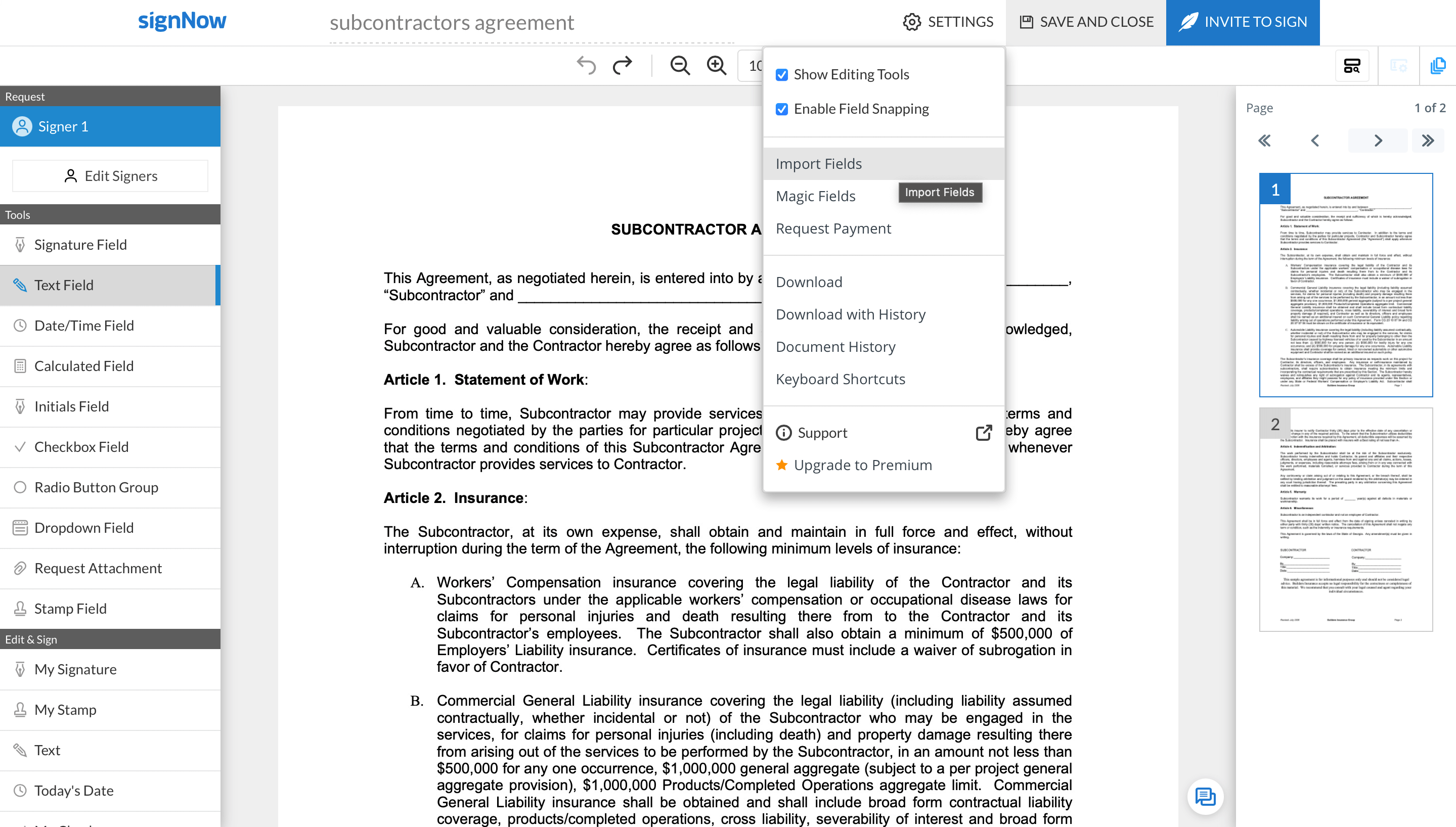
Click on the Settings button at the top of the screen. Then, select Import Fields from the dropdown.
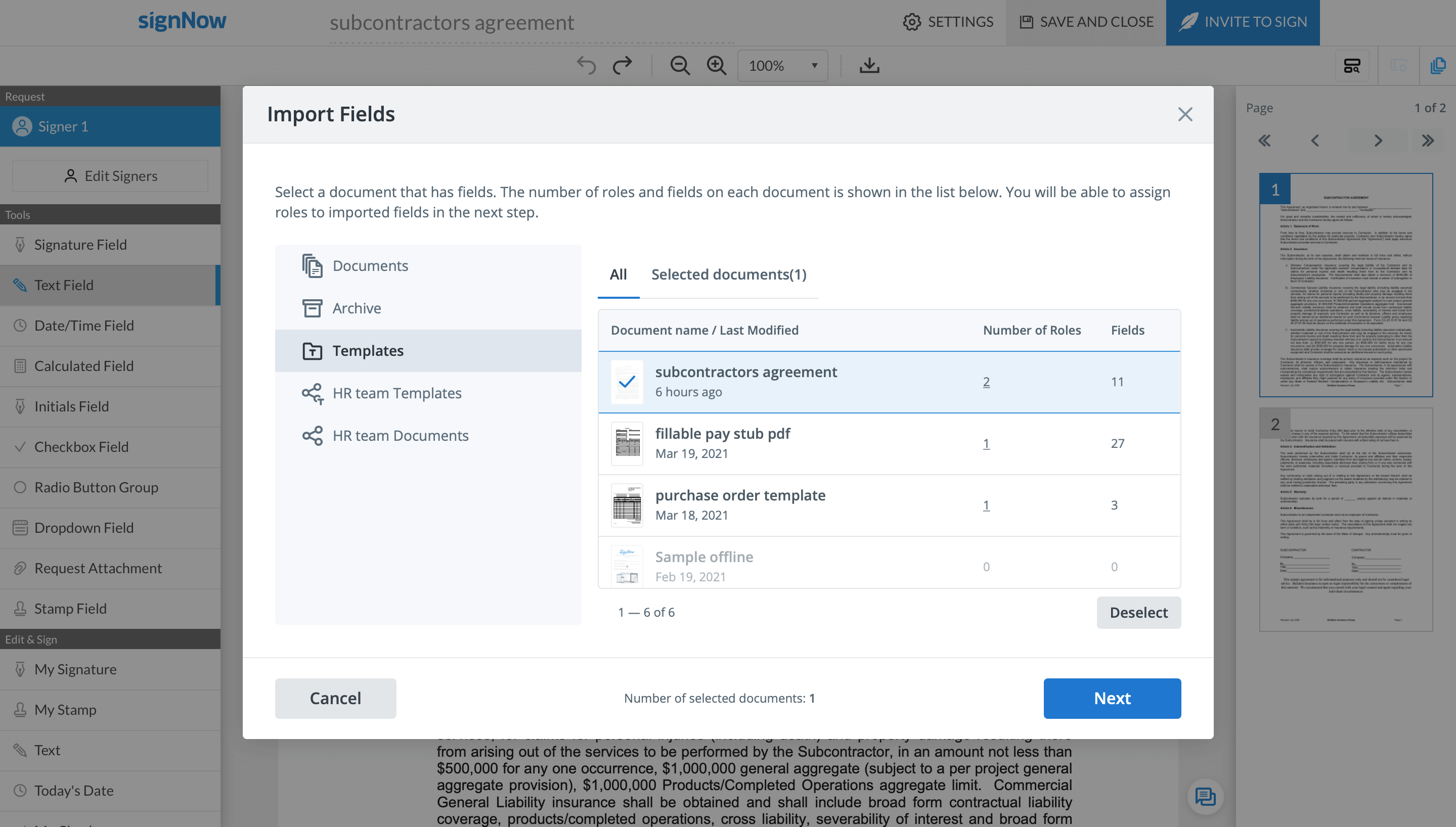
Select an identical or similar document with fillable fields in any of your airSlate SignNow folders. You can view the number of fillable fields and signing roles for each of your documents. Click Next to proceed.
Assign or edit signing roles according to your needs and then click the Import field(s) button.
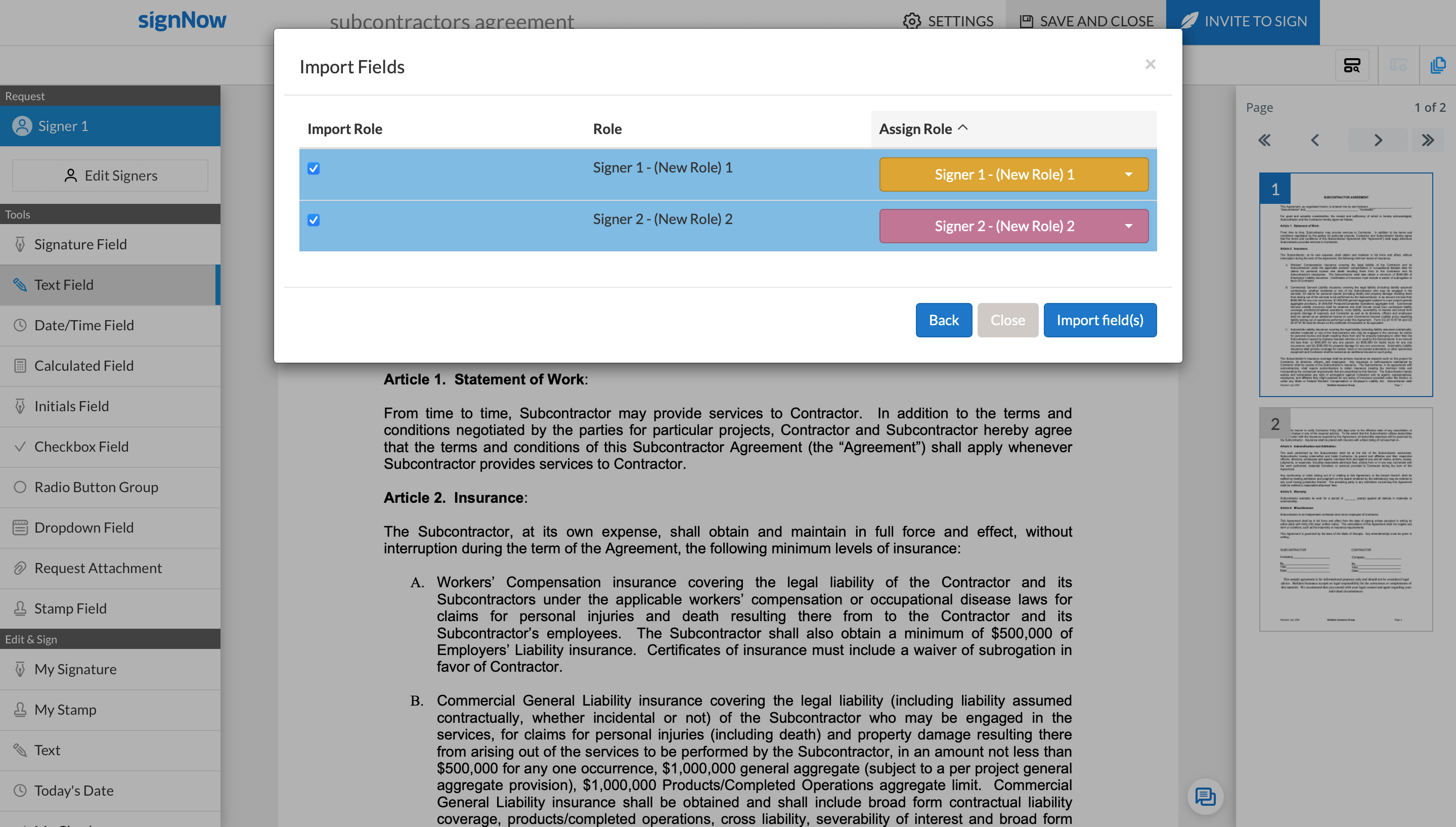
The fillable fields will be instantly transferred from one document to another along with their settings. You can then adjust the size and position of the imported fields or change their settings.