Gestion Des Leads Conformes SOC Avec SignNow
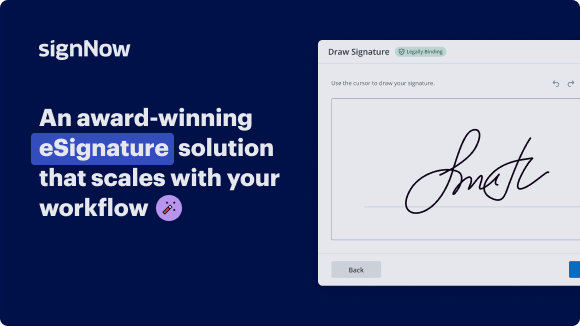
Solution eSignature primée




Faites avancer votre entreprise avec la solution de signature électronique airSlate SignNow
Ajoutez votre signature juridiquement contraignante
Intégrez via l'API
Envoyez des documents conditionnels
Partagez des documents via un lien d'invitation
Gagnez du temps avec des modèles réutilisables
Améliorez la collaboration d'équipe
Découvrez les signatures électroniques airSlate SignNow en action


Solutions airSlate SignNow pour une meilleure efficacité
Les avis de nos utilisateurs parlent d'eux-mêmes










Pourquoi choisir airSlate SignNow
-
Essai gratuit de 7 jours. Choisissez le forfait dont vous avez besoin et essayez-le sans risque.
-
Tarification honnête pour des forfaits complets. airSlate SignNow propose des abonnements sans frais supplémentaires ni frais cachés lors du renouvellement.
-
Sécurité de niveau entreprise. airSlate SignNow vous aide à respecter les normes de sécurité mondiales.

Comment utiliser la gestion de la relation client conforme à la CCPA par airSlate SignNow
Gérer les données et documents des clients peut être fluide et efficace. Avec la gestion de la relation client conforme à la CCPA d'airSlate SignNow, vous pouvez trouver toutes les informations de contact de vos signataires en un seul endroit, et accéder instantanément aux fichiers partagés. Gérez vos flux de travail de signature électronique avec une rapidité et des performances exceptionnelles.
Suivez les étapes ci-dessous pour commencer à travailler avec la gestion de la relation client conforme à la CCPA :
- Connectez-vous à votre compte airSlate SignNow.
- Cliquez sur Contacts dans le menu de navigation à gauche pour ouvrir le CRM.
- Appuyez sur le bouton ‘Ajouter un contact’ pour ajouter des contacts manuellement.
- Entrez les données personnelles de votre client (nom, email, numéro de téléphone, etc.).
- Ajustez les détails du contact à tout moment.
- Consultez tous les documents que vous avez envoyés pour signature ou reçus de vos clients.
Le tri des formulaires par contacts simplifie considérablement la livraison de documents pour signature, le suivi des signatures électroniques, la réponse aux demandes de signature d'autres personnes, et la gestion du workflow des documents. Vous maintiendrez une base de données clients structurée et trouverez rapidement les enregistrements que vous échangez avec eux en utilisant airSlate SignNow.
Comment ça marche
Fonctionnalités airSlate SignNow appréciées par les utilisateurs





Obtenez des signatures juridiquement contraignantes dès maintenant !
FAQ
-
Qu'est-ce que la gestion de la relation client conforme à la CCPA ?
La gestion de la relation client conforme à la CCPA fait référence aux systèmes CRM qui respectent les réglementations de la California Consumer Privacy Act. Cette conformité garantit que les données des clients sont traitées avec soin et transparence, permettant aux utilisateurs de gérer, protéger et exploiter leurs données tout en restant légalement conformes. -
Comment airSlate SignNow garantit-il la conformité à la CCPA ?
airSlate SignNow intègre des mesures et pratiques de protection des données solides pour assurer la conformité à la CCPA dans ses fonctionnalités de gestion de la relation client. Cela inclut la facilitation de la transparence sur la façon dont les données des clients sont collectées, utilisées et stockées, offrant aux entreprises une tranquillité d'esprit lors de la gestion d'informations sensibles. -
Quelles sont les principales fonctionnalités de la solution CRM d'airSlate SignNow ?
La solution CRM d'airSlate SignNow offre des fonctionnalités telles que la signature électronique de documents, les flux de travail automatisés et le stockage sécurisé des données, le tout dans un cadre conforme à la CCPA. Ces fonctionnalités permettent aux entreprises de gérer efficacement les relations avec les clients tout en respectant les réglementations sur la confidentialité. -
AirSlate SignNow est-il le bon choix pour les petites entreprises recherchant un CRM conforme à la CCPA ?
Absolument ! airSlate SignNow fournit une solution de gestion de la relation client conforme à la CCPA, rentable et facile à utiliser, que les petites entreprises peuvent mettre en œuvre facilement. Elle offre des fonctionnalités essentielles sans la complexité ou les coûts élevés généralement associés aux grandes plateformes CRM. -
Quels sont les avantages d'utiliser un système de gestion de la relation client conforme à la CCPA ?
L'utilisation d'un système de gestion de la relation client conforme à la CCPA comme airSlate SignNow renforce la confiance des consommateurs et améliore la réputation de votre marque. Elle fournit également des outils robustes pour gérer les interactions avec les clients tout en assurant la conformité légale, minimisant ainsi le risque de violations coûteuses de la vie privée. -
Existe-t-il des intégrations disponibles avec le CRM conforme à la CCPA d'airSlate SignNow ?
Oui, la solution CRM conforme à la CCPA d'airSlate SignNow propose diverses intégrations avec des outils commerciaux populaires. Cette intégration transparente permet aux entreprises de rationaliser leurs flux de travail et d'améliorer leur efficacité tout en garantissant que la gestion des données clients est conforme aux réglementations de la CCPA. -
Quelles options de tarification airSlate SignNow propose-t-il pour ses solutions CRM ?
airSlate SignNow propose des plans tarifaires flexibles adaptés aux différents besoins des entreprises, rendant la gestion de la relation client conforme à la CCPA abordable pour tous. Que vous soyez une petite entreprise ou une grande entreprise, vous pouvez choisir un plan qui correspond à votre budget et offre les fonctionnalités dont vous avez besoin.
Ce que disent les utilisateurs actifs — ccpa compliant customer relationship management


Obtenez plus pour ccpa compliant customer relationship management
- Logiciel de Proposition Solaire Solo pour les Opérations
- Logiciel de Proposition Solaire Solo pour la Planification
- Logiciel de Proposition Solaire Solo pour l'Achat
- Logiciel de Proposition Solaire Solo pour l'Assurance Qualité
- Logiciel de Proposition RFP pour le Droit
- Logiciel de Proposition Solaire Solo pour Exportation
- Logiciel de Proposition Solaire Solo pour l'Expédition
- Logiciel de Proposition Solaire Solo pour Relations Publiques
Découvrez d'autres ccpa compliant customer relationship management
- Légitimité de la signature électronique pour les ...
- Assurer la légitimité de la signature électronique ...
- Améliorez la légitimité de la signature ...
- Maximisez la légitimité de la signature électronique ...
- Légitimité de la signature électronique pour les ...
- La légitimité des signatures électroniques pour la ...
- Légalité de la signature électronique pour le ...
- Légalité de la signature en ligne pour les ...
- Déverrouillez le pouvoir de la légalité de la ...
- Légalité de la signature en ligne pour les contrats ...
- Déverrouiller le pouvoir de la légalité de la ...
- Déverrouillez le pouvoir des signatures en ligne ...
- Déverrouillez la légalité de la signature en ligne ...
- Déverrouillez le pouvoir de la signature électronique ...
- Améliorez vos documents avec une signature manuscrite
- Déverrouillez la puissance de la signature ...
- Créez votre eSignature avec notre générateur de ...
- Découvrez le prix du certificat DSC qui convient à ...
- Découvrez les meilleurs fournisseurs de services de ...
- Ajouter une signature à un PDF sans Acrobat avec ...