Signature Numérique SignNow Contre Signature Numérique Salesforce
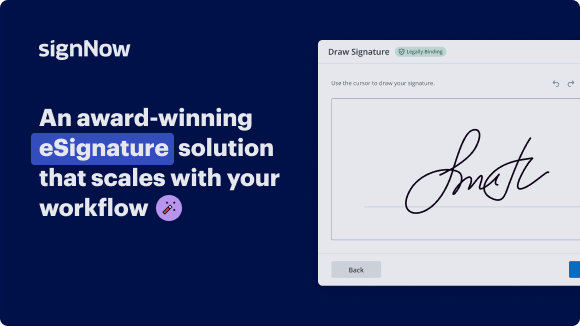
Solution eSignature primée




Faites avancer votre entreprise avec la solution de signature électronique airSlate SignNow
Ajoutez votre signature juridiquement contraignante
Intégrez via l'API
Envoyez des documents conditionnels
Partagez des documents via un lien d'invitation
Gagnez du temps avec des modèles réutilisables
Améliorez la collaboration d'équipe
Découvrez les signatures électroniques airSlate SignNow en action


Solutions airSlate SignNow pour une meilleure efficacité
Les avis de nos utilisateurs parlent d'eux-mêmes










Pourquoi choisir airSlate SignNow
-
Essai gratuit de 7 jours. Choisissez le forfait dont vous avez besoin et essayez-le sans risque.
-
Tarification honnête pour des forfaits complets. airSlate SignNow propose des abonnements sans frais supplémentaires ni frais cachés lors du renouvellement.
-
Sécurité de niveau entreprise. airSlate SignNow vous aide à respecter les normes de sécurité mondiales.

Comment choisir entre airSlate SignNow eSign et Salesforce eSign et rendre vos workflows d'approbation de documents les plus efficaces
Les technologies d'aujourd'hui déterminent de nouvelles conditions et approches pour faire des affaires. Considérez les signatures électroniques - ne sont-elles pas impossibles à réaliser sans elles ? Choisir la solution logicielle la plus adaptée avec des capacités puissantes et des conditions économiques est crucial pour chaque organisation. Évaluez airSlate SignNow eSign vs. Salesforce eSign pour choisir le meilleur outil pour des workflows de gestion de documents efficaces.
Suivez le guide ci-dessous pour comparer airSlate SignNow eSign vs. Salesforce eSign :
- Connectez-vous ou abonnez-vous pour votre essai gratuit de 7 jours afin de découvrir toutes les fonctionnalités avancées de la plateforme.
- Gérez votre profil dans le menu Mon compte, et configurez les notifications et signatures par défaut.
- Accédez à Contacts et ajoutez les emails, noms, et détails de l'organisation de toutes les personnes avec qui vous travaillez.
- Cliquez sur Importer ou Créer et choisissez un fichier depuis votre appareil, le cloud, ou la bibliothèque de modèles en ligne.
- Créez un formulaire à remplir avec des zones obligatoires, optionnelles ou conditionnelles attribuées à chaque partie.
- Ajoutez un Champ de Signature pour tous les participants et signez le document vous-même si nécessaire.
- Envoyez des demandes de signature personnalisées aux contacts sélectionnés dans votre base de données.
- Obtenez votre paperasserie signée électroniquement en quelques minutes et organisez-la dans des dossiers spécifiques.
Notre plateforme vous permet également de créer des équipes et de collaborer sur divers workflows, de créer des modèles réutilisables, et même de demander la notarisation de documents depuis votre compte. Examinez ces options et d'autres logiciels, considérez les plans tarifaires, et faites votre choix le plus adapté entre airSlate SignNow eSign et Salesforce eSign pour maximiser l'efficacité de votre workflow !
Comment ça marche
Fonctionnalités airSlate SignNow appréciées par les utilisateurs





Obtenez des signatures juridiquement contraignantes dès maintenant !
FAQ
-
Qu'est-ce que airSlate SignNow ?
airSlate SignNow est une solution de signature électronique exceptionnelle qui offre toutes les fonctionnalités importantes pour des workflows de signature de documents rapides et efficaces. Elle permet aux professionnels de gérer efficacement la paperasserie de l'entreprise, de la mettre à jour en utilisant différents champs à remplir, de générer des signatures électroniques juridiquement contraignantes, et de collecter des documents approuvés en quelques minutes. L'outil dispose également d'une base de données intégrée, où les utilisateurs peuvent créer et gérer leurs contacts professionnels, et suivre toute la paperasserie qui leur a été partagée.
-
La signature électronique airSlate SignNow est-elle meilleure que la signature électronique Salesforce ?
Les deux produits sont adaptés à la gestion électronique de la paperasserie d'entreprise. Comme airSlate SignNow utilise également des fonctionnalités de base de données, c'est un outil plus robuste et efficace. Inscrivez-vous pour un essai gratuit, comparez airSlate SignNow eSign vs. Salesforce eSign, et choisissez celui qui répond le mieux à vos besoins.
-
Quels facteurs dois-je considérer lors du choix d'une solution de signature électronique ?
Vous pouvez utiliser la signature électronique avec différents documents d'entreprise, y compris ceux contenant des informations sensibles. Sans aucun doute, la sécurité et la conformité sont les premières choses auxquelles vous devez penser. La praticité, l'intuitivité et le prix sont également des facteurs cruciaux. Évaluez airSlate SignNow eSign vs. Salesforce eSign et prêtez attention à ces détails lors de la décision sur la solution qui donnera à votre entreprise l'outil le plus adapté.
-
airSlate SignNow est-il gratuit ?
airSlate SignNow est gratuit pendant votre essai de 7 jours, vous permettant de découvrir ses fonctionnalités complètes. Après la fin de votre essai, vous pourrez choisir un plan d'abonnement qui correspond le mieux à votre budget et à vos exigences techniques.
-
Pourquoi devrais-je considérer airSlate SignNow eSign plutôt que Salesforce eSign ?
Les deux outils ont leurs avantages et leurs points à améliorer. Néanmoins, airSlate SignNow possède des fonctionnalités puissantes pour une signature de documents sécurisée et simple. Il bénéficie de notes élevées de la part des utilisateurs pour sa facilité d'utilisation, sa simplicité et la qualité du support. Lisez ce que nos clients disent de leur expérience avec airSlate SignNow et comparez-le avec Salesforce avant de prendre votre décision finale.
-
Combien coûte airSlate SignNow eSign par rapport à Salesforce ?
airSlate SignNow propose une politique tarifaire flexible et plusieurs plans d'abonnement. Vous pouvez consulter la liste des fonctionnalités offertes dans chaque plan, la comparer à l'offre de Salesforce, et décider laquelle répond le mieux à vos besoins.
Ce que disent les utilisateurs actifs — signNow electronic signature vs salesforce electronic signature


Obtenez plus pour signNow electronic signature vs salesforce electronic signature
- Constructeur de propositions HVAC pour la finance
- Constructeur de propositions HVAC abordable pour l'IT
- Constructeur de propositions HVAC pour le juridique
- Logiciel de Proposition Intégré à QuickBooks
- Logiciel de Proposition S'intégrant à QuickBooks
- Constructeur de propositions HVAC pour la vente
- Constructeur de propositions HVAC pour le support
- Constructeur de propositions HVAC pour la comptabilité
Découvrez d'autres signNow electronic signature vs salesforce electronic signature
- Signature électronique en Inde
- Modèle de page de signature pour contrat en Inde
- Signature d'intégration en Inde
- Comment créer une signature email pour Gmail en Inde
- Signer sur Gmail en Inde
- Faites une signature en ligne gratuitement en Inde
- Signer un PDF en ligne gratuitement en Inde
- Créer une signature électronique gratuite en Inde
- Create a signature for PDF in India
- Ajouter une signature dans Preview en Inde
- Validité des signatures électroniques en Inde
- Signer et envoyer en Inde
- Obtenez une signature électronique en Inde
- Ajouter une signature en Inde
- Ajouter une signature à un PDF en ligne gratuitement ...
- Créez une signature en ligne gratuitement en Inde
- Insérer une signature électronique dans un PDF en ...
- Créer une signature électronique dans un PDF en Inde
- Configurer une signature dans Outlook en Inde
- Capturer une signature en Inde