Establishing secure connection…Loading editor…Preparing document…

Boat Charter Agreement

This template is fully customizable. Edit the text, fill out the fields, and send it for signature. Give it a try!
Boat Charter Agreement

What a Boat Charter Agreement Covers

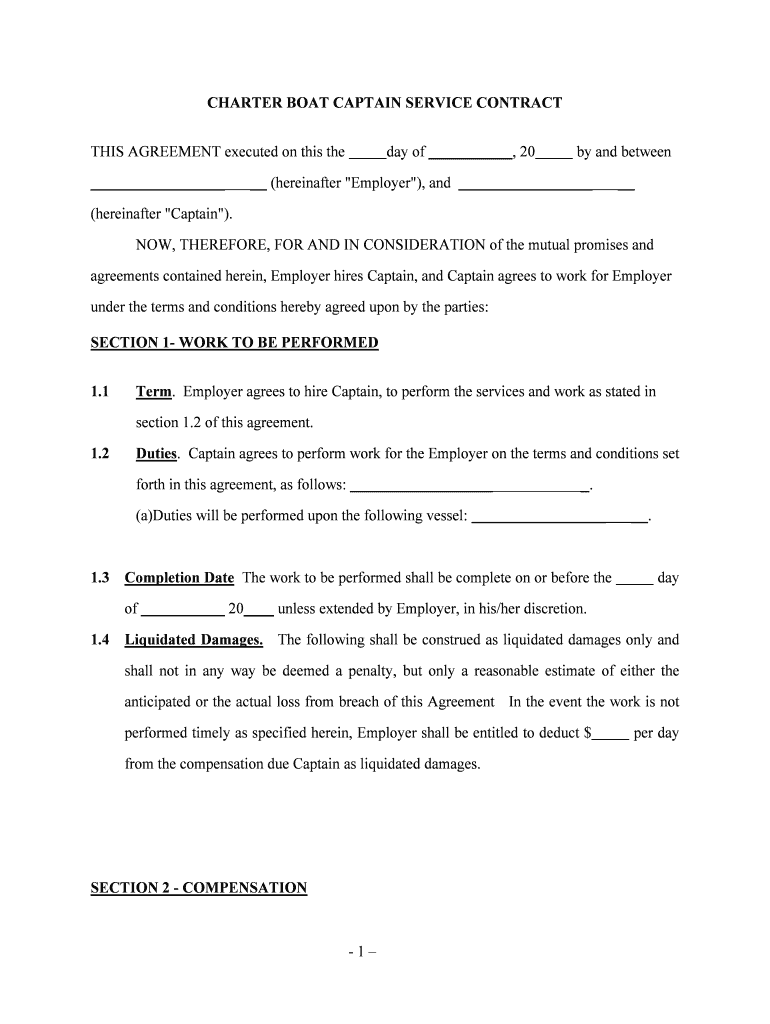
A Boat Charter Agreement is a legally binding contract between a vessel owner (or operator) and a charterer that sets the terms for temporary use of a boat. It identifies the parties and vessel, specifies the charter type (e.g., bareboat, skippered, or time charter), defines the rental period and itinerary, records payment terms and deposits, allocates responsibility for fuel, provisions, and maintenance, and sets insurance, indemnity, and dispute-resolution provisions. The agreement also addresses safety rules, permitted waters, and consequences for damage, late return, or regulatory violations.

Why a Clear Charter Agreement Matters

A written Boat Charter Agreement reduces ambiguity about responsibilities, limits exposure to liability, documents payments and security deposits, and creates an enforceable record for insurance and dispute resolution under U.S. contract law and electronic signature statutes.

Why a Clear Charter Agreement Matters

Who Commonly Uses This Agreement

Typical users include vessel owners, charter operators, marinas, and customers arranging private or commercial charters.

  • Private owners renting their vessel for short-term use to guests or acquaintances.
  • Charter operators offering skippered or bareboat rentals to clients and tour groups.
  • Marinas or brokers managing reservations, slip agreements, and third-party charters.

Typical Signers and Their Roles

Vessel Owner

The owner (or authorized operator) signs to grant use of the vessel, confirm insurance coverage, and accept deposit and damage-processing procedures. The owner’s signature binds the owner to vessel condition representations and indemnity clauses.

Charterer

The charterer signs to accept the vessel under stated conditions, agree to payment and security deposit terms, and acknowledge operational limits, safety rules, and liability for damage or rule violations during the charter period.

Essential Elements to Include

A professional Boat Charter Agreement organizes obligations, risk allocation, and operational details so both parties understand expectations and remedies.

Parties & Recitals

Full legal names and roles of owner/operator and charterer; identification of vessel by name, hull ID, registration, and official documentation.
Vessel Description

Include make, model, length, capacity, registration number, safety equipment, and any limitations on passengers or cargo.

Charter Term

Exact start and end dates and times, embarkation and disembarkation locations, and permitted cruising area or itinerary restrictions.

Payment Terms

Total charter fee, due dates, security deposit amount, accepted payment methods, taxes, and refund/cancellation schedule.

Insurance & Liability

Required insurance coverages, responsible party for deductible, indemnity language, and any waiver of subrogation or limitation of liability.

Operational Rules

Safety duties, captain/crew authority, fuel responsibility, maintenance reporting, prohibited activities, and consequences for violations.

Required Information to Collect

Party Names: Full legal names
Vessel ID: Registration or hull number
Charter Dates: Start and end dates
Payment Details: Fee, deposit amount
Insurance Info: Carrier and policy number
Emergency Contact: Name and phone

How to Complete the Agreement

Follow these steps to prepare, execute, and record a Boat Charter Agreement efficiently.

  • 01
    Prepare Draft: Gather vessel ID, party details, dates, payment terms, and insurance information.
  • 02
    Review Terms: Confirm itinerary, fuel, safety, and cancellation policies with both parties before finalizing.
  • 03
    Sign Electronically: Send for eSignature with clear signature blocks, date fields, and authentication settings.
  • 04
    Distribute Copies: Provide each party a signed copy and retain an executed version for records and insurance purposes.

Configure an Online Signing Workflow

Set up a digital workflow to reduce turnaround time and ensure consistent execution.

Field Configuration
Signature Fields Place signer name, date, and initials fields where required
Authentication Use email link or SMS code for signer verification
Reminders Enable automated reminders for unsigned documents
Integrations Connect to CRM or cloud storage for archiving

Digital Signing and Delivery Requirements

Choose a platform that supports secure eSignature, audit trails, and common file formats.

  • File Formats: PDF, DOCX supported
  • Integrations: Salesforce, Google Workspace
  • Security: TLS and AES encryption

Where to Send Completed Agreements

After execution, distribute copies to the parties and retain a master copy for operations, insurance, and compliance.

  • Owner / Operator: Keep the executed original for vessel records
  • Charterer: Provide a signed copy for trip reference
  • Insurance Carrier: Send policy and agreement if requested
  • Marina / Agent: Supply proof of charter and docking arrangements

Typical Timelines and Deadlines

Operational deadlines vary by operator; include clear timing for payments, cancellations, and check-in procedures.

Booking Lead Time:

Book days or weeks in advance depending on season

Deposit Due:

Pay deposit on reservation to secure dates

Final Payment:

Due before embarkation or at check-in

Cancellation Deadline:

Defines refund eligibility based on notice period

Check-in / Check-out:

Specify exact times to avoid disputes

Key Milestones in the Charter Process

Track these sequential milestones from inquiry through post-charter reconciliation to ensure accountability.

01

Inquiry & Quote

Client requests charter and receives written quote and terms

02

Reservation & Deposit

Deposit secures dates and triggers contract preparation

03

Embarkation Inspection

Pre-charter inspection documents vessel condition and inventory

04

Return & Settlement

Post-charter inspection, damage reconciliation, and deposit settlement

Common Preparation Errors to Avoid

  • Omitting full vessel identifiers or incorrect registration numbers that frustrate insurance and reporting.
  • Failing to document insurance coverage or policy number, leaving gaps in claim processing.
  • Using vague cancellation or refund terms that trigger disputes over deposits and fees.
  • Neglecting to record embarkation/disembarkation times or pre/post-charter condition reports.

Risks and Potential Consequences

Damage Liability: Charterer may bear repair costs
Insurance Denial: Claims rejected for noncompliance
Legal Disputes: Breach claims and attorney fees
Regulatory Fines: Violations of navigation laws
Loss of Deposit: For cancellations or damage
Operational Delays: Trip cancellations and reputational harm

Sample eSignature Pricing and Feature Comparison

Compare basic pricing and common capabilities for eSignature providers; signNow is shown first for reference. Confirm vendor plans for exact limits and enterprise features.

signNow DocuSign Adobe Sign PandaDoc HelloSign
Starting Price $8/user/mo $15/user/mo $14/user/mo $19/user/mo $15/user/mo
Free Trial 7-day free trial Varies by plan Varies by plan Varies by plan Varies by plan
Bulk Send Yes Yes Yes Yes No
Audit Trail Yes Yes Yes Yes Yes
HIPAA Compliant Yes Yes Yes No No

Real-World Charter Scenarios

Two concise examples showing how agreements solve common operational and liability issues.

Leisure Weekend Charter

A private owner rents a 35-foot vessel for a weekend with a skippered option to minimize risk

  • The operator documents safety briefing and fuel policy to avoid disputes
  • The signed agreement and pre/post-charter condition report enabled a smooth deposit settlement and avoided an insurance claim dispute.

Commercial Tour Operator

A tour operator establishes recurring weekly charters for sightseeing with a deposit and cancellation schedule

  • The contract requires proof of commercial insurance and captain credentials
  • Clear indemnity and passenger limits reduced operational interruptions and clarified responsibilities after an onboard incident.

Frequently Asked Questions

Answers to common questions about executing, authenticating, and storing Boat Charter Agreements.


Need help? Contact support

be ready to get more
Join over 28 million airSlate SignNow users