Establishing secure connection…Loading editor…Preparing document…

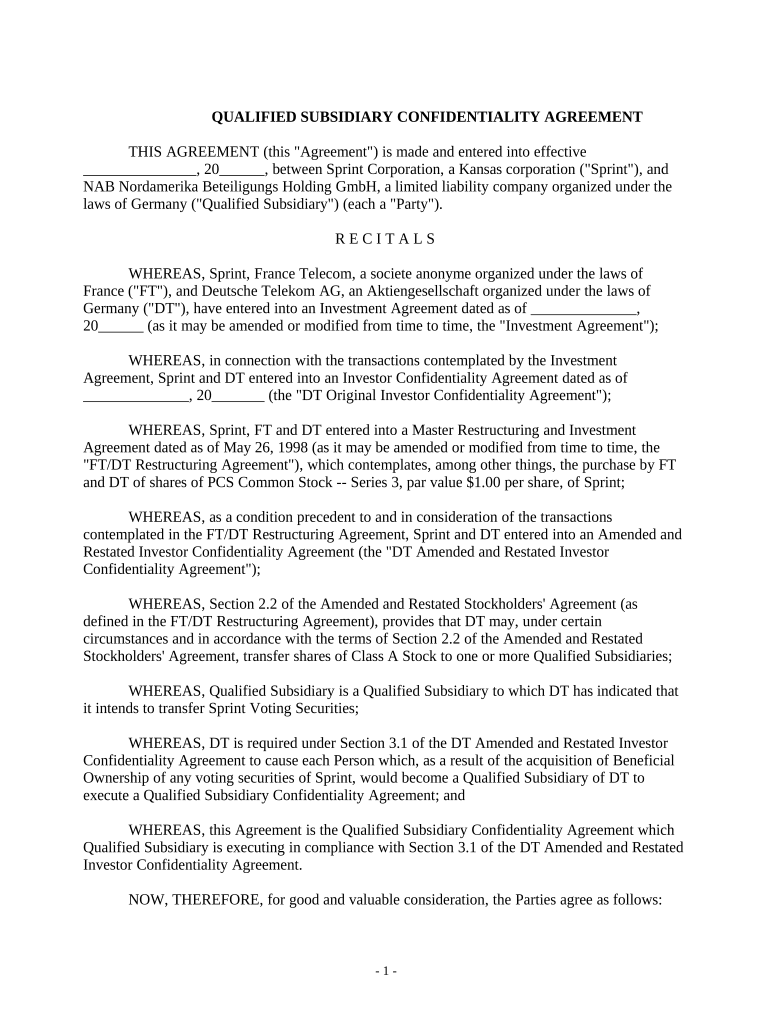
Confidentiality Nondisclosure Agreement

This template is fully customizable. Edit the text, fill out the fields, and send it for signature. Give it a try!
Confidentiality Nondisclosure Agreement

What a Confidentiality Nondisclosure Agreement is and when it matters

A Confidentiality Nondisclosure Agreement (NDA) is a written contract that creates a confidential relationship between parties who intend to share proprietary information. The agreement defines what information is confidential, sets permitted uses, details disclosure exceptions, and establishes the duration of confidentiality obligations. NDAs can be mutual or one-way, and may include remedies for breach such as injunctive relief or monetary damages. In commercial contexts NDAs protect trade secrets, technical data, business plans, and client lists. Properly executed NDAs support enforceability and help parties manage risk when exchanging sensitive information.

Why a clear Confidentiality Nondisclosure Agreement protects your business

A Confidentiality Nondisclosure Agreement limits the risk of public disclosure and preserves competitive advantage by legally restricting use and dissemination of confidential material. It clarifies obligations, reduces litigation risk, and establishes remedies and procedures if confidential data is misused.

Why a clear Confidentiality Nondisclosure Agreement protects your business

Who commonly uses Confidentiality Nondisclosure Agreements

Common users include startups, vendors, consultants, and employers who exchange proprietary information such as trade secrets, source code, customer lists, and pricing models.

  • Startup founders sharing product roadmaps with potential investors and contractors.
  • Vendors disclosing pricing, technical specs, or integration details during procurement.
  • Employers protecting employee training materials, client lists, and strategic plans.

Step-by-step: complete and execute an NDA

Follow these sequential steps to complete and execute a Confidentiality Nondisclosure Agreement accurately online or in person.

  • 01
    Identify Parties: List full legal names and contact details for all disclosing and receiving parties.
  • 02
    Define Confidential Info: Describe categories of confidential material and examples with sufficient specificity.
  • 03
    Set Terms: Establish duration, permitted use, exclusions, and return or destruction obligations.
  • 04
    Sign & Store: Obtain signatures, date the agreement, and retain originals and executed copies securely.

Recommended platform settings when assembling the NDA

Standard configuration settings for assembling and sending a Confidentiality Nondisclosure Agreement using an eSignature platform.

Field Configuration
Signature Field Required for each party, date auto-populates
Initials Field Optional for page-by-page acknowledgment during multi-page documents
Confidentiality Scope Use checkboxes and examples to limit scope
Authentication Email link, SMS code, or KBA per sensitivity

Typical e-signing flow for a Confidentiality Nondisclosure Agreement

Typical e-signing workflow for sending and executing a Confidentiality Nondisclosure Agreement online securely and with audit trail capture.

  • Upload Document: Import PDF or DOCX, check formatting.
  • Add Fields: Place signature, date, and confidentiality fields.
  • Set Authentication: Choose email, SMS, or stronger verification.
  • Send & Track: Deliver to signers and monitor completion status.

Core clauses that make NDAs effective

Key clauses and structural elements that give a Confidentiality Nondisclosure Agreement clarity, enforceability, and practical value across business contexts and transactions.

Definition

A clear definition of what constitutes 'Confidential Information' with examples and exclusions. Specific categories reduce ambiguity and prevent accidental inclusion of public or previously known information.
Purpose

A narrow statement of permitted uses limits the receiving party to specific business purposes, preventing unauthorized exploitation and clarifying the scope of data sharing for both parties.

Term

Specify the agreement term and any post-termination survival period for confidentiality obligations. Trade secrets may require an indefinite or longer survival clause by law or contract.

Exceptions

List standard exceptions such as information that is public, independently developed, lawfully obtained, or disclosed under court order; include notice procedures for compelled disclosures and protective measures.

Remedies

Specify injunctive relief, damages, and any agreed liquidated damages or fee-shifting provisions, and describe dispute resolution mechanisms such as arbitration or courts with venue specification.

Return/Destruction

Require return or certified destruction of confidential materials at termination or on request, and define procedures for retaining minimal archival copies for compliance or legal obligations.

Security and compliance measures relevant to NDAs

Encryption: TLS 1.2/1.3 in transit; AES-256 at rest
Audit Trail: Timestamped logs, IP address, action history
Access Controls: Role-based permissions and SSO support
HIPAA: BAA available for covered entities
21 CFR Part 11: Supports electronic records and signatures
Authentication: SMS codes, KBA, SSO, two-factor

Common legal and operational risks when NDAs are incorrect

Unenforceable Terms: Overbroad scope risks invalidation
No Consideration: May void contract
Incorrect Parties: Wrong entity names cause issues
Insufficient Specificity: Vague definitions hinder enforcement
Data Breach Liability: Potential regulatory penalties
Tax Reporting: Mismatched TIN triggers withholding

Frequent drafting mistakes to avoid

  • Using overly broad confidentiality language that covers general knowledge or future ideas, which courts may refuse to enforce as unreasonable restraints on trade.
  • Failing to define exclusions such as information already known, independently developed, or publicly available, leading to unnecessary disputes over scope.
  • Not tailoring duration to the sensitivity of information, resulting in indefinite terms that can be struck down or negotiated away.
  • Neglecting to specify permitted disclosures to legal counsel, auditors, or affiliates, creating operational friction when lawful sharing is needed.

Pricing and feature snapshot for eSignature vendors

Comparison of signNow and common eSignature vendors for signing Confidentiality Nondisclosure Agreements, including pricing and core capabilities.

signNow DocuSign Adobe Sign PandaDoc HelloSign
Starting Price $8/user/mo $15/user/mo $14/user/mo $19/user/mo $15/user/mo
Free Trial 7-day free trial Varies by plan Varies by plan Varies by plan Varies by plan
Bulk Send Yes Yes Yes Yes No
Audit Trail Yes Yes Yes Yes Yes
HIPAA Compliant Yes Yes Yes No No
Envelope Cap No cap 100 envelopes/user/year Varies by plan Varies by plan Varies by plan

Practical drafting and handling practices

Practical tips to draft enforceable Confidentiality Nondisclosure Agreements and reduce review cycles for faster execution.

Use precise definitions and narrow scope
Define confidential categories with examples and expressly exclude public or preexisting information. Narrow scope reduces the chance a court will find the restriction unreasonable and increases enforceability in litigation.
Limit duration to reasonable period
Tie the confidentiality term to business reality—two to five years is common for commercial information; trade secrets may require indefinite protection or survival clauses that reflect legal standards and practical enforceability.
Specify remedies and dispute process
State available remedies, whether injunctive relief or liquidated damages, and specify governing law and venue or an agreed arbitration process to resolve disputes efficiently when breaches occur and allocation of costs.
Document handling and access controls
Limit access on a need-to-know basis, require secure transfer methods for shared files, log access events, and set retention and destruction procedures to reduce unauthorized disclosure risk and compliance auditing.

Frequently asked questions about Confidentiality Nondisclosure Agreements

Answers to common questions about signing, enforceability, and typical issues with Confidentiality Nondisclosure Agreements in practice.


Need help? Contact support

be ready to get more
Join over 28 million airSlate SignNow users