Establishing secure connection…Loading editor…Preparing document…

Consignment Form

This template is fully customizable. Edit the text, fill out the fields, and send it for signature. Give it a try!
Consignment Form

What a Consignment Form Covers

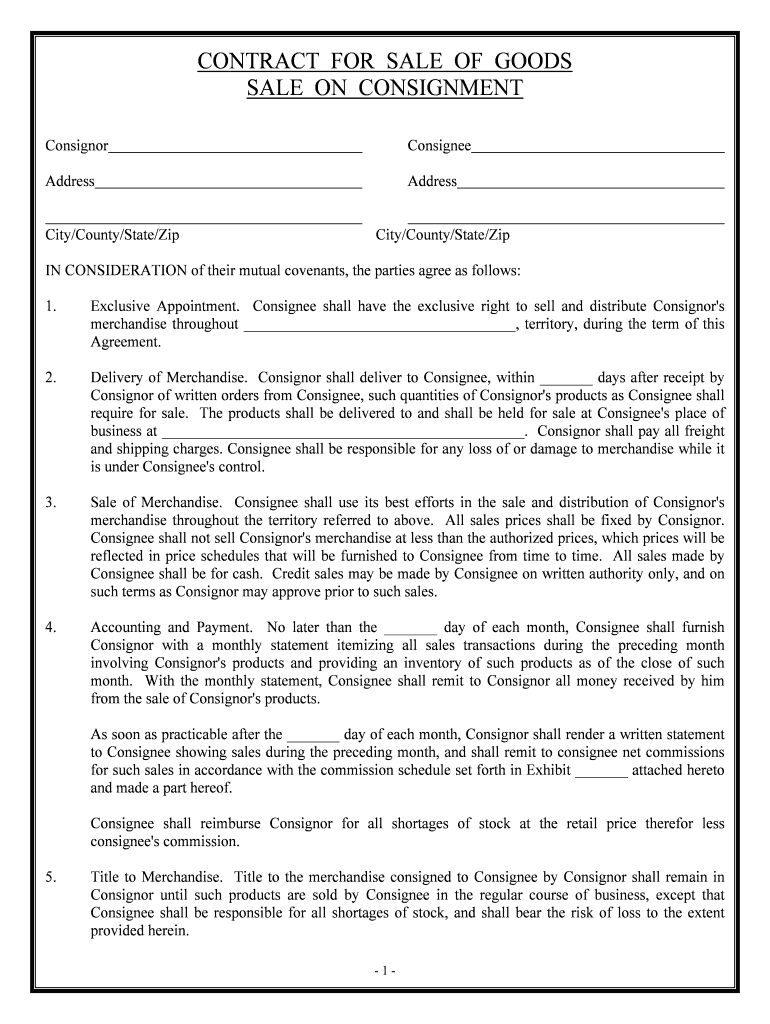
The Consignment Form is a written agreement that documents the transfer of goods from a consignor to a consignee for sale, storage, or display while the consignor retains ownership until items are sold. It defines parties, inventory descriptions, pricing or commission rates, payment timing, return conditions, insurance, risk of loss, and termination terms. Properly executed forms reduce disputes by specifying responsibilities for shipping, inspection, inventory tracking, and unsold goods. Consignment Forms are commonly used in retail, art galleries, secondhand stores, and specialty markets.

Why a Clear Consignment Form Matters

A clear Consignment Form protects both parties by allocating risk, clarifying financial terms, and documenting title and inventory. It streamlines accounting, supports tax reporting, and provides an evidentiary record for disputes or insurance claims while improving operational transparency.

Why a Clear Consignment Form Matters

Typical Users and Roles

Common users include consignors, consignees, brokers, and store managers who need a written record of inventory and terms.

  • Independent sellers and artisans consign items to galleries or shops while retaining ownership until sale.
  • Retail consignees receive inventory, handle sales, and remit proceeds minus commission under agreed terms.
  • Brokers and online marketplaces manage listings and logistics, using forms to document condition and pricing.

Core Sections to Include

Core Consignment Form sections establish responsibilities, item details, financial split, timing, risk allocation, and procedures for unsold goods or contract termination.

Parties

Identify consignor and consignee by legal name, business entity type, contact information, and authorized representative; include tax ID where applicable to support payments, reporting, and enforcement of contract rights.
Inventory

Describe each item with SKU or serial number, quantity, condition, appraised or reserve price, photos as exhibits, and any cataloging method used to reconcile sales and returns.

Pricing & Commission

Specify retail price, minimum accepted price, commission percentage or flat fee, timing of commission calculation, and how discounts, taxes, or returns affect final settlement amounts.

Payment Terms

State when the consignee remits net proceeds, acceptable payment methods, accounting cycle, required documentation for remittance, and holdback provisions for chargebacks or disputes and periodic statements.

Risk & Insurance

Allocate risk of loss during transit, display, or storage; require insurance coverage limits, name the insured party, and specify responsibility for claims and deductible reimbursement.

Termination & Returns

Define contract term, notice requirements for termination, procedures for unsold goods return, timelines for pick-up, and liabilities for damaged or unreturned items and mediation steps.

Step-by-Step Completion Workflow

Follow these steps to complete and exchange a Consignment Form, from drafting to final settlement and recordkeeping.

  • 01
    Draft Agreement: Prepare terms, inventory list, and payment mechanics.
  • 02
    Review & Negotiate: Confirm pricing, commission, insurance, and return policies.
  • 03
    Sign & Exchange: Obtain signatures, dates, and any witness or notary attestations.
  • 04
    Record & Reconcile: Store executed copy; update inventory and accounting entries.

Typical Digital Routing for Consignment Forms

Typical routing outlines who prepares the form, how inventory is documented, signing sequence, and post-sale settlement workflow.

  • Upload Form: Create or upload the template PDF or DOCX file.
  • Place Fields: Add signature, date, and custom inventory or calculation fields.
  • Send to Signers: Deliver via email link, bulk send, or secure portal.
  • Capture Audit Trail: Record timestamps, IPs, and completion certificates for compliance.

Recommended Digital Workflow Settings

Configure a digital workflow that mirrors the paper process: routing, authentication, field behavior, and final delivery options.

Field Configuration
Signing Sequence, Routing, and Roles Specify sign order and role-based recipients.
Authentication Methods and Verification Options Choose email, SMS, or KBA per risk level.
Fields, Conditional Logic, and Calculations Add text, number, checkbox, date, and formula fields.
Delivery Copies, Storage, and Notifications Set final recipients, storage location, and email alerts.

Compatibility and Integration Considerations

Basic technical and integration considerations for eSubmission and sharing of Consignment Forms, including PDF, DOCX compatibility, and common integrations.

  • File Formats: PDF, DOCX, and editable templates supported.
  • Integrations: Salesforce, NetSuite, Google Workspace and Box.
  • Authentication: Email, SMS, SSO options; advanced methods available.

Best Practices to Reduce Disputes and Delays

Adopt consistent drafting and recordkeeping practices to reduce disputes and ease reconciliation between consignor and consignee.

Include a numbered inventory exhibit
Attach an itemized, numbered exhibit with condition notes, photos, and identifiers; use this exhibit for inspection, claims, and returning unsold goods to avoid disagreement over condition or quantity at delivery and at turnover.
Specify commission, discounts, and price adjustments
Write explicit formulas for calculating commissions after discounts, taxes, and chargebacks; define how markdowns, promotions, or refunds affect net proceeds and timing of payments, and specify currency.
Document insurance coverage and claims process
Require named insurers and minimum coverage limits for transit, storage, and display; set procedures and deadlines for filing claims, reimbursement responsibilities for deductibles, and obligations for damaged, lost, or stolen items.
Maintain digital and physical records with access controls
Keep executed originals and certified digital copies with immutable audit trails, limited access based on role, and regular backups; retain records per legal retention schedules to support audits, tax reporting, and potential litigation.

Consequences of Incomplete or Incorrect Forms

Tax Reporting: Missing records can trigger IRS audits.
Sales Tax Liability: Incorrect resale certificates may incur tax penalties.
Inventory Loss: Consignor may bear loss without proof.
Late Payments: Delays can accrue interest or breach.
Insurance Gaps: Insufficient coverage shifts claim costs.
Contract Ambiguity: Vague terms increase litigation risk.

Common Preparation Pitfalls to Avoid

  • Failing to list serial numbers or photos increases disputes over item condition, allowing parties to contest ownership, damage, or agreed pricing at settlement.
  • Using vague compensation language like 'market rate' without formula often leads to reconciliation disagreements and delayed payments between consignor and consignee.
  • Not specifying insurance or risk allocation for transit and display can result in uncovered losses and protracted claims handling.
  • Failing to record signature dates, witness names, or executed exhibits complicates evidence in disputes and may invalidate certain settlement claims.

Practical Consignment Scenarios

Real-world consignment scenarios show how clear terms reduce disputes and speed settlements across retail, art, and online marketplaces.

Retail Boutique

A small boutique consigns designer clothing to a local shop and uses an itemized exhibit to track condition and sales.

  • Clear commissions avoided accounting disputes.
  • The consignor received timely monthly statements tied to SKU-level sales, enabling quick reconciliation; when one garment was returned damaged, photo exhibits and condition codes resolved liability without litigation and preserved business relationship.

Art Gallery

An art gallery accepts local artists on consignment and requires appraised values and insurance for high-value pieces.

  • Appraisals guided insurance and pricing.
  • When a painting was sold at auction, the gallery remitted net proceeds after commission and provided the consignor a certified settlement statement, avoiding tax reporting errors and facilitating prompt payment.

Key Deadlines and Timing Considerations

Common deadlines include payment cycles, inventory reconciliation dates, notice periods for returns, claim filing windows, and tax documentation requests.

Provide Tax Documents:

Supply a completed W-9 upon request to prevent backup withholding.

Payment Cycle and Settlement:

Set monthly or agreed settlement date for remitting net proceeds.

Inventory Reconciliation Window:

Agree periodic reconciliation frequency and deadlines for reporting sales.

Return and Pick-Up Notice:

Specify notice period for returning unsold goods and pick-up procedures.

Insurance Claim Deadlines:

State timeframe for filing claims after loss or damage discovery.

eSignature Pricing and Feature Comparison

Compare standard eSignature options for completing a Consignment Form, including pricing and key plan features.

signNow DocuSign Adobe Sign PandaDoc HelloSign
Starting Price $8/user/mo $15/user/mo $14/user/mo $19/user/mo $15/user/mo
Free Trial 7-day trial Varies by plan Varies by plan Varies by plan Varies by plan
Bulk Send Yes Yes Yes Yes Varies
Audit Trail Yes Yes Yes Yes Yes
HIPAA Compliant Yes Yes Yes No No
Envelope Cap No cap 100 envelopes/user/year Varies by plan Varies by plan Varies by plan

Frequently Asked Questions

Answers to frequent questions about completing, signing, and enforcing Consignment Forms, including eSignature, notarization, and recordkeeping concerns.


Need help? Contact support

be ready to get more
Join over 28 million airSlate SignNow users