Establishing secure connection…Loading editor…Preparing document…

Convertible Note Form

This template is fully customizable. Edit the text, fill out the fields, and send it for signature. Give it a try!
Convertible Note Form

What a Convertible Note Form Is and When It’s Used

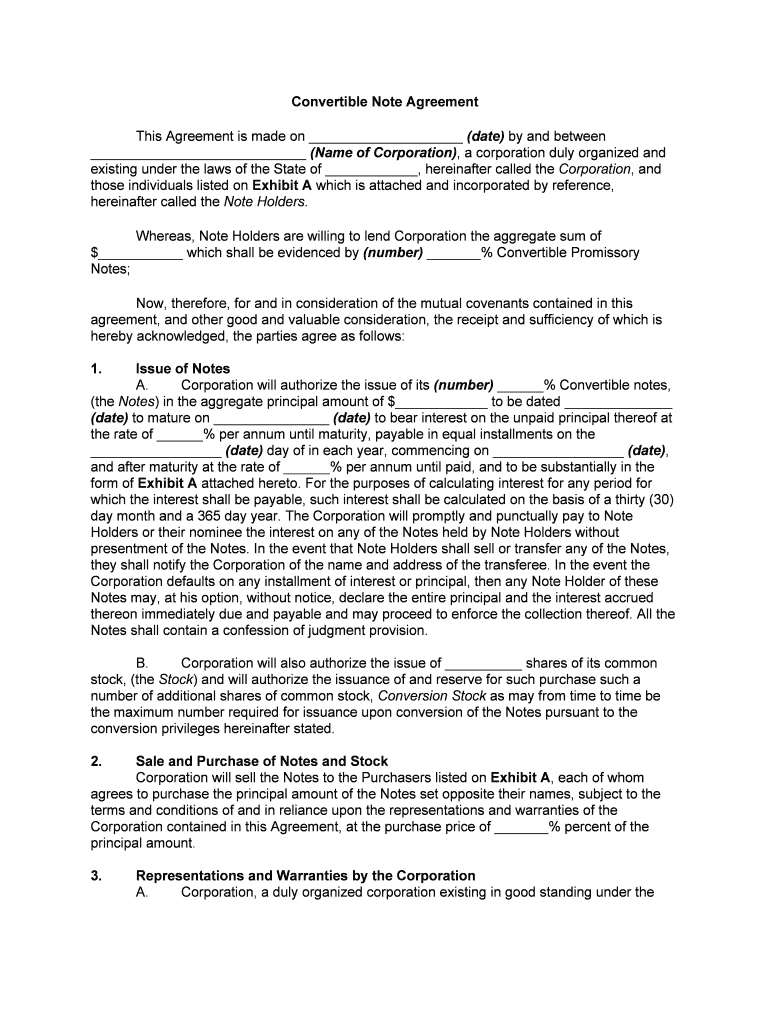
A Convertible Note Form is a written promissory instrument used in early-stage financing where debt converts into equity under predefined conditions. It records principal, interest, maturity date, conversion mechanics, valuation cap, discount rate, and investor rights. Founders and investors use convertible notes to postpone setting a company valuation during seed financings, standardize investor treatment, and provide a documented repayment or conversion path. The form may also address prepayment, change-of-control treatment, automatic versus optional conversion events, and any security interest or subordination terms.

Why the Convertible Note Form Matters for Startups and Investors

The form simplifies early financing by deferring valuation, accelerating closings, and creating clear conversion mechanics. It provides legal evidence of obligations, helps manage investor expectations, and reduces negotiation time compared with a priced equity round while preserving enforceability when properly drafted and executed.

Why the Convertible Note Form Matters for Startups and Investors

Who Commonly Uses the Convertible Note Form

Convertible notes are most often used by startup founders, angel investors, and seed-stage venture funds for quick bridge financing without immediate equity valuation.

  • Founders and startups seeking short-term capital with minimal negotiation and delayed valuation.
  • Angel investors and seed funds standardizing seed investments with conversion incentives.
  • Corporate or strategic investors providing bridge loans pending a priced round.

Use involves both legal and tax considerations; parties commonly obtain counsel to confirm conversion mechanics and securities compliance prior to execution.

Core Elements to Include in a Professional Convertible Note Form

A complete convertible note sets out financial terms, conversion mechanics, protective provisions, and remedies so all parties understand obligations and outcomes at maturity or qualifying financing.

Principal

State the exact dollar amount loaned, currency, and acceptance date; this is the base for interest and conversion calculations.
Interest Rate

Specify nominal annual interest, compounding method if any, and how accrued interest is treated at conversion or repayment.

Maturity Date

Define the maturity date and procedures if the company cannot repay or convert prior to that date, including extension terms.

Conversion Terms

Describe automatic and elective conversion triggers, conversion price formula, and documentation required for share issuance.

Valuation Cap / Discount

Include valuation cap and/or discount to set maximum conversion price or discount at the next qualified financing round.

Investor Rights

List rights such as information rights, pro rata participation, security interest, and any negative covenants or defaults.

Essential Data Fields Required on the Form

Borrower Name: Legal entity name
Lender Name: Investor or entity name
Principal Amount: Exact loan amount
Interest Rate: Annual percentage
Maturity Date: MM/DD/YYYY
Governing Law: Selected state

Key Legal Risks if the Form Is Incorrect

Unenforceability: Ambiguous terms risk invalidation
Tax Exposure: Mischaracterized debt may change tax treatment
UCC Priority: Unfiled security interest reduces priority
Securities Violations: Improper offering may trigger SEC rules
Conversion Errors: Incorrect formulas misallocate equity
Dispute Costs: Litigation or remediation expenses

Common Preparation Errors to Avoid

  • Failing to define qualified financing thresholds precisely, which can create disputes about when conversion occurs and what price applies.
  • Omitting a clear valuation cap or discount formula, leaving conversion price subject to differing interpretations between parties.
  • Neglecting to file a UCC-1 financing statement when a security interest is granted, which may impair secured creditor priority.
  • Using inconsistent party names or mismatched signatures, which can lead to enforceability challenges and refund or re-execution delays.

Step-by-Step: How to Complete a Convertible Note Form

Follow these sequential actions to prepare, review, and execute a convertible note while preserving enforceability and clarity.

  • 01
    Draft Terms: Assemble principal, rate, cap, discount, maturity, and conversion language.
  • 02
    Review Compliance: Confirm securities law and tax implications with counsel.
  • 03
    Add Administrative Details: Include governing law, notices, UCC/security provisions as applicable.
  • 04
    Execute and Record: Collect signatures, file UCC-1 if secured, and distribute executed copies.

How to Configure an Online Convertible Note Workflow

Set up a digital workflow that enforces signing order, authentication, and document retention to maintain legal evidence of execution.

Field Configuration
Signature Method E-signature with audit trail
Authentication Email link plus optional SMS code
Template Controls Lock key clauses and require initials
Retention Settings Retain PDF and audit log

Where to Send and How Execution Typically Proceeds

Execution flows from the sender to signers, then to filing and distribution; ensure each recipient receives an executed copy and any required filings are made.

  • Upload Document: Sender uploads the completed note to the eSignature platform.
  • Assign Signers: Define signing order and enter signer contact details.
  • Sign and Timestamp: Signers authenticate, sign, and the system captures timestamps.
  • Distribute Copies: Send executed PDF and retain audit trail for records.

Digital Signing and eSubmission Considerations

Choose an eSignature platform that captures an audit trail, supports appropriate authentication levels, and retains signed records in a tamper-evident format.

  • File Formats: PDF and DOCX
  • Integrations: CRM and cloud storage
  • Authentication: Email, SMS, KBA

Ensure the platform supports required compliance frameworks (ESIGN/UETA) and provides downloadable evidence of signing events to support enforceability and any required post-execution filings.

Key Dates and Timing to Track for a Convertible Note

Monitor these dates to preserve rights, trigger conversions, and meet filing or reporting obligations tied to the note.

Funding / Close Date:

Date funds are transferred and the note becomes effective

Maturity Date:

Date when repayment or mandatory conversion must occur

Qualified Financing:

Window or threshold defining an automatic conversion event

UCC Filing Window:

File UCC-1 promptly after agreement if a security interest is granted

Tax Reporting:

Track interest and conversion events for applicable IRS reporting timelines

Who Is Authorized to Sign a Convertible Note

Founder / CEO

Typically the authorized officer or manager with corporate authority signs for the borrower; confirm board resolution or corporate authority for the specific transaction.

Investor / Authorized Signer

Authorized signatory for the lender (individual or entity) must be identified; for entity investors, include title and proof of signing authority.

Practical Use Cases for Convertible Notes

Two representative scenarios show how convertible notes speed early-stage financing and handle conversion events in practice.

Seed Bridge Loan

A founder raises $150,000 via convertible notes to bridge to Series A

  • The note specifies a 20% discount and $3M cap
  • Upon a priced round, notes convert automatically under the agreed formula, preserving speed and reducing immediate valuation negotiation.

Investor Refill

An angel provides a follow-on convertible note with a short maturity to support growth

  • The agreement includes pro rata rights and an optional conversion at maturity
  • Clear conversion mechanics and investor rights reduced disputes and enabled a smooth Series A close.

Practical Tips for Accurate and Efficient Completion

Adopt these practices to reduce execution time, avoid disputes, and ensure the note is enforceable and administrable.

Use Standard Clauses
Start from a market-standard convertible note template and adapt only necessary fields. Standard language for conversion, caps, discounts, and default remedies reduces negotiation and aligns expectations across investors.
Confirm Signing Authority
Obtain and document board or member authorizations for the borrower and verify entity signer authority for each investor to avoid challenges to validity after execution.
File UCC Carefully
If the note grants a security interest, prepare a timely UCC-1 financing statement with accurate debtor name formatting; errors here can compromise priority and recovery rights.
Keep an Audit Trail
Use an eSignature solution that records timestamps, IP addresses, and signer authentication events and preserves a tamper-evident PDF and audit log for future enforcement or due diligence.

eSignature Vendor Pricing Snapshot for Executing Convertible Notes

Platform pricing and features vary. The table highlights starting price and core capabilities relevant to executing, storing, and auditing signed convertible notes.

signNow DocuSign Adobe Sign PandaDoc HelloSign
Starting Price $8/user/mo $15/user/mo $14/user/mo $19/user/mo $15/user/mo
Free Trial 7-day free trial Varies by vendor Varies by vendor Varies by vendor Varies by vendor
Bulk Send Yes Yes Yes Yes Varies
Audit Trail Yes Yes Yes Yes Yes
Envelope Cap No cap 100 envelopes/user/year Varies Varies Varies

Frequently Asked Questions About the Convertible Note Form

Answers to common legal, procedural, and digital signing questions to help parties avoid pitfalls when using a convertible note.


Need help? Contact support

be ready to get more
Join over 28 million airSlate SignNow users