Establishing secure connection…Loading editor…Preparing document…

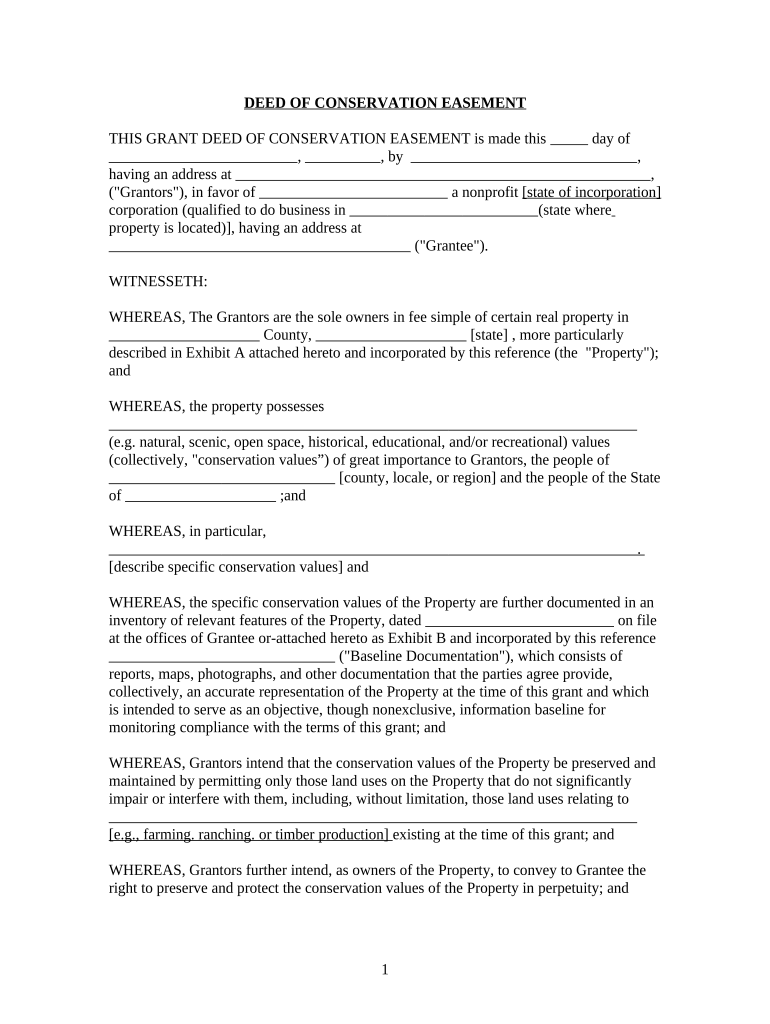
Easement Deed

This template is fully customizable. Edit the text, fill out the fields, and send it for signature. Give it a try!
Easement Deed

What an Easement Deed Is and when it matters

An Easement Deed is a recorded legal instrument that grants a person or entity the right to use a defined portion of another party's real property for a specific purpose while the grantor retains title. Typical easements include access, utility, drainage, and conservation rights. The deed identifies parties, describes the precise area and permitted uses, states duration or termination conditions, notes consideration if any, and includes recording and notary instructions. Proper drafting and recording ensure the easement is enforceable and appears on title searches for future purchasers and lenders.

Why a clear Easement Deed protects property interests

A well-drafted Easement Deed reduces disputes, clarifies maintenance and access responsibilities, preserves marketable title, and notifies future owners and lenders of encumbrances. Recording the deed secures priority against later conveyances and supports enforceability in court when rights or obligations are contested.

Why a clear Easement Deed protects property interests

Who typically prepares and signs an Easement Deed

Typical users include landowners, utility companies, developers, municipal agencies, title companies, and attorneys arranging or reviewing property rights.

  • Landowners and grantors — convey defined use rights while preserving ownership and control.
  • Utility companies and municipalities — secure permanent access for lines, pipes, or public infrastructure.
  • Developers and contractors — obtain temporary or permanent access for construction and maintenance.

Identifying the correct party and scope early reduces negotiation time and recording complications and settlement delays.

Essential elements to include in a professional Easement Deed

A complete Easement Deed addresses the parties, exact property description, scope of allowed uses, term or duration, consideration, and recording details to prevent ambiguity and title exceptions.

Parties

Identify grantor and grantee with full legal names and entity types; include authorized signatory details and contact information to establish attribution and enforceability.
Legal Description

Provide the precise recorded legal description or metes and bounds, referencing plat book and page if available; attach an official survey to fix easement boundaries.

Scope

Define permitted uses, access points, width, and any seasonal or time restrictions; state whether sub-easements or assignment are permitted and maintenance allocation.

Term

State whether the easement is perpetual, for a fixed term, or conditional; include commencement date, expiration events, renewal rights, and termination triggers.

Consideration

Record monetary payment, mutual consideration, or nominal consideration; clarify tax treatment and whether the easement conveys any possessory rights.

Recording

Specify county recorder instructions, required exhibits, return-to address, and include the appropriate notary acknowledgement and witness blocks for the jurisdiction.

Step-by-step process to prepare, sign, and record an Easement Deed

Follow these steps in sequence to produce a recorded Easement Deed that is legally enforceable and compatible with title insurance requirements.

  • 01
    Prepare Draft: Draft deed with accurate legal description and attached exhibits.
  • 02
    Review Title: Confirm title status, encumbrances, and required consents with a title company.
  • 03
    Sign & Notarize: All parties sign before a notary or via state-approved RON procedures.
  • 04
    Record Document: File with county recorder and obtain the recorded instrument and document number.

Recommended online workflow settings for electronic completion

Configure the signing workflow to enforce signer order, attach exhibits, and capture authentication while preserving a complete audit trail for the recorded deed.

Field Configuration
Signer Order Grantor first; grantee second; optional title agent as recipient
Authentication Email link plus SMS code recommended for signer attribution
Attachments Attach PDF survey and title report; mark exhibits as required
Conditional Fields Show termination clause only if temporary easement selected

Where to file, send, and how recording fits the process

Execution and recording are distinct: sign and notarize first, then submit the original to the county recorder or approved e-recording vendor to preserve priority.

  • Execute: Parties sign before notary in person or via approved RON.
  • Prepare Recording: Attach exhibits, complete cover sheet, and include recording fee.
  • Record: File with county recorder or authorized electronic recording service.
  • Distribute: Provide certified recorded copy to title company and affected parties.

Digital signing and eSubmission considerations

Use a platform that supports PDF/A output, audit trails, and remote notarization where your state allows to preserve legal effect and evidentiary records.

  • File Formats: PDF and DOCX supported
  • Integrations: Works with cloud storage and title systems
  • Authentication: Supports SMS codes and multi-factor authentication

Confirm the platform complies with ESIGN (15 U.S.C. §7001) and UETA where applicable, and verify state RON requirements before completing electronic notarization.

Timing and recording expectations that affect priority

Recording timing affects priority against later conveyances and can change tax assessment cycles; check county processing times and lender requirements before execution.

Effective Date vs Recording:

Effective on execution; priority often determined by recording date.

County Recording Times:

Processing varies by county from same day to several weeks.

Title Insurance Notice:

Inform title insurer per policy requirements before recording.

Tax Assessment Changes:

Recordation can affect property tax assessment on the next billing cycle.

Statute of Limitations:

Claims about easement rights may be subject to state limitation periods.

Common preparation errors to avoid

  • Using an imprecise legal description leads to boundary disputes and may render the easement unenforceable against subsequent purchasers.
  • Failing to attach a clear, labeled survey exhibit often causes recording rejection or requires corrective instruments and additional expenses.
  • Incorrect signer authority, missing corporate resolutions, or absent notary acknowledgements can delay recording and title insurance issuance.
  • Assuming an easement is revocable without explicit release language creates ambiguity and litigation risk for both grantor and grantee.

Key risks and consequences of an incorrect Easement Deed

Recording Rejection: Document returned unrecorded
Title Problems: Clouded title, insurer exceptions
Financial Liability: Unexpected tax or maintenance costs
Invalid Signature: Signature defect may void easement
Legal Disputes: Costly litigation and injunctions
Revocation Risk: Improper revocation may be ineffective

Practical easement scenarios and typical drafting responses

Two concise examples show common easement facts, the drafting focus, and the recording outcome most parties seek.

Private Driveway Easement

A homeowner granted a permanent driveway easement to a neighbor to permit vehicle access across a narrow strip of land.

  • Included width, maintenance, and permitted vehicle types.
  • The deed attached a survey exhibit, allocated shared maintenance costs, and was recorded to avoid future title disputes and to make obligations clear for subsequent buyers.

Utility Line Easement

A utility company obtained a perpetual easement for overhead lines across multiple parcels to serve a subdivision.

  • Defined pole locations and vegetation clearance obligations.
  • Recording included a detailed map and right-of-entry terms; the clear survey and maintenance schedule reduced later claims and simplified permitting for upgrades.

Practical drafting and recording tips to reduce delays

Follow these best practices to minimize recording issues, avoid title exceptions, and reduce the need for corrective documents.

Verify legal description
Confirm the legal description matches the current deed or survey; small inconsistencies can trigger recording rejection or title exceptions that require corrective affidavits.
Attach survey exhibits
Include a clearly labeled survey or map exhibit with bearings and dimensions to prevent boundary ambiguity and to support accurate indexing by the recorder's office.
Confirm signatory authority
When a party is an entity, include corporate resolutions or formation documents authorizing the signer to bind the entity; obtain appropriate notarizations.
Record promptly and distribute copies
File the original with the county recorder quickly after notarization, then provide certified recorded copies to the title company, lenders, and all interested parties.

Frequently asked questions about Easement Deeds

Answers to common execution, recording, e-signing, and revocation questions, including references to applicable U.S. electronic signature frameworks.


Need help? Contact support

be ready to get more
Join over 28 million airSlate SignNow users