Grant of Rights
Define exclusive or non-exclusive distribution rights, territory limits, channel restrictions, and any white-label allowances.
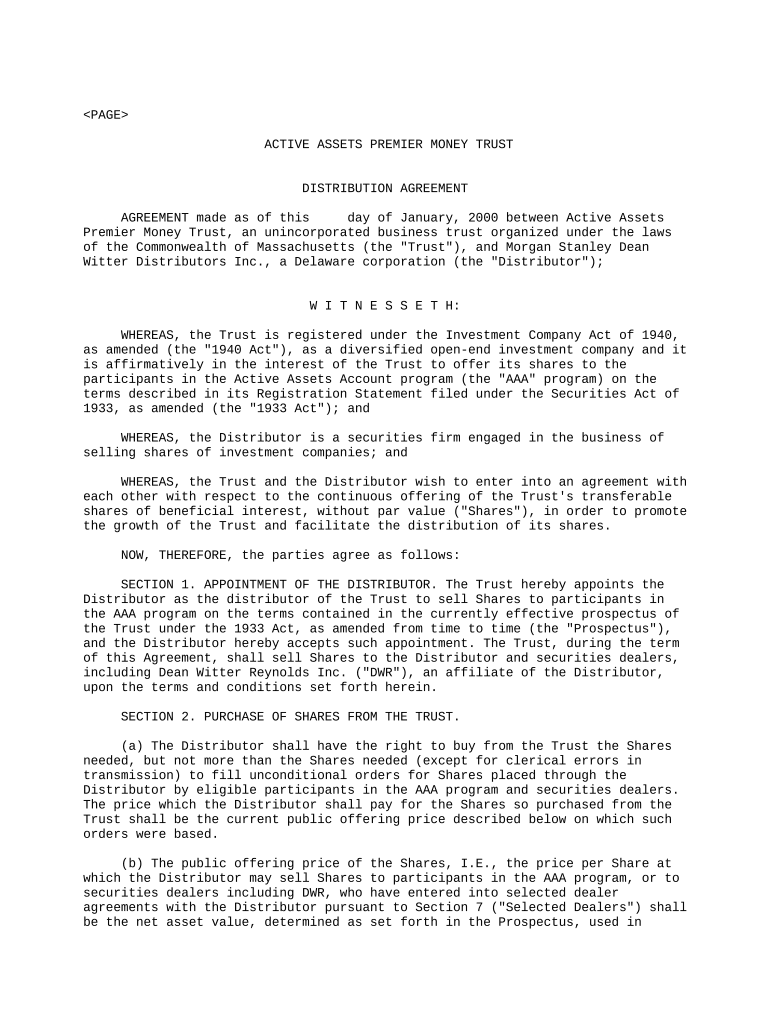
A well-drafted Distribution Agreement reduces ambiguity about rights and obligations, limits commercial exposure, and creates enforceable remediation paths for breaches. For electronic execution, the ESIGN Act (15 U.S.C. ch. 96) and UETA (1999, adopted by most states) generally make properly executed electronic signatures legally equivalent to handwritten signatures, subject to limited statutory exceptions.

Distribution Agreements are most often prepared by legal counsel or contracting teams and executed by commercial or finance leaders with signing authority.
Smaller companies may use standardized templates or external counsel; ensure the signatory has corporate authority and that execution complies with applicable e-signature and notary rules.
| Field | Configuration |
|---|---|
| Signer Order | Sequential or parallel routing |
| Authentication | Email link, SMS code, or stronger ID verification |
| Required Fields | Signature, printed name, date, and initials where needed |
| Audit Trail | Enable detailed logging and timestamping |
Choose delivery channels and platform settings that match your security and compliance needs.
Confirm the eSignature provider supports required integrations, audit trails, and any regulatory controls such as HIPAA or 21 CFR Part 11 before finalizing the workflow.
Confirm start date and term length; renewal notice windows typically 30–90 days.
State net terms (Net 30, Net 45) and late interest rates explicitly.
Specify reporting and purchase review periods (quarterly or annually).
Provide required notice periods and cure windows in termination clauses.
Set deadlines for price lists, product specs, or compliance certificates updates.
A manufacturer granted exclusive rights in a defined state territory to a distributor for five years
A supplier appointed a nationwide reseller for electronics with export controls
Define exclusive or non-exclusive distribution rights, territory limits, channel restrictions, and any white-label allowances.
State pricing, rebates, payment terms, invoicing, taxes, pricing updates, and penalties for late payment.
Include minimum purchase obligations, sales targets, reporting cadence, and remedies for underperformance.
License limited trademark use, require brand guidelines adherence, and define termination effects on IP use.
Specify product warranties, disclaimers, limitation of liability, and indemnity mechanics between parties.
Detail termination for convenience/cause, notice and cure periods, inventory buy-back, and post-termination support.
| signNow | DocuSign | Adobe Sign | PandaDoc | HelloSign | |
|---|---|---|---|---|---|
| Starting Price | $8/user/mo | $15/user/mo | $14/user/mo | $19/user/mo | $15/user/mo |
| Free Trial | 7-day free trial | Varies | Varies | Varies | Varies |
| Bulk Send | Yes | Yes | Yes | Yes | No |
| Audit Trail | Yes | Yes | Yes | Yes | Yes |
| HIPAA Compliant | Yes | Yes | Yes | No | No |
| Envelope Cap | No cap | 100 envelopes/user/year | Varies | Varies | Varies |
The Distributor's CCO typically accepts pricing, sales targets, and marketing obligations and binds the distributor to purchase commitments. Their signature confirms commercial acceptance and operational responsibility for performance metrics.
The Manufacturer's General Counsel often reviews and signs to confirm legal compliance, IP protections, and indemnity language; their execution signals corporate-level approval of risk allocation and dispute resolution clauses.