Establishing secure connection…Loading editor…Preparing document…

Final Accounting Form

This template is fully customizable. Edit the text, fill out the fields, and send it for signature. Give it a try!
Final Accounting Form

What the Final Accounting Form is and when it’s used

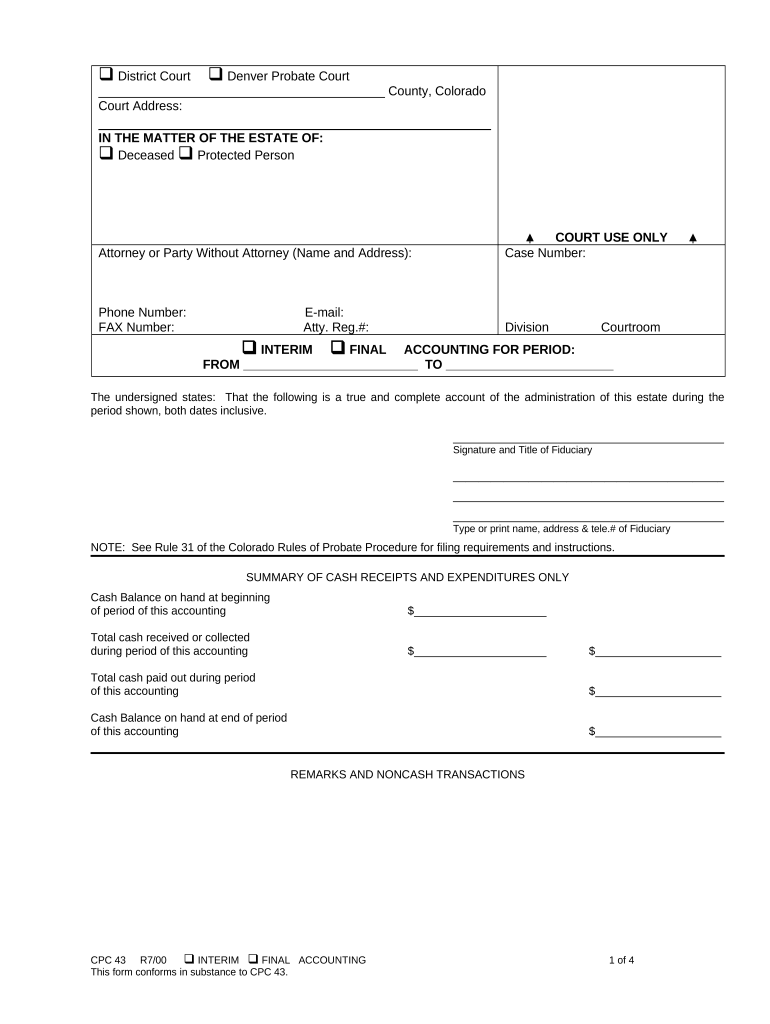
The Final Accounting Form is a structured statement, prepared by an executor, administrator, or trustee, that reconciles all receipts, disbursements, assets, liabilities, and proposed distributions at the close of estate or trust administration. It aggregates ledgers, supporting exhibits, fee requests, tax reconciliations, and inventory schedules into a court-ready package for review and approval. Courts and beneficiaries commonly review the final accounting before authorizing discharge of fiduciary duties and final distributions, and the document becomes part of the probate record.

Why a clear Final Accounting Form matters

A complete Final Accounting Form documents fiduciary actions, supports transparent distributions, and provides a verified record for judicial approval. It reduces beneficiary disputes, clarifies fee and expense requests, and helps avoid later surcharge claims or creditor challenges in probate proceedings.

Why a clear Final Accounting Form matters

Who prepares and relies on the Final Accounting Form

Executors, administrators, trustees, and their counsel prepare and file final accountings with probate courts or serve them on beneficiaries.

  • Personal representatives and executors — file when estate administration is complete and assets are ready for distribution.
  • Trustees — include accounting when a trust terminates or when beneficiaries request final reporting and settlement.
  • Estate attorneys and accountants — prepare schedules, tax reconciliations, and supporting pleadings for court submission and review.

Core components to include in a professional Final Accounting Form

A complete final accounting organizes the ledger, schedules, exhibits, statutory notices, signature and verification blocks, and a certification statement so the court can verify fiduciary conduct and authorize distribution.

Summary Ledger

Provide a running balance showing opening assets, all incoming funds, each disbursement with date and purpose, and a closing balance reconciled to inventory and bank statements.
Receipts & Disbursements

List every receipt and payment with dates, payor/payee, amounts, and reference numbers; group items by category and include subtotals that match ledger balances.

Inventory of Assets

Describe cash, accounts, securities, real property, and personal property with valuations, appraisal dates, account identifiers, and exhibit references to original documentation.

Liabilities & Claims

Identify creditor claims, taxes owed, contested claims, and payments made; show allowances or disallowances and reference docket entries or orders.

Fees & Compensation

Detail fiduciary and attorney fees, the calculation method or statutory basis, hourly rates if applicable, prior approvals, and any objections filed.

Supporting Exhibits

Attach bank statements, receipts, paid invoices, appraisals, prior accountings, and any court orders that affect distributions or expense allowances.

Stepwise checklist to prepare and submit a Final Accounting Form

Follow these sequential steps to prepare, verify, file, and serve the Final Accounting Form so it is admissible and ready for court review.

  • 01
    Prepare Schedules: Compile ledger, receipts, and inventory reconciliations.
  • 02
    Attach Exhibits: Append bank statements, invoices, and appraisals.
  • 03
    Obtain Approvals: Get fee approvals or consents before submission.
  • 04
    File & Serve: File with the probate clerk and serve parties per rules.

How the Final Accounting Form moves through review and approval

Typical routing includes internal review, counsel sign-off, court filing, and service to beneficiaries and creditors according to local probate rules.

  • Internal Review: Check arithmetic accuracy and confirm supporting documents.
  • Approvals: Obtain attorney and fiduciary sign-off in writing.
  • Court Filing: Submit original and required copies to the probate clerk.
  • Service: Serve beneficiaries, creditors, and interested parties per local rules.

Configuring an online workflow for Final Accounting filing

Set up a digital workflow to collect signatures, attachments, verification, and court-ready PDFs while preserving an audit trail.

Field Configuration
Attachments Require bank statements and invoices, allow PDF uploads
Signature Type Allow typed, drawn, or cryptographic signatures per court rules
Authentication Use email, SMS code, or two-factor where required
Retention Store signed PDF and certificate of completion securely

Technical checklist for e-submission and e-signature platforms

Use an e-signature solution that produces court-quality signed PDFs, detailed audit trails, and secure attachments for exhibits.

  • Document Formats: PDF/A and DOCX support
  • Authentication: Email, SMS code, or KBA options
  • Integrations: Integrates with case and cloud storage systems

Common timeline checkpoints and notice periods

Filing windows and notice periods vary by jurisdiction; courts often require notice and a statutory objection period before final distribution.

Court-Ordered Deadline:

Adhere to the date set by the probate judge or clerk for filing.

Notice Period to Creditors:

Follow the local statute for creditor notice; timing varies by state.

Objection Window:

Parties may object within the court-specified period after service of the accounting.

Tax Reporting Deadline:

File final estate and income tax returns according to IRS deadlines.

Final Distribution Date:

Distribution generally occurs after objections are resolved and court approval is entered.

Penalties and risks from incorrect or incomplete filings

Surcharge Liability: Court may surcharge fiduciary for losses
Creditor Claims: Unnoticed claims can reopen distributions
Tax Penalties: Incorrect returns trigger IRC §6721 penalties
Filing Rejection: Clerk may refuse deficient filings
Notary Errors: Improper acknowledgments can invalidate pages
Contested Accounting: Challenges increase costs and delay closure

Common mistakes to avoid when preparing the Final Accounting

  • Failing to attach supporting receipts and bank statements causes clerks to request amendments and delays distribution by weeks or months.
  • Miscalculations or unreconciled ledger balances invite beneficiary objections and possible judicial surcharge proceedings against the fiduciary.
  • Using inconsistent dates or accounting periods creates confusion about which transactions belong in the final accounting and may trigger supplemental filings.
  • Not serving all required parties or using incorrect service methods can render the accounting ineffective and subject to return or re-service.

Common eSignature vendor comparison for Final Accounting workflows

Compare key vendor attributes relevant to Final Accounting workflows: starting price, trial availability, bulk send, audit trail, HIPAA compliance, and envelope caps.

signNow DocuSign Adobe Sign PandaDoc HelloSign
Starting Price $8/user/mo $15/user/mo $14/user/mo $19/user/mo $15/user/mo
Free Trial 7-day free trial Yes, trial available Yes, trial available Yes, trial available Yes, trial available
Bulk Send Yes (Business Premium) Yes Yes Yes No
Audit Trail Yes Yes Yes Yes Yes
HIPAA Compliant Yes Yes Yes No No
Envelope Cap No cap 100 envelopes/user/year Varies by plan Varies by plan Varies by plan

Frequently asked questions about Final Accounting Forms

Answers to common questions about validity, notarization, corrections, and electronic filing to help avoid procedural delays or rejection.


Need help? Contact support

be ready to get more
Join over 28 million airSlate SignNow users