Establishing secure connection…Loading editor…Preparing document…

Florida Petition Form

This template is fully customizable. Edit the text, fill out the fields, and send it for signature. Give it a try!
Florida Petition Form

What the Florida Petition Form Is and when it's used

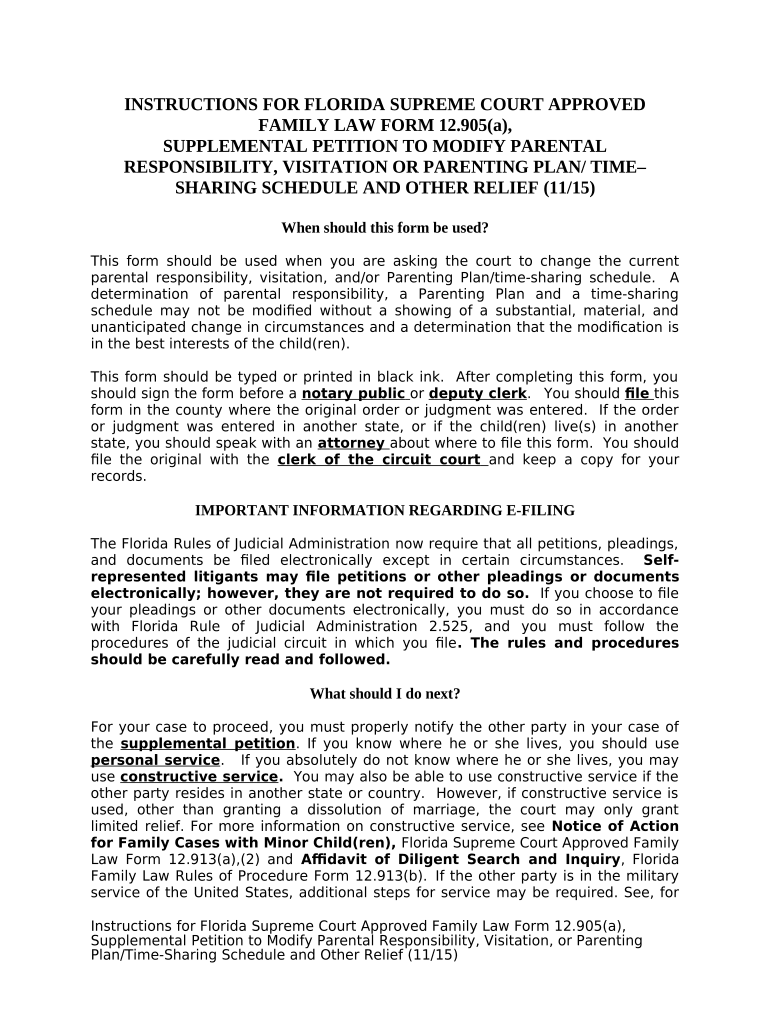
A Florida Petition Form is a written filing used to initiate a legal request or case with a Florida court or to ask a state agency for a particular relief, order, or administrative action. Petitions present parties, facts, and the specific relief sought, and they often attach supporting exhibits, verification, and service instructions. Depending on the type (civil, family, guardianship, probate, administrative), the form must meet local court formatting and filing rules. Electronic completion and submission are generally allowed under ESIGN and UETA when state and court procedures permit.

Why the Florida Petition Form matters for your case

The petition establishes the legal record, frames issues for the court or agency, and starts procedural timelines. A properly completed petition reduces rejection risk, clarifies relief requested, and speeds case processing.

Why the Florida Petition Form matters for your case

Who typically prepares and files this form

The Florida Petition Form is used by a range of filers depending on the matter and complexity.

  • Pro se petitioners filing without an attorney for uncontested or simple matters.
  • Attorneys and law firms preparing pleadings for litigation, family, probate, or guardianship matters.
  • Government agencies and court clerks processing administrative petitions or agency appeals.

Selection of court division, correct venue, and proper service are common differentiators among these users.

Core parts of a professional Florida Petition Form

A professional petition is organized, complete, and references supporting exhibits. Each section below is essential for clarity and court acceptance.

Caption

Court name, county, case number space, and title identifying petitioner and respondent so the filing appears in the correct docket and receives proper service.
Parties

Full legal names, business entities with jurisdiction, addresses, and contact information so the court and opposing parties can identify and serve the correct persons.

Statement of Facts

Concise factual narrative organized by numbered paragraphs that establishes the legal basis for relief without argument or unnecessary detail.

Relief Requested

Clear, itemized statement of the specific orders or remedies sought from the court or agency, including any alternative relief.

Jurat and Verification

Notarization or sworn verification when required; indicates the document was signed under oath and may affect admissibility.

Exhibits

Properly labeled attachments referenced in the petition (contracts, medical records, invoices) with an exhibit index and Bates numbers where appropriate.

Essential data elements required on most petitions

Petitioner Name: Full legal name
Respondent Name: Full legal name
Court and County: Correct court designation
Relief Sought: Specific orders requested
Signature Date: Signed MM/DD/YYYY
Contact Info: Address, phone, email

Step-by-step: filling the Florida Petition Form

Follow these core steps in order to prepare a court-ready petition.

  • 01
    Gather documents: Collect IDs, contracts, medical records, and exhibits.
  • 02
    Complete form: Enter data, check caption and venue.
  • 03
    Sign and notarize: Apply required signatures, jurat, and witness steps.
  • 04
    File and serve: Submit to clerk and serve opposing parties per rules.

Where to submit and how the filing flows

Different petition types route differently; use the correct destination and follow local e‑filing rules.

  • Clerk of Court: Primary filing destination for most civil and family petitions.
  • E-Filing Portal: Use approved e‑filing systems where required by local rules.
  • Mail or Hand Delivery: Allowed if local rules permit; track or obtain stamped copies.
  • Agency Office: Administrative petitions often file directly with the agency involved.

How to configure an online petition workflow

Setting up a digital workflow reduces manual errors and supports eSignature and document routing.

Field Configuration
Required Fields Mark name, date, and signature as required
Conditional Logic Show attachments only when relevant
Signer Authentication Use email + SMS or KBA as needed
Retention Policy Set automatic archival after finalization

Digital submission and format considerations

Electronic filing and eSignature require compatible file formats, signer authentication, and audit trails.

  • Integrations: Connect with court docketing, case management, or cloud storage systems.
  • File Formats: Use PDF or PDF/A for court-ready, text-searchable files.
  • Authenticator Options: Email link, SMS code, or stronger KBA methods

Verify the court or agency's e‑filing specifications before submission to avoid rejection or conversion errors.

Common timelines and time-sensitive actions

Petitions trigger multiple deadlines: service, responses, hearings, and statute of limitations considerations. Track calendar dates carefully.

Service Deadline:

Federal Rule 4(m) allows 90 days for service in federal actions

Respondent Answer:

Typically 20–30 days after service, depending on court rules

Hearing Scheduling:

Courts often set hearings 30–90 days after filing

Statute of Limitations:

Varies by claim; check Florida statutes for applicable periods

Clerk Processing:

Initial acceptance or administrative review may take several business days

Key milestones from filing to final disposition

A typical case follows a predictable sequence; these stages mark critical decision and action points.

01

File Petition

Clerk accepts and assigns a case number

02

Serve Parties

Provide official notice to respondents per rule

03

Respondent Deadline

Opposing party files a response or motion

04

Hearing or Order

Court schedules a hearing or issues a ruling

Common errors that delay acceptance or service

  • Incorrect caption or venue leads to misfiling and administrative rejection, requiring refiling in the correct county.
  • Missing or unordered exhibits make review difficult; reference each exhibit in the petition and include an index.
  • Unsigned or improperly notarized verification can render sworn statements inadmissible and may require re-execution.
  • Failure to follow local e‑filing rules (format, file size, cover sheet) often causes automated rejection.

Consequences of an incorrect or incomplete petition

Dismissal Risk: Case may be dismissed for procedural defects
Delay: Scheduling and hearings postponed
Sanctions: Court may impose monetary or procedural sanctions
Perjury Exposure: False statements may carry criminal risk
Fee Forfeiture: Filing fees may not be refundable
Service Failure: Improper service can void proceedings

eSignature vendor comparison for signing and routing petitions

Basic feature and price comparisons help choose an eSignature provider for petition workflows; signNow appears first for parity in this table.

signNow DocuSign Adobe Sign PandaDoc HelloSign
Starting Price $8/user/mo $15/user/mo $14/user/mo $19/user/mo $15/user/mo
Free Trial 7-day free trial Varies Varies Varies Varies
Bulk Send Yes Yes Yes Yes No
Audit Trail Yes Yes Yes Yes Yes
HIPAA Compliant Yes Yes Yes No No

Practical tips to complete the form accurately and efficiently

Adopt consistent checks and digital tools to minimize clerical errors and expedite processing.

Verify names and parties
Compare all names, entity spellings, and addresses against government or corporate records. Small discrepancies in names or entity identifiers frequently cause service or jurisdictional problems and can require re-filing.
Attach a clear exhibit index
Number and reference each exhibit inside the petition. A concise exhibit index reduces reviewer confusion, shortens review time, and ensures the court can readily match evidence to allegations.
Use eSignature with audit trail
Select an eSignature method that records signer identity, timestamps, and IP or authentication method; this evidence supports attribution and admissibility in contested matters.
Confirm service method
Follow the court's approved service rules and document proof of service. Mistakes in service method or timing can halt proceedings or require re-service.

Real-world examples of petition uses in Florida

These brief scenarios illustrate common petition types and practical outcomes.

Guardianship Petition

An adult child's petition alleges incapacity and requests appointment of a guardian

  • The petition attaches medical affidavits and care plans
  • The court schedules a hearing, reviews exhibits, and issues temporary orders while full investigation proceeds.

Landlord-Tenant Petition

A landlord files a petition for possession after nonpayment of rent

  • The filing includes lease, payment history, and notice of default
  • The clerk issues a summons, the tenant may respond, and the court sets an expedited hearing.

Representative filers and signers

Pro Se Petitioner

An individual representing themself files a simple petition. They must follow caption and venue rules, complete verification or notarization if required, and ensure service is effected correctly to preserve their claims.

Attorney Filings

A licensed practitioner prepares the petition using firm templates, includes citations and exhibits, signs with professional contact information, and often uses e‑filing with eSignature and automated service notifications.

Frequently asked questions about the Florida Petition Form

Answers to common procedural and technical questions about preparing, signing, and filing petitions in Florida.


Need help? Contact support

be ready to get more
Join over 28 million airSlate SignNow users