Establishing secure connection… Loading editor… Preparing document…
Navigation

Fill and Sign the Guide for Protecting Deceased Persons Form
Fill and Sign the Guide for Protecting Deceased Persons Form

How it works

Open the document and fill out all its fields.
Apply your legally-binding eSignature.
Save and invite other recipients to sign it.

Rate template

4.7
42 votes
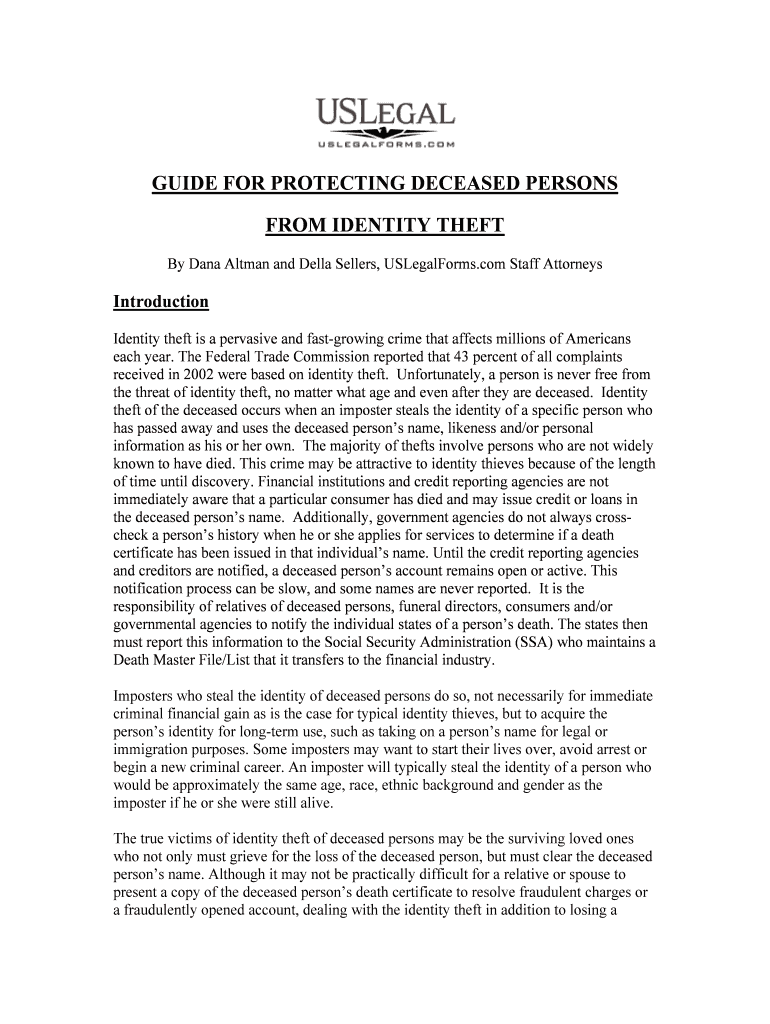
GUIDE FOR PROTECTING DECEASED PERSONS FROM IDENTITY THEFT By Dana Altman and Della Sellers, USLegalForms.com Staff Attorneys Introduction Identity theft is a pervasive and fast-growing crime that affects millions of Americans each year. The Federal Trade Commission reported that 43 percent of all complaints received in 2002 were based on identity theft. Unfortunately, a person is never free from the threat of identity theft, no matter what age and even after they are deceased. Identity theft of the deceased occurs when an imposter steals the identity of a specific person who has passed away and uses the deceased person’s name, likeness and/or personal information as his or her own. The majority of thefts involve persons who are not widely known to have died. This crime may be attractive to identity thieves because of the length of time until discovery. Financial institutions and credit reporting agencies are not immediately aware that a particular consumer has died and may issue credit or loans in the deceased person’s name. Additionally, government agencies do not always cross- check a person’s history when he or she applies for services to determine if a death certificate has been issued in that individual’s name. Until the credit reporting agencies and creditors are notified, a deceased person’s account remains open or active. This notification process can be slow, and some names are never reported. It is the responsibility of relatives of deceased persons, funeral directors, consumers and/or governmental agencies to notify the individual states of a person’s death. The states then must report this information to the Social Security Administration (SSA) who maintains a Death Master File/List that it transfers to the financial industry. Imposters who steal the identity of deceased persons do so, not necessarily for immediate criminal financial gain as is the case for typical identity thieves, but to acquire the person’s identity for long-term use, such as taking on a person’s name for legal or immigration purposes. Some imposters may want to start their lives over, avoid arrest or begin a new criminal career. An imposter will typically steal the identity of a person who would be approximately the same age, race, ethnic background and gender as the imposter if he or she were still alive. The true victims of identity theft of deceased persons may be the surviving loved ones who not only must grieve for the loss of the deceased person, but must clear the deceased person’s name. Although it may not be practically difficult for a relative or spouse to present a copy of the deceased person’s death certificate to resolve fraudulent charges or a fraudulently opened account, dealing with the identity theft in addition to losing a family member or spouse can be emotionally overwhelming. Moreover, a spouse who shared joint accounts with the deceased person may face serious financial implications of the identity theft. Federal legislation exists to help victims of identity theft, as well as many state laws, which vary by state. In the fall of 1998, for example, Congress passed the Identity Theft and Assumption Deterrence Act. This legislation created a new offense of identity theft, which prohibits knowingly transferring or using, without lawful authority, a means of identification of another person with the intent to commit, or to aid or abet, any unlawful activity that constitutes a violation of federal law, or that constitutes a felony under any applicable state or local law (18 U.S.C. § 1028(a)(7)). This offense, in most circumstances, carries a maximum term of 15 years' imprisonment, a fine, and criminal forfeiture of any personal property used or intended to be used to commit the offense. Acts committed in connection with identity theft or fraud may also involve violations of other statutes such as identification fraud (18 U.S.C. § 1028), credit card fraud (18 U.S.C. § 1029), computer fraud (18 U.S.C. § 1030), mail fraud (18 U.S.C. § 1341), wire fraud (18 U.S.C. § 1343), or financial institution fraud (18 U.S.C. § 1344). These federal offenses are felonies that carry substantial penalties in some cases, as high as 30 years' imprisonment, fines, and criminal forfeiture. Federal legislation has also been introduced and is pending that would directly address identity theft of deceased persons. The Identity Theft Protection for the Deceased Act and the Identity Theft Prevention and Timely Reporting Act would require the federal government to notify each of the national credit reporting agencies when an individual dies. The credit reporting agencies would then be required to place a permanent fraud alert in deceased persons’ files to prevent creditors from issuing credit or new loans to persons attempting to misuse the personal information of the deceased individual. How Criminals Steal a Deceased Person’s Identity and Signs that a Deceased Person May be the Victim of Identity Theft Some of the more common methods criminals use to obtain a deceased person’s personal information for illegal purposes include combing through detailed obituaries or newspaper articles that include the deceased person’s identifying information and matching it up with Social Security numbers posted on the Internet, on genealogy or ancestry websites or on websites that post the SSA’s Master Death Index. Imposters also obtain identifying information for deceased persons by stealing death certificates. You may discover that a deceased person has become the victim of identity theft if a collection notice, credit card bill or a notification from law enforcement is sent in the deceased person’s name. You may also discover identity theft of a deceased person by reviewing the deceased person’s credit report. Steps to Take When a Loved One Dies to Prevent Identity Theft 1. Obtain at least 12 copies of the official death certificate of the deceased person from the agency in your state that makes them available, such as the Department of Health, County Clerk or the Office of Vital Statistics or Records. Some entities will accept a photocopy, but others will require an original. 2. Notify credit card companies, banks, stock brokers, loan or lien holders and mortgage companies of the death of the deceased person. Address the outstanding debts of the deceased person by transferring the account to another person or closing the account. For joint accounts, you may want to change the name on the account to just include the surviving spouse’s name or close the account and open a new account under the surviving spouse’s name. For accounts you are closing, request that the company list the account as “Closed. Account holder is deceased.” USLegalForms.com provides a sample letter at http://www.uslegalforms.com/us/US-00731-LTR.htm to use to make the above requests. 3. Contact each of the three credit reporting bureaus or agencies (death information is not shared between the agencies) in writing and request a copy of the deceased person’s credit report to inform you of any collection notices or credit cards that need to be closed. Request that a “deceased” alert be placed on the report to prevent fraudulent accounts from being opened. The alert should read “Deceased. Do not issue credit. If someone applies for credit, notify the following person(s) immediately: (provide the name of the next surviving relative, executor/trustee of the estate and/or law enforcement agency, as well as the relationship of the person(s) listed to the deceased).” Also request all contact information on any accounts currently open in the deceased person’s name, such as credit grantors or collection agencies, so that you may contact those entities as well. USLegalForms.com provides a sample letter at http://www.uslegalforms.com/us/US- 00732-LTR.htm to use in making the above requests from the credit reporting agencies. The following is a list of the contact information for each of the credit reporting agencies: Equifax: 1-800-525-6285; www.equifax.com; P.O. Box 740241, Atlanta, GA 30374- 0241 Experian: 1-888-EXPERIAN (397-3742); www.experian.com; P.O. Box 9532, Allen, TX 75013 TransUnion: 1-800-680-7289; www.transunion.com; Fraud Victim Assistance Division, P.O. Box 6790, Fullerton, CA 92834-6790 4. Notify the Social Security Administration of the deceased person’s death. USLegalForms.com provides a sample letter at http://www.uslegalforms.com/us/US- 00733-LTR.htm for this purpose. 5. Notify any membership programs of the deceased person’s death. For example, the deceased person may have been a member of a video rental facility, public library, country club or fitness club. USLegalForms.com provides a sample letter at http://www.uslegalforms.com/us/US-00729-LTR.htm for this purpose. 6. Notify insurance companies of the deceased person’s death, if the deceased person held auto, health, life or other insurance policies. USLegalForms.com provides a sample letter at http://www.uslegalforms.com/us/US-00735-LTR.htm to use for this purpose. 7. Notify other entities of the deceased person’s death, such as the Veteran’s Administration (if the deceased person was a member of the military), Immigration Services (if the deceased person was not a U.S. Citizen), and professional agencies (if the deceased person was a member of a particular association or held a specialized license). USLegalForms.com provides a sample letter at http://www.uslegalforms.com/us/US- 00737-LTR.htm to use for this purpose. 8. Notify the Department of Motor Vehicles of the deceased person’s death if the deceased person had a driver’s license or state ID card. USLegalForms.com provides a sample letter at http://www.uslegalforms.com/us/US-00736-LTR.htm to use for this purpose. Also, transfer any vehicle registration papers to the new owners of any vehicles owned by the deceased person. 9. Register the deceased person’s name, address, telephone number, and e-mail address on the Direct Marketing Association’s (DMA) Deceased Do-Not-Contact list by completing the online form at https://preference.the-dma.org/cgi/ddnc_form.php . This list is an online registry to remove deceased persons from phone, e-mail and direct mail commercial marketing lists for a fee of $1.00. In addition to providing the name, address, telephone number and e-mail address of the deceased person, you will be required to provide the date of the deceased person’s death, their age at time of death, as well as your name, your relationship to the deceased person, your e-mail address and your credit card information. The DMA makes this list available to member and non-member companies and non-profit organizations. It is best to contact the various entities to notify them of the death of the deceased person and to request specific action to be taken by telephone and in writing. Sending correspondence by certified mail with return receipt requested is preferred, and you should always keep a copy of the letter you send, as well as letters you receive. When sending letters, you should include copies of the deceased person’s death certificate. Be sure to include in all correspondence with credit issuers and credit reporting agencies the name and Social Security number of the deceased, last known address, last five years of addresses (if applicable), date of birth and date of death. You should also include proper identification for yourself and verification of your relationship to the deceased person, such as official legal documents for power of attorney, executor/trustee or conservatorship. If the deceased person was your minor child, you should also provide a copy of the birth or death certificate for your child that names you as the parent. If you are a friend, neighbor or distant relative of the deceased person, and therefore considered a third party, you may not have the same rights to receive a credit report or change information on a person’s file as a spouse or executor/trustee of the person’s estate. You may be required to write to the credit reporting agencies to explain your relationship to the deceased person and why you should be allowed to make your requests even though you are classified as a third party. Credit reporting agencies handle these situations on a case-by-case basis. Initial Steps to Remedy Identity Theft of a Deceased Person 1. Request a copy of the deceased person’s credit report and the placement of a “deceased” alert on the report as described above. Additionally, ask that a security alert and/or general statement be added to the deceased person’s report to further prevent credit from being issued in the deceased person’s name. 2. If you have evidence of fraud, such as collection notices, bills or credit reports showing fraudulent activity, immediately notify and file a report with the local police where the deceased person lived or where the identity theft took place. Get a copy of the report or, at the very least, the number of the report, to submit to creditors and others that may require proof of the crime. Provide as much documented evidence as possible, including the deceased person’s death certificate, and make sure the police report lists the fraudulent accounts. Make a note of the phone number of the investigator so you’ll be able to give it to creditors and others who require verification of the deceased person’s case. If the imposter is a family member or friend, contacting law enforcement may be difficult for you. You may choose instead to seek the advice of an attorney that specializes in estate or family law. Remember, however, that without the police report, financial institutions may not be as willing to resolve fraudulent activity. 3. Notify any creditor, collection agency, credit issuer or utility company of the deceased person’s death, providing a copy of the deceased person’s death certificate. If you have evidence of fraud, request that the company begin an immediate investigation and that it notify you of the results of the investigation. Also request that the company issue letters of clearance, which you should retain with the deceased person’s estate documents. Tax Information If you think a deceased person’s identity has been stolen and used inappropriately for tax purposes, you should call the Internal Revenue Service (IRS) at 1-800-829-1040. If the deceased person has an unresolved issue related to identity theft, you should visit the IRS Taxpayer Advocate Service website www.irs.gov/advocate/ or call toll-free: 1-877-777-4778. Bankruptcy If you believe someone has filed for bankruptcy in a deceased person’s name, you should send written notification to the U.S. Trustee in the region where the bankruptcy was filed. A list of the U.S. Trustee Programs' Regional Offices is available on the UST website, or check the Blue Pages of the phone book under U.S. Government Bankruptcy Administration. You should include a copy of the deceased person’s death certificate and any other identifying information. If you provide enough documented evidence, the U.S. Trustee may make a criminal referral to law enforcement authorities. You may also want to file a complaint with the U.S. Attorney and/or the FBI in the city where the bankruptcy was filed. You may need to hire an attorney to help prove that the deceased person’s filing was fraudulent, since the U.S. Trustee does not offer free legal help or court documents. Copies of court documents may be obtained from the bankruptcy clerk's office for a fee. False Criminal Charges If a deceased person is falsely charged with a crime or traffic violation, you should file an impersonation report with the police/sheriff's department or the court, and confirm the deceased person’s identity and death. You should provide a photograph of the deceased person, a copy of the deceased person’s death certificate and other photo identification documents, such as his or her driver's license, passport, or travel visa. You can request the police to establish the deceased person’s innocence by comparing the photographs with those of the imposter. If the arrest warrant is not issued from the state or county where the deceased person lived, you should ask the local police department to forward the impersonation report to the police department in the jurisdiction where the arrest warrant, traffic citation, or criminal conviction originated. Once the deceased person’s name is cleared, the law enforcement agency should recall any warrants and issue a "clearance letter" or "certificate of release". You should ask the law enforcement agency to file the record of the follow-up investigation establishing the deceased person’s innocence with the district attorney's (D.A.) office and/or court in the jurisdiction where the crime occurred, so that an amended criminal complaint can be filed. You should request that the "key name" or "primary name" in the criminal database be changed from the deceased person’s name to the imposter's name (or to "John Doe" if the imposter's true identity is not known), with the deceased person’s name noted as an alias. Debt Collectors You may stop a debt collector from attempting to contact a deceased person by writing a letter to the collection agency telling them to stop and attaching a copy of the deceased person’s death certificate and police report. You may also send a letter to the collection agency, within 30 days after the agency sent the deceased person written notice of the debt, informing them of the deceased person’s death and stating that the deceased person does not owe the money. Again, you should attach copies of the deceased person’s death certificate and police report. Passport Fraud If you believe that a deceased person’s passport is being used fraudulently, you should contact the United States Department of State (USDS) through their website at www.travel.state.gov/passport/passport_1738.html, or call a local USDS field office. Local field offices are listed in the Blue Pages of the telephone directory. Even if the deceased person did not have a passport, you should notify the USDS of the deceased person’s identity theft to alert them to anyone ordering a passport fraudulently in the deceased person’s name. Phone Fraud If an identity thief has established phone service in a deceased person’s name, is making unauthorized calls that seem to come from and are billed to the deceased person’s cellular phone, or is using the deceased person’s calling card and PIN, you should contact the service provider immediately to cancel the account and/or calling card. For assistance with difficulties in removing fraudulent phone charges from the deceased person’s account or getting an unauthorized account closed, you should contact the appropriate agency below: - State Public Utility Commission for disputed local call charges. - Federal Communications Commission (FCC) for disputed cellular or long distance charges. The FCC regulates interstate and international communications by radio, television, wire, satellite, and cable. Call: 1-888-CALL-FCC; TTY: 1-888-TELL-FCC; or write: Federal Communications Commission, Consumer Information Bureau, 445 12th Street, SW, Room 5A863, Washington, DC 20554. You can file complaints online at www.fcc.gov, or e-mail your questions to fccinfo@fcc.gov. Social Security Number Misuse The SSA Office of the Inspector General should be notified of information regarding specific instances of SSN misuse that involves the buying or selling of SSN cards, may be related to terrorist activity, or is designed to obtain SSN benefits. You may file a complaint online at www.socialsecurity.gov/oig, call toll-free: 1-800-269-0271, fax: 410- 597-0118, or write: SSA Fraud Hotline, P.O. Box 17768, Baltimore, MD 21235. You may also call SSA toll-free at 1-800-772-1213 to verify the accuracy of the earnings reported on the deceased person’s SSN or request a copy of the deceased person’s Social Security Statement. You should follow up with written correspondence and keep a copy for your files. You may also request a Social Security Statement (Form 7004) at www.ssa.gov/online/ssa-7004.html. Student Loans If you discover a fraudulent student loan in the deceased person’s name, you should close the loan account by contacting the school or program that opened the student loan. You should also report the fraudulent loan to the U.S. Department of Education. Call the Inspector General's Hotline toll-free at 1-800-MIS-USED; visit www.ed.gov/about/offices/list/oig/hotline.html?src=rt; or write: Office of Inspector General, U.S. Department of Education, 400 Maryland Avenue, SW, Washington, DC 20202-1510. Medical Identity Theft An identity thief may use a deceased person’s identifying information to obtain medical treatment or medical supplies, or to submit false claims to Medicare/Medicaid or to a deceased person's health insurance plan. Medical identity theft is on the rise among large crime rings and among insiders or employees who work in the health care profession and have access to patient records. According to the World Privacy Forum, as many as 250,000 to 500,000 Americans have become victims of this type of identity theft. For further details on medical identity theft and help for consumers and victims, see the World Privacy Forum's report at www.worldprivacyforum.org/medicalidentitytheft.html. Counseling The emotional impact of identity theft of deceased persons can be overwhelming for survivors, and family members or friends may require counseling to help in the healing process. Especially if the imposter is a parent, relative or other person known to the deceased person’s family, survivors of the deceased person often experience feelings of betrayal, violation, anger and fear. Survivors may benefit from meeting with a private therapist, local religious leader, county Mental Health Association representative, support group, or supportive family members or friends. Useful Links American Association of Retired Persons - http://www.aarp.org/money/wise_consumer/scams/a2002-10-03- WiseConsumerIdentityTheft.html Better Business Bureau - http://www.bbbonline.org/idtheft/complaint.asp Federal Bureau of Investigation - http://www.fbi.gov/publications/financial/fcs_report052005/fcs_report052005.htm#e1 Federal Deposit Insurance Corporation - http://www.fdic.gov/consumers/consumer/ccc/theft.html Identity Theft Resource Center - http://www.idtheftcenter.org/index.shtml National Consumers League - http://www.nclnet.org/privacy/ National Fraud Information Center - http://www.fraud.org/welcome.htm Privacy Rights Clearinghouse - http://www.privacyrights.org/identity.htm Social Security Administration Online - http://www.ssa.gov/pubs/idtheft.htm United States Department of Justice – http://www.usdoj.gov/criminal/fraud/idtheft.html United States Postal Inspection Service - http://www.usps.com/postalinspectors/idthft_ncpw.htm

Useful Advice for Finishing Your ‘Guide For Protecting Deceased Persons’ Online

Are you fed up with the trouble of managing paperwork? Look no further than airSlate SignNow, the premier eSignature solution for individuals and small to medium-sized businesses. Bid farewell to the dreary task of printing and scanning documents. With airSlate SignNow, you can effortlessly finalize and sign documents online. Leverage the powerful features included in this intuitive and cost-effective platform and transform your method of document management. Whether you need to approve forms or collect signatures, airSlate SignNow takes care of everything seamlessly, with just a few clicks.

Follow these comprehensive instructions:

  1. Access your account or register for a free trial with our service.
  2. Select +Create to upload a file from your device, cloud, or our template library.
  3. Edit your ‘Guide For Protecting Deceased Persons’ in the editor.
  4. Click Me (Fill Out Now) to set up the document on your end.
  5. Add and designate fillable fields for others (if necessary).
  6. Proceed with the Send Invite options to seek eSignatures from others.
  7. Save, print your copy, or convert it into a reusable template.

Don't worry if you need to collaborate with your team on your Guide For Protecting Deceased Persons or send it for notarization—our platform provides everything you require to accomplish such tasks. Sign up with airSlate SignNow today and elevate your document management to a new standard!

Here is a list of the most common customer questions. If you can’t find an answer to your question, please don’t hesitate to reach out to us.

Need help? Contact Support

The best way to complete and sign your guide for protecting deceased persons form
Save time on document management with airSlate SignNow and get your guide for protecting deceased persons form eSigned quickly from anywhere with our fully compliant eSignature tool.

How to Sign a PDF Online How to Sign a PDF Online

How to fill out and sign forms online

Previously, dealing with paperwork took lots of time and effort. But with airSlate SignNow, document management is easy and fast. Our robust and easy-to-use eSignature solution lets you easily complete and electronically sign your guide for protecting deceased persons form online from any internet-connected device.

Follow the step-by-step guide to eSign your guide for protecting deceased persons form template online:

  • 1.Sign up for a free trial with airSlate SignNow or log in to your account with password credentials or SSO authorization option.
  • 2.Click Upload or Create and add a file for eSigning from your device, the cloud, or our form catalogue.
  • 3.Click on the file name to open it in the editor and use the left-side toolbar to fill out all the blank areas accordingly.
  • 4.Drop the My Signature field where you need to approve your form. Type your name, draw, or import a picture of your regular signature.
  • 5.Click Save and Close to accomplish modifying your completed document.

As soon as your guide for protecting deceased persons form template is ready, download it to your device, export it to the cloud, or invite other individuals to electronically sign it. With airSlate SignNow, the eSigning process only requires a couple of clicks. Use our robust eSignature solution wherever you are to handle your paperwork productively!

How to Sign a PDF Using Google Chrome How to Sign a PDF Using Google Chrome

How to complete and sign paperwork in Google Chrome

Completing and signing documents is simple with the airSlate SignNow extension for Google Chrome. Adding it to your browser is a fast and effective way to deal with your forms online. Sign your guide for protecting deceased persons form template with a legally-binding electronic signature in just a few clicks without switching between applications and tabs.

Follow the step-by-step guide to eSign your guide for protecting deceased persons form in Google Chrome:

  • 1.Navigate to the Chrome Web Store, search for the airSlate SignNow extension for Chrome, and install it to your browser.
  • 2.Right-click on the link to a document you need to sign and choose Open in airSlate SignNow.
  • 3.Log in to your account using your password or Google/Facebook sign-in buttons. If you don’t have one, sign up for a free trial.
  • 4.Use the Edit & Sign toolbar on the left to fill out your sample, then drag and drop the My Signature field.
  • 5.Add a photo of your handwritten signature, draw it, or simply type in your full name to eSign.
  • 6.Make sure all data is correct and click Save and Close to finish editing your paperwork.

Now, you can save your guide for protecting deceased persons form template to your device or cloud storage, email the copy to other individuals, or invite them to eSign your form via an email request or a secure Signing Link. The airSlate SignNow extension for Google Chrome improves your document processes with minimum effort and time. Try airSlate SignNow today!
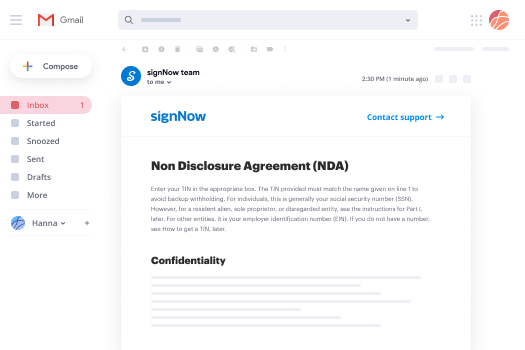

How to Sign a PDF in Gmail How to Sign a PDF in Gmail How to Sign a PDF in Gmail

How to fill out and sign documents in Gmail

Every time you get an email with the guide for protecting deceased persons form for approval, there’s no need to print and scan a document or download and re-upload it to a different program. There’s a better solution if you use Gmail. Try the airSlate SignNow add-on to promptly eSign any documents right from your inbox.

Follow the step-by-step guide to eSign your guide for protecting deceased persons form in Gmail:

  • 1.Visit the Google Workplace Marketplace and look for a airSlate SignNow add-on for Gmail.
  • 2.Install the tool with a related button and grant the tool access to your Google account.
  • 3.Open an email containing an attached file that needs approval and use the S key on the right sidebar to launch the add-on.
  • 4.Log in to your airSlate SignNow account. Opt for Send to Sign to forward the document to other people for approval or click Upload to open it in the editor.
  • 5.Drop the My Signature option where you need to eSign: type, draw, or upload your signature.

This eSigning process saves efforts and only takes a few clicks. Use the airSlate SignNow add-on for Gmail to adjust your guide for protecting deceased persons form with fillable fields, sign documents legally, and invite other parties to eSign them al without leaving your mailbox. Improve your signature workflows now!

How to Sign a PDF on a Mobile Device How to Sign a PDF on a Mobile Device How to Sign a PDF on a Mobile Device

How to fill out and sign paperwork in a mobile browser

Need to quickly fill out and sign your guide for protecting deceased persons form on a smartphone while doing your work on the go? airSlate SignNow can help without the need to install additional software apps. Open our airSlate SignNow tool from any browser on your mobile device and create legally-binding electronic signatures on the go, 24/7.

Follow the step-by-step guidelines to eSign your guide for protecting deceased persons form in a browser:

  • 1.Open any browser on your device and follow the link www.signnow.com
  • 2.Sign up for an account with a free trial or log in with your password credentials or SSO authentication.
  • 3.Click Upload or Create and add a file that needs to be completed from a cloud, your device, or our form catalogue with ready-to go templates.
  • 4.Open the form and complete the blank fields with tools from Edit & Sign menu on the left.
  • 5.Put the My Signature area to the form, then type in your name, draw, or upload your signature.

In a few easy clicks, your guide for protecting deceased persons form is completed from wherever you are. When you're done with editing, you can save the file on your device, build a reusable template for it, email it to other individuals, or ask them to electronically sign it. Make your paperwork on the go speedy and efficient with airSlate SignNow!
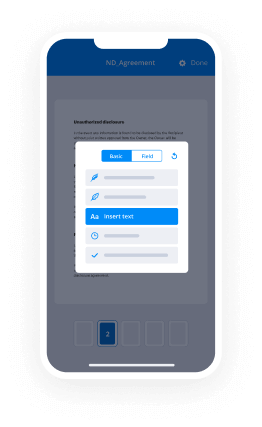

How to Sign a PDF on iPhone How to Sign a PDF on iPhone

How to complete and sign documents on iOS

In today’s business world, tasks must be completed rapidly even when you’re away from your computer. With the airSlate SignNow mobile app, you can organize your paperwork and sign your guide for protecting deceased persons form with a legally-binding eSignature right on your iPhone or iPad. Install it on your device to close deals and manage documents from anyplace 24/7.

Follow the step-by-step guide to eSign your guide for protecting deceased persons form on iOS devices:

  • 1.Open the App Store, search for the airSlate SignNow app by airSlate, and install it on your device.
  • 2.Open the application, tap Create to import a template, and select Myself.
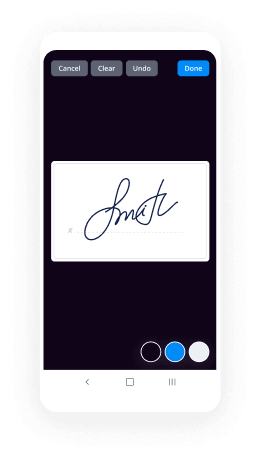
  • 3.Choose Signature at the bottom toolbar and simply draw your autograph with a finger or stylus to eSign the form.
  • 4.Tap Done -> Save right after signing the sample.
  • 5.Tap Save or take advantage of the Make Template option to re-use this paperwork later on.

This process is so simple your guide for protecting deceased persons form is completed and signed in just a few taps. The airSlate SignNow application works in the cloud so all the forms on your mobile device remain in your account and are available whenever you need them. Use airSlate SignNow for iOS to improve your document management and eSignature workflows!
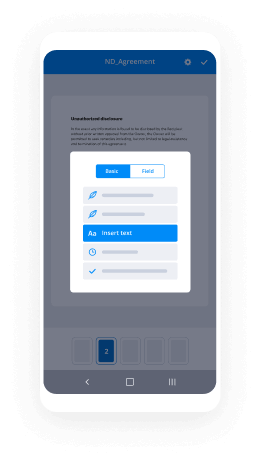
How to Sign a PDF on Android How to Sign a PDF on Android

How to complete and sign documents on Android

With airSlate SignNow, it’s easy to sign your guide for protecting deceased persons form on the go. Install its mobile app for Android OS on your device and start boosting eSignature workflows right on your smartphone or tablet.

Follow the step-by-step guidelines to eSign your guide for protecting deceased persons form on Android:

  • 1.Go to Google Play, find the airSlate SignNow application from airSlate, and install it on your device.
  • 2.Sign in to your account or register it with a free trial, then import a file with a ➕ option on the bottom of you screen.
  • 3.Tap on the uploaded document and select Open in Editor from the dropdown menu.
  • 4.Tap on Tools tab -> Signature, then draw or type your name to electronically sign the template. Fill out empty fields with other tools on the bottom if required.
  • 5.Use the ✔ button, then tap on the Save option to finish editing.

With an easy-to-use interface and total compliance with major eSignature standards, the airSlate SignNow application is the best tool for signing your guide for protecting deceased persons form. It even operates offline and updates all record adjustments when your internet connection is restored and the tool is synced. Fill out and eSign forms, send them for approval, and make multi-usable templates whenever you need and from anywhere with airSlate SignNow.

Sign up and try Guide for protecting deceased persons form
  • Close deals faster
  • Improve productivity
  • Delight customers
  • Increase revenue
  • Save time & money
  • Reduce payment cycles