Establishing secure connection…Loading editor…Preparing document…

Subsequent Mortgage Loan Purchase Agreement

This template is fully customizable. Edit the text, fill out the fields, and send it for signature. Give it a try!
Subsequent Mortgage Loan Purchase Agreement

What the Subsequent Mortgage Loan Purchase Agreement Is

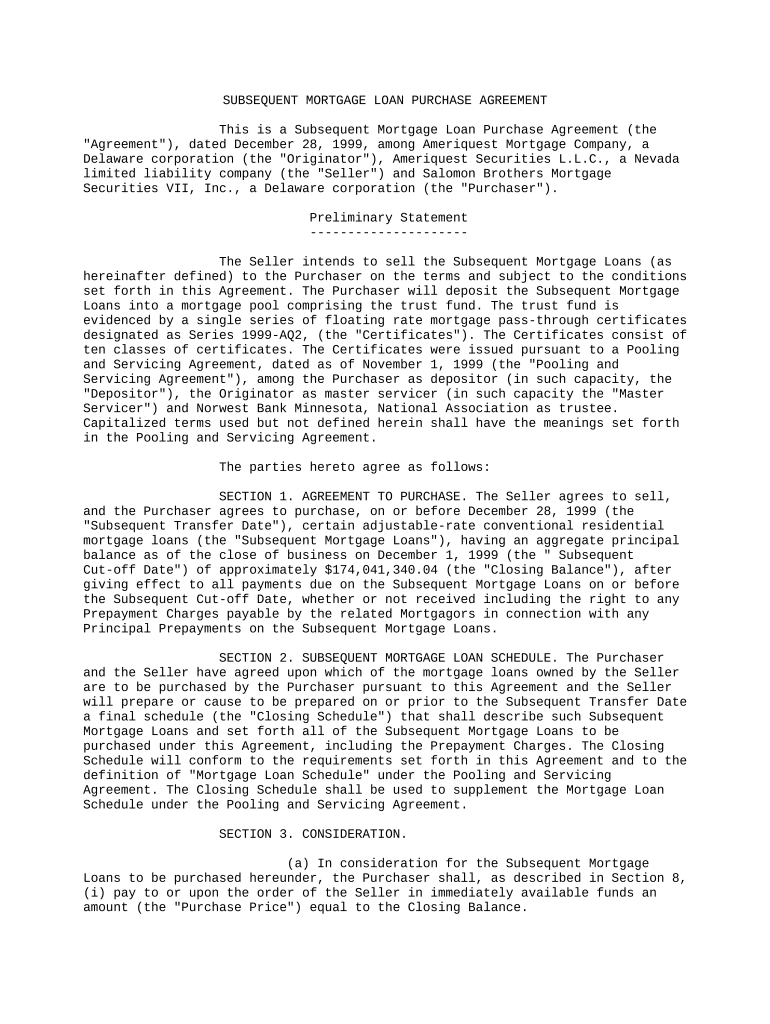
A Subsequent Mortgage Loan Purchase Agreement documents the sale or transfer of one or more mortgage loans from a seller/assignor to a buyer/assignee after an initial acquisition or pooling event. It records the specific loans, purchase price allocation, representations and warranties, closing conditions, assignment mechanics, and any servicing transfer instructions. The document ensures both parties identify transferred loan files, state conditions for funding and recording, and allocate liabilities and indemnities tied to loan performance, title, or regulatory compliance.

Why a Clear Agreement Matters for Subsequent Loan Purchases

A well-drafted Subsequent Mortgage Loan Purchase Agreement reduces ambiguity about which loans transfer, the price allocation, and each party’s post-closing obligations. It limits disputes over repurchases, servicing errors, and indemnity claims by documenting due diligence, representations, and remedies in a single, auditable contract.

Why a Clear Agreement Matters for Subsequent Loan Purchases

Who Typically Uses This Agreement

Typical users include loan sellers, investors buying pools or individual loans, mortgage servicers, and in-house counsel at financial institutions responsible for secondary-market transactions.

  • Loan seller teams managing asset disposition and repurchase obligations
  • Investors and asset managers acquiring loans or performing portfolio swaps
  • Servicers and sub-servicers coordinating file delivery and servicing transfers

Core Components of a Professional Subsequent Mortgage Loan Purchase Agreement

A comprehensive agreement organizes key clauses so parties can operationalize the transfer, close cleanly, and resolve post-closing claims without repeated negotiation.

Identifying Loans

Detailed loan schedule with loan numbers, borrower names, property addresses, original principal, and current balance for precise transfer mapping.
Purchase Price

Allocation method and payment terms, including any holdbacks, escrowed amounts, and adjustments for prepayments or curtailments.

Representations

Seller statements about loan validity, enforceability, compliance, documentation completeness, and bankruptcy or litigation status at closing.

Warranties & Indemnities

Remedies for breaches, repurchase obligations, cure periods, and limits on damages and recovery mechanics post-closing.

Closing Mechanics

Conditions precedent, required deliveries (files, endorsements, assignments), funding instructions, and recording responsibilities.

Servicing Transfer

Instructions for assignment of servicing rights, notice to borrowers, escrow handling, and data file formats for system migration.

Step-by-Step: How to Complete and Close the Agreement

Follow these steps in order to prepare, review, sign, and record the subsequent loan purchase with reduced operational risk.

  • 01
    Prepare Schedule: Assemble the loan schedule and supporting files.
  • 02
    Due Diligence: Buyer reviews files and confirms covenants.
  • 03
    Execute Agreement: Authorized signers sign and date the contract.
  • 04
    Close and Record: Fund consideration, deliver documents, and record assignments.

How to Configure the Online Workflow

Set fields, signer order, and authentication before sending to ensure compliance and an auditable record of the transaction.

Field Configuration
Signature Order Lender signs after buyer confirms funding conditions
Authentication Email plus SMS code for primary signers
Conditional Fields Show repurchase clauses only if certain boxes checked
Reminder Schedule Send two reminders at 3 and 7 days

Where to Send and File Documents

Route executed copies to all contracting parties, the servicer, and the county recorder as required; maintain a verified delivery log.

  • Executed Copies: Deliver signed PDF to buyer, seller, and servicer
  • Loan Files: Upload complete loan files to secure repository
  • Recording Office: Record assignments with county recorder where property located
  • Post-Closing Packets: Send reconciled delivery and funding statements

Digital Signing and eSubmission Considerations

Choose eSignature and file-transfer settings that support audit trails, strong authentication, and the formats required by the buyer and recorder.

  • Integrations: Salesforce, NetSuite, Box
  • Formats: PDF, DOCX, CSV
  • Authentication: Email + SMS or KBA

Common Timing Elements and Deadlines

Key dates govern funding, recording, and repurchase windows; track them in closing checklists to prevent covenant or recording lapses.

Execution Date:

Date parties sign; starts most contractual deadlines.

Funding Deadline:

Date by which buyer must deliver purchase consideration.

Recording Window:

Record assignments promptly after closing per county rules.

Repurchase Notice:

Seller cure period for discovery of defects.

Escrow Release:

Date for releasing holdback or escrowed funds.

Key Milestones from Agreement to Recording

Track these sequential milestones to coordinate funding, delivery, and public recording of the assignment.

01

Negotiation Complete

Agreement terms finalized and approved internal counsel.

02

Document Execution

Authorized signatories execute the agreement and schedules.

03

Funding and Delivery

Buyer wires funds; seller delivers loan files.

04

Record Assignment

Assignment and related documents recorded with county recorder.

Common Preparation and Execution Mistakes to Avoid

  • Incomplete loan schedules or mismatched loan IDs causing reconciliation disputes and delayed funding.
  • Using nonstandard or ambiguous assignment language that limits enforceability or creates conflicting title records.
  • Missing or inconsistent signature authority records leading to challenges on assignment validity or title acceptance.
  • Failing to record assignments promptly, which may affect priority, lien position, or borrower notice requirements.

Potential Risks and Consequences of Errors

Title Defect: May lead to indemnity claims
Funding Delay: Could trigger breach damages
Repurchase Exposure: Seller may owe repurchase price
Regulatory Risk: Consumer disclosure violations possible
Recording Failure: Loss of lien priority
Data Privacy: Improper PHI handling risks HIPAA

eSignature Vendor Comparison for Executing Agreements

Common eSignature features and pricing for high-level comparison. signNow is listed first per vendor layout rules; verify plan details with each vendor for specific enterprise options.

signNow DocuSign Adobe Sign PandaDoc HelloSign
Starting Price $8/user/mo $15/user/mo $14/user/mo $19/user/mo $15/user/mo
Free Trial 7-day free trial Varies by vendor Varies by vendor Varies by vendor Varies by vendor
Bulk Send Yes Yes Yes Yes Varies by plan
Audit Trail Yes Yes Yes Yes Yes
HIPAA Compliant Yes Yes Yes No No
Envelope Cap No cap 100 envelopes/user/year Varies by plan Varies by plan Varies by plan

How to Download, Save, and Export Completed Agreements

Preserve both human-readable signed PDFs and machine-readable exports for compliance, audit, and servicing system ingestion.

PDF/A Archive

Save a PDF/A copy of the signed file for long-term archival and compatibility with most recordkeeping systems and county requirements.

DOCX Editable

Keep an editable DOCX version for internal amendment tracking but do not use it as the executed record unless signed again.

CSV/Excel Export

Export signature metadata and loan schedule data as CSV for reconciliation and import into servicing or investor accounting systems.

Audit Record

Download the platform’s certificate of completion showing timestamps, IP, and authentication events to support enforceability.

Required Information and Key Fields Checklist

Borrower Name: Full legal name
Seller Name: Entity legal name
Loan Number: Servicer loan ID
Property Address: Street, city, state, ZIP
Purchase Price: Dollar amount
Effective Date: MM/DD/YYYY format

Who May Sign the Agreement

Lender Representative

An authorized officer or employee of the buyer with delegation of authority in corporate records; the signer should be listed in a corporate resolution or power of attorney to avoid later challenges to execution authority.

Seller Authorized Signer

An officer or designated agent of the seller with signing authority documented in organizational minutes or an executed power of attorney; third-party agent signatures require a clear agency attachment.

Frequently Asked Questions About Execution and Validity

Answers to common legal and practical questions when preparing or executing a Subsequent Mortgage Loan Purchase Agreement.


Need help? Contact support

be ready to get more
Join over 28 million airSlate SignNow users