Establishing secure connection…Loading editor…Preparing document…

Landlord Complaint Letter

This template is fully customizable. Edit the text, fill out the fields, and send it for signature. Give it a try!
Landlord Complaint Letter

What a Landlord Complaint Letter Is and When to Use It

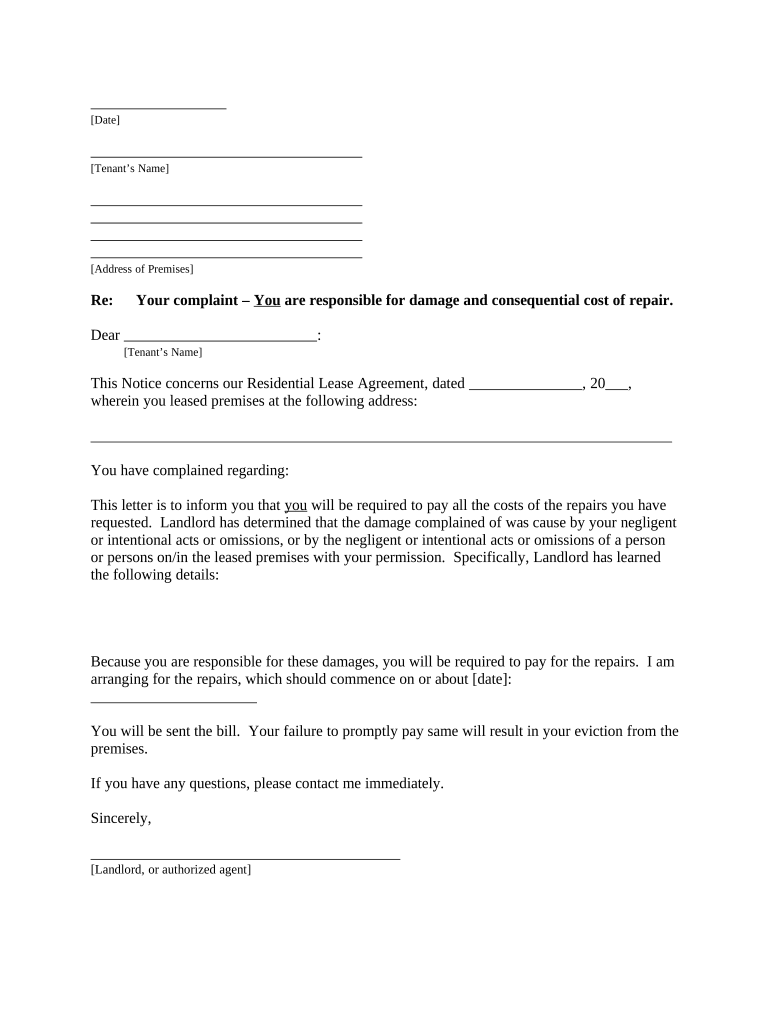
The Landlord Complaint Letter is a formal written notice tenants use to report lease violations, property defects, or landlord misconduct to a property owner, manager, or housing authority. It documents specific incidents, dates, and any steps already taken to resolve the issue while requesting corrective action or remedies. A clear, dated complaint helps preserve legal rights, creates a paper trail for repairs or rent withholding disputes, and may be required by local housing codes before filing administrative complaints or pursuing litigation. Use concise facts and attach supporting evidence.

Why a Formal Written Complaint Matters

A Landlord Complaint Letter clarifies the problem, records dates and communications, and creates evidence needed for repairs, rent adjustments, or enforcement actions. It reduces misunderstandings, speeds resolution by providing clear expectations, and supports legal or administrative remedies when informal requests fail.

Why a Formal Written Complaint Matters

Who Typically Prepares and Submits These Letters

Tenants, property managers, and legal representatives use a Landlord Complaint Letter to document repair requests, safety hazards, lease breaches, or habitability issues when informal contacts fail.

  • Tenants reporting unresolved repairs, health hazards, or lease violations to landlord or property manager.
  • Tenant organizations or legal clinics drafting formal notices before administrative complaints or lawsuits.
  • Property managers documenting tenant complaints, requests for action, or records for insurance and compliance.

Representative User Profiles

Emily Rivera, Tenant Advocate

Emily represents tenants in a community legal clinic and prepares clear complaint letters that cite lease clauses, document habitability defects with dated photos, and track correspondence to support administrative complaints or negotiated remedies.

Mark Thompson, Property Manager

Mark receives tenant complaints, logs issues in the property management system, and uses standardized complaint letters to ensure consistent responses, assign repairs, and preserve records for insurance and regulatory compliance.

What to Include in a Professional Landlord Complaint Letter

A professional Landlord Complaint Letter combines clear facts, supporting evidence, desired remedies, and legal references to prompt timely landlord response and preserve tenant rights.

Header

Include your full legal name, rental property address, unit number, current mailing address if different, and the date to establish identity and create a clear record for correspondence.
Specific Incidents

Describe each issue with dates, times, locations, involved persons, and how the condition breaches the lease or applicable housing code; avoid opinionated language and focus on verifiable facts.

Supporting Evidence

Attach photos, repair requests, inspection reports, receipts, and previous emails or texts that corroborate your claims; label each exhibit and reference it in the body of the letter.

Requested Remedy

State the specific action you want—repair, abatement, reimbursement, rent reduction, or corrective timetable—and provide a reasonable deadline for completion.

Legal Basis

Cite relevant lease clauses, local housing codes, or habitability standards when applicable; referencing statutes strengthens the claim but consult counsel for complex legal assertions.

Closing Statement

Request confirmation of receipt, provide contact information for follow-up, and indicate next steps if the issue is not resolved, such as filing a housing complaint or seeking legal advice.

Step-by-Step: Prepare and Send Your Complaint Letter

Follow these steps to prepare and send an effective Landlord Complaint Letter with supporting evidence and clear remedy requested.

  • 01
    Collect Facts: List dates, times, and witnesses.
  • 02
    Gather Evidence: Photographs, receipts, prior communications.
  • 03
    Draft Letter: State issues, desired remedy, and deadline.
  • 04
    Send & Record: Deliver via certified mail or email; keep copies.

Where and How to Submit the Letter

Decide whether to send the complaint directly to the landlord, to the property manager, or to a local housing authority based on issue severity and prior communications.

  • Direct to Landlord: Send by certified mail or email with read receipt.
  • Property Manager: Use company portal or office address when available.
  • Housing Authority: File with code enforcement for unresolved habitability issues.
  • Legal Counsel: Send via attorney when escalating toward litigation or injunctions.

Digital Workflow Settings for Online Completion

Configure an online workflow to assemble, sign, and distribute the Landlord Complaint Letter efficiently while retaining an audit trail.

Field Configuration
Template Pre-fill tenant fields and detachable exhibits
Signing Allow tenant signature and witness or notarization step
Delivery Certified mail, email, or housing authority upload
Retention Secure storage with export to PDF and audit log

Technical Considerations for eSubmission and Storage

Choose distribution channels and eSignature provider compatible with your security and notarization needs, and verify audit trail and storage options before sending notices.

  • Supported Formats: PDF, DOCX, or image files
  • Integrations: Google Drive, Microsoft 365, NetSuite
  • Authentication: Email, SMS code, or ID verification

Typical Deadlines and Follow-Up Expectations

Key deadlines and expectations for sending, following up, and escalating a Landlord Complaint Letter to landlords or housing authorities.

Immediate:

Document issue and send notice within days of occurrence

Repair Deadline:

Provide landlord a reasonable period, typically 7–30 days

Follow-Up:

Send second notice 7–14 days after initial letter

File Complaint:

If unresolved, file with housing authority after deadline passes

Legal Action:

Consult counsel if no remedy within statutory timeframe

Common Mistakes to Avoid When Preparing the Letter

  • Using vague language or emotional statements instead of concrete dates, times, and measurable effects undermines credibility and slows resolution.
  • Failing to attach or label supporting documents such as photos, receipts, or prior messages causes confusion and weakens evidence.
  • Sending the letter to the wrong recipient or outdated address can forfeit administrative notice requirements and delay enforcement.
  • Omitting a clear requested remedy or reasonable deadline makes it difficult to measure compliance and to justify escalation.

Risks and Consequences of an Incorrect or Incomplete Letter

Delayed Repair: Escalated damage, potential code violations
Lost Evidence: Missing records weaken claims
Incorrect Address: Notice may not be delivered
Retaliation Risk: Illegal eviction or harassment
Statute Issues: Missed administrative deadlines
Legal Costs: Higher attorney fees later

eSignature Pricing and Feature Snapshot Relevant to Complaint Letters

Compare baseline pricing and core features across eSignature providers commonly used to distribute and sign Landlord Complaint Letters; confirm vendor terms and BAAs where applicable.

signNow DocuSign Adobe Sign PandaDoc HelloSign
Starting Price $8/user/mo $15/user/mo $14/user/mo $19/user/mo $15/user/mo
Free Trial 7-day trial Varies by vendor Varies by vendor Varies by vendor Varies by vendor
Bulk Send Yes Yes Yes Yes Varies
Audit Trail Yes Yes Yes Yes Yes
HIPAA Compliant Yes Varies Varies Varies Varies
Envelope Cap No envelope cap 100 envelopes/user/year Varies by plan Varies by plan Varies by plan

Real-World Examples of How Complaint Letters Resolve Issues

Two short scenarios show typical usage: documenting chronic repair needs and unsafe conditions to prompt repair or administrative enforcement.

Chronic Repair Case

A tenant documented repeated heating failures with dates and photos to the landlord

  • The property manager acknowledged receipt and scheduled repairs
  • The clear timeline and evidence supported a code enforcement referral and expedited repairs when the landlord missed the deadline.

Unsafe Conditions Case

A resident reported mold and water intrusion with invoices and medical notes

  • The landlord failed to respond within the requested period
  • The tenant filed the complaint and used the documented letter and attachments when seeking housing authority remediation and temporary relocation assistance.

Key Information to Include (Checklist)

Tenant Name: Full legal name matching ID
Property Address: Street, unit, city, state, ZIP
Lease Details: Lease start, term, relevant clauses
Incident Dates: MM/DD/YYYY format for each occurrence
Evidence List: Photos, receipts, communications, labeled exhibits
Contact Info: Phone and email for reply

Frequently Asked Questions About Landlord Complaint Letters

Answers to common questions about legality, e-signatures, notarization, and next steps when a landlord does not respond.


Need help? Contact support

be ready to get more
Join over 28 million airSlate SignNow users