Establishing secure connection…Loading editor…Preparing document…

Mutual Agreement

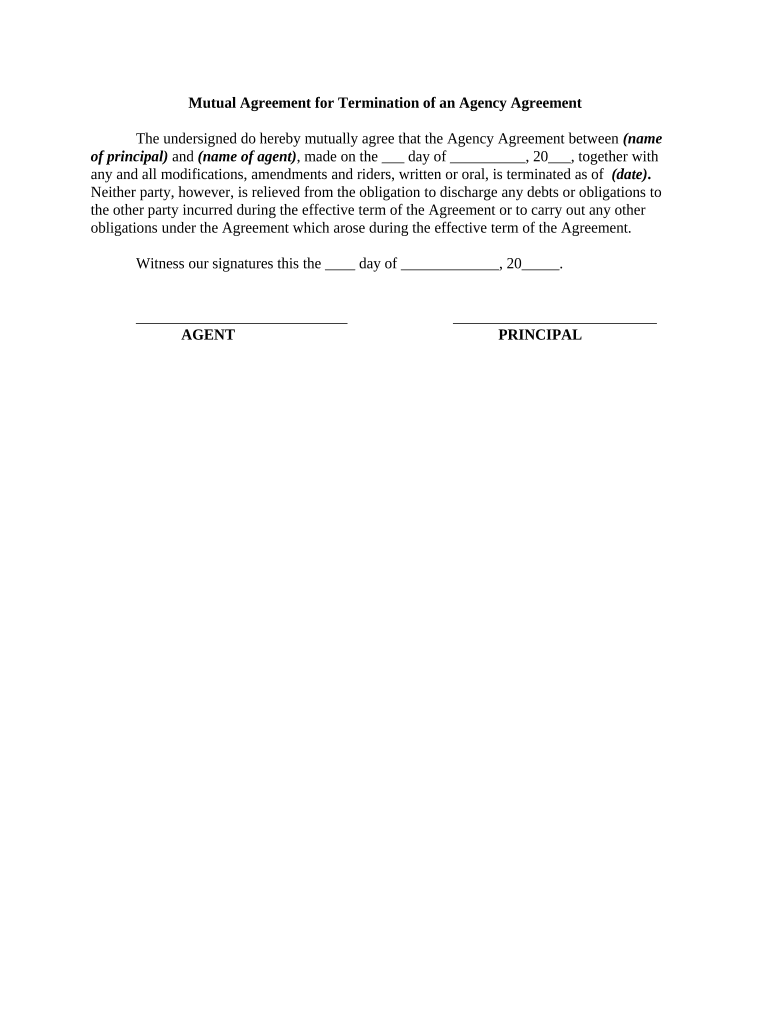
This template is fully customizable. Edit the text, fill out the fields, and send it for signature. Give it a try!
Mutual Agreement

What a Mutual Agreement Is and When it Matters

A Mutual Agreement is a bilateral contract that records reciprocal promises, obligations, and remedies between two or more parties. It typically sets out the scope of work or exchange, consideration, effective date, term, termination rights, confidentiality, dispute resolution, and signature blocks for each party. When executed properly it creates enforceable rights and duties under contract law; where executed electronically, it is generally recognized under federal and state electronic signature laws such as the ESIGN Act and UETA when statutory conditions are met. Drafting clarity reduces future disputes.

Why a Clear Mutual Agreement Protects Both Parties

A well‑drafted Mutual Agreement reduces ambiguity, allocates risk, and documents expectations for performance, payment, confidentiality, and remedies. Electronically executed agreements can be legally binding under the ESIGN Act (15 U.S.C. ch. 96) and UETA when intent, consent, attribution, and retention requirements are satisfied.

Why a Clear Mutual Agreement Protects Both Parties

Who Commonly Prepares or Signs a Mutual Agreement

Mutual Agreements are used by organizations and individuals across industries whenever reciprocal obligations need a written record.

  • Businesses and procurement teams completing vendor or services contracts across departments.
  • Legal counsel and contract managers who review terms, risk allocation, and compliance language.
  • Independent contractors, landlords, and counterparties who need clear performance, payment, and termination provisions.

Users span Real Estate, Healthcare, Financial Services, and Legal Services — adjust clauses to match industry rules and regulatory obligations.

Typical Signatory Roles

In‑House Counsel — Legal Director

Reviews and approves contract language, negotiates warranties and indemnities, and certifies that the signing representative has authority; often tracks retention obligations and escalation points for disputes or regulatory disclosures.

Operational Lead — Contract Manager

Manages the agreement lifecycle on behalf of the business unit, coordinates countersignature, ensures performance milestones are met, and retains final signed copies according to record retention policies.

Security and Compliance Elements to Verify

Encryption: TLS 1.2/1.3; AES‑256
Audit Trail: Tamper-evident timestamps and event logs
Regulatory Compliance: ESIGN, UETA, SOC 2 Type II
Healthcare: HIPAA available with BAA
Accessibility: WCAG 2.0 Level AA support
Certificate Options: 21 CFR Part 11 / QES options available

Key Risks If the Agreement Is Incomplete or Incorrect

Unenforceable Terms: Ambiguous obligations may be void
Unauthorized Signature: Absent authority, contract may be invalid
Missing Dates: Effective/termination ambiguity causes disputes
Noncompliance: HIPAA or tax rules can trigger penalties
Lost Records: Failure to retain may impair defenses
Improper Notarization: Missing notary/witness invalidates certain documents

Common Preparation Mistakes to Avoid

  • Failing to identify the legal entity correctly — using a trade name or abbreviation can create mismatch issues when validating signer authority or matching tax documentation.
  • Leaving the effective date blank or switching formats — inconsistent dates complicate performance windows and statute of limitations calculations.
  • Overbroad or vague scope-of-work language — ambiguous deliverables or milestones commonly lead to disputes over payment and acceptance criteria.
  • Not specifying governing law and venue — omission increases cost and uncertainty if a dispute requires litigation or arbitration.

Core Components to Include in a Professional Mutual Agreement

A complete Mutual Agreement balances clarity with enforceability by combining operative clauses, administrative details, and execution mechanics tailored to the transaction.

Parties and Identification

Clearly identify each contracting party by full legal name, entity type, and principal place of business; include taxpayer identification where relevant to avoid later TIN or contracting disputes.
Scope and Deliverables

Describe specific services, goods, milestones, and acceptance criteria; attach exhibits or SOWs with measurable metrics to reduce ambiguity about performance and payment triggers.

Consideration and Payment Terms

State precise amounts, invoicing schedules, payment methods, late fees, and withholding obligations; include backup withholding instructions if TIN information is incomplete.

Term, Termination, and Renewal

Set the initial term, renewal mechanics, notice periods for termination, and survival clauses for confidentiality and indemnity provisions to preserve post‑termination obligations.

Representations, Warranties, and Indemnities

Allocate risk by articulating basic warranties, limitations of liability, and indemnity scopes; clarify caps, exclusions, and insurance requirements where appropriate.

Signatures, Authentication, and Miscellaneous

Include signature blocks with printed names and titles, chosen governing law, dispute resolution, assignment restrictions, and any required notary or witness language based on jurisdictional needs.

Step‑by‑Step: How to Complete a Mutual Agreement

Follow these sequential steps to prepare, review, and execute a enforceable Mutual Agreement.

  • 01
    Draft: Enter all parties, scope, term, and payment details.
  • 02
    Review: Legal counsel checks representations and risk clauses.
  • 03
    Authorize: Confirm signer authority and countersignature process.
  • 04
    Execute: Obtain signatures and retain the final signed copy.

How Electronic Execution Typically Works

Electronic signing follows a straightforward workflow; understanding each step helps ensure legal validity and reliable evidence.

  • Upload: Sender uploads the agreement file and positions fields.
  • Invite: Signer receives email or link to review and sign.
  • Authenticate: Signer confirms identity via code or KBA as required.
  • Complete: Signed document and audit trail are stored.

Typical Electronic Workflow Settings to Configure

Configure signer order, required fields, and authentication strength before sending to reduce friction and ensure compliance.

Field Configuration
Signer Order Sequential or parallel routing selection
Authentication Email, SMS code, or knowledge‑based identity
Required Fields Mark signature, date, and key data mandatory
Notifications Set reminders and expiration windows

Technical Considerations for eSigning and Distribution

Choose a platform that supports required authentication, audit trails, and your integration ecosystem.

  • Integrations: Salesforce, NetSuite, Google Workspace
  • File Types: PDF, DOCX, HTML, Excel
  • Authentication: Email, SMS, KBA, SSO

Confirm platform compliance with HIPAA or 21 CFR Part 11 when handling regulated data, and ensure retention and export capabilities meet your records policy.

Common Timelines and Processing Expectations

Mutual Agreements have internal and statutory timing considerations — plan execution and retention to meet both business and regulatory needs.

Effective Date vs. Execution:

Specify whether the agreement is effective on signing or a later defined date.

Response Window:

Typical countersignature window is 7–30 days depending on negotiation needs.

Execution Deadline:

Include an expiration for offers to avoid stale proposals.

Record Retention Trigger:

Begin retention from effective date or final payment, per policy.

Notice Periods:

Termination or cure periods commonly range from 10 to 30 days.

Key Milestones in the Agreement Lifecycle

Track milestones from drafting through archival to ensure obligations are met and records retained for compliance.

01

Draft Complete

Agreement text finalized and exhibits attached for review.

02

Legal Review

Counsel reviews and negotiates risk allocation and clauses.

03

Execution

All parties sign and the document becomes binding.

04

Archival

Signed copy stored and retention period recorded in records system.

eSignature Vendor Pricing and Core Feature Comparison

This table summarizes starting prices and common feature availability across leading eSignature providers; signNow appears first per comparison convention.

signNow DocuSign Adobe Sign PandaDoc HelloSign
Starting Price $8/user/mo $15/user/mo $14/user/mo $19/user/mo $15/user/mo
Free Trial 7-day free trial No No Yes, limited Yes, limited
Bulk Send Yes Yes Yes Yes No
Audit Trail Yes Yes Yes Yes Yes
HIPAA Compliant Yes Yes Yes No No

Frequently Asked Questions and Troubleshooting

Answers to common execution, authentication, and recordkeeping questions for Mutual Agreements and their electronic completion.


Need help? Contact support

be ready to get more
Join over 28 million airSlate SignNow users