Establishing secure connection…Loading editor…Preparing document…

Oklahoma Answer Form

This template is fully customizable. Edit the text, fill out the fields, and send it for signature. Give it a try!
Oklahoma Answer Form

What the Oklahoma Answer Form Is and when it is used

The Oklahoma Answer Form is the formal written response a defendant files after being served with a civil complaint in Oklahoma state court. It admits or denies each allegation, raises any affirmative defenses, and may assert counterclaims or setoffs when applicable. Filing an answer preserves procedural defenses such as lack of jurisdiction or improper service and sets the case for further motions and scheduling. Courts generally require timely filing under local rules; failing to respond can result in a default judgment against the defendant.

Why a timely, complete Answer Form matters

A properly prepared Oklahoma Answer Form protects the defendant’s procedural and substantive rights, preserves defenses, and avoids default judgments. It also frames the factual disputes and narrows issues for discovery and motion practice while satisfying court procedural requirements under state civil rules.

Why a timely, complete Answer Form matters

Who typically prepares and files an Answer in Oklahoma

Where parties use counsel, attorneys usually handle timing, service, and docketing; pro se filers should consult court rules or resources at the county clerk’s office.

  • Represented defendants — attorneys prepare pleadings and file via electronic court filing systems.
  • Pro se defendants — individuals who represent themselves and must follow local court formatting and deadlines.
  • Plaintiffs’ counsel — may review the Answer to plan next steps (motions, discovery, or settlement talks).

Step-by-step: completing an Oklahoma Answer Form

Follow a consistent order when preparing the Answer so the court and opposing counsel can readily identify admissions, denials, and defenses.

  • 01
    Identify the case: Enter court name, case number, party names, and caption exactly as on the complaint.
  • 02
    Respond to allegations: Number your responses to match complaint paragraphs; state 'admit', 'deny', or 'lack sufficient information'.
  • 03
    Assert defenses: List affirmative defenses (statute of limitations, failure to state a claim) in a separate section.
  • 04
    Sign and date: Sign the form, include contact info, and attach certificate of service before filing.

Core parts of a professional Oklahoma Answer Form

A compliant Answer is concise, replicates the complaint’s numbering, and includes essential administrative and service information to meet court clerks’ standards.

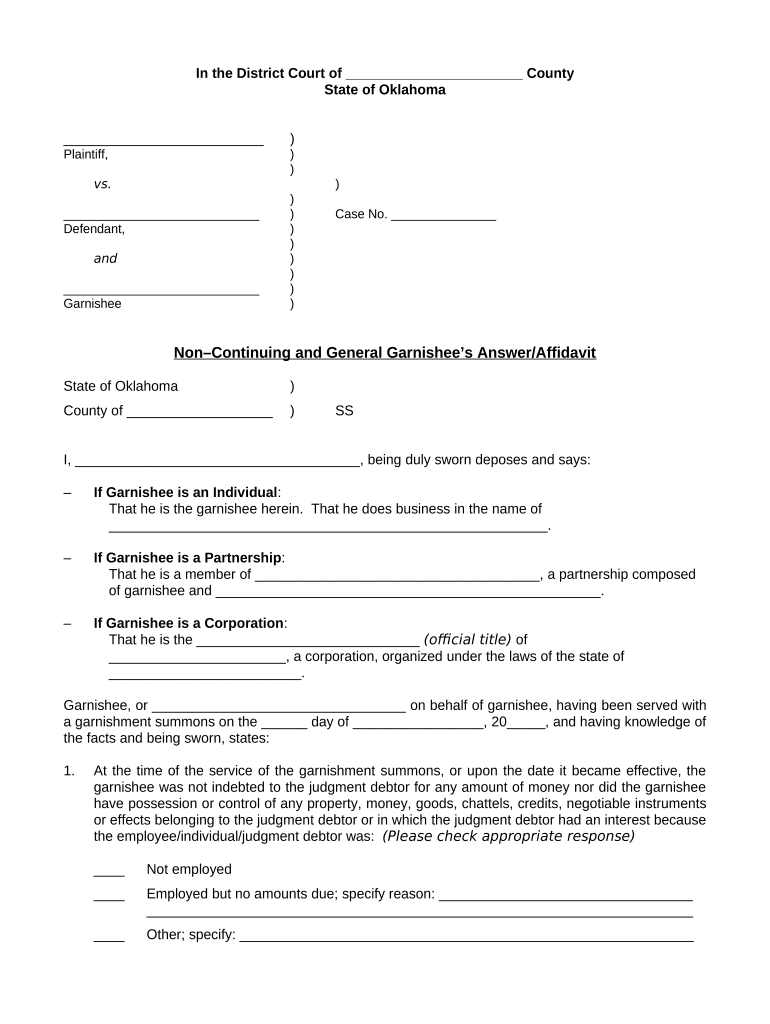
Caption and Case Information

Complete court caption with case number and parties so the clerk can associate the Answer with the original complaint and docket the filing correctly.
Numbered Responses

Respond to each allegation by paragraph number to make issues clear and facilitate later pleadings and discovery references.

Affirmative Defenses Section

Include a headed section enumerating affirmative defenses with concise statements that give opposing parties and the court fair notice of the legal grounds.

Counterclaims or Cross-Claims

If asserting counterclaims, include separate numbered counts with factual and legal bases and the specific relief sought.

Signature and Contact

Signed and dated signature block with address, telephone, email, and bar number for counsel, enabling clerk and counsel to reach filer.

Certificate of Service

A concluding certificate confirming how and when parties were served, which is required for a valid filing and proper service record.

Essential factual and administrative items to include

Case Number: Exact case number
Court Name: Full court and county
Party Identification: Defendant legal name
Response Statements: Admit/deny language
Signature: Signer name and date
Service Details: Method and date

Configuring an online workflow for the Answer

Set up a repeatable e-filing workflow: upload the template, add signature and date fields, and prepare a service certificate field for consistent entries.

Field Configuration
Document Upload PDF or DOCX
Signature Field Signer name + date
Service Certificate Auto-fill method and date
Filing Export PDF/A or court-required format

Technical options for sharing and signing the Answer

Confirm the court’s preferred submission method; the platform should preserve an immutable audit trail for each signing event and record service details.

  • Formats: PDF, DOCX
  • Integrations: Clerk e-filing portals
  • Auth Methods: Email, SMS code

Where to file and how submissions typically flow

Submissions vary by county; know whether the county requires electronic filing, accepts email service, or needs physical delivery to the clerk.

  • Prepare Document: Complete Answer and certificate of service in required format.
  • Sign Parties: Obtain signatures and dates from required signers.
  • File With Clerk: Submit via court e-filing system or clerk’s office.
  • Serve Opposing Parties: Serve by e-mail, e-service, or mail as local rules allow.

Deadlines and timing expectations for filing an Answer

Timeliness depends on how and when the complaint was served and whether state or local rules modify deadlines; confirm applicable rule immediately.

Standard Response Deadline:

Usually 20–30 days from service, depending on the method.

Extended Time by Waiver:

If the defendant waives service, new deadlines may apply per the waiver terms.

Default Consequence:

Failure to timely answer may lead to default judgment.

Motion to Extend:

Courts may grant extensions for good cause on motion.

Check Local Rules:

County and district rules often alter timing and format.

Common mistakes to avoid when preparing the Answer

  • Failing to use exact caption and case number leads to misdocketing and possible rejection.
  • Answering with general denials rather than paragraph-by-paragraph responses invites adverse inferences.
  • Omitting a signed certificate of service may leave an incomplete service record and harm defense.
  • Using incorrect filing format or ignoring local e-filing rules can delay acceptance by the clerk.

Consequences of an incorrect or late Answer

Default Judgment: Entry of judgment against the defendant
Loss of Defenses: Waiver of procedural or substantive defenses
Delays: Increased litigation costs
Sanctions: Possible sanctions for non-compliance
Service Disputes: Disputes over adequacy of service
Clerical Rejection: Refiling requirements and fees

Real-world examples of Answer form use

These short examples illustrate practical variations in how Answers are drafted and filed.

Small Business Dispute

A small LLC filed a paragraph-by-paragraph denial to preserve counterclaims for breach

  • Included a succinct affirmative defenses list
  • The Answer was e-filed and served electronically, then amended after discovery produced new evidence.

Pro Se Individual

An individual represented themselves with a simple admission/denial format

  • Notarization was not required for the Answer
  • The clerk accepted the filing after the certificate of service showed mailed service to the plaintiff’s counsel.

Practical tips to ensure an effective Answer

Follow consistent formatting, be clear in admissions and denials, and document service carefully to avoid technical rejections or procedural complications.

Mirror Complaint Numbering
Respond paragraph-by-paragraph using the complaint’s numbering so the court and opposing counsel can easily track admissions, denials, and issues for discovery.
Be Specific in Defenses
State affirmative defenses clearly and concisely; vague or boilerplate defenses may be struck or provide inadequate notice.
Keep Service Records
Maintain proof of service and the certificate of service; if electronically served, keep delivery receipts and server logs when available.
Verify Local Rules
Confirm county and district court formatting, e-filing rules, and signature requirements before submission to prevent rejection or delays.

eSignature vendor comparison for preparing and signing the Answer

Common eSignature vendors and plan-level differences to consider when obtaining signatures and maintaining an audit trail for court filings.

signNow DocuSign Adobe Sign PandaDoc HelloSign
Starting Price $8/user/mo $15/user/mo $14/user/mo $19/user/mo $15/user/mo
Free Trial 7-day free trial Varies Varies Varies Varies
Bulk Send Yes Yes Yes Yes No
Audit Trail Yes Yes Yes Yes Yes
HIPAA Compliant Yes Yes Yes No No
Envelope Cap No cap 100 envelopes/user/year Varies by plan Varies by plan Varies by plan

Frequently asked questions about the Oklahoma Answer Form

Common procedural and practical questions about preparing, signing, and filing Answers in Oklahoma state court with concise, actionable answers.


Need help? Contact support

be ready to get more
Join over 28 million airSlate SignNow users