Establishing secure connection…Loading editor…Preparing document…

Pennsylvania Trust

This template is fully customizable. Edit the text, fill out the fields, and send it for signature. Give it a try!
Pennsylvania Trust

What a Pennsylvania Trust Is and when it’s used

A Pennsylvania Trust is a written legal instrument creating fiduciary ownership of assets by a trustee for the benefit of one or more beneficiaries under Pennsylvania law. It can be revocable or irrevocable and commonly serves estate planning, asset protection, or management of real property and investments. The trust document names the settlor (grantor), trustee, successors, beneficiaries, distribution provisions, and trustee powers. While trusts are governed by state trust and property law, electronic execution and recordkeeping are often permissible under federal and state e-signature statutes when statutory exceptions do not apply.

Why a Pennsylvania Trust is useful for estate and asset administration

A trust centralizes asset management, can avoid probate for properly funded assets, and lets the settlor specify distribution timing and trustee authority in detail. It also supports incapacity planning and can provide tax and creditor protections depending on structure.

Why a Pennsylvania Trust is useful for estate and asset administration

Who commonly creates or signs a Pennsylvania Trust

Typical users include individuals planning estates, trustees managing assets, attorneys drafting documents, and financial institutions accepting trust assets.

  • Individuals and Families managing intergenerational transfers, minors’ inheritances, and incapacity planning.
  • Trustees and Fiduciaries responsible for stewardship, accounting, and distributions under fiduciary duty standards.
  • Attorneys and Estate Planners drafting tailored trust terms and ensuring compliance with Pennsylvania trust law.

Users often work with legal counsel for initial drafting and with trustees or banks when funding the trust to ensure asset transfers meet statutory and institutional requirements.

Essential parts of a professionally drafted Pennsylvania Trust

A complete trust instrument balances clarity of intent with operational detail: identity of parties, precise asset and distribution language, trustee powers, successor appointment, amendment and revocation clauses, and trust termination procedures.

Trust Name

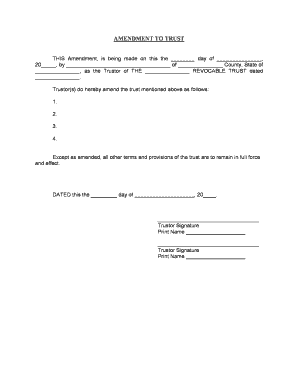
A clear title and date (e.g., 'The Jane Doe Revocable Trust, dated MM/DD/YYYY') to identify the instrument and establish the effective date for tax and succession purposes.
Settlor and Trustee

Full legal names and capacities for settlor and initial trustee; include successor trustee appointment, trustee resignation procedures, and trustee acceptance clauses.

Beneficiaries

Named primary and contingent beneficiaries with distribution shares, survivor rules, and any conditions or spendthrift protections.

Powers and Duties

Express trustee powers (invest, sell, lease, borrow) and duties (accounting, impartiality, tax filings) to avoid ambiguity in administration.

Funding Instructions

Instructions for transferring assets into the trust, including deeds for real property, account re-titling, and assignment forms required to fund the trust.

Amendment & Termination

Procedures and requirements for revocation or amendment (if revocable), plus conditions and methods for trust termination and final distribution.

Step-by-step: completing and executing a Pennsylvania Trust

Follow a clear sequence from drafting through funding to make the trust effective and enforceable.

  • 01
    Draft: Prepare terms and name parties; review with counsel.
  • 02
    Review: Confirm beneficiary designations and trustee powers.
  • 03
    Execute: Sign in presence of required witnesses/notary as applicable.
  • 04
    Fund: Transfer assets (deeds, accounts) into the trust name.

Typical execution and post-execution routing for the trust

After execution, documents and transfers must be routed to trustees, banks, and title offices to complete funding and recordkeeping.

  • Signer Execution: Settlor and trustee sign the trust document; include notary if required.
  • Notarization: Notary or RON session documented when deeds or affidavits require acknowledgment.
  • Funding Transfers: Re-title accounts and record deeds to the trustee or trust name.
  • Record Retention: Provide copies to trustees, counsel, and institutions holding trust assets.

Digital workflow settings for completing a trust online

Configure the signing workflow to collect consent, authenticate signers, and retain an audit trail compliant with ESIGN and UETA.

Field Configuration
Signature Type Electronic signature with audit trail; consider PKI if higher assurance required
Authentication Email plus SMS code or knowledge-based authentication for trustee verification
Notarization Enable RON session or prepare for in-person notarization when required
Retention Store signed PDF and certificate of completion for required retention period

Technical considerations for e-signing and storing the trust

Ensure the e-signature platform supports required authentication, audit trails, and secure storage compatible with legal standards.

  • Authentication: Email, SMS, or KBA
  • Audit Trail: IP, timestamp, actions
  • Storage: AES-256 at rest

Choose a platform that can produce an unalterable signed PDF with an attached certificate of completion and that can meet any HIPAA, 21 CFR Part 11, or institutional BAA requirements when handling regulated data.

Key penalties and legal risks from incorrect trust preparation

Improper Funding: Assets left out may pass through probate
Incorrect Beneficiary Data: Mismatched names can cause title rejection
Tax Filing Errors: Possible penalties and IRS reporting complications
Notary/Execution Defects: May render certain transfers void
Fiduciary Breach: Trustee liability and removal risk
1099 Filing Penalties: $60–$330 per form; IRC §6721

Comparing common e-signature vendors for signing and storing trusts

Below is a concise vendor comparison focused on baseline pricing and features relevant to signing trust documents; signNow is listed first per vendor comparison practice.

signNow DocuSign Adobe Sign PandaDoc HelloSign
Starting Price $8/user/mo $15/user/mo $14/user/mo $19/user/mo $15/user/mo
Free Trial 7-day free trial Varies by vendor Varies by vendor Varies by vendor Varies by vendor
Bulk Send Yes (premium) Yes Yes Yes No
Audit Trail Yes Yes Yes Yes Yes
HIPAA Compliant Yes Yes Yes No No
Envelope Cap No cap 100 envelopes/user/year Varies by plan Varies by plan Varies by plan

Frequently asked questions about the Pennsylvania Trust

Answers to common questions about execution, electronic signing, notarization, and updating a Pennsylvania Trust.


Need help? Contact support

be ready to get more
Join over 28 million airSlate SignNow users