Establishing secure connection…Loading editor…Preparing document…

Letter of Congratulations on Passing the Medical Boards

This template is fully customizable. Edit the text, fill out the fields, and send it for signature. Give it a try!
Letter of Congratulations on Passing the Medical Boards

What this Letter Is and When It’s Used

A Letter of Congratulations on Passing the Medical Boards is a formal written acknowledgment that an individual has successfully completed a board examination required for medical licensure or certification. Typical senders include residency program directors, hospital department chiefs, medical school deans, or professional organizations. The letter confirms the accomplishment, may note the exam date or specialty, and can serve as a record for personnel files, credentialing packets, or department announcements while remaining concise and professional.

Why a Clear, Professional Congratulatory Letter Matters

A concise, properly formatted letter documents the milestone, supports credentialing and HR records, and communicates institutional recognition. Clear wording preserves accuracy for licensing or verification and helps avoid misunderstandings when schools, hospitals, or boards review a candidate’s file.

Why a Clear, Professional Congratulatory Letter Matters

Who Typically Writes or Receives This Letter

Recipients include the physician, credentialing offices, human resources, and occasionally external licensing or fellowship program reviewers.

  • Residency Program Director — Confirms resident achievement and may reference training standing.
  • Medical School Dean — Announces graduate board performance and supports alumni records.
  • Hospital Department Chief — Notes clinical staff qualification for privileging and credentialing.

Step-by-Step: Creating the Letter

Follow these practical steps to prepare a clear, verifiable letter that supports professional records and credentialing needs.

  • 01
    Gather details: Confirm full legal name and exam date.
  • 02
    Write opening: State the purpose and congratulate the recipient.
  • 03
    Provide specifics: Include board name, specialty, and pass date.
  • 04
    Sign and deliver: Use authorized signer and retain a copy.

Essential Elements to Include in the Letter

Include the following components to make the letter both meaningful and administratively useful for licensing and credentialing.

Formal Greeting

Address the recipient by full name and professional title to establish the official tone and ensure correct file association.
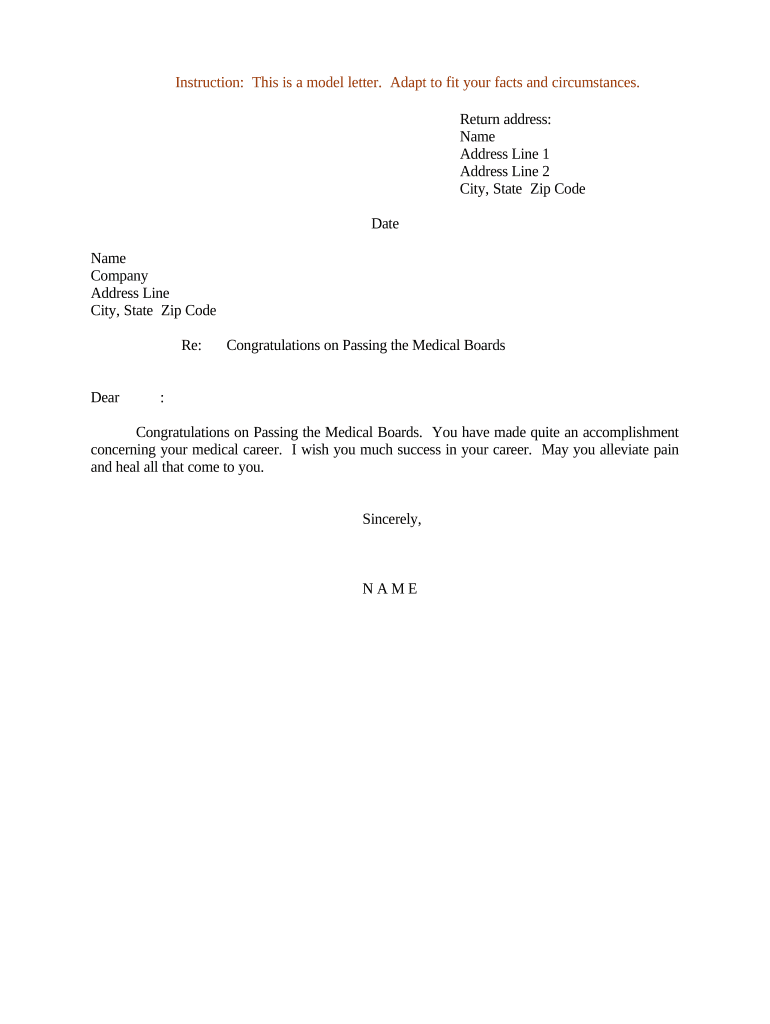
Clear Statement

State explicitly that the individual passed the specified medical board examination and include the certification designation where applicable.

Exam Details

List the board name, specialty, and the exact pass or certification date to aid credentialing verification and recordkeeping.

Contextual Note

Optional short sentence about training program, residency year, or performance if relevant and accurate.

Authorized Signature

Include typed name, title, institutional affiliation, and a handwritten or electronic signature from an authorized official.

Retention Instruction

Note internal filing instructions or whether the recipient should forward the letter to credentialing or licensing bodies.

Required Identification and Verification Details

Full Name: Exact legal name
Board Name: Official board title
Pass Date: MM/DD/YYYY
Signer Title: Role and authority
Institution: Affiliated organization
Signature Type: Handwritten or e-sign

Where the Letter Is Sent and Who Keeps Copies

Identify primary recipients and internal routing so the letter is stored and used correctly for credentialing, HR, and licensing.

  • To the Physician: Delivered to recipient for personal records.
  • Credentialing Office: Copy retained in personnel credential file.
  • Licensing Board: Forward only when board submission is requested.
  • Department Records: File copy for institutional documentation.

Customizing and Sending the Letter Online

Set up a simple digital workflow to populate, authorize, and distribute the letter while preserving an audit trail.

Field Configuration
Recipient Name Auto-fill from HR directory
Exam Details Template fields for board and date
Signer Role Conditional visibility for authorized signers
Delivery Email copy and secure archive

Digital Signing Considerations

Retain copies in the HR or credentialing system with limited access; ensure any electronic signature meets ESIGN/UETA requirements for record retention.

  • Authentication: Email or SMS code
  • Audit Trail: IP, timestamp, action log
  • Storage: Encrypted at rest

How to Save and Share the Final Letter

Export and store the signed letter in formats that support long-term access and verification by credentialers and licensing bodies.

PDF/A Export

Save the signed letter as a non-editable PDF/A for archival compatibility and to preserve the visual presentation and signature evidence.

Signed Copy for Recipient

Email a signed PDF to the physician and advise saving it in their personal credentialing folder or secure cloud storage.

Record in HR System

Upload the signed PDF to the employee file in the institution’s HR or credentialing platform with restricted access controls.

Printable Archive

Store a printed copy in a locked personnel file when an organization maintains paper records for redundancy.

Common Mistakes to Avoid

  • Using an informal or ambiguous description of the board or specialty that later confuses credentialing verifiers.
  • Leaving out the exact pass date or using an inconsistent date format that delays verification requests.
  • Having an unauthorized signer or missing institutional affiliation, which can require reissuance for credentialing.
  • Sending only an unsigned draft or an image without a verifiable audit trail, complicating acceptance by boards.

Consequences of Inaccurate or Improper Letters

Verification Delays: Delayed credentialing
Credential Rejection: Possible denial
Reputational Harm: Institutional credibility
Workflow Rework: Administrative burden
Legal Exposure: Misrepresentation risk
Record Inaccuracy: Audit issues

Practical Tips for Accurate, Efficient Letters

Adopt consistent templates and digital workflows to reduce errors and speed distribution while preserving verification evidence.

Use a standard template consistently
Maintain a single approved letter template within HR or credentialing systems to ensure uniform wording, correct fields, and predictable validation by external boards.
Confirm signer authority before sending
Keep a current list of authorized signers and their titles to prevent reissuance and ensure the letter is accepted by credentialing offices.
Preserve an audit trail for e-signatures
When using electronic signatures, retain platform-generated metadata (IP, timestamp, and signer email) to demonstrate authenticity if a board requests verification.
Store copies in the credentialing file
Upload the signed letter to the central personnel or credentialing record with access controls and a short retention note describing where the master copy resides.

Common eSignature Vendor Comparison for Sending Letters

Typical pricing and compliance features for popular eSignature vendors. Place vendor selection in light of needed HIPAA, audit trail, and envelope volume capabilities.

signNow DocuSign Adobe Sign PandaDoc HelloSign
Starting Price $8/user/mo $15/user/mo $14/user/mo $19/user/mo $15/user/mo
Free Trial 7-day free trial Varies by vendor Varies by vendor Varies by vendor Varies by vendor
Bulk Send Yes (Business Premium) Yes Yes Yes Limited
Audit Trail Yes Yes Yes Yes Yes
HIPAA Compliant Yes Yes Yes Varies Varies
Envelope Cap No cap 100 envelopes/user/year limit Varies Varies Varies

Frequently Asked Questions

Answers to common questions about drafting, signing, and storing a Letter of Congratulations on Passing the Medical Boards.


Need help? Contact support

be ready to get more
Join over 28 million airSlate SignNow users