Establishing secure connection…Loading editor…Preparing document…

Letter of Encouragement for Publication

This template is fully customizable. Edit the text, fill out the fields, and send it for signature. Give it a try!
Letter of Encouragement for Publication

What a Letter of Encouragement for Publication Is and When It’s Used

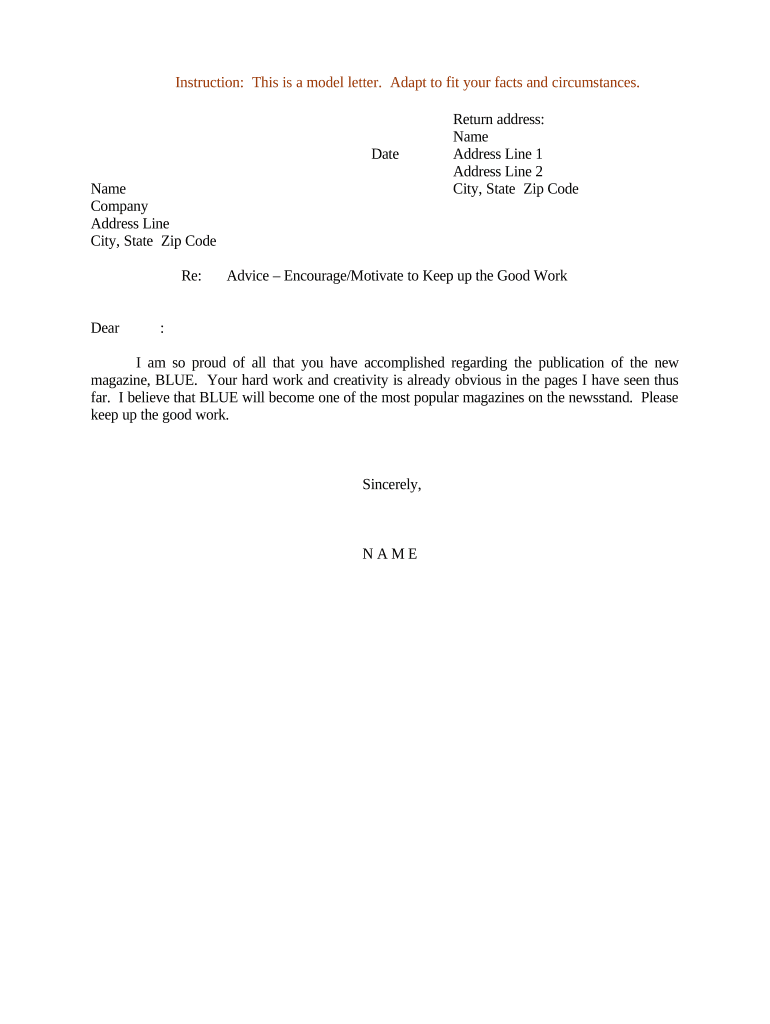
A Letter of Encouragement for Publication is a concise professional letter written to support an author’s manuscript submission or resubmission. Typically authored by a supervisor, mentor, department chair, or collaborator, it highlights the manuscript’s contribution, signals endorsement of the work, and clarifies the author’s role and readiness for peer review. The letter is not a formal guarantee of acceptance; rather, it provides context that may help editors or reviewers assess significance, methodology, or novelty. It is commonly attached to cover letters or uploaded in journal submission systems to strengthen an application.

Why a Letter of Encouragement Matters to Authors and Editors

A concise endorsement clarifies the manuscript’s significance, confirms authorship and contribution, and helps editors triage submissions efficiently.

Why a Letter of Encouragement Matters to Authors and Editors

Who Typically Prepares and Receives These Letters

Typical senders and recipients are listed below to clarify common roles involved in producing and using this letter.

  • Mentors and supervisors — senior researchers or faculty endorsing a student or junior colleague for journal submission, noting supervision and contribution.
  • Department chairs or program directors — offering institutional context, confirming resources or ethical approvals where applicable for the manuscript.
  • Collaborators or co-authors — providing subject-matter endorsement, method validation, or corroboration of specific technical claims in the manuscript.

Essential Elements to Include in a Professional Letter of Encouragement

Structure the letter so editors can quickly confirm the author, manuscript, key contributions, and any institutional support; keep it succinct and factual.

Heading

Institutional letterhead, date, and recipient field. Identifies sender affiliation and lends formal context for editorial review.
Salutation

Address the editor or journal by name if known; otherwise use a neutral editorial salutation to ensure proper routing.

Author Identification

State the author’s full name, affiliation, contact details, and relevant identifiers such as ORCID for reviewer verification.

Manuscript Summary

One- to two-sentence synopsis of the manuscript’s objectives and principal findings to orient editors quickly.

Specific Support

Explain the nature of encouragement — endorsement of novelty, methodological rigor, ethical compliance, or institutional backing.

Closing and Contact

Include sender name, title, signature, and a point of contact for follow-up or verification by the journal.

Step-by-Step: Preparing and Attaching the Letter

Follow these practical steps to create a clear, verifiable letter and attach it to your manuscript submission or cover letter.

  • 01
    Draft Text: Compose one page maximum with factual endorsement and manuscript details.
  • 02
    Verify Details: Confirm names, title, affiliation, and manuscript title match submission files.
  • 03
    Sign Appropriately: Use institutional signature or an eSignature compliant with ESIGN/UETA.
  • 04
    Attach to Submission: Upload as supplementary file or include in the submission cover letter per journal instructions.

Where to Send or Include the Letter

Journals and publishers accept the letter through different channels; choose the option the target journal specifies to avoid processing delays.

  • Submission System: Upload as a supplementary or supporting document during manuscript submission.
  • Cover Letter Inclusion: Embed a brief endorsement paragraph in the manuscript cover letter when space permits.
  • Editorial Email: Send directly to the handling editor’s professional email when requested or customary.
  • Institutional Repository: Store a signed copy in departmental records for verification and archives.

Online Setup: Configuring a Digital Letter Workflow

When completing the letter online, adjust template fields, signer roles, and retention settings to match journal and institutional policies.

Field Online Setting
Template Create reusable template with fixed manuscript fields
Signers Assign sender as primary signer; allow co-signers where required
Authentication Use email or SMS verification depending on journal requirements
Retention Set archive retention to institutional minimums

Digital Signing and Delivery Considerations

Choose delivery formats and signer authentication aligned with journal policies and institutional requirements.

  • File Formats: PDF and PDF/A preferred for immutable records
  • Authentication: Email or SMS codes; consider stronger ID verification when required
  • Integrations: Supports common systems like Microsoft 365 and Google Workspace

Timing: When to Issue the Letter

Issue the letter close to the submission date so details remain current; provide earlier if the journal requests institutional verification.

Before Submission:

Provide letter at manuscript submission to accompany the cover letter.

Upon Revision:

Submit an updated letter when major revisions alter authorship or claims.

Institutional Requests:

If the university requires a copy, file the letter in departmental records promptly.

Journal Deadlines:

Adhere to any journal-specific deadlines for supplementary materials.

Archival Retention:

Retain signed copies according to institutional retention policy.

Common Mistakes to Avoid When Preparing the Letter

  • Using vague language or generic praise instead of specific evidence of novelty and contribution undermines editorial confidence.
  • Mismatched names, affiliations, or manuscript titles between the letter and submission often trigger administrative delays or identity checks.
  • Including promises about acceptance, reviewer identities, or funding that are speculative or unverifiable can create ethical concerns.
  • Failing to sign or date the letter, or using an unverifiable signature method, can render the letter ineffective for editorial verification.

Risks and Consequences of an Incorrect or Misleading Letter

Misrepresentation: Damaged credibility
Authorship Dispute: Potential retraction risk
Delay: Submission processing delays
Ethics Review: Institutional inquiry possible
Confidentiality Breach: Disclosure of sensitive data
Invalid Signature: Editor may ignore unsigned letters

Required Identification and Document Data

Author Name: Full legal name
Affiliation: Department and institution
Manuscript Title: Exact title text
Date: MM/DD/YYYY format
Contact Info: Email and phone number
Signature: Typed and signed form

Real-World Use Cases for Letters of Encouragement

These examples show how different roles use a short endorsement to support manuscript consideration and institutional recordkeeping.

Academic Supervisor

A lab director endorses a junior researcher’s manuscript with a brief summary of contribution and mentoring

  • Emphasizes originality and data integrity
  • The letter is attached to the journal submission and retained in departmental records for the grant file.

Departmental Endorsement

A department chair confirms institutional resources and IRB approvals

  • Notes compliance with ethics and data access
  • The journal receives the letter with the cover letter and the archive copy supports institutional audits.

Best Practices for Clear, Credible Letters

Adopt a concise, factual style and document verification details to make the letter useful to editors and compliant with institutional expectations.

Be Specific About Contribution
Describe the manuscript’s unique contribution and the author’s precise role. Specifics are easier for editors and reviewers to evaluate than generic praise.
Keep It Concise
Limit the letter to one page. Editors appreciate brief endorsements that highlight key facts rather than lengthy narratives.
Avoid Promises
Do not guarantee acceptance or reviewer outcomes. Stick to verifiable facts about methodology, data access, and ethical compliance.
Archive a Signed Copy
Store the signed letter with institutional records and update it if authorship or data availability changes during revision.

eSignature Vendor Comparison for Attaching and Signing Letters

Compare common vendor attributes relevant to preparing, signing, and storing a Letter of Encouragement for Publication; signNow is listed first for column alignment.

signNow DocuSign Adobe Sign PandaDoc HelloSign
Starting Price $8/user/mo $15/user/mo $14/user/mo $19/user/mo $15/user/mo
Free Trial 7-day trial No No Yes, limited Yes, limited
Bulk Send Yes Yes Yes Yes No
Audit Trail Yes Yes Yes Yes Yes
HIPAA Compliant Yes Yes Yes No No

Frequently Asked Questions About Letters of Encouragement

Answers address common legal, practical, and format concerns when preparing a Letter of Encouragement for Publication.


Need help? Contact support

be ready to get more
Join over 28 million airSlate SignNow users