Establishing secure connection…Loading editor…Preparing document…

South Carolina Assignment of Lien

This template is fully customizable. Edit the text, fill out the fields, and send it for signature. Give it a try!
South Carolina Assignment of Lien

What the South Carolina Assignment of Lien Is

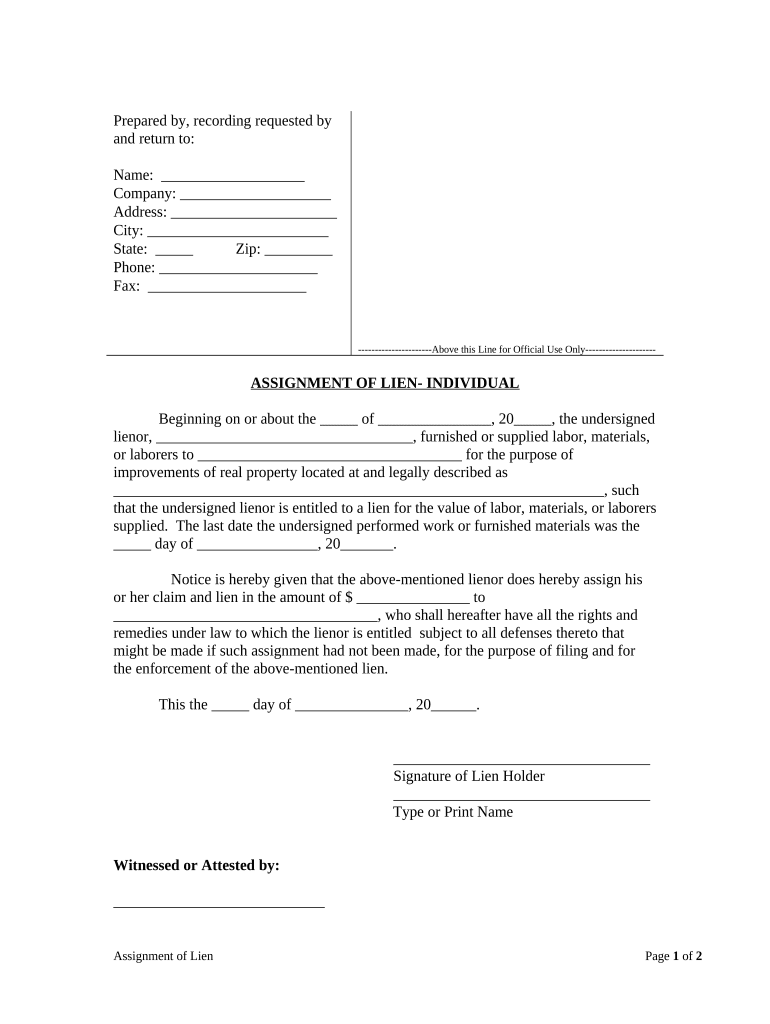
A South Carolina Assignment of Lien is a written document transferring the rights and interests in an existing lien from the original lienholder to an assignee. Recording the assignment with the appropriate county register of deeds or clerk typically preserves priority against third parties. The assignment should clearly identify the original lien, the amount transferred, parties involved, and any limitations. Proper execution, delivery, and timely recording are essential to ensure the assignee can enforce, release, or pursue the underlying claim in South Carolina courts or against property subject to the lien.

Why an Assignment of Lien Matters

Assigning a lien formalizes transfer of enforcement rights, preserves priority against later claims, and allows the assignee to collect or release the lien. It creates a clear chain of title for the underlying obligation.

Why an Assignment of Lien Matters

Who Typically Prepares or Receives an Assignment

Common participants include businesses and professionals who buy, sell, or transfer lien rights as part of financing, collections, or portfolio management.

  • General contractors who assign mechanic’s lien claims to lenders or factoring companies for financing purposes.
  • Subcontractors or suppliers who transfer lien rights to a collection agent or purchaser of receivables.
  • Lenders, title companies, and investors who require recorded assignments to protect priority interests.

Parties should confirm signatory authority and recording requirements at the county level before finalizing an assignment.

Core Elements to Include in a Professional Assignment

A complete assignment of lien clearly identifies the original lien instrument, the parties, scope of rights transferred, consideration, effective date, and any limitations or representations.

Parties

Full legal names and capacities of assignor and assignee, including mailing addresses and contact details.
Referenced Lien

Exact title, recording date, and official recording reference (book/page or instrument number) of the original lien.

Scope of Rights

Describe whether the assignment transfers full enforcement rights, partial interests, payment stream rights, or indemnities.

Consideration

State the agreed consideration (dollar amount or other value) supporting the assignment to avoid later disputes.

Effective Date

Specify the effective date and whether assignment is contingent on recording or other conditions precedent.

Execution Details

Signature blocks, notarization or witness lines if required, and any required corporate attestations or officer titles.

Step-by-Step: Completing and Recording an Assignment

Follow these sequential steps to prepare, execute, and perfect an assignment of lien in South Carolina.

  • 01
    Identify the lien: Locate the original recorded instrument and capture the exact recording reference.
  • 02
    Draft the assignment: Include parties, lien reference, consideration, effective date, and transfer language.
  • 03
    Execute with authority: Ensure authorized signatory signs and notarizes if required by county rules.
  • 04
    Record promptly: File the assignment in the county where the original lien is recorded to preserve priority.

Typical Workflow for an Assignment Transaction

A predictable workflow reduces errors and preserves rights; use consistent routing and proof of delivery for each step.

  • Prepare Document: Draft with precise references and internal approvals.
  • Obtain Signatures: Collect authorized signatures and notarization if required.
  • Record Instrument: Submit to the county register of deeds and obtain stamped return copy.
  • Distribute Copies: Send recorded copies to assignee, assignor, lender, and title insurer.

Digital Workflow Settings for Online Completion

Configure your online workflow to capture required fields, authentication, and post-signing routing before sending to signers.

Field Configuration
Signature Field Required | Signer must sign and date
Notary Block Optional | Include if county requires notarization
Attachment Field Optional | Attach original lien instrument copy
Routing Order Sequential | Assignor then assignee then recorder

Digital Signing and Delivery Considerations

Choose a platform that supports robust audit trails, conditional fields, and integrations with your document systems.

  • Authentication: Email link, SMS code, or advanced signer verification
  • Integrations: CRM and document storage connectors like Salesforce and NetSuite
  • Document Formats: Accepts PDF and DOCX with tamper-evident audit trails

Ensure the chosen provider supports export of the signed record and certificate of completion for recording and title purposes.

eSignature Pricing and Feature Comparison

Common vendor pricing and feature differences for executing and tracking recorded assignments; signNow is listed first per comparison formatting rules.

signNow DocuSign Adobe Sign PandaDoc HelloSign
Starting Price $8/user/mo $15/user/mo $14/user/mo $19/user/mo $15/user/mo
Free Trial 7-day free trial No No Yes, limited Yes, limited
Bulk Send Yes Yes Yes Yes No
Audit Trail Yes Yes Yes Yes Yes
HIPAA Compliant Yes Yes Yes No No
Envelope Cap No envelope cap 100 envelopes/user/year Varies by plan Varies by plan Varies by plan

Real-world Examples of Digital Document Workflows

These examples illustrate how organizations use online signing and recording workflows to process property-related documents quickly and consistently.

Martin Properties

Tim Martin’s firm moved execution online for property-related documents to reduce turnaround times.

  • The firm used mobile signing on site.
  • The result was consistent, auditable records and faster delivery of recorded assignments to title companies, improving transaction throughput without in-person meetings.

Optica Ventures

Optica centralized its agreement processes to ensure consistent signatures and recordkeeping.

  • They standardized templates and routing.
  • Centralized digital workflows produced uniform executed instruments and simplified production of recorded copies for lenders and purchasers seeking proof of assignment.

Practical Tips for Accurate and Efficient Completion

Follow these best practices to reduce rejections and ensure enforceability when assigning lien rights.

Confirm exact recorded references
Use the precise recording instrument number, book/page, and county from the public record. Small transcription errors can lead to indexing failures and title search problems.
Verify signatory authority
Confirm corporate resolutions or power of attorney where an entity signs. Absent authority, a recorder or court may refuse acceptance or later challenge the assignment.
File quickly to preserve priority
Record the assignment promptly in the same county as the original lien to maintain the intended priority position against subsequent claims.
Keep documented chain of custody
Retain executed copies, certificates of completion, and delivery receipts to support enforcement or title inquiries later.

Essential Data Elements to Include

Assignor Name: Full legal name
Assignee Name: Full legal name
Original Lien Reference: Instrument number
Assignment Amount: Dollar amount or percentage
Effective Date: MM/DD/YYYY
Execution Block: Signatures and notary

Common Risks and Potential Consequences

Unrecorded Assignment: May lose priority to later-recorded interests
Incorrect References: Can cause recorder to reject or mis-index
Unauthorized Signatory: Assignment may be voidable or subject to litigation
Missing Notarization: Some counties may refuse recording without required acknowledgements
Incomplete Consideration: Creates ambiguity and potential enforcement disputes
Poor Record Retention: Loss of evidence for enforcement or title claims

Key Timing Considerations and Deadlines

Timely execution and recording guard priority rights and support enforcement; note these common timing milestones.

Effective Date:

Date the assignment takes effect, often upon signing or recording

Recording Promptness:

Record the assignment as soon as practicable to protect priority

Notice to Parties:

Provide recorded copy to assignee, assignor, and relevant lenders promptly

Statute of Limitations:

Enforcement timing depends on underlying claim and applicable state limitations

Retention Start:

Retention periods begin at execution, recording, or claim resolution

Frequently Asked Questions About Assignment of Lien Issues

Answers to common questions about execution, recording, and electronic completion of assignments of lien in South Carolina.


Need help? Contact support

be ready to get more
Join over 28 million airSlate SignNow users