Establishing secure connection…Loading editor…Preparing document…

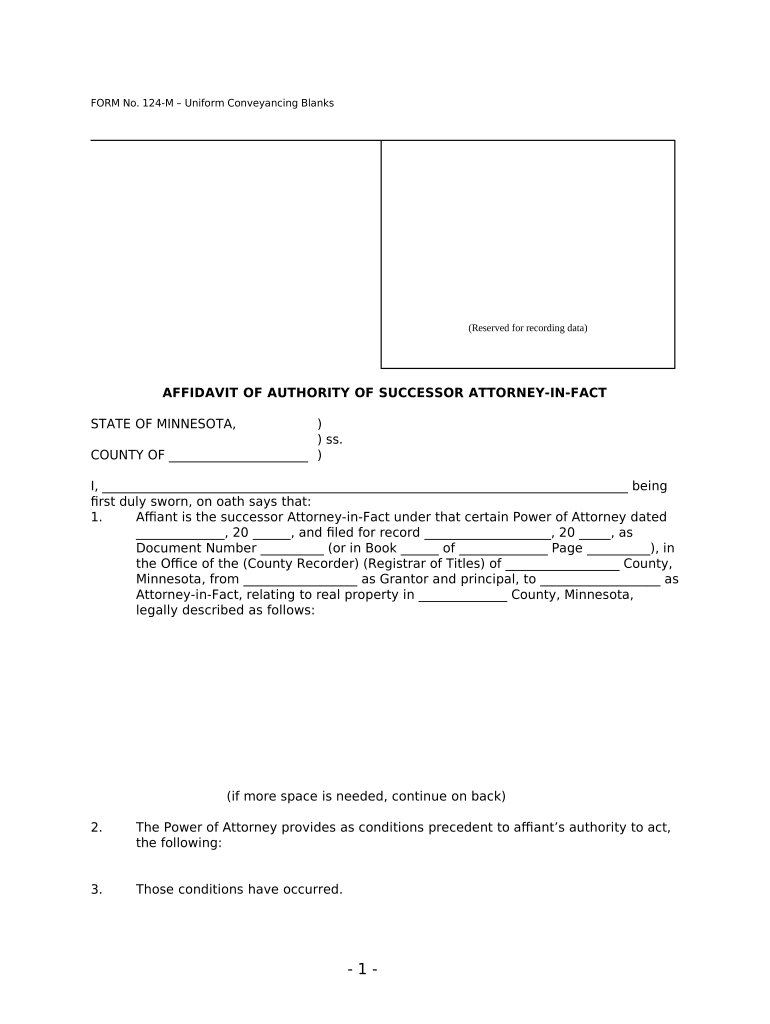
Successor Attorney in Fact

This template is fully customizable. Edit the text, fill out the fields, and send it for signature. Give it a try!
Successor Attorney in Fact

What a Successor Attorney in Fact Does and When it Applies

A Successor Attorney in Fact is a named individual who becomes an agent under a power of attorney if the primary agent is unable, unwilling, or unavailable to act. This designation typically appears within a durable power of attorney or in an addendum that names one or more successors in a specified order. The successor steps into the agent role to exercise the authority granted by the principal, which can include financial transactions, property management, and other defined powers. States vary on notarization and witness requirements, so execution must follow local rules to ensure acceptance.

Why Naming a Clear Successor Attorney in Fact Matters

Designating a successor ensures continuity of decision-making and reduces the risk of delays, institutional refusals, or court involvement when the primary agent cannot serve.

Why Naming a Clear Successor Attorney in Fact Matters

Who Typically Prepares or Signs a Successor Attorney in Fact

The following groups frequently prepare, review, or rely on this designation when managing incapacity or agent transitions.

  • Individuals planning estate or incapacity arrangements who want uninterrupted authority flow.
  • Banks and custodians that require clear, notarized authority before accepting agent instructions.
  • Attorneys and estate planners drafting durable powers of attorney and successor clauses.

Each user should verify state notarization and witness rules and provide institutions with originals or compliant electronic copies.

Step-by-Step: Complete and Execute a Successor Designation

Follow a clear sequence to reduce rejection risk: prepare, verify identity, sign with required notarization or witnesses, distribute, and store originals securely.

  • 01
    Prepare: Use the principal’s legal name and define successor order.
  • 02
    Verify Identity: Confirm IDs for principal and signers before notarization.
  • 03
    Sign and Notarize: Have principal sign in notarized presence per state rules.
  • 04
    Distribute Copies: Provide originals to institutions; keep certified copies on file.

Workflow Overview: From Draft to Institutional Acceptance

A concise workflow clarifies responsibilities and reduces processing time when institutions or third parties must accept the successor appointment.

  • Draft: Add successor clause to POA or use standalone addendum.
  • Authenticate: Notarize and add required witness signatures if needed.
  • Deliver: Send originals or certified copies to banks and custodians.
  • Activate: Successor assumes authority when primary agent cannot act.

Digital Setup: Configuring an Online Successor POA Template

When using a digital template, configure authentication, conditional fields, and retention to match legal and institutional requirements.

Field Configuration
Authentication Method Email link, SMS code, or stronger ID verification.
Conditional Fields Show successor fields only if primary agent fails.
Signing Order Require principal → notary/witness → successor sequence.
Retention Setting Archive originals for the statutory retention period.

Preparing Documents for eSigning and Institutional Submission

Confirm the receiving institutions’ acceptance rules for electronic copies, notarized scans, remote notarization, and required authentication levels.

  • File Formats: PDF/A or standard PDF preferred
  • Integrations: Works with CRM and cloud storage
  • Authentication: Support for SMS, KBA, and SSO

Preserve notarized originals when possible, provide certified copies to banks and trustees, and confirm that electronic notarization meets state RON rules before relying on remote methods.

eSignature Platform Comparison for Executing Successor Documents

Compare common eSignature options for notarization support, HIPAA needs, and enterprise features; signNow is shown first per platform conventions.

signNow DocuSign Adobe Sign PandaDoc HelloSign
Starting Price $8/user/mo $15/user/mo $14/user/mo $19/user/mo $15/user/mo
Free Trial 7-day free trial No No Yes, limited Yes, limited
Bulk Send Yes Yes Yes Yes No
Audit Trail Yes Yes Yes Yes Yes
HIPAA Compliant Yes Yes Yes No No

Security and Compliance Considerations for Electronic Execution

Encryption: TLS 1.2/1.3 in transit; AES-256 at rest
Certifications: SOC 2 Type II, ISO 27001 available
HIPAA: HIPAA-compliant with BAA required
Audit Trail: Detailed timestamp and IP logging
Authentication: Support for SMS, KBA, and SSO
Accessibility: WCAG 2.0 Level AA compliance

Key Risks If a Successor Document Is Defective

Agent Rejection: Institutions may refuse authority
Probate Delay: Court involvement and delays possible
Tax Consequences: Transactions may trigger withholding or penalties
Fraud Exposure: Poor vetting increases fraud risk
Invalidation: Incorrect notarization may void authority
Recordkeeping: Insufficient retention harms future claims

Common Preparation Errors to Avoid

  • Using informal or nickname versions of names that differ from IDs leads to institutional refusals and delays in transactions.
  • Failing to obtain the correct number of witnesses or notarization for your state invalidates the document at acceptance points.
  • Sending only an electronic copy when an institution requires an original or certified copy causes processing interruptions and extra steps.
  • Confusing medical advance directives with financial POAs results in the wrong form being presented to banks or medical providers.

How Successor Designations Differ from a Broad Durable POA

Compare the successor appointment concept with the broader durable power of attorney to clarify scope, execution, and activation differences.

Criteria Successor Attorney in Fact Durable Power of Attorney
Notarization Required varies by state often required
Scope of Authority narrow or specific succession powers broad agent powers across matters
Activation Trigger primary agent incapacity or vacancy principal incapacity or immediate
Typical Use continuity of agent role comprehensive representation

Timing and Processing Expectations for Successor Documents

While formal deadlines are limited, follow the timing steps below to ensure prompt institutional acceptance and continuity of authority.

Effective upon Signing:

Document is effective on the date specified or upon notarized signing

Notary Record:

Notary journals and RON recordings should be retained per state rules

Institutional Processing:

Bank or custodian review times vary; expect 3–10 business days

Deliver Originals:

Provide originals or certified copies promptly to key institutions

Update Notices:

Notify interested parties immediately after any agent changes

Practical Tips for a Clear, Enforceable Successor Appointment

Follow these practical practices to minimize disputes and ensure institutions accept the successor appointment without delay.

Verify Identity and Names
Confirm all parties’ legal names from government-issued ID and use those exact names throughout the document and any institutional forms to prevent mismatches that can cause refusal or delays.
Be Explicit About Succession Order
List successors in the precise order they should assume authority, include contact details, and specify whether successors serve jointly or consecutively to avoid interpretation disputes.
Meet Execution Formalities
Follow state rules for notarization and witness counts, consider a self-proving affidavit where available, and use remote online notarization only if accepted by the receiving institution.
Distribute and Archive Originals
Provide originals or certified copies to banks, trustees, and attorneys; maintain an archived original for the statutory retention period and store electronic records with secure access controls.

Frequently Asked Questions and Practical Answers

Answers address common execution, validity, and institution-acceptance issues encountered with successor appointments.


Need help? Contact support

be ready to get more
Join over 28 million airSlate SignNow users