Revolutionizing Gas Pipeline Management System with airSlate SignNow
airSlate SignNow regularly wins awards for ease of use and setup




See airSlate SignNow eSignatures in action

Collect signatures
24x
faster
Reduce costs by
$30
per document
Save up to
40h
per employee / month
Our user reviews speak for themselves

Kodi-Marie Evans
Director of NetSuite Operations at Xerox

Samantha Jo
Enterprise Client Partner at Yelp


Megan Bond
Digital marketing management at Electrolux







be ready to get more
Why choose airSlate SignNow
-
Free 7-day trial. Choose the plan you need and try it risk-free.
-
Honest pricing for full-featured plans. airSlate SignNow offers subscription plans with no overages or hidden fees at renewal.
-
Enterprise-grade security. airSlate SignNow helps you comply with global security standards.
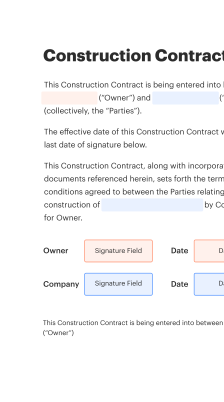
Gas Pipeline Management System
How to use airSlate SignNow:
airSlate SignNow empowers businesses to send and eSign documents with an easy-to-use, cost-effective solution. It offers great ROI with rich features, scalability for SMBs and Mid-Market, transparent pricing without hidden fees, and superior 24/7 support for all paid plans.
Experience the benefits of airSlate SignNow today and streamline your document workflows!
airSlate SignNow features that users love





be ready to get more
Get legally-binding signatures now!
FAQs online signature
-
What sensors are used for oil and gas pipeline monitoring?
Piezoelectric pressure sensors offer the capability to detect and monitor dynamic pressure spikes, pulsations and surges in gaseous or liquid media.
-
What is the pipeline between US and Canada?
The Keystone Pipeline, an existing system often referred to as “Base Keystone Pipeline”, is owned by TransCanada Keystone Pipeline GP Ltd. It transports about 14% of western Canadian crude oil exports to key U.S. refining markets.
-
How are gas pipelines monitored?
SCADA systems are one of the most common methods of pipeline monitoring. SCADA (Supervisory Control and Data Acquisition) is a computer-based system. It collects and analyses data from a pipeline's sensors and other equipment. SCADA systems help operators monitor pipeline operations.
-
What is the purpose of the PSMS?
The purpose of a PSMS is to place existing programs within a more safety-oriented context and generate novel ones to enhance pipeline and worker safety. The following figure illustrates a sample structure of a PSMS along with 3 of the 10 essential PSMS elements.
-
What is the full form of PSMS safety?
At Unitil, maintaining industry leading pipeline safety practices is central to our Company mission, vision and RISE values. In order to pursue a goal of zero gas incidents, we must embrace a comprehensive, systemic effort throughout our organization.
-
What is the PSMS pipeline?
What is a PSMS? Our Pipeline Safety Management System (PSMS) is a systematic approach for building upon existing processes and establishing new processes that continuously improve the safety of employees, customers, and the communities that we serve.
-
What is PSMS in safety?
Understanding Process Safety Management Systems: Process Safety Management Systems (PSMS) are comprehensive frameworks designed to prevent and mitigate accidents, incidents, and potential harm in industrial processes.
-
What is gas pipeline system?
The gas pipe line network is a transport system used to transport goods and materials. Pipelines carry various products, such as sewage and water.
-
Are gas pipelines regulated?
Federal pipeline statutes provide for exclusive Federal authority to regulate interstate pipelines, interstate underground natural gas storage, and interstate LNG facilities.
-
What is a pipeline monitoring system?
The system detects and accurately locates changes in temperature, noise, vibration, and strain around a pipeline. These changes are caused by leaks or Third Party Interference (TPI) events such as pipeline theft or digging.
-
What is pipeline management?
Pipeline management is the process of identifying and managing all the moving parts — from manufacturing to your sales team— within a supply chain. The best-performing companies learn how to identify where their cash is flowing and then direct that money where it's most productive. This is called “pipeline management.”
-
What is the most accurate and reliable way to monitor pipeline protection?
The most effective ways to monitor pipeline integrity include retrofitting existing pipelines with multiple sensors for flow, pressure, temperature, and fatigue stress measurement, and using real-time risk-based inspection.
Trusted e-signature solution — what our customers are saying


Related searches to make a sign
Gas pipeline management system pdf
Natural gas pipeline management system
Gas pipeline management system project
national pipeline mapping system
natural gas pipeline map
oil pipeline management meaning
interactive pipeline map
natural gas lines in my neighborhood