Digital vs electronic signature





6 reasons why airSlate SignNow is a winning solution
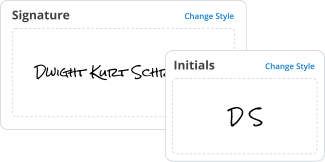
Apply legally-binding electronic signatures
Generate valid electronic signatures on your forms from anywhere, at any time. Choose the signing option you prefer to type, draw, or add a picture of your signature.

Generate smart fillable areas
Turn your paperwork into fillable forms with smart areas for different data types. Make them optional or mandatory, or add conditions that specify which areas each party should complete.
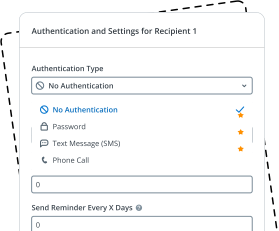
Send forms for signing
Share your paperwork with other parties and have it legally approved promptly. Ask recipients to eSign your forms via email requests or by sending them secure signing links.
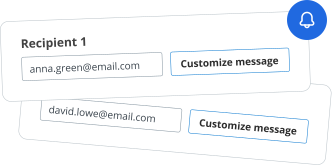
Follow the status of your samples
Keep track of any changes applied to your documents stay tuned for who completed them, when they did so, and from what IP address. Take advantage of the Audit Trail, which is admissible in court, to follow these details.
We spread the word about digital transformation
signNow empowers users across every industry to embrace seamless and error-free eSignature workflows for better business outcomes.






Free 7-day trial. Choose the plan you need and try it risk-free.

Honest pricing for full-featured plans. airSlate SignNow offers subscription plans with no overages or hidden fees at renewal.

Enterprise-grade security. airSlate SignNow helps you comply with global security standards.
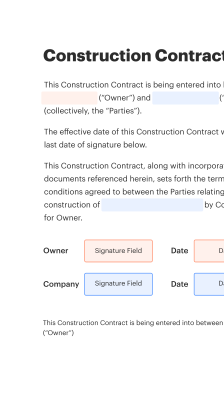

Place electronic signatures and send records in moments instead of hours. Our eSignatures have the identical legal power as wet-ink ones.

Take advantage of the signature tips function and improve your files without any concerns about the safety of your information.

Modify existing forms and save changes, and airSlate SignNow will immediately inform your entire crew that there are updated templates.

Place fillable areas, create or collect electronic signatures, get supplementary documents and payments, and discover different ways to boost your workflows.

Use airSlate SignNow API, the easiest way to create and collect eSignatures. Do so within your CRM systems, on your website, or even in specific apps.

Generate a public link for your template and collect signatures while not having to directly send your document to specific consumer email addresses.
Your complete how-to guide - digital vs electronic signature
Self-sign documents and request signatures anywhere and anytime: get convenience, flexibility, and compliance.
These days, you most likely won't find an organization that doesn't use contemporary technology to atomize work-flow. A digital signing is no longer the future, but the present. Present day businesses using their turnover simply cannot afford to quit web-based software that provide superior data file processing automation tools, like Digital vs electronic signature option.
How to handle Digital vs electronic signature airSlate SignNow feature:
-
After you get to our web site, Login or create your account if you don't have one, it will take you a few seconds.
-
Upload the appropriate document or select one from your catalogue folders: Documents, Archive, Templates.
-
cloud-structured storage compatibility, you can quickly upload the appropriate doc from preferred clouds with practically any gadget.
-
You'll get your data document opened in the advanced PDF Editor where you can add changes before you decide to continue.
-
Type text, place pictures, include annotations or fillable fields to be accomplished further.
-
Use My Signature button for self-signing or include Signature Fields to email the sign require to one or multiple users.
-
Apply the DONE button when finished to go on with Digital vs electronic signature feature.
airSlate SignNow web-based platform is necessary to raise the effectiveness and output of all working processes. Digital vs electronic signature is one of the capabilities that can help. While using web-based application these days is actually a necessity, not much of a competitive advantage. Give it a try now!
How it works


Electronic Signature Legality
What is the digital versus electronic
The terms “digital” and “electronic” often create confusion, yet they serve distinct purposes in the context of documents and signatures. A digital document is one that exists in a digital format, typically created and manipulated using software. Electronic documents, on the other hand, refer to any document that is created, stored, or transmitted electronically, which can include digital documents as well as scanned paper documents. Understanding this distinction is crucial when navigating the eSignature process, as it affects how documents are prepared and signed.
How to use the digital versus electronic
Using digital and electronic documents involves specific processes for completion and signing. Digital documents can be filled out directly using software like airSlate SignNow, allowing users to input information, add signatures, and submit forms seamlessly. Electronic documents may require scanning or uploading before they can be signed. With airSlate SignNow, users can easily convert paper documents into electronic formats, enabling them to send, sign, and store documents securely online.
Steps to complete the digital versus electronic
Completing a digital or electronic document involves several straightforward steps:
- Upload or create the document using airSlate SignNow.
- Fill in the required fields, ensuring all information is accurate.
- Add your eSignature by selecting the signature option and placing it in the designated area.
- Review the document for completeness.
- Send the document for signature to other parties, if necessary.
- Once all signatures are obtained, download or store the completed document securely.
Legal use of the digital versus electronic
Both digital and electronic documents hold legal validity in the United States, provided they meet specific criteria outlined in the Electronic Signatures in Global and National Commerce (ESIGN) Act. This legislation ensures that electronic signatures are recognized as legally binding, similar to traditional handwritten signatures. It is essential for users to ensure compliance with state-specific laws and regulations regarding electronic signatures to maintain the enforceability of their documents.
Security & Compliance Guidelines
When handling digital and electronic documents, security and compliance are paramount. Users should ensure that their eSignature platform, such as airSlate SignNow, employs robust encryption and security measures to protect sensitive information. Compliance with regulations such as the General Data Protection Regulation (GDPR) and the Health Insurance Portability and Accountability Act (HIPAA) is also crucial, particularly when dealing with personal or health-related information. Regular audits and updates to security protocols help maintain the integrity of the signing process.
Documents You Can Sign
With airSlate SignNow, users can sign a wide variety of documents electronically. Common examples include contracts, agreements, tax forms, and HR documents. The flexibility of digital and electronic formats allows users to streamline their workflows, reducing the time and effort required to obtain signatures. This capability is particularly beneficial for businesses that rely on quick turnaround times for essential documents.
Sending & Signing Methods (Web / Mobile / App)
airSlate SignNow offers multiple methods for sending and signing documents, accommodating various user preferences. Users can access the platform via web browsers, mobile devices, or dedicated applications. This versatility ensures that documents can be signed anytime and anywhere, making it easier to manage workflows efficiently. Whether on a desktop or mobile device, the process remains user-friendly, allowing for seamless document management.
 Best ROI. Our customers achieve an average 7x ROI within the first six months.
 Scales with your use cases. From SMBs to mid-market, airSlate SignNow delivers results for businesses of all sizes.
 Intuitive UI and API. Sign and send documents from your apps in minutes.
FAQs
Here is a list of the most common customer questions. If you can't find an answer to your question, please don't hesitate to reach out to us.
What is the difference between digital versus electronic signatures?
Digital signatures use cryptographic techniques to provide a higher level of security and authenticity, while electronic signatures are a broader category that includes any electronic indication of agreement. Understanding the difference between digital versus electronic signatures is crucial for businesses looking to ensure compliance and security in their document processes.
How does airSlate SignNow compare in terms of pricing for digital versus electronic signature solutions?
airSlate SignNow offers competitive pricing for both digital and electronic signature solutions, making it accessible for businesses of all sizes. By choosing airSlate SignNow, you can benefit from a cost-effective solution that meets your needs without compromising on features or security, regardless of whether you prefer digital versus electronic signatures.
What features does airSlate SignNow provide for digital versus electronic signatures?
airSlate SignNow includes a variety of features for both digital and electronic signatures, such as customizable templates, real-time tracking, and secure storage. These features ensure that you can efficiently manage your document signing process, whether you are using digital versus electronic signatures.
What are the benefits of using airSlate SignNow for digital versus electronic signatures?
Using airSlate SignNow for digital versus electronic signatures streamlines your workflow, reduces turnaround time, and enhances security. The platform's user-friendly interface and robust features make it easy for businesses to adopt and integrate into their existing processes, ultimately improving productivity.
Can airSlate SignNow integrate with other software for digital versus electronic signatures?
Yes, airSlate SignNow offers seamless integrations with various software applications, enhancing its functionality for both digital and electronic signatures. This allows businesses to connect their existing tools and systems, ensuring a smooth transition and improved efficiency in document management.
Is airSlate SignNow compliant with legal standards for digital versus electronic signatures?
Absolutely! airSlate SignNow complies with major legal standards, including the ESIGN Act and UETA, ensuring that both digital and electronic signatures are legally binding. This compliance gives businesses peace of mind when using airSlate SignNow for their document signing needs.
How secure are digital versus electronic signatures with airSlate SignNow?
airSlate SignNow prioritizes security for both digital and electronic signatures by employing advanced encryption and authentication methods. This ensures that your documents are protected against unauthorized access, making it a reliable choice for businesses concerned about security.




airSlate SignNow is committed to protecting your sensitive information by complying with global industry-specific.

digital vs electronic signature
Your entire business wins with electronic signature software. Generate a unique eSignature and boost your document workflows.


How to complete and sign a file online
So, you need to eSign a document online? Drive your process with airSlate SignNow, a perfect solution to lost time, risky security and inefficient processes. Generate your signatures online in three possible ways: draw, type in or upload an image of a handwritten signature. digital vs electronic signature at ease.
Follow the step-by-step guidelines to digital vs electronic signature online:
- Upload a document.
- Once it’s uploaded, it’ll open in the online editor.
- Select My signature.
- Choose one of three options to generate a signature: draw, type or upload an image of a handwritten one.
- Once you create a signature click Ok.
- Finish the process by clicking Done.
airSlate SignNow supports almost every format: PDF, Word, etc. Apart from signing a document, you can fill it out by adding a variety of fields: text, date, dropdown. Send a doc for signing via email, SMS or with a public hyperlink. Set-up Bots that’ll remind a signer to verify the file and notify a sender as soon as it's validated. digital vs electronic signature effectively straight away.
Trusted eSignature solution - digital vs electronic signature
Explore how the airSlate SignNow eSignature platform helps businesses succeed. Hear from real users and what they like most about electronic signing.


The ins and outs of eSignature
Find everything you need to know about electronic signatures. We've collected all the best tips and step-by-step instructions for working with eSignatures in a single place.

Signature verification: what is it and how to use it?
Find out why electronic signature verification is so important and learn how to do it with the help of specialized software.

How to simplify real estate operations with an eSignature solution
Learn how to speed up real estate operations, conclude deals in a few minutes from any place and any device.

If there are similar fields for name, can I autofill the other name fields?
Save time for your recipients with airSlate SignNow’s autofill option for similar fields. Learn how to easily set up automatic data completion for documents.
Discover powerful features with airSlate SignNow
Dec 11, 2020 — Digital signature – An electronic signature based upon cryptographic methods of originator authentication, computed by using a set of rules ...
May 8, 2020 — A digital signature is an electronic signature captured through an eSignature software using special encryption. This cryptographic operation ...
Feb 1, 2021 — Digital signatures create a virtual fingerprint that is unique to a person or entity and are used to identify users and protect information in ...
