Add Conditional Fields to the Document with SignNow

Make a recipient of your document meet requirements in order to see and fill conditional fields. This feature ensures that your document will be completed properly.

Award-winning eSignature solution

Why implement conditional fields in documents

Conditional fields reduce signer errors, shorten completion time, and improve data accuracy by presenting only relevant fields. They also simplify multi-path forms like applications and contracts while supporting compliance and auditability.

Why implement conditional fields in documents

Roles that manage conditional fields

Template Administrator

Template Administrators create and maintain templates with conditional fields, manage rule sets, and ensure templates meet organizational data and compliance standards. They coordinate testing and approve changes before templates are published for broader use.

Workflow Manager

Workflow Managers oversee how conditional fields integrate with business processes, set workflow-level defaults, monitor audit logs for exceptions, and map role-based visibility so that signers see the correct fields during transactions.

Key capabilities for effective conditional fields

These core features help teams implement accurate, adaptable documents: conditional visibility, multi-field rules, role-based logic, data-driven defaults, integration triggers, and template reuse.

Conditional Visibility

Fields can be shown or hidden when specified trigger values are present, letting documents present only relevant questions to each signer and reducing clutter.


Multi-field Rules

Create rules that evaluate several fields together, allowing complex pathways such as conditional sequences, mutually exclusive choices, and cascading question sets within a single document.

Role-based Logic

Apply rules that depend on signer role, so different users see different fields based on their assigned role during the signing process for clear, role-specific data capture.

Data-driven Defaults

Populate fields automatically from profile data or integrations, then use conditional logic to adjust visibility or requirement based on those populated values.

Integration Triggers

Use conditional outcomes to call integrations or webhooks, allowing downstream systems to react only when specific conditions are met in the signed document.

Template Reuse

Save documents with conditional rules as templates, which streamlines future sends and maintains consistent logic across recurring transactions.

be ready to get more

Choose a better solution

Integrations and templates for reusable conditional logic

Connect conditional templates to cloud services and CRMs to prefill data and trigger actions when conditions are met, enabling automation across systems with consistent logic.

CRM integration

Sync contact and account fields into templates so conditional logic can base decisions on CRM data and push completed form data back into customer records for accuracy.

Cloud document sources

Attach documents from cloud drives with preserved conditional rules and use saved templates to standardize logic across team drives and shared repositories for consistent outcomes.

Webhook automation

Invoke webhooks when conditional rules are evaluated to notify downstream systems, launch approval tasks, or record events in external process-management tools.

Template library

Maintain a library of conditional templates enabling teams to reuse validated rule sets, reduce setup time, and ensure consistent handling of multi-path documents.
How conditional fields work inside a document

Conditional fields change visibility or required status based on values entered elsewhere in the document, enabling dynamic forms that adapt to each signer’s responses.

  • Trigger field: A checkbox, dropdown, or radio button that initiates logic.
  • Target field: The field shown, hidden, or required when conditions are met.
  • Logical operator: Use equals, contains, or matches to evaluate trigger values.
  • Rule evaluation: Rules run client-side or server-side depending on platform integration.
Collect signatures
24x
faster
Reduce costs by
$30
per document
Save up to
40h
per employee / month

Quick setup: Add conditional fields to the document

This concise setup walk-through explains how to add conditional fields to the document, configure basic rules, and prepare a template for repeated use across standard workflows.

  • 01
    Upload document: Import your document from local storage or connected cloud drive.
  • 02
    Place fields: Drag signature, text, checkbox, and data fields onto the page.
  • 03
    Define rules: Select a trigger field and configure visibility or requirement logic.
  • 04
    Save template: Store conditional logic as a template for future sends.

Audit trail and record-keeping for conditional forms

Maintain clear, tamper-evident records of condition evaluations, signer inputs, and rule-trigger events to support audits and compliance.

01

Event timestamp:

Logged per action
02

Field change history:

Stored with values
03

Rule evaluation log:

Records condition matches
04

Signer IP capture:

IP and device data
05

Document snapshot:

PDF with applied fields
06

Export options:

CSV or JSON
be ready to get more

Why choose airSlate SignNow

  • Free 7-day trial. Choose the plan you need and try it risk-free.
  • Honest pricing for full-featured plans. airSlate SignNow offers subscription plans with no overages or hidden fees at renewal.
  • Enterprise-grade security. airSlate SignNow helps you comply with global security standards.
illustrations signature

Configuring workflow settings for conditional fields

Set workflow-level defaults and automation rules so conditional fields behave consistently across sends and templates.

Workflow Configuration Setting Name for Conditional Fields Default configuration values for conditional fields
Reminder Frequency for Pending Signers 48 hours
Conditional Logic Evaluation Mode Real-time
Field Visibility Fallback Setting Hidden by default
Role to Field Mapping Defaults Auto-assign roles
API Trigger on Condition Match Webhook call

Device support for conditional fields

Basic conditional logic and field visibility are supported on modern desktop browsers and official mobile apps, but advanced scripting may be limited on smaller devices.

  • Desktop browsers: Full feature support
  • Mobile apps: Most functions supported
  • Tablet experience: Near-desktop capabilities

To ensure consistent behavior, test templates on the actual platforms your signers will use, and avoid complex, device-specific scripts that may not run on every mobile client.

Security, authentication, and document protection

Encryption: At-rest and in-transit
Access control: Role-based permissions
Two-factor authentication: Optional for signers
Audit logs: Comprehensive event records
Document locking: Prevents post-signing edits
HIPAA support: Available with BAAs

Industry examples of conditional fields in action

Conditional fields streamline common industry forms by tailoring questions to each signer, improving completion rates and data quality.

Healthcare intake

A patient intake form hides insurance questions for self-pay patients and displays them for insured patients

  • Use a dropdown to select payment type
  • Reduces unnecessary fields and improves accuracy

Resulting in faster check-in, fewer follow-ups, and clearer insurance capture for billing and compliance.

Employee onboarding

An HR packet reveals tax withholding fields only when employment status requires them

  • Triggered by role or hire type selection
  • Ensures only applicable forms are completed and reduces signer confusion

Leading to complete onboarding records, fewer corrections, and streamlined HR processing with auditable steps.

Best practices for secure and accurate conditional fields

Follow these guidelines to minimize errors and ensure conditional logic operates correctly for all signers and integration points.

Design clear conditional pathways in templates
Map each conditional path before adding fields: document the triggers, expected values, and resulting field states to prevent overlaps and unintended visibility conflicts that confuse signers and increase error rates.
Test across devices and roles
Perform end-to-end tests with desktop and mobile clients and with every signer role to ensure conditional rules evaluate as expected and that required fields surface correctly in each scenario.
Limit nested complexity
Avoid overly deep chains of dependent conditions; simplify logic where possible and use summary fields to consolidate decisions, reducing maintenance overhead and potential rule conflicts.
Document and version control rules
Keep a versioned record of conditional logic changes and include descriptive labels for rules so audit reviews and troubleshooting are faster when business requirements evolve.

FAQs About add conditional fields to the document

Answered questions focus on configuration, device behavior, and integration points to help administrators and end users troubleshoot common conditional field issues.

Comparison: Conditional field support across platforms

Feature comparison of conditional field capabilities across major eSignature providers to help technical teams assess platform fit for dynamic forms.

Feature or Requirement Name for Comparison signNow (Recommended) DocuSign Adobe Acrobat Sign
Conditional Fields Availability
Logic Complexity Advanced rules Advanced rules Basic rules
Template Conditional Reuse Strong Strong Moderate
API Conditional Triggers
be ready to get more

Get legally-binding signatures now!

Common risks and compliance considerations

Incorrect data capture: Lost records
Broken logic paths: Incomplete forms
Unauthorized access: Data exposure
Noncompliance: Regulatory fines
Audit gaps: Missing evidence
Integration failures: Process delays

How to add conditional fields with airSlate SignNow

If you want your fillable forms to look more professional while ensuring the consistency and accuracy of the completion process, consider setting up conditional fields. A conditional field becomes available for filling once another specified field (or fields) is completed (or left blank).

Let’s say you need a couple of text fields to appear in a form under the condition that one of your checkboxes is checked. Here’s how you do it with airSlate SignNow.

Add fillable fields

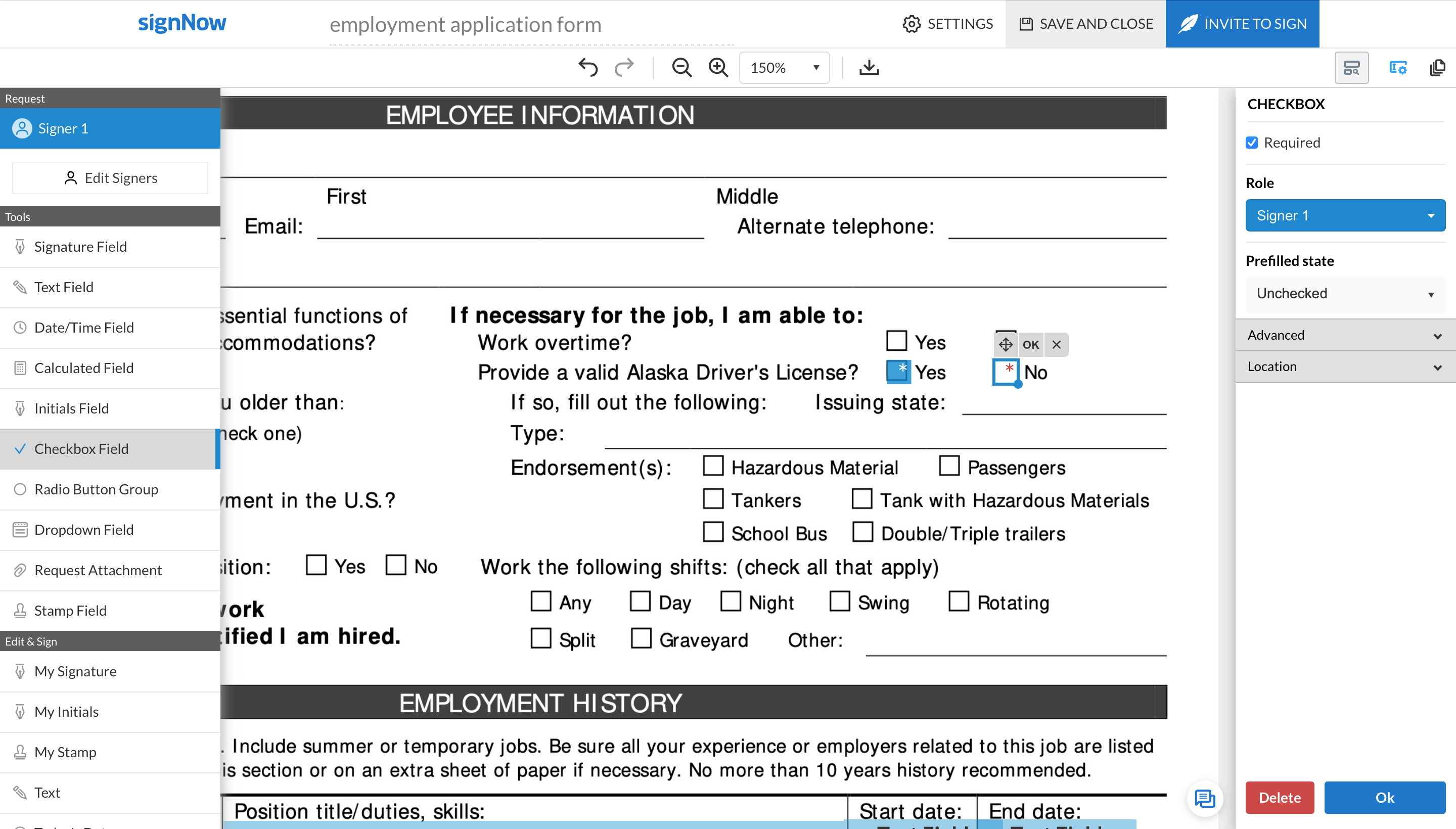
Select the Checkbox Field in the left-hand toolbar and drop it on your document. Add as many checkbox fields as you need
fill-guide-illustration

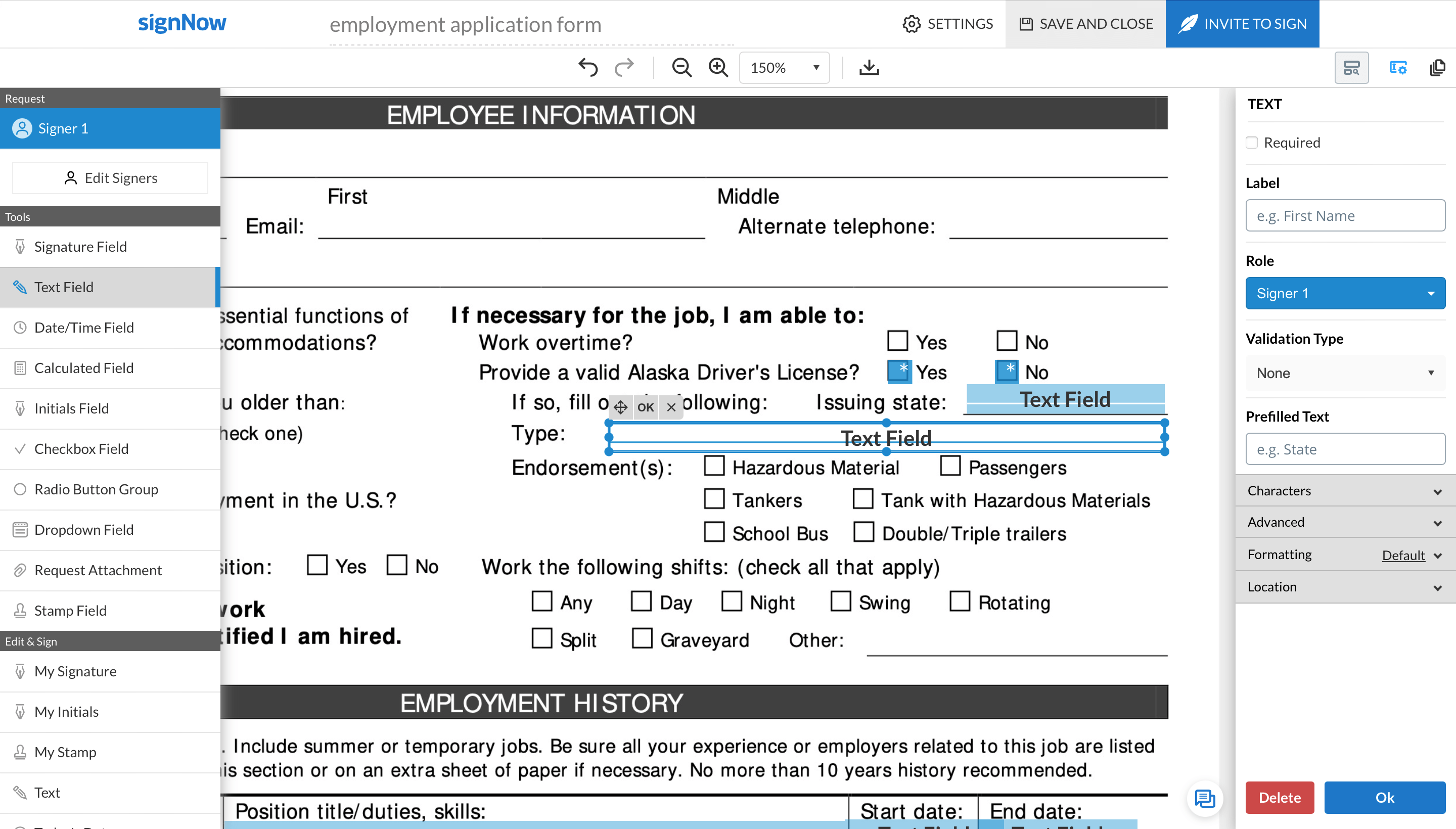
Then, add text fields. Adjust their size and positioning to properly fit in the blanks.
fill-guide-illustration

Make fields conditional

Now you need to make sure that your text fields only become visible if your recipient checks the Yes checkbox.

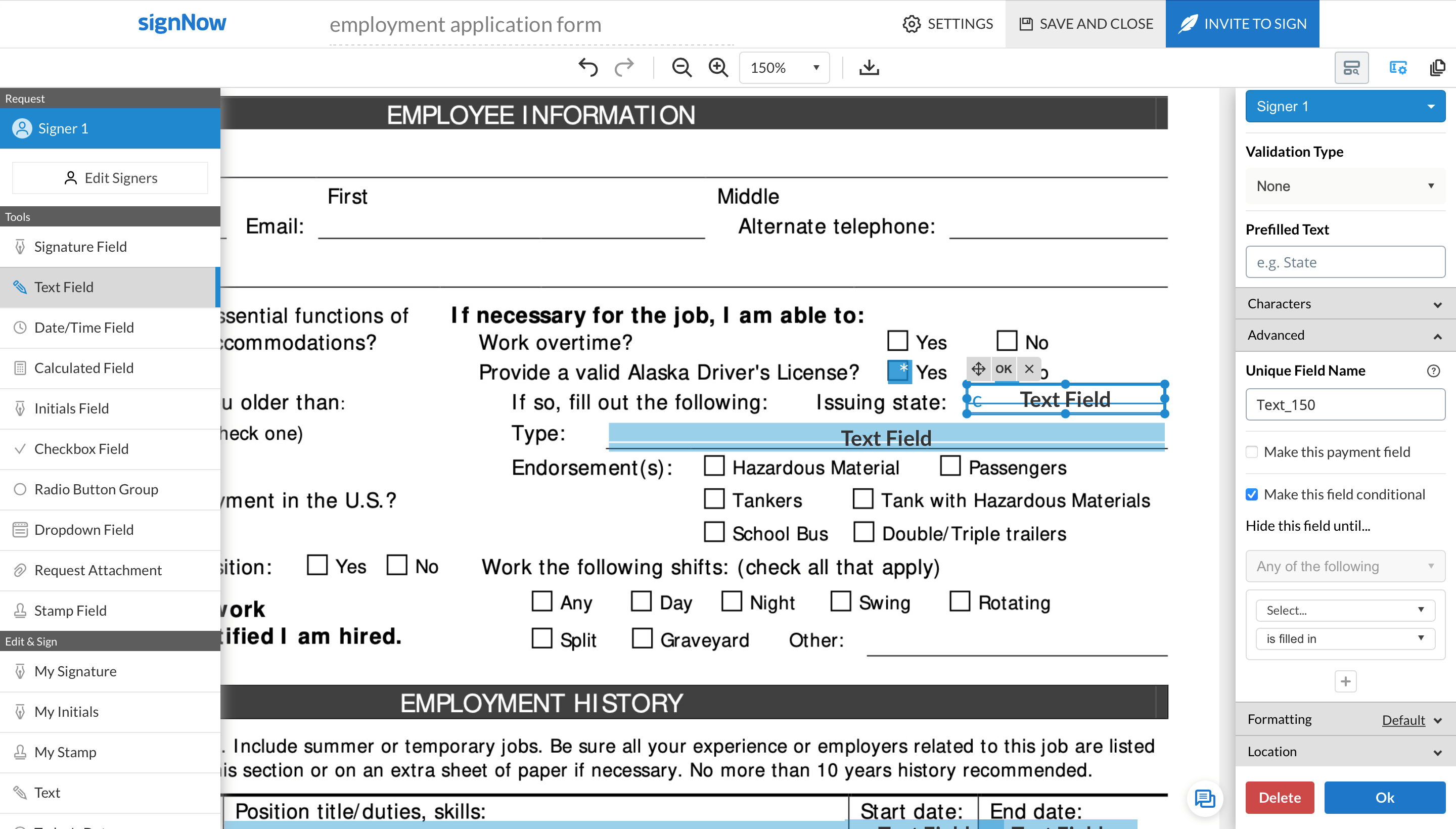
Select the first text field, open the Advanced dropdown in the sidebar on the right, and check the Make this field conditional checkbox.
fill-guide-illustration

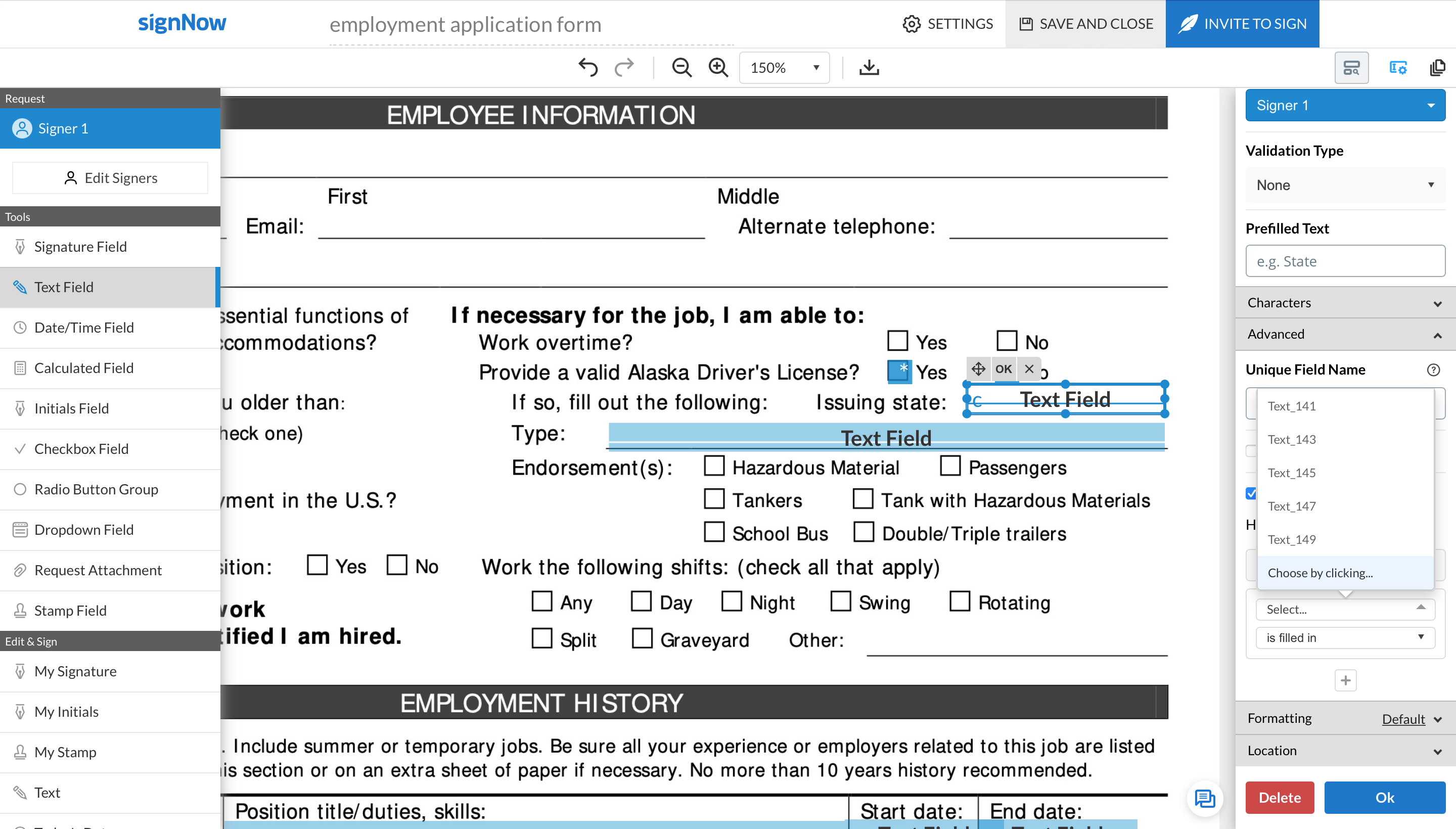
Choose the field that will trigger the condition. Open the upper dropdown in the Hide this field until section and select Choose by clicking. Click on the Yes checkbox that you added previously.
fill-guide-illustration

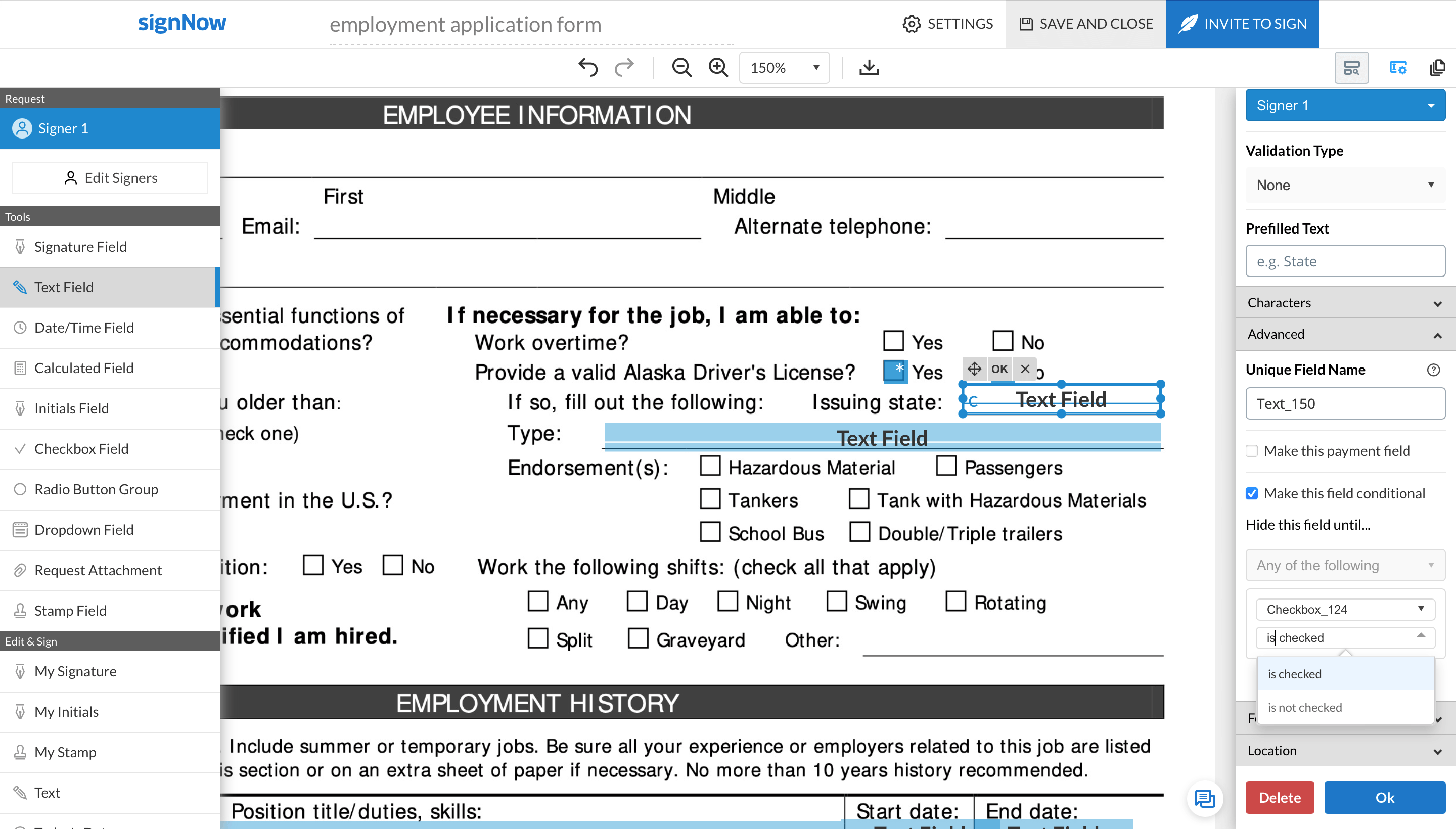
Finally, select the condition for the chosen field. In our case, we need the Yes checkbox checked to trigger the condition. Select the corresponding option from the lower dropdown and click Ok to finish. Repeat the same process for the second text field.
fill-guide-illustration

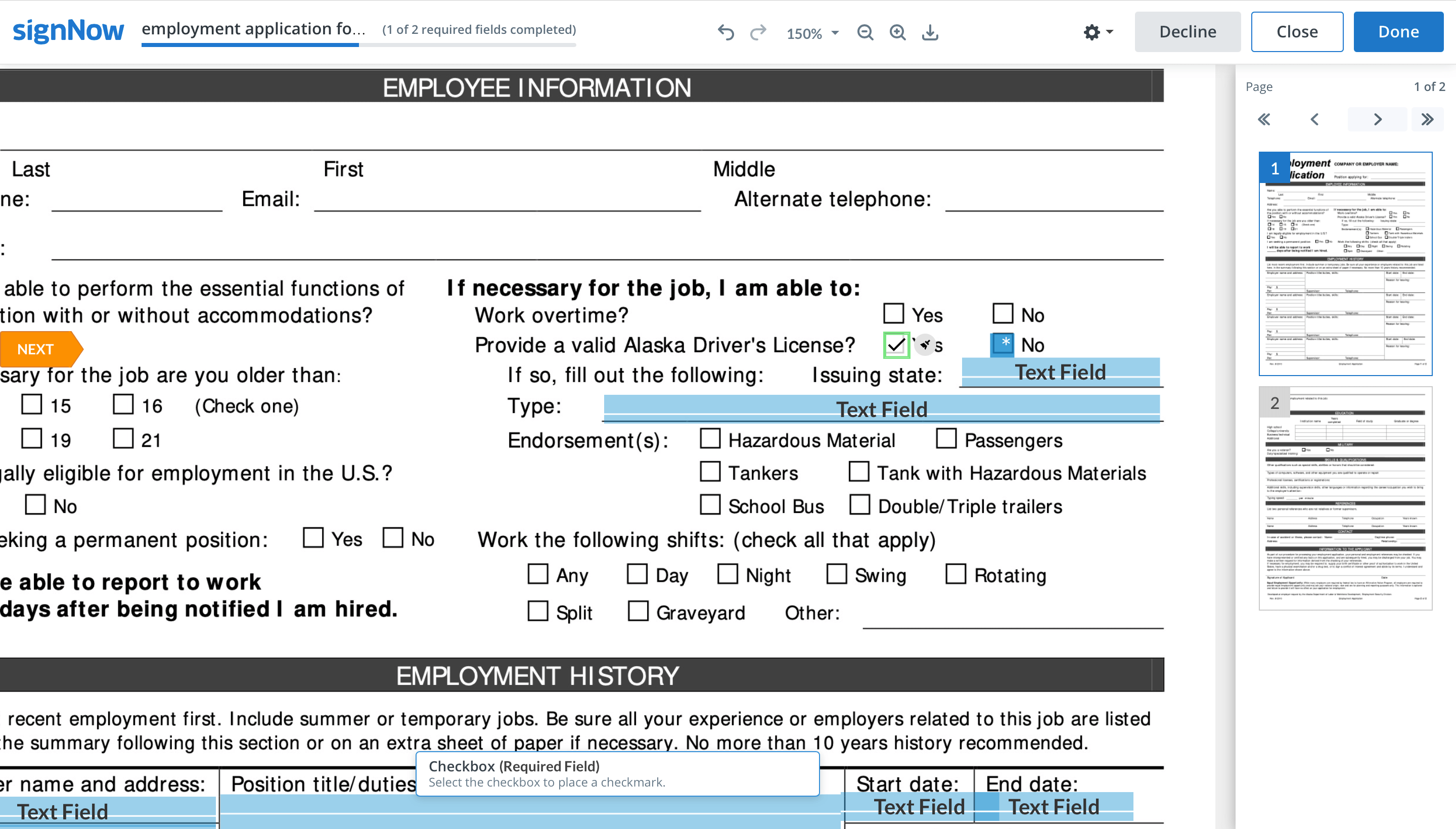
Now, when a recipient gets your eSignature invite, they will not see the given text fields until they fulfill the predefined condition — which is checking the Yes checkbox.

fill-guide-illustration
walmart logo
exonMobil logo
apple logo
comcast logo
facebook logo
FedEx logo
be ready to get more

Get legally-binding signatures now!