Required fields
Mark text fields as required to prevent completion until valid input is provided, ensuring mandatory data is captured before a signature can be applied and reducing incomplete submissions.




add text fields reduce manual post-signature edits by capturing signer-provided information directly in the document, improving data accuracy and maintaining a single authoritative file for compliance and recordkeeping.

An HR Manager uses add text fields to collect employee IDs, emergency contact information, and benefit selections within onboarding packets. They rely on required validation and templates to ensure each record is complete before storing the signed document in the HR system.
A Sales Representative adds text fields to proposals and order forms to capture custom line-item notes, special pricing approvals, and delivery instructions. They use templates and conditional fields to speed repeat deals while keeping consistent contract data for reporting.
Legal, HR, sales, and operations teams commonly use add text fields to collect required signer details directly in documents.
The feature supports both simple forms and complex conditional workflows, enabling consistent data capture across departments and use cases.
Mark text fields as required to prevent completion until valid input is provided, ensuring mandatory data is captured before a signature can be applied and reducing incomplete submissions.
Apply predefined or custom validation such as numeric-only, date formats, or regular expressions to enforce correct input and minimize downstream data cleansing work after signature completion.
Define maximum character counts for specific fields to prevent overflow, maintain document layout integrity, and ensure exported values meet system or database constraints.
Show or hide add text fields based on prior responses or role assignments to simplify signer experience and only request relevant information when needed.
Prepopulate fields with known data from templates or integrations to reduce signer effort and ensure consistency across repeat documents and processes.
Map completed add text values to CSV, API endpoints, or connected systems for reporting, automation, or billing reconciliation without manual copy-paste.
Map add text fields from templates to Google Docs exports so completed values populate destination documents and enable consistent version control between signed PDFs and cloud documents.
Sync add text field values with CRM contact records to automatically update lead or account properties after signature, reducing manual data entry and ensuring accurate sales records.
Save final signed documents with completed add text fields to Dropbox folders using naming conventions that include key field values for simplified retrieval and audit.
Export field values into CSV or Google Sheets to aggregate signer responses and drive reporting or reconciliation tasks without manual transcription.

| Configuration | Default Value |
|---|---|
| Reminder Frequency Settings | 48 hours |
| Completion Validation Mode | Strict validation |
| Auto-archive Completed Documents | Enabled |
| Template Field Mapping Behavior | Preserve field names |
| Post-signature Webhook | Send JSON payload |
add text works across desktop browsers and native mobile apps, but form layout and input behavior can vary by device and screen size.
Test templates on representative devices and use character limits and responsive placement to avoid layout issues; prefer short fields for mobile and verify validation behaves consistently in the platform's mobile app and browser clients.
A mid-sized employer uses templates with add text fields for employee name and tax ID collection
Resulting in faster processing and fewer manual corrections.
A regional software vendor adds text fields for discount codes and PO numbers on proposals
Leading to more accurate invoicing and shorter days sales outstanding.
| Comparison Criteria and Vendor Column Headers | signNow (Featured) | DocuSign | Adobe Acrobat Sign |
|---|---|---|---|
| Add text field availability | |||
| Template field mapping | |||
| Bulk Send support | Enterprise only | ||
| HIPAA-compliant option | BAA available | BAA available | BAA available |
| Vendor Pricing and Plan Comparison | signNow (Recommended) | DocuSign | Adobe Acrobat Sign | Dropbox Sign | PandaDoc |
|---|---|---|---|---|---|
| Free tier or trial availability | Free trial; no permanent free tier for advanced features | 30-day free trial only | Trial with Acrobat subscription | Free limited eSignatures | Free eSignatures available |
| Entry-level paid plan | Plans start at competitive per-user rates with templates included | Individual plans available monthly | Often bundled with Acrobat subscriptions | Business plans start mid-range | Paid plans include templates and integrations |
| API access availability | API included on Business/API tiers | API on elevated plans only | API available with enterprise licensing | API available on paid plans | API available on Business plans |
| Enterprise pricing model | Custom enterprise pricing with volume discounts | Custom enterprise contracts and SLAs | Enterprise licensing through Adobe enterprise sales | Enterprise agreements available | Enterprise packages with advanced features |
| Support and onboarding options | Email and priority support on higher tiers with onboarding options | Paid support packages and onboarding | Adobe enterprise support and implementation services | Standard support with paid onboarding available | Dedicated onboarding for enterprise customers |
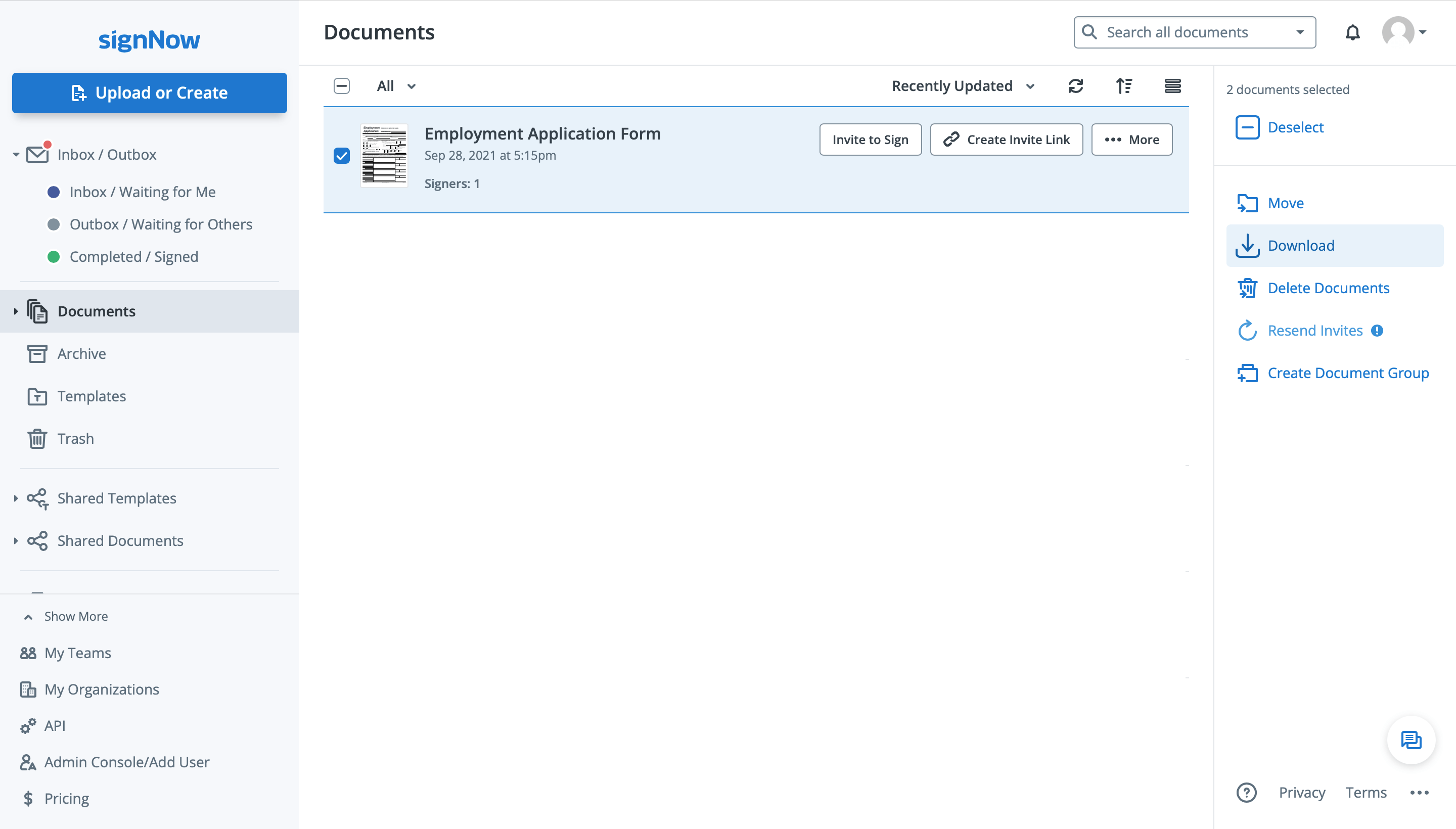
Need to complete a PDF form and send it to someone to sign? Using airSlate SignNow is the quickest way to get the job done as you can add text to a PDF without having to convert it to an editable format.
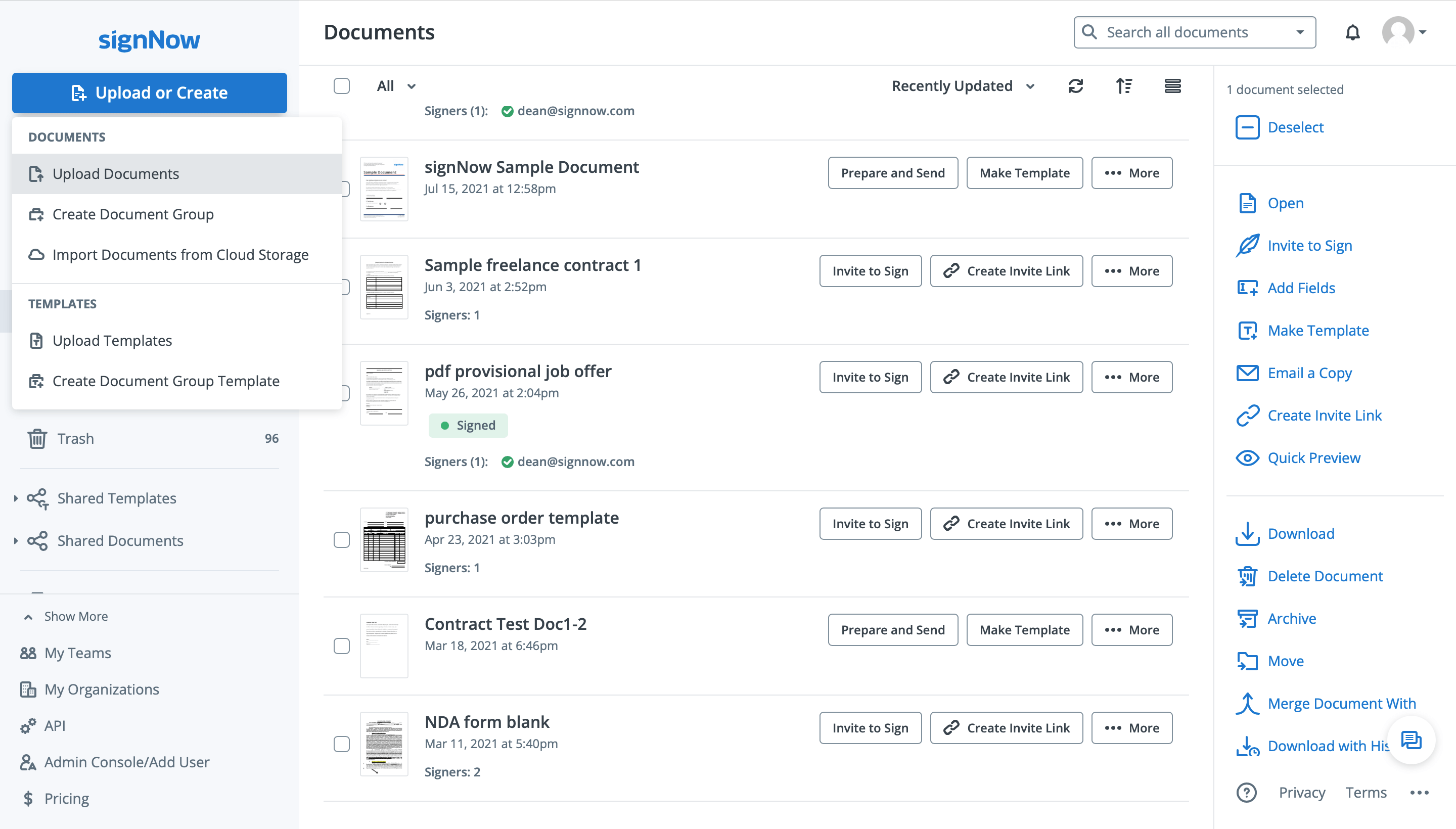
In the airSlate SignNow dashboard, hover over the Upload or Create button and select Upload Documents from the dropdown. Select a PDF stored on your hard drive and wait a moment for it to upload. Then, open your document in the editor by double-clicking it.
Select Text in the toolbar on the left, click anywhere on your document and start typing.
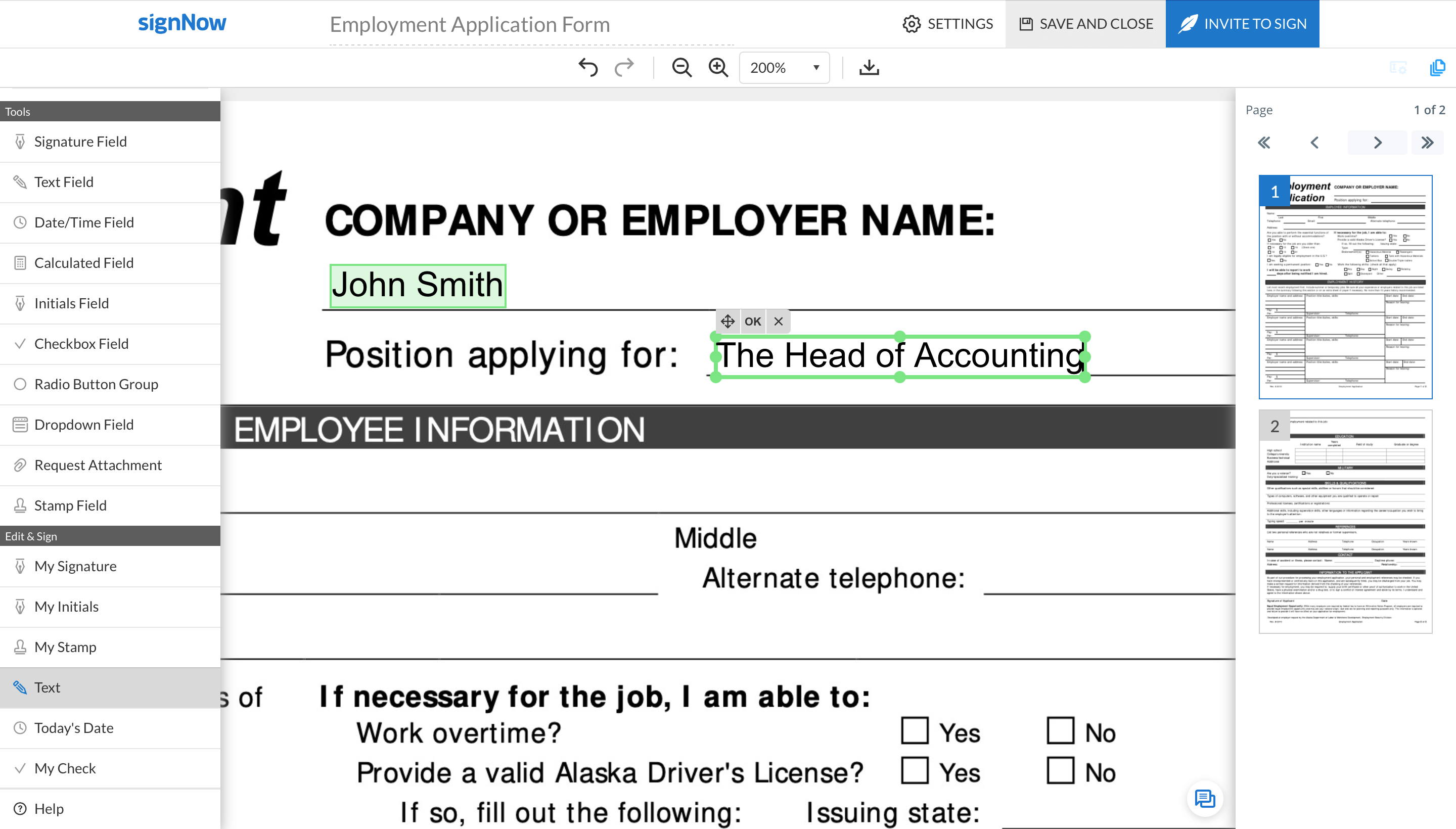
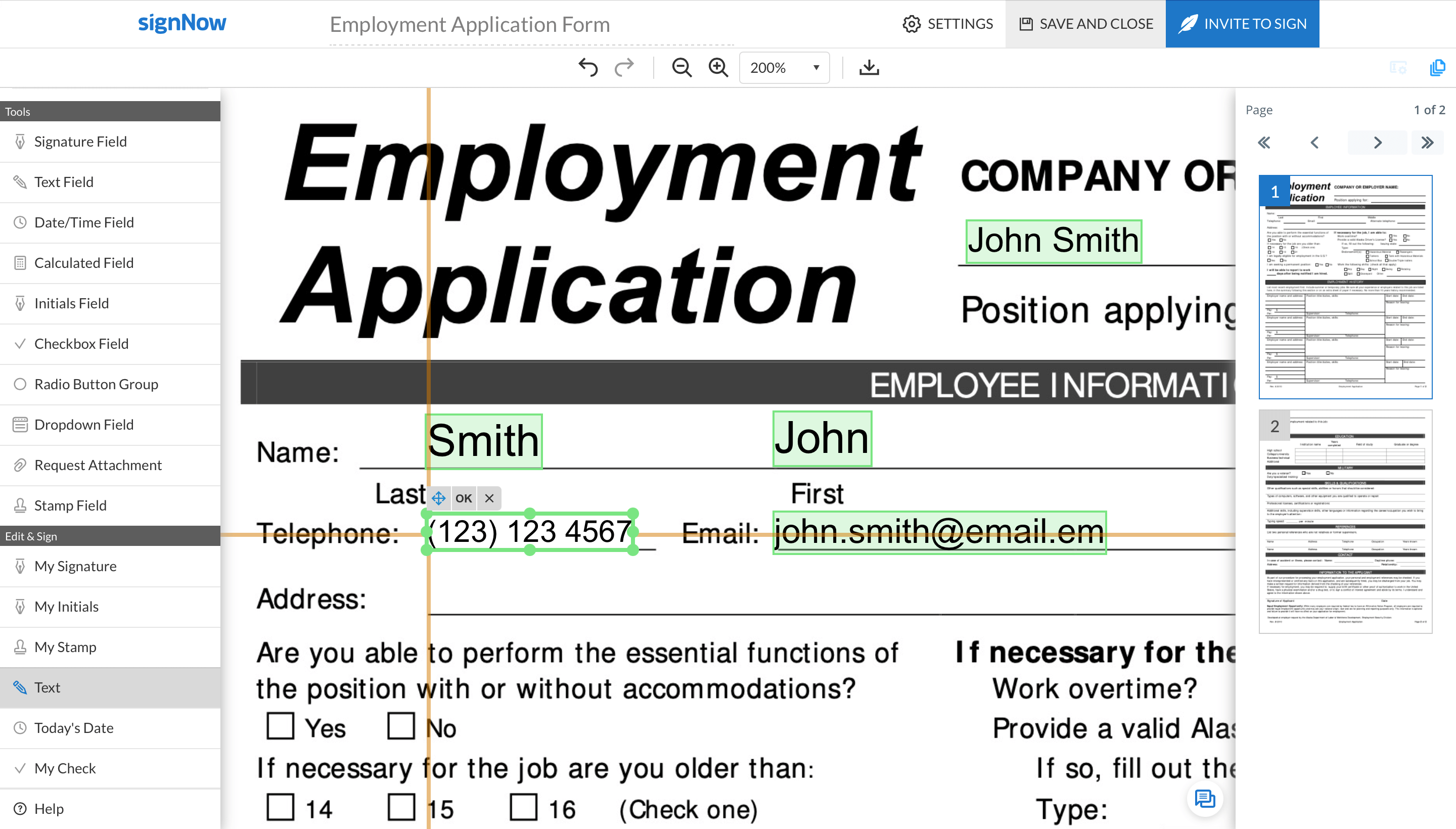
Click on your text box and use the arrow cross icon to drag it across the page. Then, drop the text box where needed. Easily resize your text by dragging its edges (anchor points).
Once you are finished editing your document, click Invite to Sign in the top right corner to send your PDF for eSignature. Or simply save your changes by clicking Save and Close.
Back in the dashboard, you can download your edited PDF or send it via email.