Create team documents with signNow, a secure and compliant eSignature solution. Streamline your document management while ensuring legal compliance across industries.
Creating team documents combines collaborative drafting, standardized templates, role-based approvals, and electronic signature collection to produce finalized, shareable records. For teams, the process reduces duplicate work by centralizing document storage, enforcing consistent fields and metadata, and tracking progress through defined workflows. When paired with an eSignature platform, document state, signer identity, and timestamps are preserved in a verifiable audit trail. This approach supports repeatable processes across HR, sales, procurement, and legal while providing controls needed for U.S. compliance frameworks and internal governance.
Why standardize how you create team documents
Standardizing team document creation reduces errors, speeds approvals, and ensures consistent recordkeeping across departments while preserving security and legal validity under U.S. eSignature law.
Common hurdles when teams create documents
Inconsistent templates lead to missing clauses and data gaps that slow approvals.
Unclear signing order and responsibilities cause delays and require manual follow-ups.
Poor version control results in multiple competing drafts and compliance exposure.
Insufficient access controls increase the risk of unauthorized edits or data leakage.
Representative profiles: who manages document creation
HR Manager
HR managers configure templates for onboarding, benefits enrollment, and policy acknowledgements. They set roles for reviewers, require specific data fields, and track completion to meet internal audit needs and regulatory obligations.
Sales Operations
Sales operations professionals assemble contract templates, enable team signatures, and automate pricing approvals. They monitor template usage and integrate signed documents with CRM records for accurate revenue recognition and account management.
Teams and roles that routinely create team documents
Typical users include HR teams creating offer letters, sales teams preparing contracts, procurement teams issuing purchase orders, and legal teams approving templates.
Human resources specialists managing onboarding documents and employment agreements.
Sales operations and account managers preparing proposals and customer contracts.
Procurement and vendor managers issuing purchase orders and supplier agreements.
Larger organizations often centralize template management and permissions to maintain consistency and reduce review cycles across departments.
be ready to get more
Choose a better solution
Essential tools when you create team documents
A feature set focused on collaboration, control, and compliance helps teams produce consistent, signable documents with minimal manual work.
Team Templates
Centralized, reusable templates enforce consistent fields and language, support role-based access, and allow admins to lock sections to prevent unauthorized edits while enabling rapid document generation for recurring processes.
Bulk Send
Send a single template to multiple recipients with individualized fields and parallel or sequential signing, reducing manual sending and allowing teams to complete high-volume distributions efficiently.
Role-Based Permissions
Granular permissions let administrators control who can create, edit, send, and archive templates, ensuring only authorized team members modify critical legal clauses and sensitive data.
Audit Trail
Comprehensive, tamper-evident logs capture signer identity, timestamps, IP addresses, and document changes to support dispute resolution and compliance audits.
How teams typically create and execute documents
The workflow moves from template creation through collaborative editing to electronic signing and secure storage, with visibility at each stage.
Template creation: Author standardized forms with required fields.
Collaborative editing: Multiple contributors revise and comment on the draft.
Signature routing: Define signer order and authentication requirements.
Completion and archive: Capture signed copy and retain an audit record.
Collect signatures
24x
faster
Reduce costs by
$30
per document
Save up to
40h
per employee / month
A simple sequence to create team documents
Follow a repeatable process to assemble, approve, and finalize team documents with consistent fields and signature steps.
01
Draft template: Create a master document with standardized fields.
02
Assign roles: Define who edits, reviews, and signs each section.
03
Set workflow: Choose signing order and conditional routing rules.
04
Publish and track: Distribute templates and monitor completion through audit logs.
be ready to get more
Why choose airSlate SignNow
Free 7-day trial. Choose the plan you need and try it risk-free.
Honest pricing for full-featured plans. airSlate SignNow offers subscription plans with no overages or hidden fees at renewal.
Enterprise-grade security. airSlate SignNow helps you comply with global security standards.
Typical workflow settings for team document creation
Configure workflow defaults to reflect team responsibilities, notification cadence, and retention requirements for consistent document processing.
Setting Name
Configuration
Reminder Frequency
48 hours
Default Signing Order
Sequential
Template Locking
Admin only
Retention Period
7 years
Signature Authentication
Email or SMS
Device and browser guidance for creating team documents
Team document creation and signing works across modern desktop and mobile browsers as well as dedicated mobile apps for full workflow access.
Desktop browsers:Chrome, Edge, Safari
Mobile platforms:iOS and Android apps
File formats:PDF, DOCX supported
For best results, use the latest browser versions, enable cookies and TLS, and prefer PDF templates for consistent field placement; mobile apps provide offline signing and camera-based identity capture.
Core security features for creating team documents
Encryption at rest:AES-256 level
Encryption in transit:TLS 1.2+ secure
Access controls:Role-based permissions
Authentication options:Multi-factor support
Document audit trail:Immutable logs
Data residency:US-based storage
Industry examples of creating team documents
Practical examples show how structured document creation reduces cycle time and improves compliance across sectors.
Healthcare onboarding
A hospital HR team standardizes consent and onboarding packets to include required HIPAA acknowledgements and role-based approvals.
Pre-filled templates reduce manual entry errors.
Signed packets integrate with the HRIS and credentialing system.
Resulting in faster onboarding, complete records, and auditable compliance for patient privacy.
Sales contracting
A regional sales organization implements team templates for quotes and contracts with embedded variable fields for pricing and terms.
Completed agreements are automatically recorded in CRM with signature metadata.
Leading to shorter sales cycles, accurate contract data, and centralized auditable storage for renewals.
Practical best practices for creating team documents
Adopt consistent procedures and technical controls to reduce errors, speed approvals, and preserve compliance when teams create documents.
Standardize templates and fields across teams
Maintain a controlled template library managed by administrators. Use predefined fields for names, dates, and identifiers to prevent free-text errors and ensure downstream systems receive structured data consistently.
Define clear signer order and approval rules
Specify whether signatures occur sequentially or in parallel and automate conditional routing based on role or field values to avoid manual coordination and missed signers.
Enforce access controls and versioning
Apply role-based permissions to editing and sending functions, and enable version history so reviewers can compare revisions and restore previous templates when necessary.
Retain audit logs and exportable records
Ensure every signed document includes a timestamped audit trail and a downloadable PDF with embedded metadata to support legal defensibility and internal audits.
Create templates in a central account or administrative workspace and assign folder-level permissions. Limit editing rights to template managers, and use naming conventions and version notes so team members select the current approved template for each process.
Use email authentication for routine agreements and add SMS codes or government ID checks for higher-risk documents. Multi-factor authentication reduces impersonation risk and strengthens evidentiary value for disputed signatures.
Apply field-level encryption or redact sensitive fields in the stored copy, restrict template access by role, and enable logging of all views and downloads. Combine platform controls with internal data classification policies.
Yes. Most eSignature platforms provide native connectors or APIs to push signed PDFs and extracted field data into CRM records, ensuring contract data synchronizes with account and opportunity workflows.
Define retention based on regulatory needs, such as employment or tax requirements. Typical controls include automated archival after signature, configurable retention windows, and secure deletion or export for long-term storage.
Check the audit trail for delivery status, resend or reassign via the platform, and verify recipient email addresses. Enable delivery and open notifications so administrators can detect and correct failures quickly.
Feature availability when teams create documents
Compare common capabilities across eSignature providers that matter when you create team documents and manage collaborative workflows.
Risks and penalties from poor team document practices
Regulatory fines:Monetary penalties
Contract disputes:Legal exposure
Data breaches:Notification costs
Operational delays:Lost revenue
Audit failures:Compliance gaps
Reputational harm:Customer trust loss
Pricing snapshot for creating team documents at scale
High-level plan and pricing characteristics to consider when budgeting for team document creation and eSignature workflows.
Pricing and Plans Overview
signNow (Featured)
DocuSign
Adobe Sign
HelloSign
PandaDoc
Starting price per user
Starts at $8/user/month billed annually
Plans from $10/user/month
Included with Acrobat subscriptions starting $14.99/month
Plans from $15/user/month
Plans from $19/user/month
Free trial availability
Free trial offered
Free trial offered
Trial available via Acrobat
Free trial offered
Free trial offered
Bulk Send included
Included in higher tiers
Available on business plans
Available via enterprise
Available on certain plans
Add-on or higher tier
Team Templates included
Included in team plans
Yes on business plans
Yes with Acrobat Sign
Yes on paid plans
Yes on business plans
API access policy
Available with API plans
Available via developer account
Available for enterprise
Available via paid plans
Available with paid tiers
How to create team documents with airSlate SignNow
Creating a team will allow you to share access to documents with other members of your organization. As a result, you can manage shared assets collaboratively without having to send files to each other over and over.
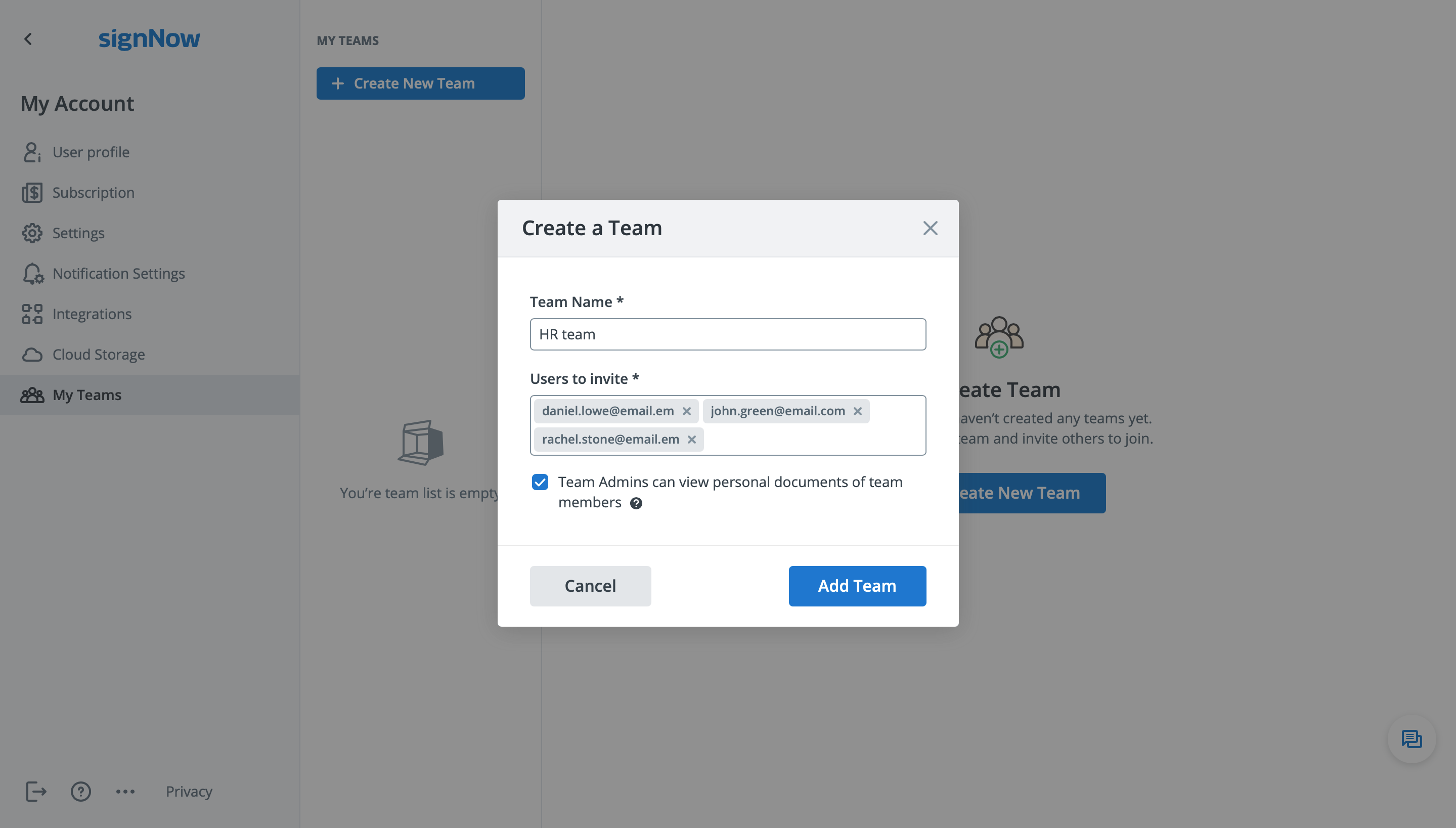
Start by creating a team
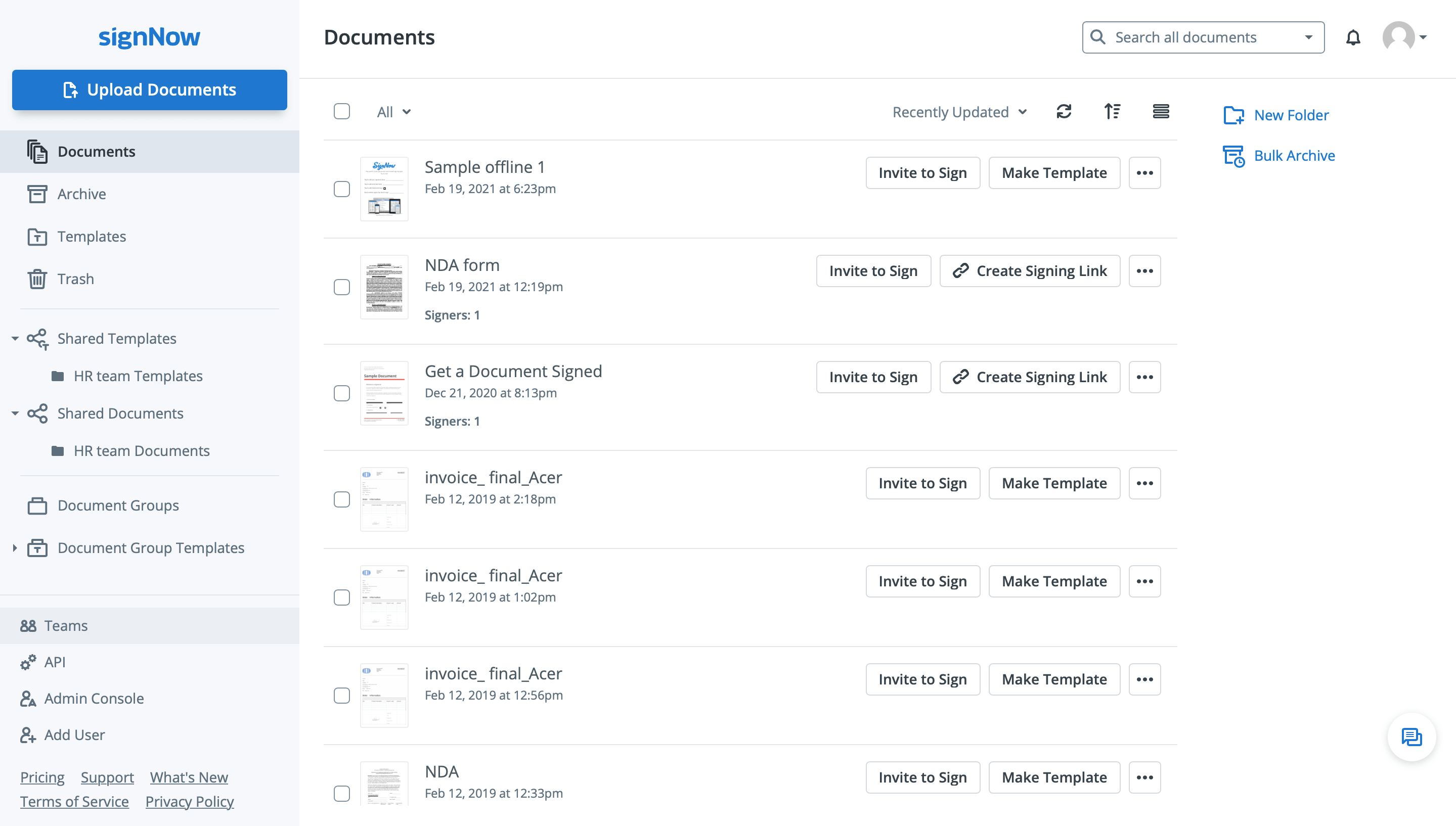
Select Teams toward the bottom of the left-hand sidebar.
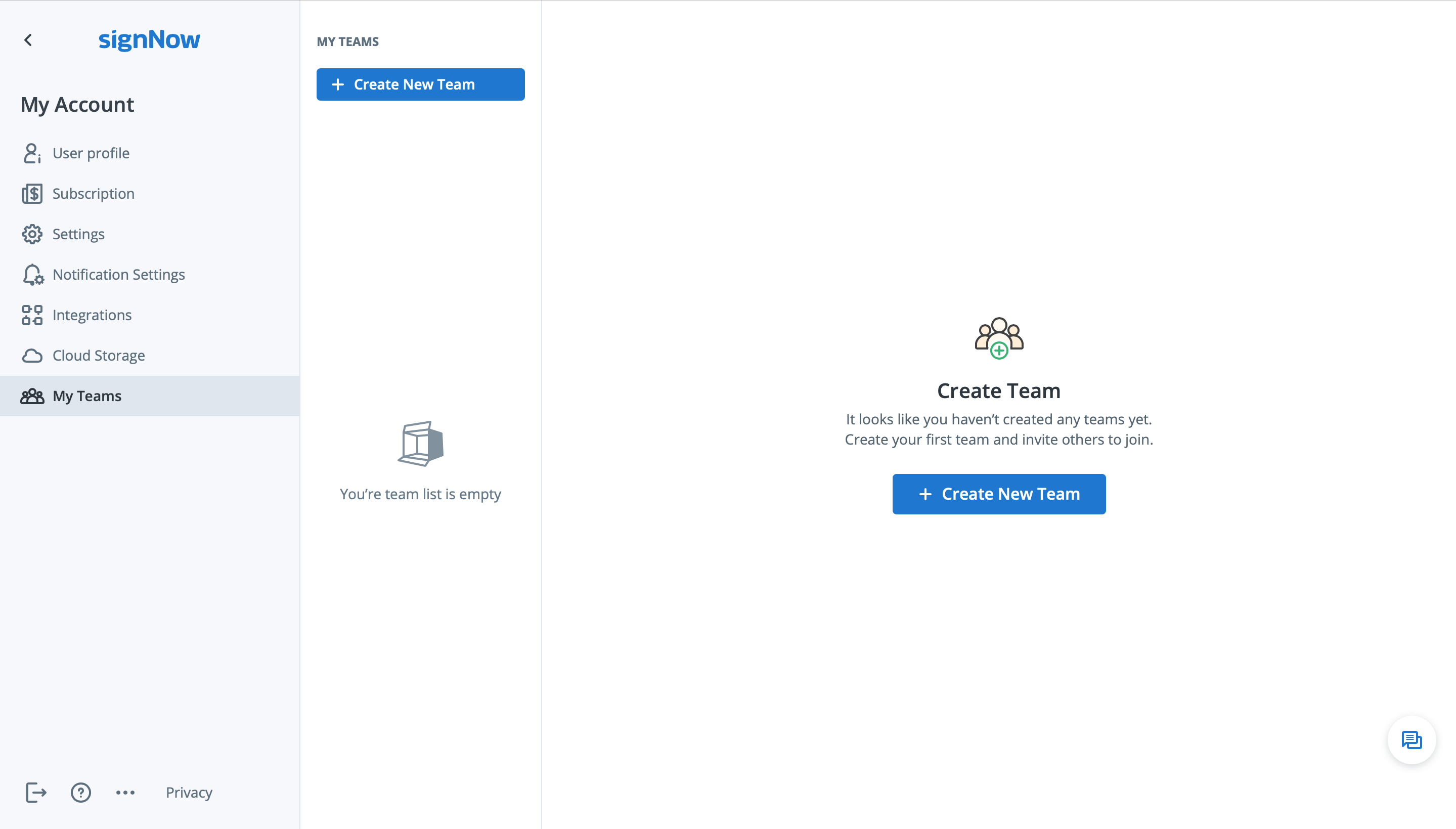
To add a new team, click the Create New Team button.
Enter your team name and add team member email addresses in the <и>Users to Invite box. Then, click Add Team.
Note: Check the Team Admins can view personal documents of team members box if you want to allow the team admins to access all of your teammates’ documents (not only shared ones).
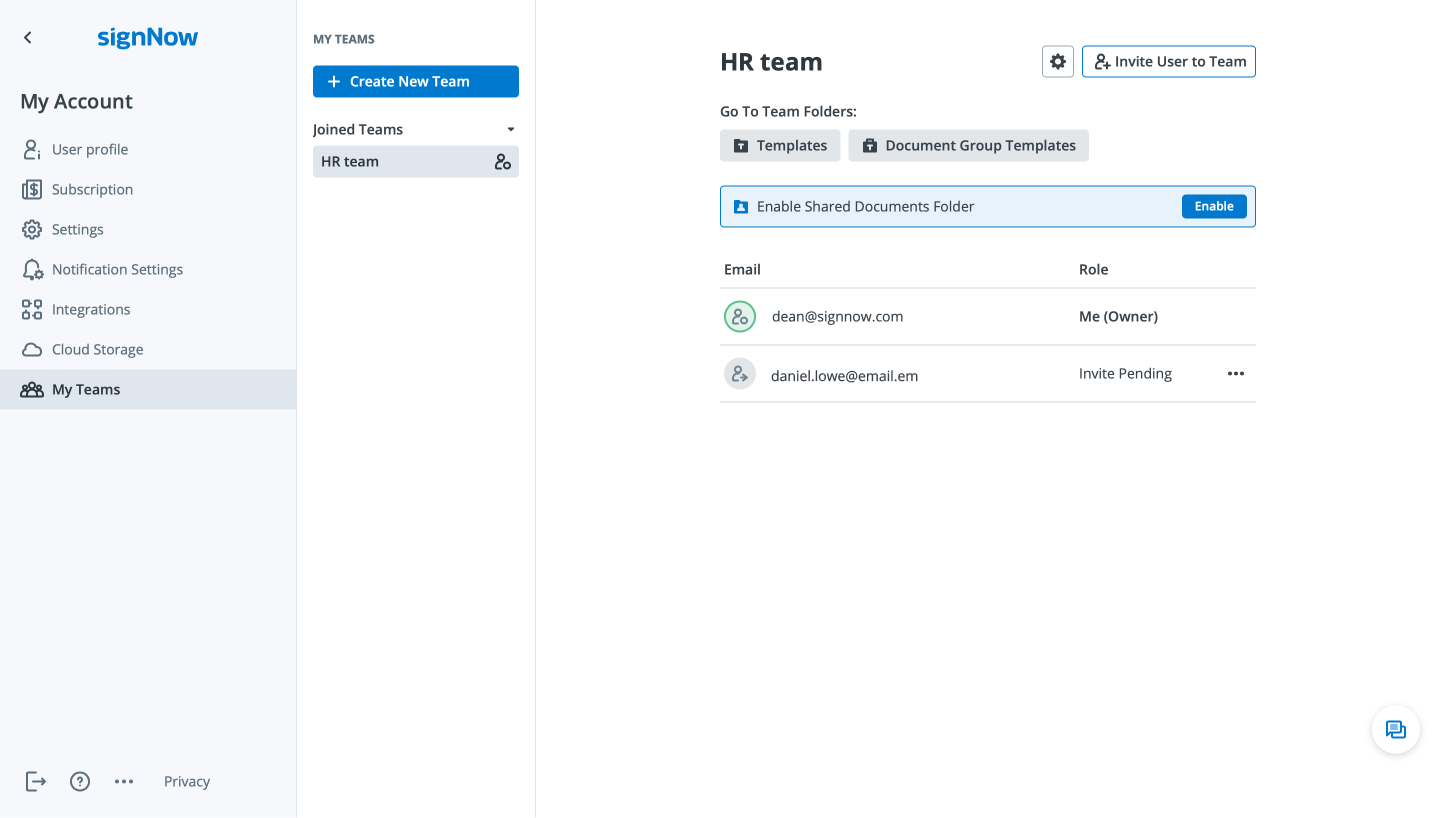
The added members will receive an email invitation to join your team. Once they accept it, your team is ready. You can view the status of your teammates next to their email addresses.
Create a shared folder
Find the Enable Shared Documents Folder option above your teammate list and click Enable.
Share documents with your team
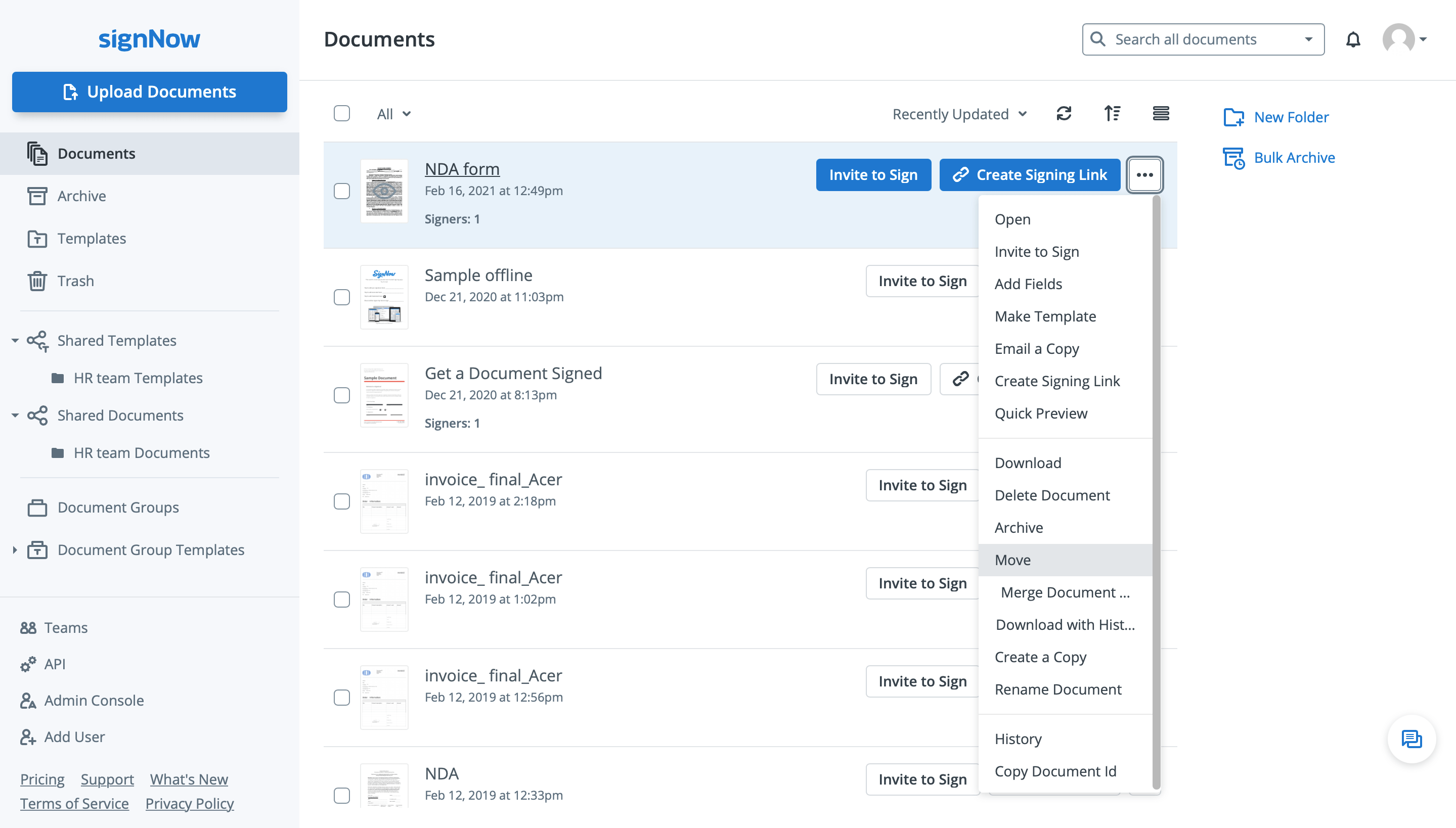
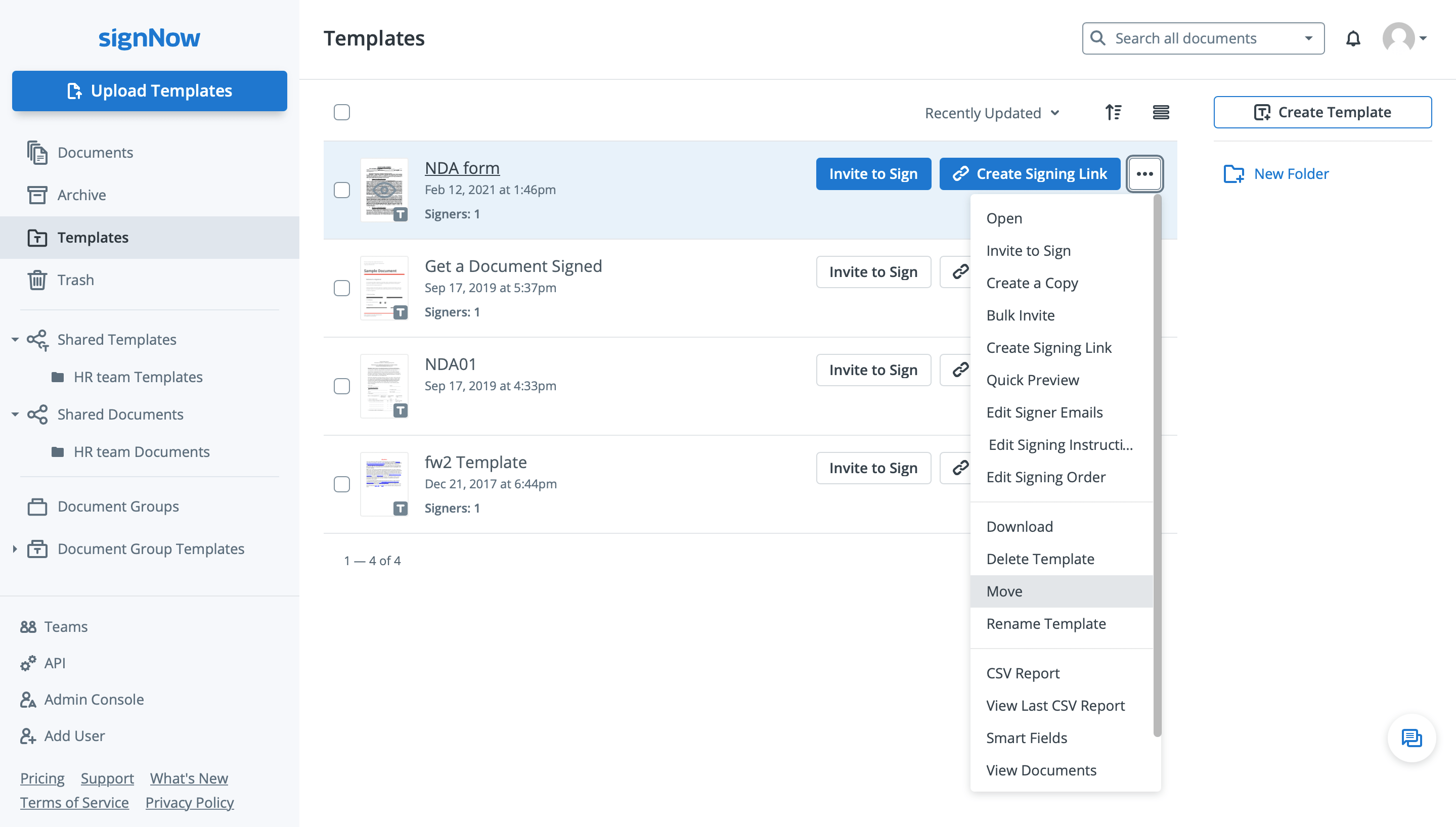
You can now move any document stored in your airSlate SignNow account to the Shared Documents folder. Click the More button next to the name of the document you are about to share and then select Move.
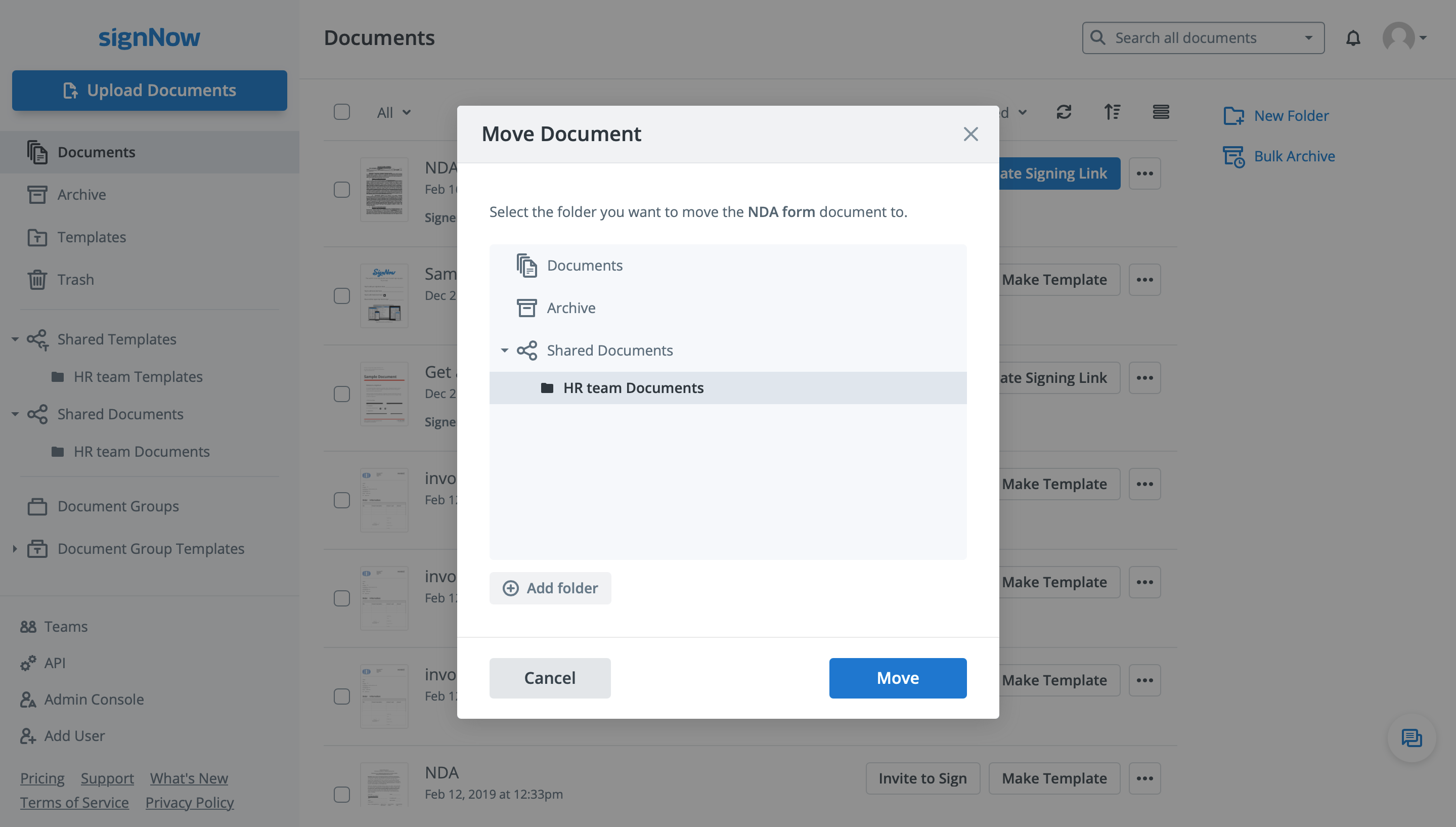
Choose your shared team folder in the new dialog box and click Move.
You will find your document in the shared folder. It is now available to all of your team members. They can eSign or send the document for signing, add fields and annotations, and so on.
Share templates with your team
Use a similar workflow to move templates to your shared folder so that your teammates can access them whenever they need.
Create document group templates
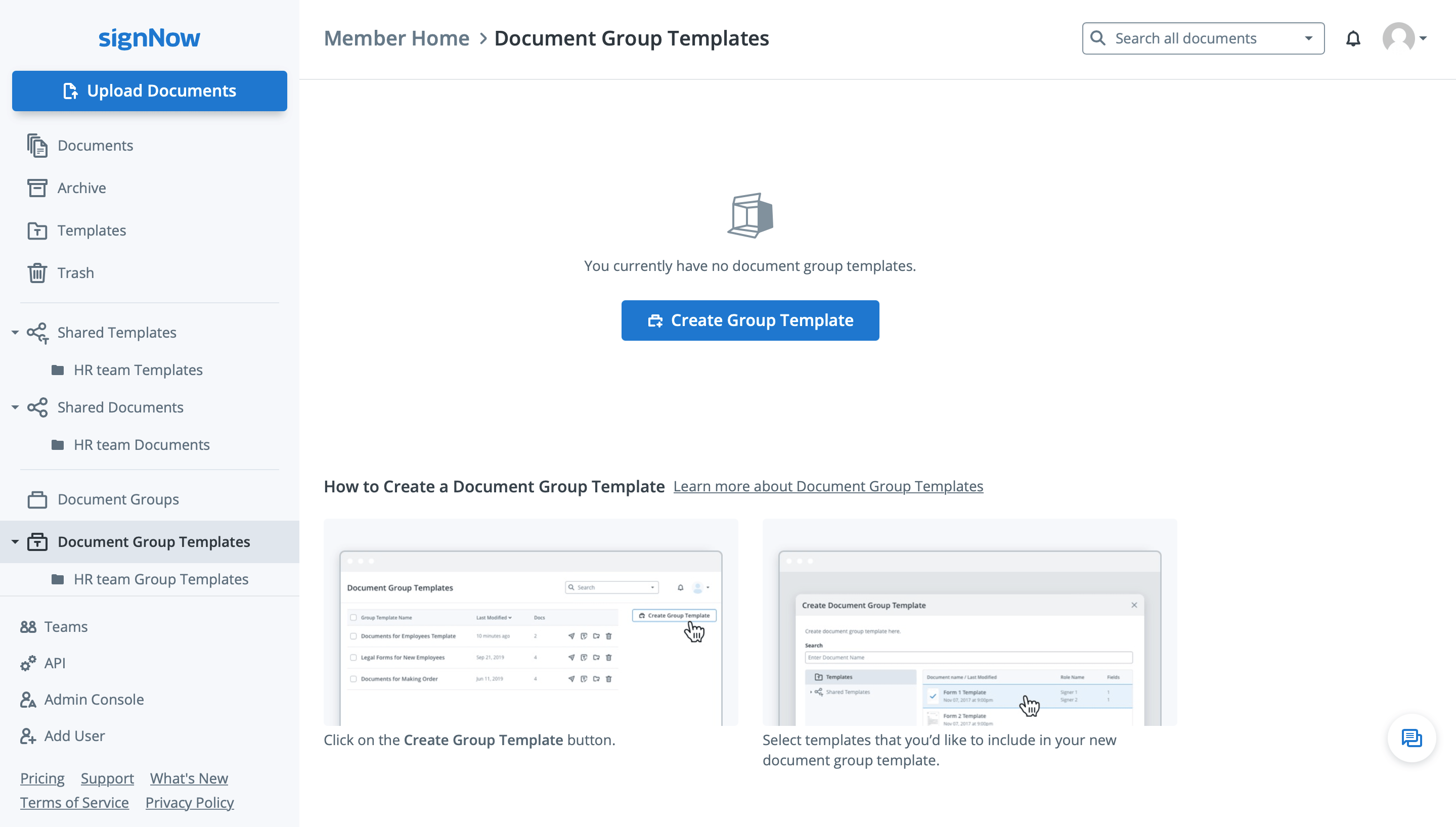
If you and your team need to send packages of documents to one or multiple signers, create a document group template. Go to the Document Group Templates folder and click Create Group Template.
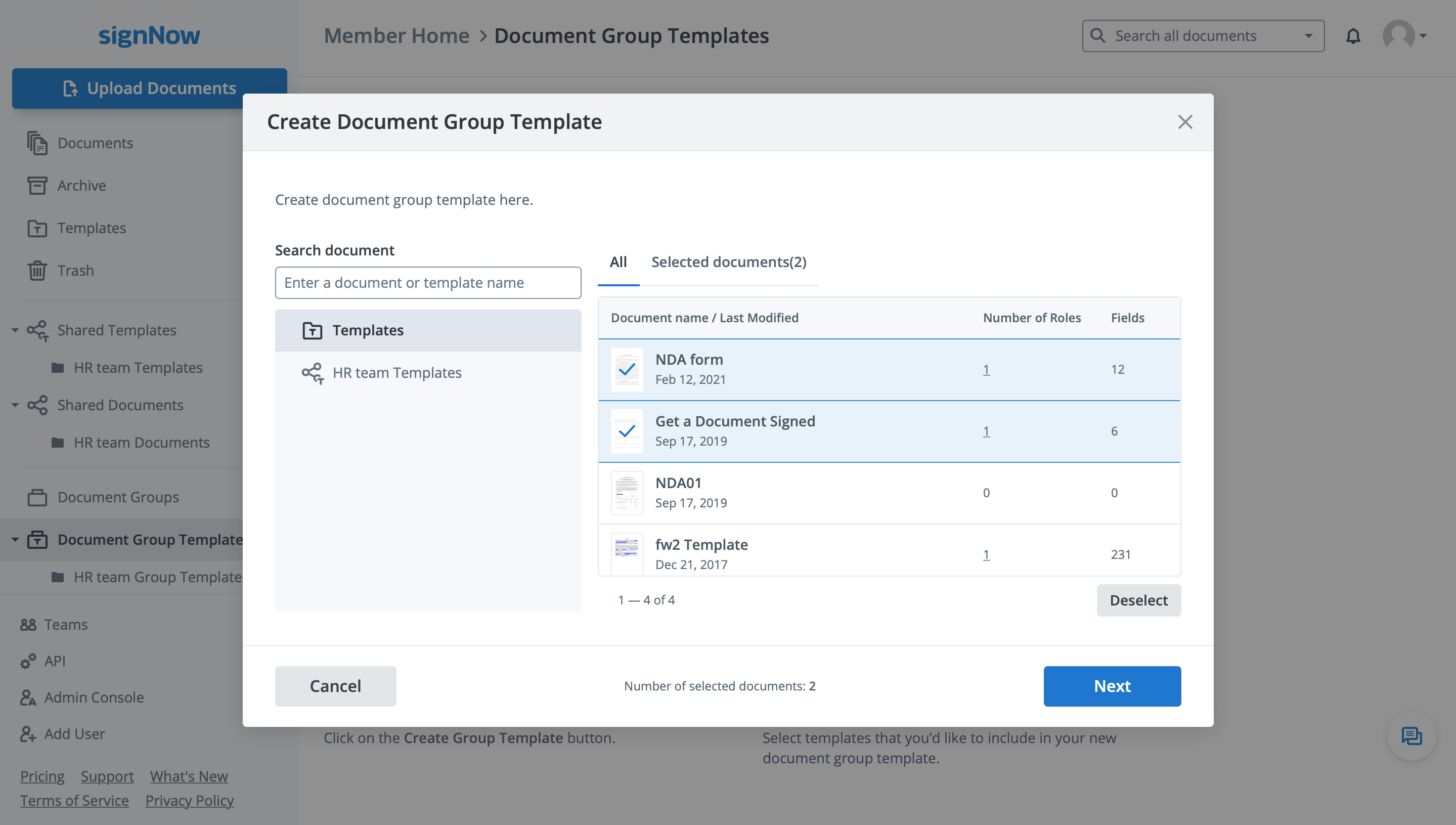
Select the document templates you want to add to the package and click Next.
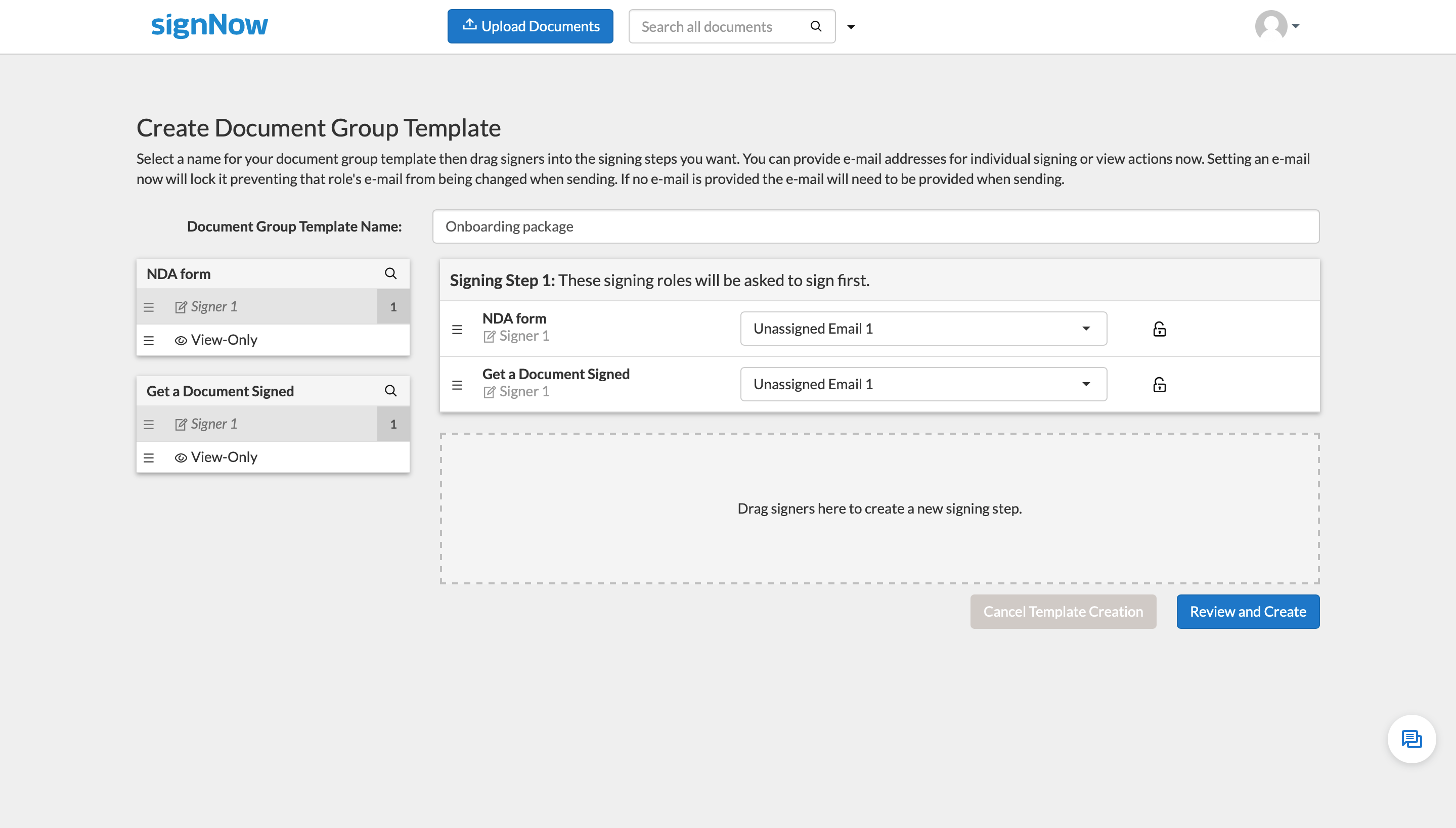
Enter the group template name and distribute signer roles by dragging signers from the column on the left to the signing step area on the right. You can add more signing steps by dragging signers to another signing step area.
Click on the lock icons next to the signer email fields if you want them to remain empty. Otherwise, add signer addresses to the fields. Finally, click Review and Create.
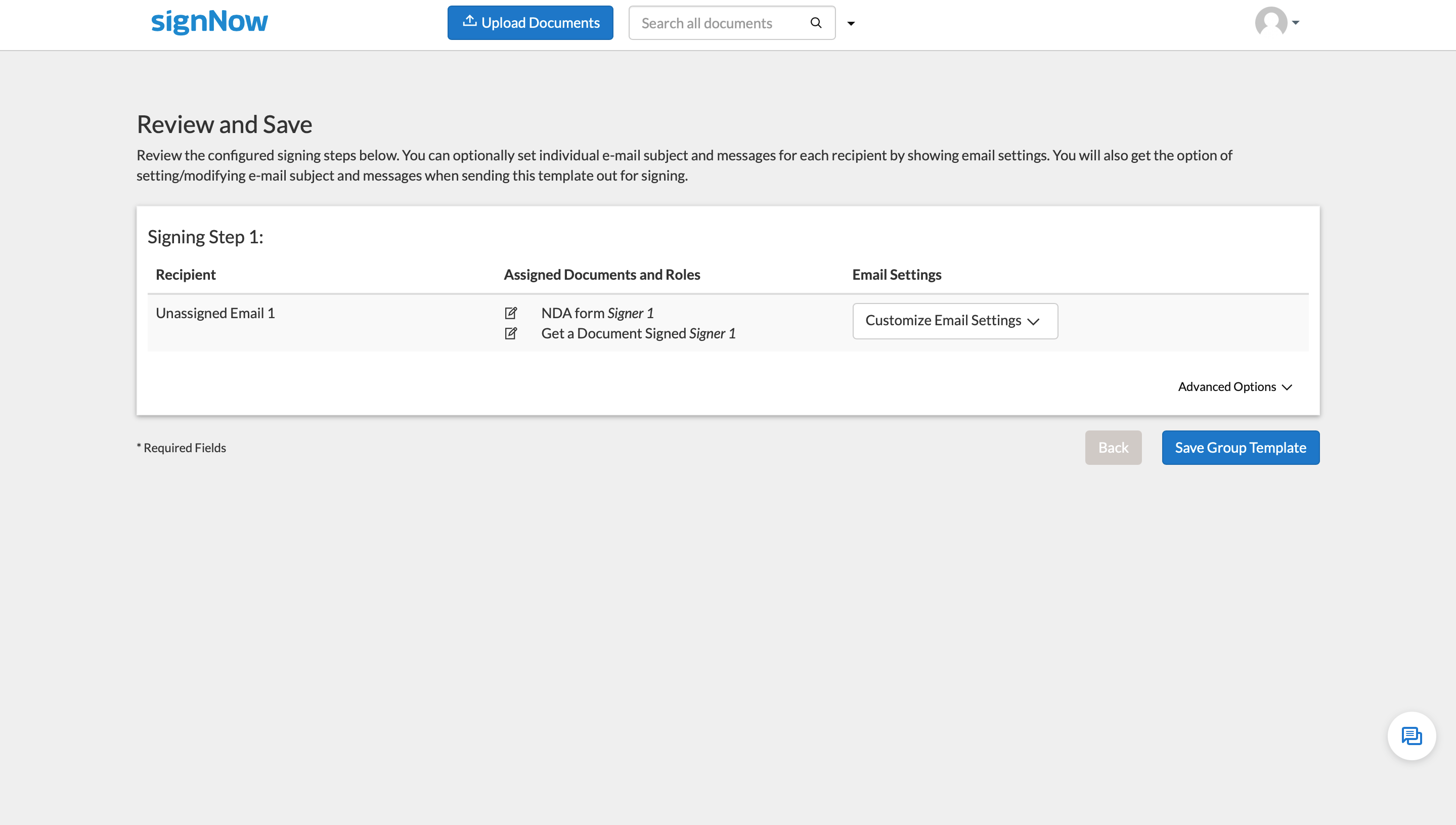
Double-check your settings before saving the template. You can also set authentication, document expiration dates, and signer reminders by opening the Customize Email Settings dropdown. When finished, click Create Group Template.
We use cookies to improve security, personalize the user experience, enhance our marketing activities (including cooperating with our 3rd party partners) and for other business use. Click here to read our Cookie Policy. By clicking “Accept“ you agree to the use of cookies. ... Read moreRead less