Dental Bill Format for Management with SignNow

Dental bill format for management streamlines billing processes with secure eSignature solutions. Explore how SignNow enhances efficiency and compliance.

Award-winning eSignature solution

What a dental bill format for management is and why it matters

A dental bill format for management is a structured template and set of rules used to capture charges, insurance adjustments, patient balances, and payment terms consistently across a practice. It standardizes line items, procedure codes, modifiers, and remarks so billing staff can generate accurate statements, submit claims, and reconcile payments more efficiently. Proper format design reduces coding errors, speeds insurance adjudication, supports clear patient communication, and creates a reliable record for audit, collections, and financial reporting within a dental practice management workflow.

Why a standardized dental bill format improves clinic operations

Consistent billing templates reduce errors, accelerate insurance processing, and improve patient clarity, which lowers collections time and administrative rework in any dental practice.

Why a standardized dental bill format improves clinic operations

Common challenges when managing dental billing formats

  • Inconsistent line-item descriptions cause claim denials and slow reimbursements.
  • Missing modifiers or incorrect CDT codes lead to insurance rejections and manual corrections.
  • Separate templates across locations create reconciliation friction and reporting inaccuracies.
  • No clear patient-facing totals or payment options increases billing inquiries and delayed payments.

Typical user roles for billing format management

Office Manager

Manages templates and oversees billing staff, ensuring bill formats align with payer requirements and internal policies. Coordinates training, reviews exception reports, and liaises with insurers and collections partners to resolve recurring issues and improve statement clarity.

Billing Specialist

Prepares and submits claims using the standard format, posts payments, and manages denials. Works directly with patients for statements, verifies insurance eligibility, and implements adjustments following payer rules to maintain accurate accounts receivable.

Who typically uses a dental bill format for management

Dental offices, billing teams, and practice managers rely on standardized bill formats to streamline claims and patient statements.

  • Independent dental practices that handle in-house billing and collections.
  • Multi-location dental groups standardizing templates across clinics and teams.
  • Third-party dental billing services managing claims for multiple providers.

Standardized formats help these users reduce errors, support consistent training, and improve financial metrics across the organization.

Key features to include in a dental bill format for management

A comprehensive template should balance payer requirements, patient clarity, and internal processing needs to minimize exceptions and support automation.

Itemized procedures

Clear line items with CDT codes, quantities, tooth/site modifiers, and unit pricing to ensure claims match clinical records and support payer adjudication.


Insurance adjustments

Fields for allowed amounts, patient responsibility, co-pay, deductible, write-offs, and payer-specific adjustments to accurately reflect balances and improve reconciliation.

Patient statement summary

A concise patient-facing section showing total due, due date, previous balance, and recent payments to reduce confusion and billing inquiries.

Payment options

Predefined entries for online payments, payment plan enrollment, and credit card processing metadata to streamline collections and post receipts.

Notes and remittances

Internal notes, payer remittance advice fields, and claim identifiers for tracking denials, appeals, and audit trails across billing cycles.

Template versioning

Version control and effective date fields to manage payer rule changes and ensure staff use the correct billing layout for each service date.

be ready to get more

Choose a better solution

Integrations that enhance dental bill format workflows

Connecting billing templates to common tools reduces manual work and keeps patient and payer data synchronized across systems.

Google Docs

Use Google Docs for collaborative template editing, merge fields for patient data, and export finalized statements into PDF format for secure delivery and archiving.

CRM integration

Sync patient contact and communication records with a CRM so statements, reminders, and payment history reflect current contact preferences and outreach activities.

Cloud storage

Store finalized statements in secure cloud folders for retention and backup, applying access controls and encryption consistent with HIPAA requirements.

Practice systems

Integrate with practice management and EHRs to pull procedure, insurance, and payment data directly into the billing template to avoid duplicate entry and errors.
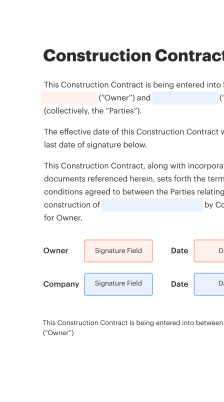
How the dental bill format interacts with practice workflows

Understanding file flow clarifies where templates fit in the lifecycle from visit to payment.

  • Capture visit: Enter procedures and notes at chairside
  • Format invoice: Apply standard template to charges
  • Submit claim: Export formatted claim to payer
  • Reconcile payments: Post adjudications and patient payments
Collect signatures
24x
faster
Reduce costs by
$30
per document
Save up to
40h
per employee / month

Step-by-step: setting up a dental bill format for management

A concise setup sequence helps offices create a repeatable and compliant billing format.

  • 01
    Define fields: Identify necessary payer and patient fields
  • 02
    Standardize codes: Fix CDT and modifier entries
  • 03
    Create template: Build a reusable statement template
  • 04
    Test and review: Run sample claims and adjust
be ready to get more

Why choose airSlate SignNow

  • Free 7-day trial. Choose the plan you need and try it risk-free.
  • Honest pricing for full-featured plans. airSlate SignNow offers subscription plans with no overages or hidden fees at renewal.
  • Enterprise-grade security. airSlate SignNow helps you comply with global security standards.
illustrations signature

Automation settings for dental bill format workflows

Recommended workflow settings help practices automate reminders, approvals, and export rules tied to the billing format.

Workflow Setting Name and Configuration Default configuration values for workflow automation
Reminder Frequency for Unpaid Invoices 7 days after statement
Approval Step for Template Changes Manager approval required
Automatic Claim Export Schedule Daily at 02:00 AM
Denial Routing Rule Route to billing specialist
Template Version Enforcement Lock old versions after 30 days

Supported devices and technical requirements

Bill templates and signing workflows should be accessible from modern desktop browsers and native mobile platforms.

  • Desktop browsers: Chrome, Edge, Safari
  • Mobile platforms: iOS and Android
  • Minimum connectivity: Reliable broadband

Ensure practice management integrations support secure API connections and that users have updated browsers or apps; perform periodic compatibility tests and document supported versions for staff reference.

Security and protection features to consider

Encryption in transit: TLS 1.2+ for data transfer
Encryption at rest: AES-256 storage encryption
Access controls: Role-based permissioning
Audit logging: Immutable activity trail
HIPAA support: BAA available
Document watermarking: Prevent unauthorized reuse

Practical examples of dental bill format usage

Two brief case examples show how a standardized format improves operations for different practice types.

Small practice streamlining statements

A four-chair independent clinic replaced mixed templates with a unified bill format that captures CDT codes, insurance adjustments, and patient balances.

  • The new template includes required payer fields and a clear patient summary.
  • Staff reduced manual corrections and phone inquiries, improving collections.

Resulting in faster reimbursements and a 20–30 percent drop in billing-related administrative hours per month.

Multi-site group standardization

A regional dental group deployed a centralized billing format across seven locations and integrated it into the practice management system for consistent exports.

  • The format enforces standard line-item descriptions and payer instructions.
  • Centralized reviews and reporting identify coding discrepancies quickly.

Resulting in improved claim acceptance rates and consistent financial reporting across the group.

Best practices for secure and accurate dental billing templates

Follow clear operational and technical standards to reduce denials, protect PHI, and improve collections.

Enforce a single authoritative template
Maintain one approved template per payer or use-case and enforce it through version control. Train staff on changes and lock previous versions to prevent inconsistent use across the practice.
Map clinical entries to billing codes consistently
Create a standard mapping between clinical notes and CDT codes, including modifiers and tooth/site data, to minimize coding errors and speed claim processing.
Enable audit logs and retention policies
Retain statement and claim records for required periods, capture an immutable audit trail for edits, and ensure secure backups to support compliance and potential audits.
Test integrations and payer flows regularly
Run staged tests for exports, API calls, and payer submissions after template updates. Validate remittance parsing and reconciliation to catch issues before they affect production claims.

FAQs about dental bill format for management

Answers to frequent operational and technical questions about building, using, and securing dental billing templates.

Comparing signature vendors for dental billing workflows

A concise feature comparison highlights platform capabilities relevant to secure signing and integration with dental billing templates.

Feature criteria for signature solution comparison signNow (Recommended) DocuSign Adobe Sign
HIPAA-compliant signing
Bulk Send capability Bulk Send Bulk Send Bulk send
Mobile app availability iOS/Android iOS/Android iOS/Android
API and developer tools REST API REST API REST API
be ready to get more

Get legally-binding signatures now!

Risks and penalties from improper billing formats

HIPAA breach fines: Significant financial penalties
Claim denials: Lost reimbursement
Audit exposure: Increased scrutiny
False claims liability: Legal risk
Patient disputes: Refunds or adjustments
Operational delays: Extended AR days
walmart logo
exonMobil logo
apple logo
comcast logo
facebook logo
FedEx logo
be ready to get more

Get legally-binding signatures now!