Software Technical Proposal for Technology Industry

Empower your business with airSlate SignNow's easy-to-use eSigning solution. Save time and reduce costs through seamless document management.

Award-winning eSignature solution

What a software technical proposal for technology industry covers

A software technical proposal for the technology industry documents the technical solution, architecture, integration points, implementation plan, and acceptance criteria for a proposed software project. It conveys system requirements, platform choices, security and compliance considerations, data flows, testing and deployment strategies, and resource estimates. The proposal is intended to align technical teams, procurement, and stakeholders on scope, risks, timelines, and deliverables so decisions are well informed and execution can proceed with clear technical baselines and measurable milestones.

Why use a structured technical proposal in technology projects

A structured proposal clarifies technical scope, reduces misunderstandings, and provides a defensible basis for budgeting and compliance assessments.

Why use a structured technical proposal in technology projects

Common challenges when preparing technical proposals

  • Vague scope definitions that lead to scope creep and project delays.
  • Inconsistent documentation across teams causing integration conflicts later.
  • Insufficient security or compliance detail that delays approvals.
  • Unrealistic timelines or missing resource estimates that inflate costs.

Typical proposal contributors and reviewers

Solutions Architect

The solutions architect designs the proposed system architecture, specifies integration and API requirements, and assesses scalability and operational concerns. They translate business requirements into technical components and identify dependencies, risk mitigations, and resource needs for implementation and testing.

Procurement Manager

The procurement manager evaluates pricing models, licensing implications, delivery milestones, and contract terms. They coordinate vendor comparisons, ensure proposals meet procurement standards, and verify that vendor commitments align with project budgets and timelines.

Who prepares and reviews technical proposals

Cross-functional teams and decision-makers use technical proposals to evaluate feasibility and align on delivery.

  • Solutions architects and senior engineers validating technical fit and interfaces.
  • Procurement and vendor management evaluating commercial and SLA commitments.
  • Security and compliance officers checking controls and regulatory adherence.

Clear proposals help procurement, engineering, and security teams reach agreement before contracts are executed.

Additional technical proposal elements to strengthen evaluation

Include these supplementary items to reduce ambiguity and support reliable vendor or internal decision-making.

Risk Register

Document identified technical and operational risks, probability and impact assessments, and proposed mitigations to make trade-offs explicit during evaluation.


Integration Details

Provide API specifications, data schemas, authentication flows, rate limits, and expected error handling to ensure consuming systems can plan accordingly.

Data Migration Plan

Outline extraction, transformation, validation, and reconciliation steps including timing and rollback criteria for migrating existing datasets safely.

Testing Strategy

Define unit, integration, performance, and acceptance testing approaches, required test data, and pass/fail criteria to validate readiness for production.

Monitoring and Operations

Specify observability measures, alert thresholds, backup schedules, and on-call responsibilities to support operational reliability after deployment.

Service Level Objectives

State expected uptime, response times, and support windows along with measurement and reporting methods for contractual clarity.

be ready to get more

Choose a better solution

Four essential proposal sections to include

Ensure every technical proposal contains core sections that address architecture, operations, compliance, and implementation.

Architecture Overview

Describe system components, deployment topology, key interfaces, and data flow diagrams to show how the solution meets requirements and how components interact during normal operation and failure modes.

Security and Compliance

List required controls, authentication methods, data handling procedures, applicable regulations like ESIGN or HIPAA for U.S. contexts, and how the solution supports auditability and incident response.

Implementation Plan

Provide milestones, acceptance criteria, testing strategy, rollback plans, and resource assignments so stakeholders can assess schedule feasibility and integration steps.

Costs and Licensing

Detail licensing models, expected operating costs, third-party services, and assumptions behind estimates to enable procurement to compare vendors and plan budgets accurately.
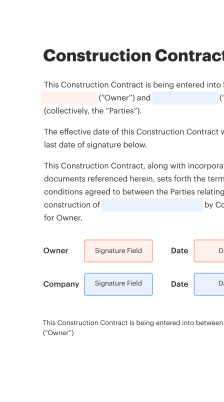
How a technical proposal progresses through approval

A proposal typically moves from draft to technical review, compliance check, procurement review, and final sign-off.

  • Draft: Initial document prepared by project team.
  • Technical review: Engineering assesses feasibility and dependencies.
  • Compliance check: Security and legal verify controls.
  • Approval: Procurement and stakeholders finalize acceptance.
Collect signatures
24x
faster
Reduce costs by
$30
per document
Save up to
40h
per employee / month

Step-by-step: assembling a technical proposal

Follow these core steps to structure a clear, reviewable technical proposal for technology projects.

  • 01
    Define scope: Document features, boundaries, and acceptance criteria.
  • 02
    Design architecture: Outline components, data flows, and interfaces.
  • 03
    Detail security: Specify authentication, encryption, and audit controls.
  • 04
    Estimate resources: Provide timelines, staffing, and cost assumptions.
be ready to get more

Why choose airSlate SignNow

  • Free 7-day trial. Choose the plan you need and try it risk-free.
  • Honest pricing for full-featured plans. airSlate SignNow offers subscription plans with no overages or hidden fees at renewal.
  • Enterprise-grade security. airSlate SignNow helps you comply with global security standards.
illustrations signature

Recommended workflow settings for proposal document handling

Configure proposal workflows to enforce review steps, approvals, and secure delivery while maintaining an auditable trail.

Feature Configuration
Signature Routing and Order Rules Sequential routing with two approvers
Reminder Frequency and Escalation Logic 48 hours then escalate to manager
Document Expiration and Access Window 30 days access then archive
Conditional Fields and Visibility Controls Show fields based on role selections
Retention and Archival Policy Setting Auto-archive after 90 days

Supported platforms for proposal creation and signing

Ensure your chosen document and signing tools support web, mobile, and desktop access for reviewers and signers.

  • Web browser: Modern browsers supported
  • Mobile apps: iOS and Android available
  • Desktop integration: Windows and macOS clients

Check browser compatibility, mobile feature parity, and offline signing options where reviewers may be remote or have intermittent connectivity to maintain consistent review and signing experiences.

Security and authentication options to specify

Data encryption: AES-256 at rest
Transport security: TLS 1.2+ enforced
User authentication: SAML or OAuth2
Access controls: Role-based policy
Audit logging: Immutable event trail
Data residency: Regional storage options

Industry examples showing practical proposal elements

Two brief case examples illustrate how proposals vary by project type and risk profile.

SaaS Integration for Enterprise

An enterprise required a cloud-native integration layer to connect CRM, billing, and analytics services with strict SLA targets.

  • Focused API gateway and message queuing design.
  • Reduced latency and improved data consistency across systems.

Resulting in measurable throughput gains and simplified vendor support.

On-Prem to Cloud Migration

A technology firm planned phased migration of legacy services to a managed cloud environment with hybrid networking.

  • Emphasized secure VPN and staged cutover plan.
  • Minimized downtime and preserved data integrity during cutover.

Leading to predictable rollout and simplified rollback procedures when needed.

Best practices to produce secure, usable technical proposals

Adopt clear formats, version control, stakeholder reviews, and compliance checklists to improve quality and reduce review cycles.

Use a standardized proposal template with section headers
Standard templates reduce omissions, make reviews faster, and ensure consistent coverage of architecture, security, compliance, and operational details across projects.
Include clear acceptance criteria and test cases
Define measurable acceptance conditions and representative test cases so deliverables can be validated objectively against the original scope and reduce disputes.
Document assumptions and constraints explicitly
State environmental constraints, third-party dependencies, and assumptions about data volumes or user behavior that affect design and scheduling decisions.
Coordinate reviews with security and procurement early
Early engagement with security, legal, and procurement surfaces compliance or commercial issues sooner, reducing rework and accelerating approvals.

FAQs and troubleshooting for proposal document signing

Common questions about creating, sending, and validating technical proposals with eSignature tools are addressed below to reduce delays and errors.

Quick feature comparison for document signing platforms

A concise technical comparison helps choose a platform that fits proposal workflows and compliance needs within U.S. legal frameworks.

Feature Criteria and Compliance Header signNow (Recommended) DocuSign Adobe Acrobat Sign
Basic eSignature
Bulk Send
API Integration REST API REST API REST API
HIPAA compliance options Available Available Available
be ready to get more

Get legally-binding signatures now!

Operational and compliance risks to disclose

Schedule overrun: Financial penalties
Data breach: Regulatory fines
Noncompliance: Contract voiding
Integration failure: Service disruption
Vendor insolvency: Project continuity risk
Poor quality: Rework costs

Representative plan tiers across common eSignature vendors

Plan names and typical tier characteristics vary; use these representative tiers to compare capabilities relevant to proposal workflows and team size.

Plan Name and Limits signNow (Recommended) DocuSign Adobe Acrobat Sign PandaDoc Dropbox Sign
Free / Entry tier Free basic plan with limited sends Personal plan with limited signatures Free trial then individual plan Free eSign with limited features Free tier with basic signatures
Business / Small team Business plan with team features and templates Standard with integrations and workflows Small Business plan with cloud integrations Essentials plan focused on eSign and templates Essentials plan with unlimited eSignatures
Advanced / Growth Business Premium with SSO and advanced API Business Pro with advanced features Business with advanced workflow automation Business plan with CRM integrations Standard with team management
Enterprise Enterprise with custom SLAs, SSO, and advanced API Enterprise with advanced security and integrations Enterprise with enterprise policies and deployment options Enterprise with advanced workflows and SSO Enterprise with large-team controls and SSO
Compliance and add-ons HIPAA and advanced security add-ons available Advanced admin and compliance packages eDiscovery and enterprise controls Advanced eSign and analytics add-ons Advanced security and audit features
walmart logo
exonMobil logo
apple logo
comcast logo
facebook logo
FedEx logo
be ready to get more

Get legally-binding signatures now!