Solar Proposal Tool for Logistics

Effortlessly create, send, and eSign proposals while saving time and costs. Empower your logistics business with our user-friendly, all-in-one solution.

Award-winning eSignature solution

What a solar proposal tool for logistics does and why it matters

A solar proposal tool for logistics centralizes site assessments, equipment specifications, cost estimates, and customer approvals into a single document workflow tailored to fleet depots, warehouses, and distribution centers. It combines proposal generation, version control, and signature capture so teams can iterate on design, pricing, and schedule without separate spreadsheets. When integrated with an eSignature provider such as signNow, documents can be authenticated and completed remotely while preserving an audit trail and meeting U.S. electronic signature standards like ESIGN and UETA for enforceability.

Why logistics teams adopt a solar proposal tool

A focused solar proposal tool for logistics reduces manual coordination, shortens approval cycles, and standardizes technical and commercial information so providers can bid, sign, and schedule projects more predictably.

Why logistics teams adopt a solar proposal tool

Common obstacles logistics teams face with solar proposals

  • Disparate data sources require manual consolidation, increasing time to produce accurate proposals and raising the chance of specification errors.
  • Multiple stakeholders across operations, procurement, and facilities cause repeated versioning and slow approvals when documents are exchanged by email.
  • Lack of integrated cost models leads to inconsistent pricing, underestimation of labor or materials, and unclear warranty details for logistics sites.
  • Paper-based approvals and offline signatures delay project start dates and complicate auditability for compliance and grant programs.

Representative user profiles for logistics solar proposals

Logistics Manager

A Logistics Manager coordinates site access, schedules downtime windows, and confirms loading dock or rooftop constraints. They use the tool to approve installation windows, confirm safety plans, and verify that operational requirements are included in the proposal before signing.

Solar Project Coordinator

The Solar Project Coordinator compiles technical specifications, line-item costs, and contractor responsibilities. They generate standardized proposals, ensure compliance documentation is attached, and manage revisions until the procurement team signs contract documents.

Teams and roles that typically use a solar proposal tool for logistics

Logistics operators, facilities managers, and solar project teams rely on a single proposal workflow to coordinate technical, financial, and compliance inputs before approval.

  • Facilities managers who validate site readiness and coordinate installation windows with operations and safety teams.
  • Procurement and finance teams that need standardized cost breakdowns and contract-ready documents for purchase orders.
  • Solar project coordinators who assemble equipment lists, installation timelines, and warranty language for vendors and installers.

The combined workflow reduces handoffs and provides a clear record of decisions, approvals, and contract acceptance for post-installation tracking.

Core features to look for in a solar proposal tool for logistics

Effective tools combine technical, financial, and compliance capabilities so logistics teams can produce contract-ready documents that withstand audit and operational scrutiny.

Template Engine

A robust template engine merges site data, custom clauses, and pricing tables into repeatable proposal documents to reduce manual edits and ensure consistent commercial language across multiple facilities and projects.


Bulk Send

Bulk Send automates distribution of individualized proposals to multiple recipients, enabling parallel approvals for a portfolio rollout and saving hours versus manual sending and tracking for each site.

Integration API

APIs connect CRM, ERP, and asset management systems so proposal fields populate automatically from existing site records, preserving data accuracy and reducing duplicate entry across logistics platforms.

Role Permissions

Granular role-based permissions control who can edit designs, adjust pricing, or finalize contracts, which preserves approval integrity and limits exposure of confidential cost data.

Audit Trail

An immutable audit trail records each document event—views, edits, signer actions, and signatures—providing admissible evidence of intent and completion required for compliance and dispute resolution.

Compliance Controls

Built-in controls for legal language, consent capture, and data handling help meet ESIGN and UETA requirements and support sector-specific needs such as HIPAA or FERPA where applicable to site records.

be ready to get more

Choose a better solution

Integration points that improve logistics proposal workflows

Integrations with common business apps streamline data flow and reduce manual rekeying across proposal, CRM, and storage systems.

CRM integration

Two-way synchronization with CRM systems ensures customer, contact, and opportunity data populate proposals automatically and that signed agreements update opportunity stages for accurate sales forecasting and operational planning.

Cloud storage connectors

Direct connectors to Google Drive and Dropbox store finalized proposals in designated folders, preserving version history and making signed documents accessible for facilities and compliance teams across the enterprise.

Document editors

Integration with document editors allows live template updates and collaborative drafting without exporting to local files, which speeds iteration between engineering and procurement reviewers.

Utility and incentive feeds

Feeds for utility rates and incentive programs let the proposal tool calculate realistic savings, rebates, and payback timelines for each logistics site to support capital budgeting decisions.
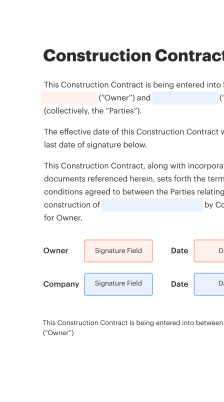
How a cloud-based solar proposal tool for logistics operates

A cloud proposal workflow connects document assembly, reviewer collaboration, and signature capture so teams can move from draft to executed contract without file-based handoffs.

  • Document assembly: Templates merge site data into a single proposal.
  • Reviewer collaboration: Comments and redlines tracked in one place.
  • Approval routing: Sequential or parallel signer workflows configured.
  • Execution and storage: Signed documents archived with an audit trail.
Collect signatures
24x
faster
Reduce costs by
$30
per document
Save up to
40h
per employee / month

Step-by-step: preparing a solar proposal for a logistics site

Follow these four practical steps to assemble, review, and finalize a solar proposal tailored for logistics facilities.

  • 01
    Gather site data: Collect roof plans, electrical service info, and photos.
  • 02
    Build the BOM: Choose panels, inverters, mounts, and wiring lists.
  • 03
    Run financials: Apply incentives, utility rates, and payback analysis.
  • 04
    Send for signatures: Route documents to stakeholders for review and signing.
be ready to get more

Why choose airSlate SignNow

  • Free 7-day trial. Choose the plan you need and try it risk-free.
  • Honest pricing for full-featured plans. airSlate SignNow offers subscription plans with no overages or hidden fees at renewal.
  • Enterprise-grade security. airSlate SignNow helps you comply with global security standards.
illustrations signature

Recommended workflow settings for logistics solar proposals

Configure these settings to match typical logistics approval cycles and regulatory needs for contract execution and recordkeeping.

Setting Name Configuration
Approval routing mode Sequential
Reminder frequency 48 hours
Signature expiration 90 days
Audit log retention 7 years
Default authentication Email + SMS

Supported platforms and device compatibility for proposal workflows

A practical solar proposal tool for logistics should work across web, mobile, and tablet to accommodate field engineers and remote approvers.

  • Web browser: Chrome, Edge, Safari
  • Mobile apps: iOS and Android
  • Offline signing: Limited offline support

Ensure that your chosen solution provides secure mobile apps and responsive web access so field teams can capture site photos, complete forms, and obtain signatures from any location with reliable audit trails.

Security and technical protections for proposal documents

Encryption at rest: AES-256 encryption applied
Encryption in transit: TLS 1.2+ transport security
Access controls: Role-based permissions
Audit logging: Immutable event logs
Multi-factor authentication: Optional MFA for accounts
Compliance attestations: SOC 2 and ISO options

Realistic logistics scenarios using a solar proposal tool

Two concise case examples illustrate how logistics organizations use a dedicated solar proposal tool to streamline approvals and protect compliance records.

Fleet Depot Installation

A regional delivery operator needed consolidated technical and financial proposals for six depots to support a phased solar rollout.

  • Automated equipment lists and standardized cost templates reduced preparation time.
  • Centralized approvals shortened procurement cycles and aligned facilities schedules.

Resulting in faster award decisions and a single signed contract per depot that enabled coordinated installer mobilization.

Warehouse Rooftop Retrofit

A third-party logistics provider evaluated rooftop feasibility across multiple warehouses with varying load capacities and roof conditions.

  • The tool incorporated structural notes and site photos into each proposal.
  • It produced consistent warranty and service terms for legal review.

Leading to clearer risk allocation, fewer revision cycles, and on-time project execution with signed acceptance documents.

Best practices for accurate and secure solar proposals in logistics

Adopting consistent processes and validation checks reduces errors and improves legal defensibility of signed proposals.

Standardize templates with required fields
Create templates with mandatory data fields for site metrics, electrical specifications, and warranty language. Use validation rules to prevent incomplete proposals and ensure legal and safety details are always included before routing for signature.
Use role-based review workflows
Establish parallel or sequential approval paths that require sign-off from facilities, procurement, and legal teams. This reduces rework by capturing concerns early and preserves a clear record of who approved what and when.
Keep an immutable audit trail for every document
Retain detailed logs of edits, comments, signer authentication, and final signatures. An audit trail supports ESIGN/UETA compliance and provides documentation in case of disputes, inspections, or warranty claims.
Validate identity and consent consistently
Apply consistent signer authentication methods such as email verification, SMS codes, or identity checks for high-value contracts. Capture explicit consent statements and date/time stamps to strengthen enforceability of agreements.

Frequently asked questions about using a solar proposal tool for logistics

Answers to common operational and technical questions about preparing, sending, and storing logistics solar proposals.

Feature availability comparison for eSignature providers

Compare core capabilities that matter for logistics solar proposals: mobile signing, bulk sending, HIPAA support, and API access.

Criteria signNow (Recommended) DocuSign Adobe Sign
Mobile app availability
Bulk Send capability
HIPAA support Optional Optional
Developer API REST API REST API REST API
be ready to get more

Get legally-binding signatures now!

Retention and deadlines calendar for logistics solar proposals

Define retention, review, and signature deadlines so proposals and executed contracts remain available for operations, finance, and compliance audits.

Proposal review period:

14 calendar days

Signature expiration window:

90 days

Document retention minimum:

7 years

Contract renewal reminder:

30 days before expiry

Compliance audit window:

Retain records for audit lifecycle

Risks and potential penalties when proposals are mishandled

Contract disputes: Lost signatures
Regulatory fines: Noncompliance costs
Data breaches: Exposure fines
Project delays: Missed deadlines
Warranty voidance: Incorrect terms
Reputational harm: Customer mistrust
walmart logo
exonMobil logo
apple logo
comcast logo
facebook logo
FedEx logo
be ready to get more

Get legally-binding signatures now!