Turn on the Kiosk Mode on Android to Collect Signatures
Turn on the Kiosk Mode on Android for Signatures
Turn on the kiosk mode on Android to collect signatures securely with signNow. This compliant eSignature solution is ideal for various industries across the U.S.
What turning on kiosk mode on Android to collect signatures means
Kiosk mode on Android configures a device to run a single application or restricted workflow, allowing in-person signings while locking out other apps and device settings. When used to collect signatures, the device presents prepared documents, captures signatures and signer data, and records an audit trail. Implemented correctly, this setup supports offline capture, per-session authentication, and secure synchronization to a central eSignature service such as signNow, helping organizations meet ESIGN and UETA expectations for intent and record integrity.
Why enable kiosk mode for on-site signatures
Kiosk mode simplifies in-person signing by providing a dedicated, tamper-resistant interface for multiple signers on a single Android device, reducing device misuse and streamlining capture of signatures and signer details.
Common challenges when using kiosk mode on Android
Device provisioning can be time-consuming for large fleets and requires consistent configuration management.
Network interruptions complicate real-time synchronization and require local caching and conflict resolution.
Ensuring signer identity at point of capture may require additional verification steps or hardware.
Balancing ease of signing with data protection and session isolation requires a clear policy and technical controls.
Representative user profiles for kiosk mode deployments
Reception Clerk
A reception clerk prepares documents in advance, launches kiosk mode for visitors, and oversees signing sessions. They verify identity where required, ensure device readiness, and confirm that captured records synchronize to the central signNow account for storage and audit purposes.
Field Technician
A field technician uses a dedicated Android tablet in kiosk mode to obtain customer signatures at job sites, capturing consent and work confirmations offline and syncing signed records to the backend once connectivity returns for secure retention and tracking.
Typical users and departments deploying kiosk signing
Organizations use kiosk mode for high-volume, in-person signing locations such as retail checkouts, clinics, and school offices for efficient document capture.
Retail stores and dealerships collecting sales agreements and waivers at the point of sale.
Healthcare clinics capturing patient consent forms and registration on arrival.
Education and campus offices collecting permissions and enrollment forms from students and parents.
Deployments often assign kiosk devices to frontline staff or public kiosks with supervised access and clear session controls for compliance and usability.
Additional features that improve kiosk signing outcomes
Beyond basic kiosk locking, consider these capabilities to improve signer experience, security, and operational efficiency for Android in-person signing.
Custom session branding
Allows organizations to display company logos and tailored instructions within the kiosk app to reduce signer confusion and reinforce trust during the signing process, leading to fewer support interventions and a clearer experience for first-time or infrequent signers.
Conditional fields
Support for fields that appear based on prior inputs reduces form length and improves accuracy by guiding signers through only relevant fields, which lowers completion time and reduces data entry errors during busy in-person signings.
Device-level remote management
Remote monitoring and configuration allow IT teams to push updates, lock compromised devices, and gather diagnostics without physical access, minimizing downtime and ensuring consistent security posture across distributed kiosk fleets.
Multi-language support
Interface and form translation reduce signer friction in diverse environments, providing clear instructions and consent language that improve compliance and reduce signature errors for non-native speakers.
Field validation and templates
Prebuilt templates and real-time validation reduce manual corrections by enforcing format rules and required fields, speeding the signing process and improving data quality for downstream systems like CRM or EHR.
Centralized reporting
Aggregated device and signature metrics provide operational visibility into signing volume, sync success rates, and device health, supporting capacity planning and SLA monitoring for kiosk deployments.
be ready to get more
Choose a better solution
Core features to look for in kiosk signing setups
Effective kiosk signing combines session control, offline capability, field customization, and auditability to meet operational and regulatory needs.
Kiosk Mode
Locks the device to a single app and restricts access, preventing navigation away from the signing workflow and reducing accidental data exposure on public or shared devices.
Offline Signing
Enables document completion and signature capture without network connectivity, storing signed records locally encrypted until the device can securely sync with central storage.
Custom Fields
Support for prefilled fields, checkboxes, and conditional logic so front-line staff can efficiently collect required signer data with fewer manual steps.
Audit Trail
Captures timestamps, device identifiers, signer IPs where available, and a sequential record of actions to support legal defensibility and internal compliance reviews.
How kiosk signing workflows operate on Android
Kiosk signing follows a sequence: device lock, document presentation, signer verification, signature capture, and secure synchronization to central storage.
Device Lock: Restrict device to the signing app only.
Document Presentation: Display prepared form and fields to signer.
Signature Capture: Collect handwritten or typed signature input.
Post-Sync: Upload signed record to central account.
Collect signatures
24x
faster
Reduce costs by
$30
per document
Save up to
40h
per employee / month
Simple steps to turn on kiosk mode on Android to collect signatures
Follow these core tasks to prepare a device, enable kiosk restrictions, and begin collecting signatures securely on an Android tablet or phone.
01
Prepare Device: Charge device and install latest OS updates.
02
Install App: Install signNow or chosen eSignature app.
03
Enable Kiosk: Configure single-app lock or managed kiosk profile.
04
Start Session: Open document and supervise signer session.
Detailed setup checklist for kiosk signing on Android
A focused checklist to verify configuration, security, and document readiness before placing a device into production kiosk use.
01
Update OS:
Install latest Android security patches.
02
Install signNow:
Install and sign into managed account.
03
Configure MDM:
Apply single-app kiosk policy through MDM.
04
Test offline flow:
Verify local signing and encrypted storage.
05
Set session timeout:
Configure auto-logout after idle period.
06
Verify audit logs:
Confirm timestamps and device IDs record.
be ready to get more
Why choose airSlate SignNow
Free 7-day trial. Choose the plan you need and try it risk-free.
Honest pricing for full-featured plans. airSlate SignNow offers subscription plans with no overages or hidden fees at renewal.
Enterprise-grade security. airSlate SignNow helps you comply with global security standards.
Typical workflow settings for kiosk signature capture
The following settings show common configurations to balance usability, security, and synchronization when enabling kiosk signing on Android devices.
Setting Name
Configuration
Kiosk session timeout duration (minutes)
5 minutes
Authentication method for session start
PIN or staff badge
Offline sync frequency and retry policy
Every 10 minutes
Local data encryption at rest setting
Enabled AES-256
Automatic upload on network restore
Immediate sync
Device and platform requirements for kiosk signing on Android
Android OS:Android 8.0 or higher
Device Hardware:2 GB RAM minimum
Network:Wi-Fi or cellular available
Choose devices with manufacturer security updates, consistent MDM support, and adequate performance to run the signing app reliably and to support offline caching and secure synchronization.
Security controls relevant to kiosk signing
Encryption at rest:AES-256 storage encryption
Encryption in transit:TLS 1.2 or higher
Session isolation:Single-app locked sessions
Authentication options:PIN, email, or token
Automatic logout:Idle session timeout
Audit logging:Timestamped event records
Real-world examples of kiosk signing on Android
These case narratives describe typical deployments, configuration choices, and operational outcomes when turning on kiosk mode on Android to collect signatures.
Retail point-of-sale
A nationwide retailer deployed Android tablets in kiosk mode to capture purchase agreements and returns authorizations
Locked single-app interface reduces accidental app switching and misuse
Speeds checkout and reduces staff handling time by consolidating capture and verification
Resulting in consistent record retention and simplified audits across locations.
Medical clinic intake
An urgent care clinic used kiosk mode tablets for patient check-in and consent capture
Offline caching allowed uninterrupted form completion during outages
Electronic signatures and captured IDs reduced paper handling and improved record legibility
Leading to faster intake, improved HIPAA recordkeeping, and clearer audit trails for patient consent.
Best practices for secure and accurate kiosk signing
Adopt operational and technical controls to protect data, verify signers, and maintain usable records when collecting in-person signatures on Android kiosks.
Deploy supervised device management and locked app profiles
Use mobile device management or Android’s managed profiles to enforce single-app operation, prevent sideloading, and apply security policies uniformly across devices to reduce configuration drift and unauthorized changes.
Require per-session verification and minimal signer data
Collect only necessary identity elements (name, email, badge PIN) and use brief verification steps to balance signer trust with privacy and compliance requirements, minimizing stored personal data.
Implement encrypted local storage with scheduled sync
Ensure local signed records are encrypted while offline and configure periodic secure synchronization to central signNow storage when connectivity is available to avoid data loss.
Establish retention, audit, and incident procedures
Document retention schedules, audit log review routines, and incident response steps to handle lost devices, suspected breaches, or disputes about signature validity.
Ensure the device is enrolled in an MDM or uses Android’s pinned screen feature and confirm the kiosk app is set as the approved single app. Check for system policies or device owner settings that might allow returning to the home screen and review device manufacturer modifications that affect kiosk behavior.
Revoke device access immediately through your device management console, trigger remote wipe if supported, and review recent signed records and audit logs for suspicious activity. Follow your incident response and data breach procedures and notify appropriate stakeholders according to policy and regulation.
Confirm offline queue processing is enabled and check application logs for sync errors. Verify network configuration and firewall rules allow outbound TLS connections, and ensure the device’s clock is accurate to avoid certificate or token validation failures that can block upload.
Use a combination of on-device verification such as government ID capture, staff confirmation, or one-time codes sent to the signer’s email or phone. Log verification steps in the audit trail and avoid storing unnecessary copies of ID images unless required and permitted by policy.
Check device specifications against recommended minimums, clear app cache, and update to the latest app version. If issues persist, collect logs, reproduce the failure, and coordinate with your eSignature provider or device vendor for a fix or performance tuning guidance.
Ensure your process captures signer intent, associates the signature with the record, and preserves an audit trail. Retain signed records securely, document consent processes, and apply access controls and retention policies in line with ESIGN, UETA, and any sector-specific rules such as HIPAA.
Comparing kiosk signing support across providers
This concise comparison highlights key capabilities that affect kiosk deployments on Android devices for in-person signature capture.
eSignature provider comparison table Android kiosk support
Risks and penalties when kiosk signing is mismanaged
Data breach fines:Regulatory penalties
Invalid signatures:Enforceability risk
HIPAA violations:Civil penalties
Contract disputes:Litigation exposure
Noncompliance fines:State-level penalties
Document loss:Operational disruption
How to collect in-person signatures with airSlate SignNow
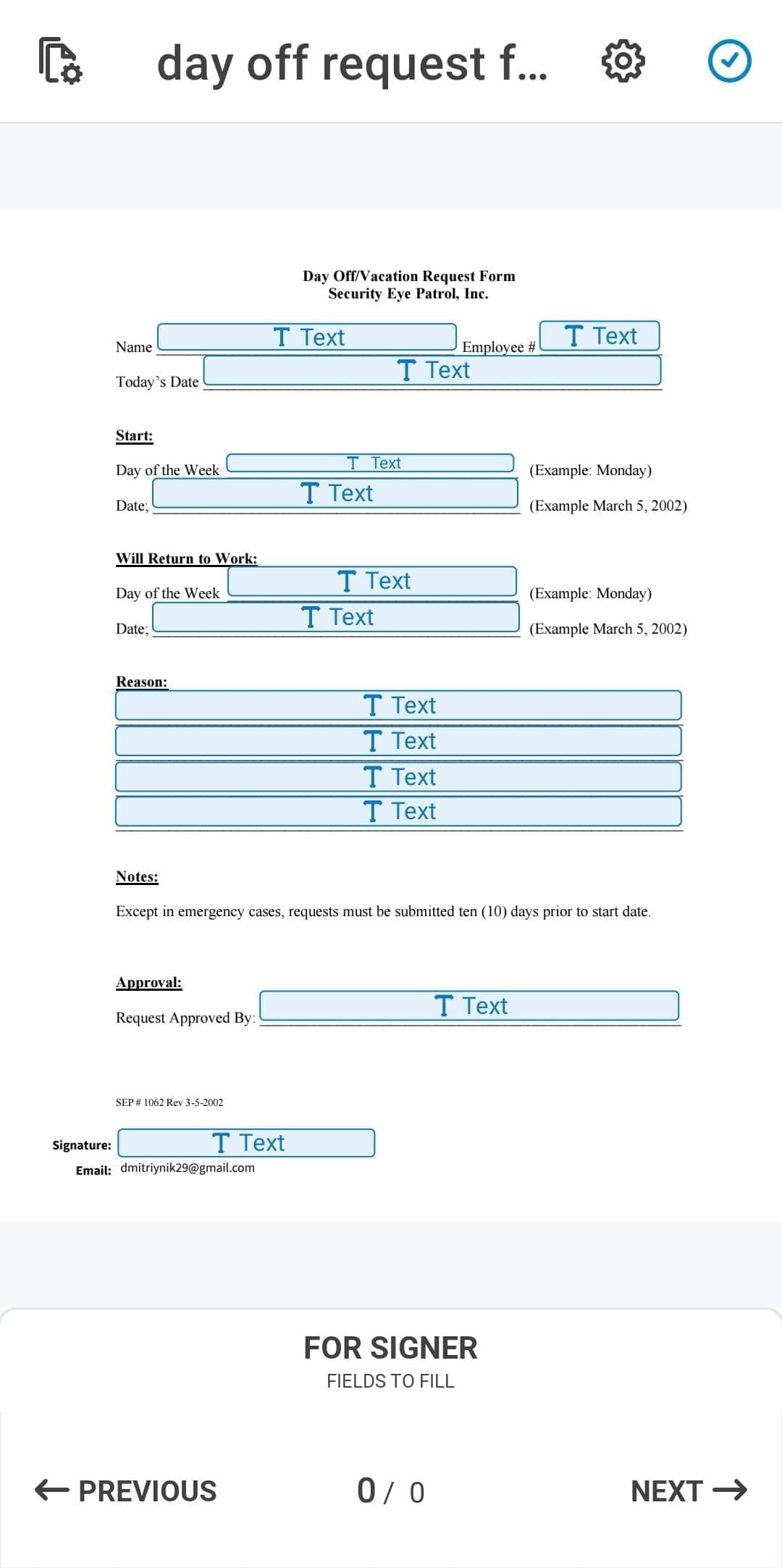
Kiosk Mode is an exclusive feature available in the airSlate SignNow mobile app. Use it to collect signatures in person using a tablet or smartphone. With Kiosk Mode enabled, airSlate SignNow automatically generates a document copy from a selected template for every new signer. As a result, the signing process is almost identical to hard copy signing.
Activate Kiosk mode
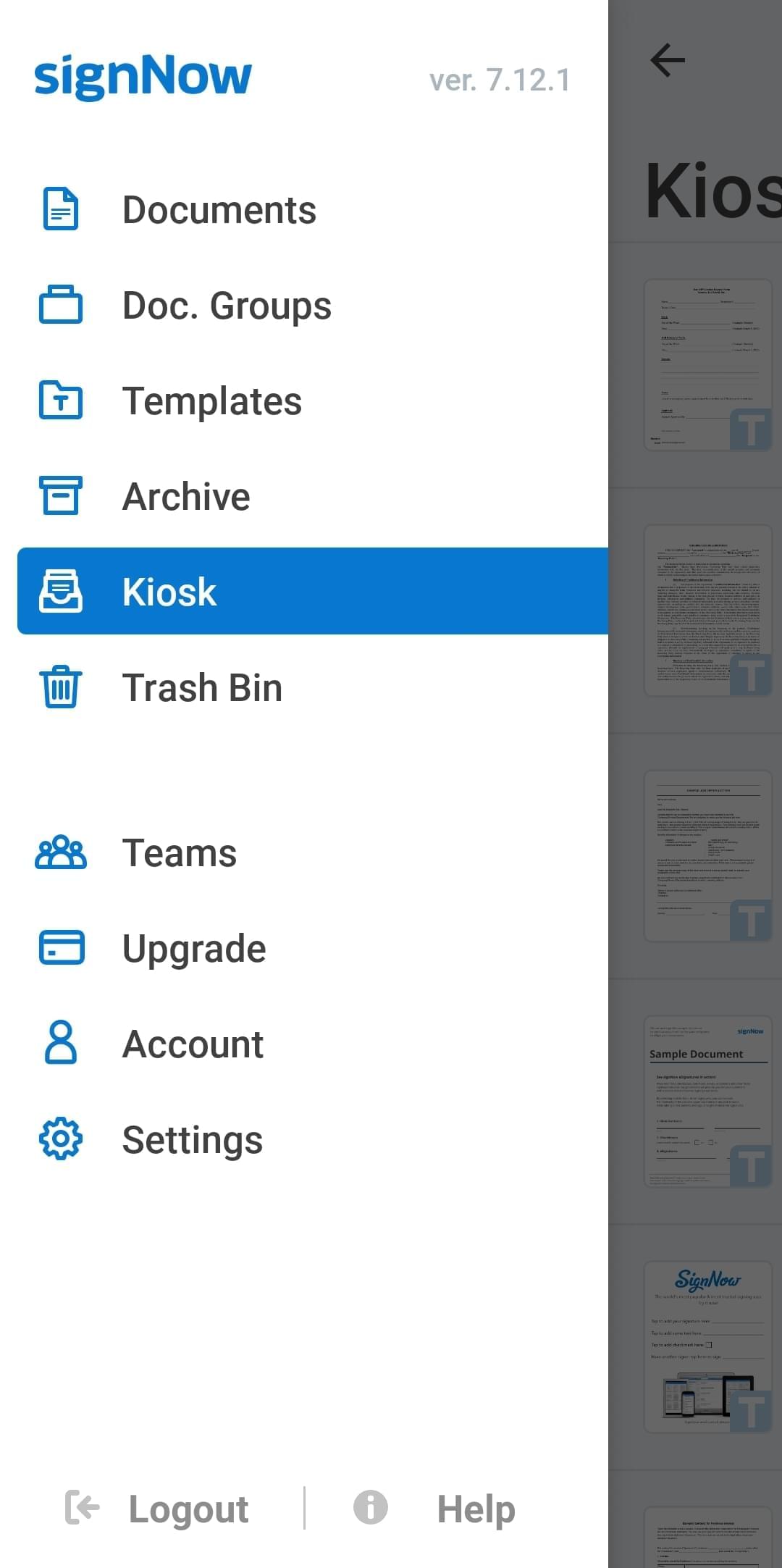
Tap the hamburger menu in the top left corner of the airSlate SignNow app’s home screen and select Kiosk.
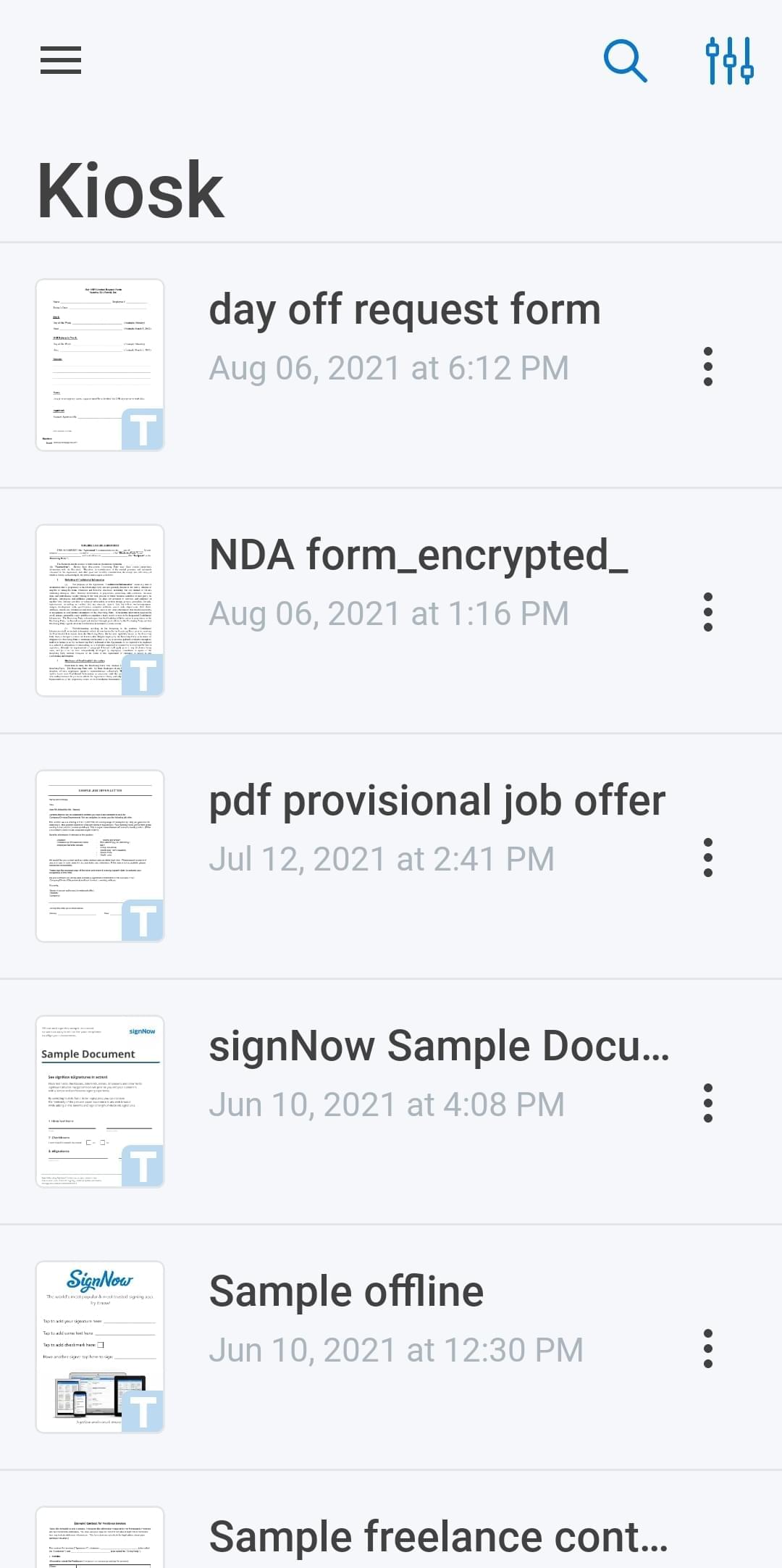
Choose a template to create document copies for signing.
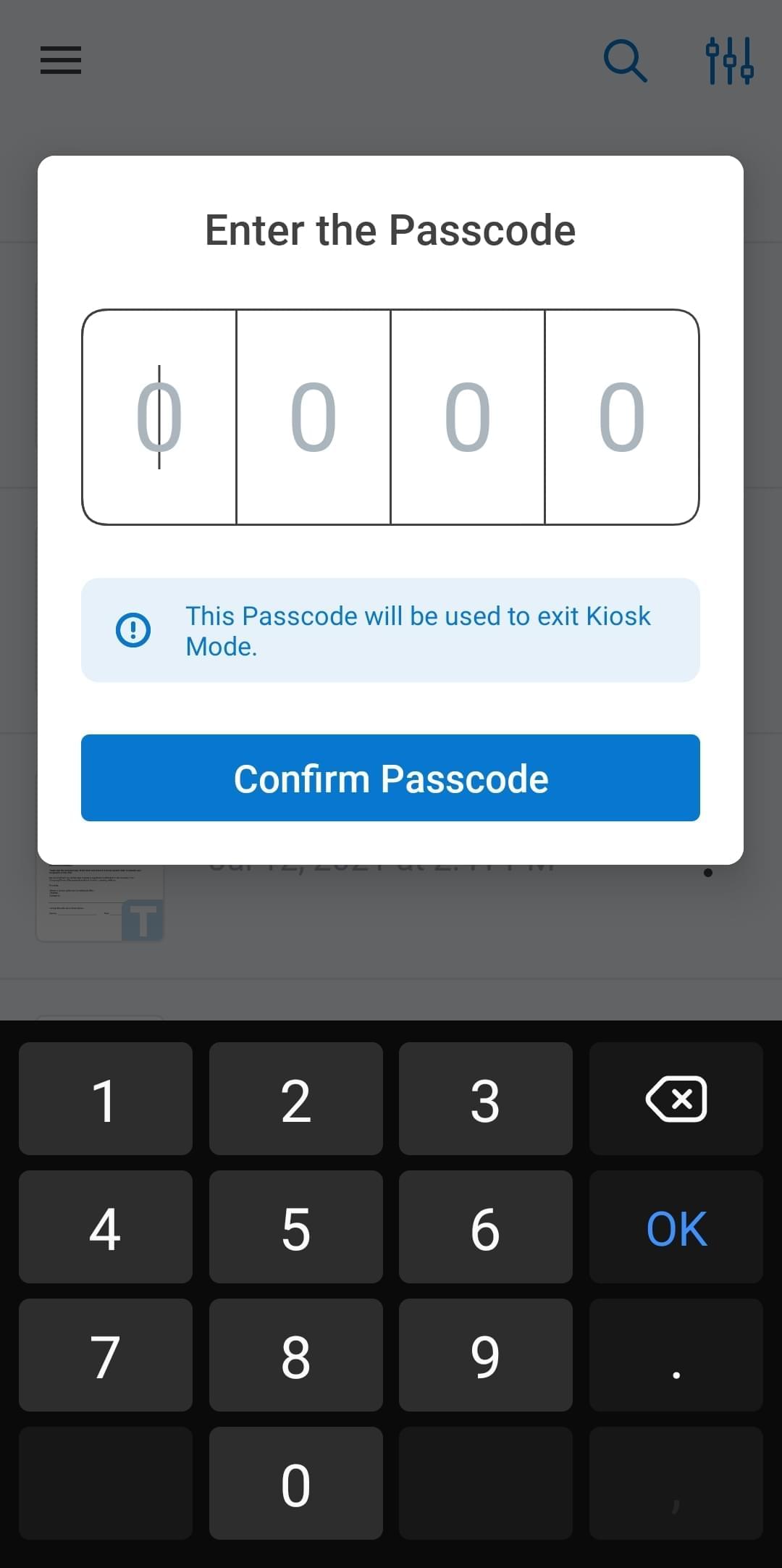
Create a four-digit code to prevent signers from exiting Kiosk Mode and accessing other documents on your device.
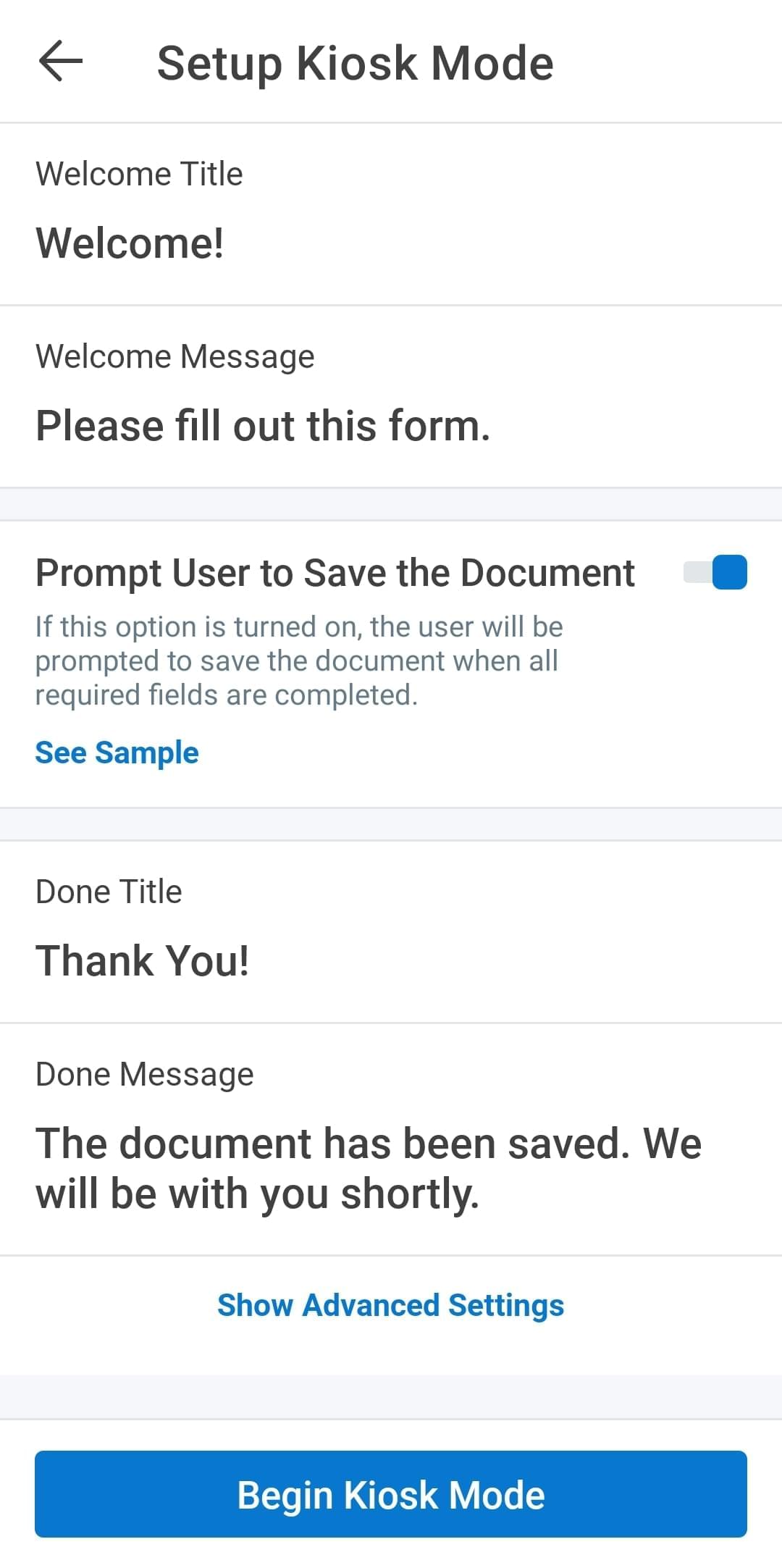
Customize your welcome and thank you messages and tap Begin Kiosk Mode. Your document will appear on the screen.
Have your document filled out
Hand your device to a signer and ask them to complete and sign the document using the touchscreen. Once they are finished, they can submit the document by tapping the checkmark icon in the top right corner.
Once the document is submitted, Kiosk Mode will automatically generate a fresh copy for the next signer. The process can be repeated as many times as needed.
Every document completed in Kiosk Mode is saved to your Documents folder.
We use cookies to improve security, personalize the user experience, enhance our marketing activities (including cooperating with our 3rd party partners) and for other business use. Click here to read our Cookie Policy. By clicking “Accept“ you agree to the use of cookies. ... Read moreRead less