Modèles centralisés
Bibliothèque multi-utilisateurs avec contrôle d'accès.




Personnaliser l'objet et le message réduit les erreurs, améliore la compréhension du destinataire et accélère les réponses grâce à un contexte clair et des instructions précises.

Le responsable RH configure des modèles d'email contenant le nom du candidat, le poste et les clauses obligatoires. Il vérifie les variables et les instructions, puis applique des modèles pour des envois groupés tout en conservant la piste d'audit requise pour conformité.
Le gestionnaire commercial personnalise l'objet avec le nom du prospect et le contrat concerné, ajoutant des détails contextuels pour accélérer la signature. Il utilise les modèles intégrés au CRM pour maintenir le format et suivre les réponses.
Les équipes qui envoient des documents standardisés personnalisent fréquemment objet et message pour clarifier le contexte destiné au signataire.
L'usage répété de modèles et variables assure cohérence, conformité et gain de temps au sein d'équipes structurées.
Bibliothèque multi-utilisateurs avec contrôle d'accès.
Import automatique des données contacts.
Sections visibles selon règles métier.
Support des messages dans plusieurs langues.
Conservation des versions de modèle pour audits.
Journalisation complète des envois et modifications.
Édition centralisée de modèles d'objet et de message avec versions et permissions, permettant aux équipes de maintenir un ton uniforme et d'inclure clauses légales obligatoires selon le type de document.
Insertion de variables issues du document ou du CRM pour préremplir automatiquement les champs d'objet et de message, réduisant les saisies manuelles et les risques d'erreur.
Personnalisation du contenu en fonction du destinataire, du montant ou du rôle, rendant possible la variation du message sans créer plusieurs modèles distincts.
Visualisation du rendu final avant envoi et possibilité d'envoyer des tests aux administrateurs pour valider la mise en forme et les variables.

| Paramètre | Configuration |
|---|---|
| Modèle d'objet par défaut de l'email | Utiliser variable {Subject} et tokens |
| Modèle de corps d'email standard | Inclure instructions et clause légale |
| Fréquence de rappel automatique | 48 heures, 3 rappels maximum |
| Validation avant envoi | Activer approbation manuelle pour modèles |
Les options de personnalisation fonctionnent sur la plupart des navigateurs modernes et sur applications mobiles, avec quelques différences de rendu.
Vérifiez la compatibilité des caractères spéciaux et l'aperçu sur chaque plateforme, et effectuez des tests sur mobile et bureau pour garantir l'affichage correct des objets et du corps des emails.
Le service RH envoie un accord d'embauche avec un objet mentionnant le nom du candidat et le poste
Conduisant à une signature plus rapide et une intégration accélérée
L'équipe commerciale automatise l'envoi d'accords en insérant le numéro de devis et le montant dans l'objet
Conduisant à une accélération du cycle de vente et meilleure traçabilité
| Criteria | Vendor | Customize Subject & Message |
|---|---|---|
| signNow (Recommended) vendor capabilities overview | signNow | Full customization |
| DocuSign fonctionnalité standard | DocuSign | Subject editable |
| Adobe Sign options de personnalisation | Adobe Sign | Message editable |
| Dropbox Sign intégration simple | Dropbox Sign | Limited tokens |
Planifier une vérification chaque 12 mois
Garder historiques durant 7 ans
Effectuer tests avant toute mise en production
Conserver copies horodatées des envois
Supprimer après validation et archivage
| Criteria | Free Plan | Individual Plan | Business Plan | Enterprise Plan | Notes |
|---|---|---|---|---|---|
| signNow (Recommended) eSignature | Disponible | À partir de $8/mois | À partir de $15/mois | Tarification personnalisée | Fonctions entreprise incluses |
| DocuSign plans standards | Essai gratuit | À partir de $10/mois | À partir de $25/mois | Tarification personnalisée | Intégrations CRM robustes |
| Adobe Sign offres | Essai gratuit | À partir de $9.99/mois | À partir de $30/mois | Tarification personnalisée | Intégration Adobe Document Cloud |
| Dropbox Sign (HelloSign) options | Essai gratuit | À partir de $15/mois | À partir de $20/mois | Tarification personnalisée | Intégration Dropbox native |
| OneSpan Sign solutions | Contact commercial | Contact commercial | Contact commercial | Tarification personnalisée | Orientation secteur réglementé |
Lors de l'envoi de documents pour signature, vous êtes libre de modifier la ligne d'objet et le message d'introduction de votre email comme bon vous semble.
De plus, vous pouvez pré-remplir un sujet et un message pour vos modèles afin de ne pas avoir à les retaper à chaque envoi d'une invitation à signer.
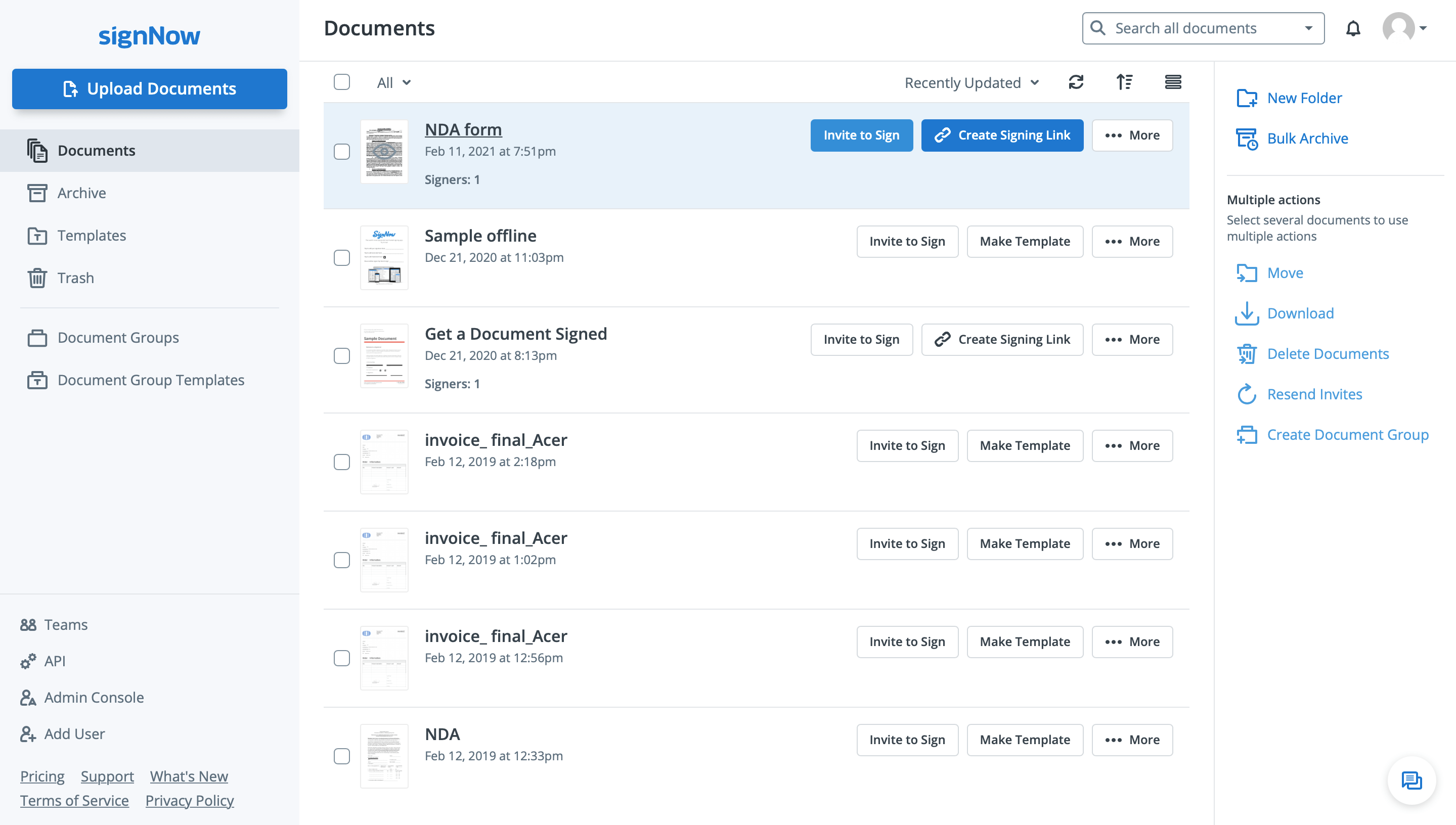
Cliquez sur le bouton Inviter à signer à côté du nom du document que vous souhaitez faire signer électroniquement.
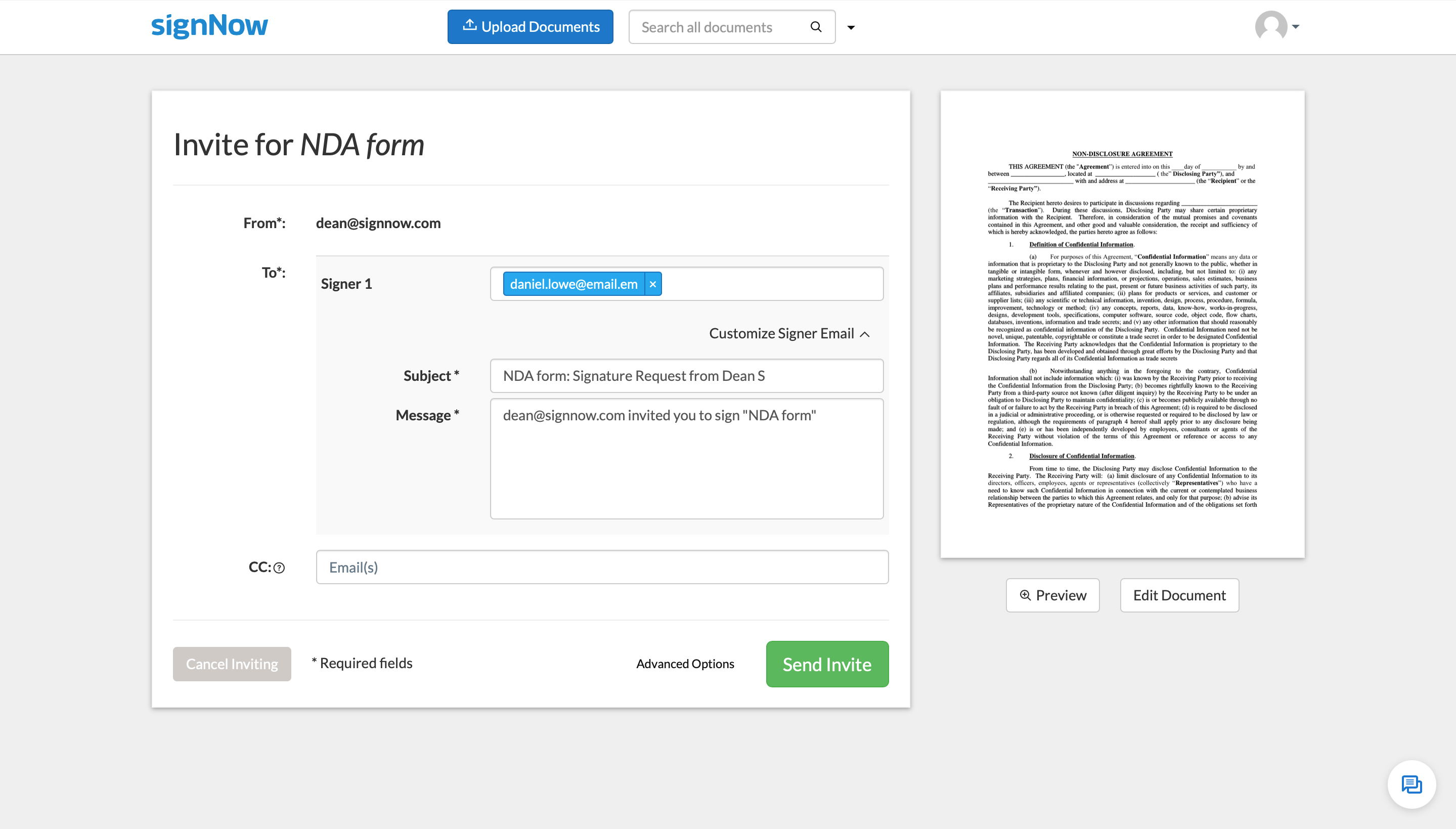
Cliquez sur le menu déroulant Personnaliser l'email du signataire. Ajoutez ou modifiez les données dans les champs Sujet et Message.
Après avoir saisi l'adresse email du destinataire, cliquez sur Envoyer l'invitation. Votre demande de signature sera envoyée au signataire et comportera le sujet et le message que vous avez définis.
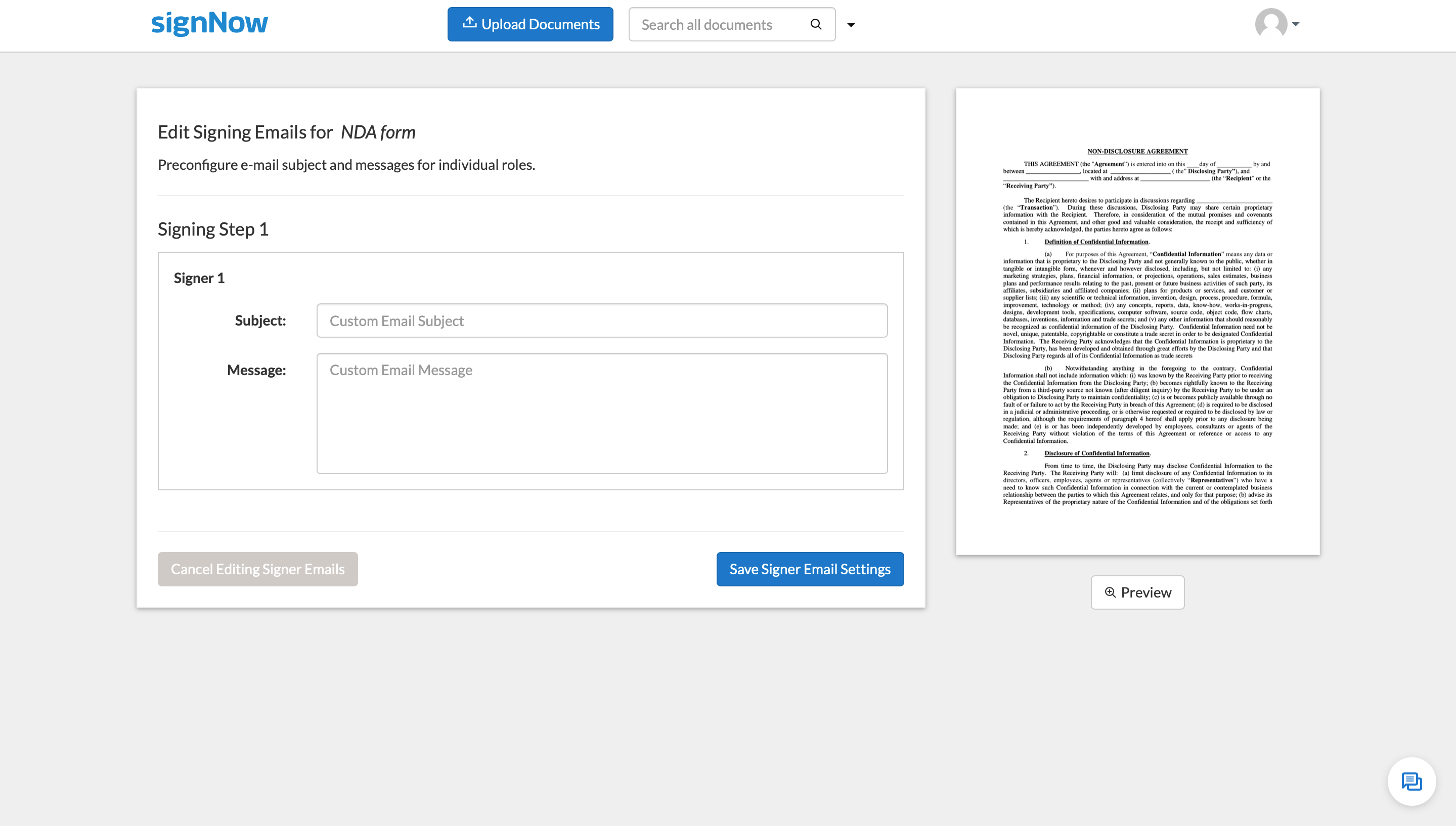
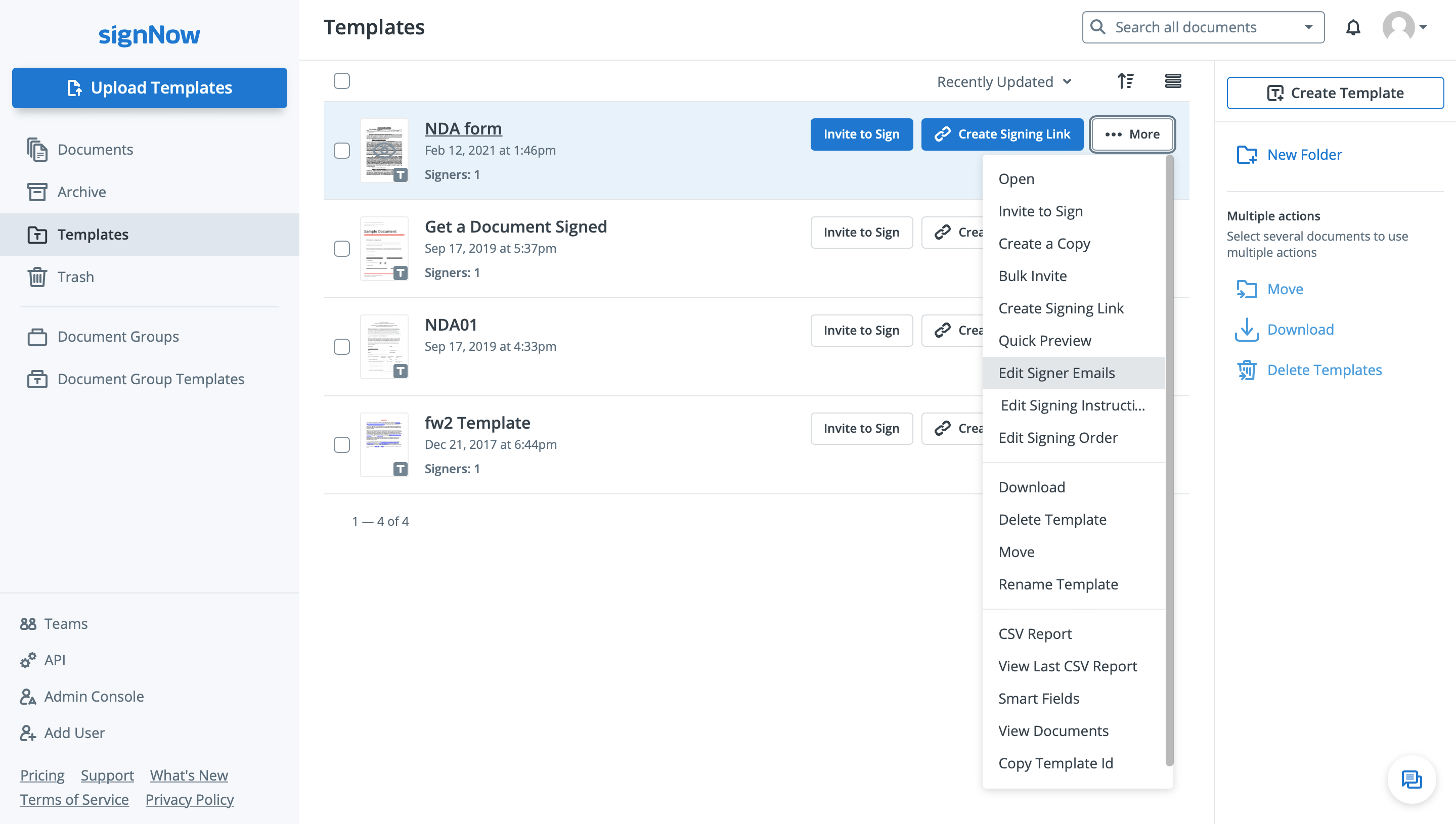
Pré-remplissez le sujet et le message de votre email pour vos modèles afin d'éviter de saisir à nouveau les données. Allez dans l'onglet Modèles à gauche et cliquez sur Plus à côté du nom du modèle à configurer. Ensuite, cliquez sur Modifier les emails du signataire.
Maintenant, il suffit de remplir les champs Sujet et Message et de cliquer sur Enregistrer les paramètres de l'email du signataire. Désormais, toutes les demandes de signature électronique générées à partir de ce modèle seront envoyées en utilisant le sujet et le message que vous avez pré-réglés.