Establishing secure connection…Loading editor…Preparing document…

Letter Requesting Contact Regarding Situation

This template is fully customizable. Edit the text, fill out the fields, and send it for signature. Give it a try!
Letter Requesting Contact Regarding Situation

What this Letter Is and When to Use It

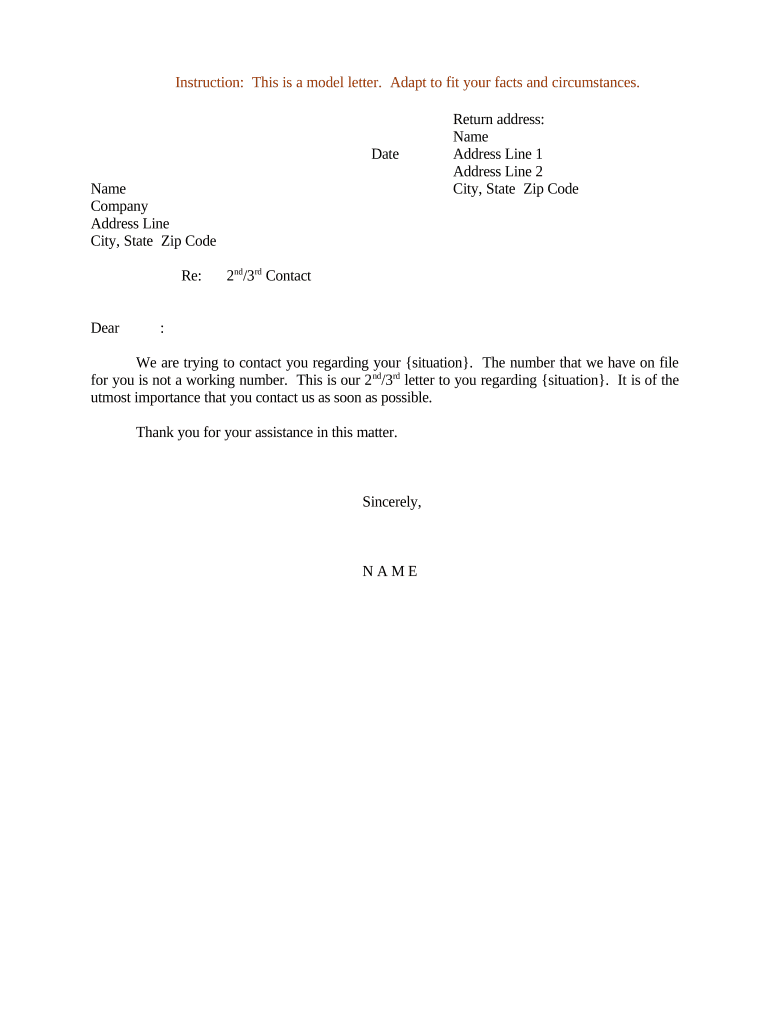
A Letter Requesting Contact Regarding Situation is a concise written request sent to an individual or organization asking them to make contact to discuss, resolve, or provide information about a specific matter. Typical uses include follow-up after an incident, clarification of account activity, scheduling a meeting, or requesting a return phone call about a concern. The letter should name the situation, explain why contact is needed, provide one or more contact methods and availability windows, and set a reasonable response timeframe to encourage timely communication and document the outreach attempt.

Why a Formal Contact Request Helps Your Case

A short, well-structured contact request clarifies expectations, creates a written record of outreach, and can limit misunderstandings if the matter escalates. When delivered electronically or on paper it may support compliance and dispute-resolution processes; electronic execution is legally recognized under ESIGN (15 U.S.C. §7001) and most state UETA statutes when intent, consent, attribution, and retention are evident.

Why a Formal Contact Request Helps Your Case

Who Typically Sends This Letter and Who Receives It

Keep recipients and senders clearly identified and provide contact windows to improve response rates.

  • Customer service teams requesting follow-up on a reported problem or claim.
  • Human resources or supervisors asking an employee to discuss a workplace incident.
  • Landlords or property managers asking tenants to contact them about lease or maintenance concerns.

Essential Parts of an Effective Contact Request Letter

Include key elements so the recipient understands the situation, who to contact, and any time limits. A clear structure reduces ambiguity and supports any subsequent administrative or legal steps.

Sender Details

Full name, title, organization, mailing address, email address, and daytime phone number so the recipient can verify and respond.
Recipient Info

Name and role of the person requested to contact you; include a mailing or email address to ensure proper delivery.

Situation Summary

A concise description of the issue or reason for contact including relevant dates, reference numbers, or incident identifiers.

Requested Action

Specify that you are requesting contact, list acceptable methods (phone, email, video), and indicate preferred days/times for a response.

Response Timeline

State a clear deadline or response window (for example, within seven business days) and note any next steps if there is no reply.

Signature Block

Printed name, signature (electronic or handwritten), title, and date; include contact information repeating the best method to reach you.

Step-by-Step: Drafting and Sending the Letter

A straightforward completion and delivery process helps ensure the recipient receives the request and you retain evidence of outreach.

  • 01
    Draft the text: Explain the situation clearly and request contact.
  • 02
    Add contact details: Provide phone, email, and availability windows.
  • 03
    Set a response deadline: Specify reasonable days for reply, e.g., seven business days.
  • 04
    Send and archive: Deliver via certified mail or eSignature platform and keep a copy.

Configure an Online Workflow for Repeated Use

Use a simple template and routing rules if you send these letters frequently to save time and ensure consistency.

Field Configuration
Template Name Use a clear, versioned template for each situation type.
Recipient Routing Auto-fill recipient by role or account owner.
Authentication Method Choose email link or SMS code depending on sensitivity.
Archiving Location Save signed copies to encrypted cloud storage.

Where to Send the Letter and Typical Routing

Identify the correct destination and routing to ensure the recipient or responsible department receives the request promptly.

  • Direct Recipient: Send to the named individual or department address first.
  • Fallback Contact: If delivery fails, copy a supervisor or general inbox for the area.
  • Legal or Compliance: If the matter may escalate, also route a copy to legal or compliance teams.
  • Record Storage: Archive the sent letter and delivery receipt for future reference.

Digital Delivery and Signing Options

For sensitive matters prefer platforms that capture an audit trail and support lawful retention policies.

  • Email with Read Receipt: Simple and quick; minimal authentication beyond email access.
  • eSignature Platform: Offers audit trail, timestamps, and stronger attribution methods.
  • Certified Mail / Return Receipt: Provides physical proof of delivery when a hard-copy record is required.

Typical Timelines and Expected Response Windows

Set clear deadlines in your letter so recipients understand urgency and so you can document follow-up steps.

Request Date:

Date you send the letter; begins the response window.

Initial Response Window:

Request reply within seven business days for routine matters.

Follow-Up Notice:

If no reply, send a second notice after 14 calendar days.

Escalation Timeline:

Consider escalation or formal notice after 30 days without contact.

Record Retention:

Retain sending and response records per applicable retention rules.

Common Mistakes That Delay Resolution

  • Using vague or technical language that leaves the recipient unsure which action is required and who should respond.
  • Failing to include complete contact details or giving conflicting availability windows, which reduces the chance of a timely reply.
  • Not documenting delivery or retention, making it difficult to prove outreach happened if the issue escalates.
  • Sending to the wrong person or generic inbox without copying the responsible department, which slows internal routing.

Risks of an Incorrect or Unclear Request

Missed Deadline: Can delay dispute resolution or trigger contractual remedies.
Privacy Breach: Sharing protected data without safeguards may violate HIPAA or other laws.
Wrong Recipient: May disclose confidential information or void proof of proper notice.
Unenforceable Signature: Improper signing or missing intent may weaken evidentiary weight.
Regulatory Violation: Consumer-facing notices may require specific disclosures under federal law.
Reputational Harm: Poorly worded letters can escalate disputes publicly or harm relationships.

Common eSignature Options for Sending and Signing Letters

Compare core pricing and capabilities for typical eSignature vendors used to deliver and preserve contact request letters; signNow is listed first per platform ordering rules.

signNow DocuSign Adobe Sign PandaDoc HelloSign
Starting Price $8/user/mo $15/user/mo $14/user/mo $19/user/mo $15/user/mo
Free Trial 7-day free trial Varies Varies Varies Varies
Bulk Send Yes Yes Yes Yes No
Audit Trail Yes Yes Yes Yes Yes
HIPAA Compliant Yes Yes Yes No No
Envelope Cap No cap 100 envelopes/user/year Varies Varies Varies

Real-World Examples of When to Use This Letter

Two concise scenarios show practical application and expected outcomes when you document a request for contact.

Employee Incident Follow-Up

A supervisor documents a workplace incident and requests a confidential call within seven business days to discuss facts.

  • The employee receives a written time window and contact options to schedule a meeting.
  • The written request establishes a record of the outreach and timelines for HR investigations, which aids compliance and reduces he-said-she-said disputes.

Customer Account Inquiry

A billing department requests a customer call to clarify unexpected charges and ask for supporting documents.

  • The letter lists reference numbers and preferred contact times to streamline verification.
  • Having a dated letter and an electronic delivery receipt helps resolve the account quickly and supports documentation if escalation to collections or dispute adjudication becomes necessary.

Frequently Asked Questions and Practical Answers

Answers to common questions about drafting, sending, and validating a Letter Requesting Contact Regarding Situation.


Need help? Contact support

be ready to get more
Join over 28 million airSlate SignNow users