Establishing secure connection… Loading editor… Preparing document…
Navigation

Fill and Sign the Decided in the Court of Appeals Form
Fill and Sign the Decided in the Court of Appeals Form

How it works

Open the document and fill out all its fields.
Apply your legally-binding eSignature.
Save and invite other recipients to sign it.

Rate template

4.5
42 votes
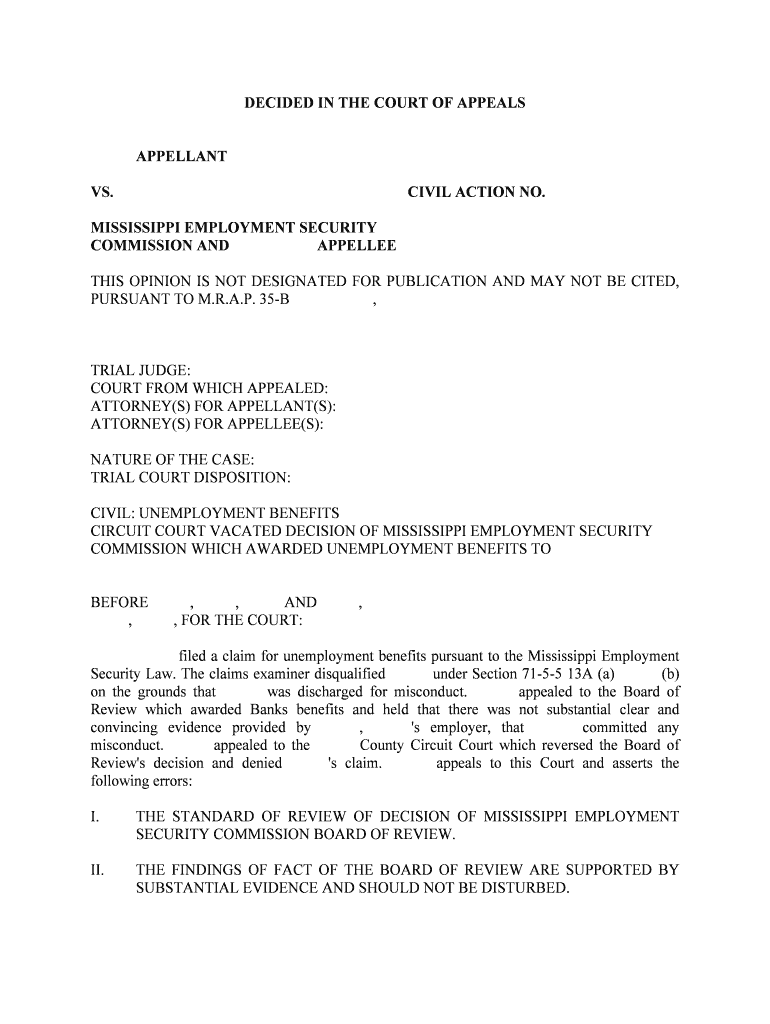
DECIDED IN THE COURT OF APPEALS APPELLANTVS. CIVIL ACTION NO. MISSISSIPPI EMPLOYMENT SECURITYCOMMISSION AND APPELLEETHIS OPINION IS NOT DESIGNATED FOR PUBLICATION AND MAY NOT BE CITED, PURSUANT TO M.R.A.P. 35-B , TRIAL JUDGE: COURT FROM WHICH APPEALED: ATTORNEY(S) FOR APPELLANT(S): ATTORNEY(S) FOR APPELLEE(S): NATURE OF THE CASE: TRIAL COURT DISPOSITION: CIVIL: UNEMPLOYMENT BENEFITSCIRCUIT COURT VACATED DECISION OF MISSISSIPPI EMPLOYMENT SECURITYCOMMISSION WHICH AWARDED UNEMPLOYMENT BENEFITS TO BEFORE , , AND , , , FOR THE COURT: filed a claim for unemployment benefits pursuant to the Mississippi Employment Security Law. The claims examiner disqualified under Section 71-5-5 13A (a) (b) on the grounds that was discharged for misconduct. appealed to the Board of Review which awarded Banks benefits and held that there was not substantial clear and convincing evidence provided by , 's employer, that committed any misconduct. appealed to the County Circuit Court which reversed the Board of Review's decision and denied 's claim. appeals to this Court and asserts the following errors: I.THE STANDARD OF REVIEW OF DECISION OF MISSISSIPPI EMPLOYMENT SECURITY COMMISSION BOARD OF REVIEW.II. THE FINDINGS OF FACT OF THE BOARD OF REVIEW ARE SUPPORTED BY SUBSTANTIAL EVIDENCE AND SHOULD NOT BE DISTURBED. III.THE BOARD OF REVIEW APPLIED THE PROPER LEGAL STANDARD IN CONCLUDING THAT THE CLAIMANT DID NOT ENGAGE IN MISCONDUCT. Finding that the circuit court was in error, we reverse and reinstate the Board of Review's award of benefits. FACTS On , , United Auto Workers Local 1956 commenced a strike against ==== when collective bargaining failed. After the strike, alleged that , an employee on strike, threw tacks under non-striking employees cars and kicked a vehicle. was terminated due to this alleged conduct. On , , filed a claim for unemployment benefits with the Mississippi Employment Security Commission. On =, , the claims examiner disqualified under section 71-5-513A (a) (b) on the grounds that Banks was discharged for misconduct. appealed to the appeals referee who awarded benefits and held that there was not substantial clear and convincing evidence provided by , 's employer, that === committed any misconduct. appealed to the board of review which adopted the findings of fact and opinion of the referee. appealed the board of review's decision to the County Circuit Court which denied 's claim. Subsequently, appealed to this Court.In awarding benefits to , the Board of Review adopted the findings of the appeals referee who held as follows:The claimant was employed approximately years, last working as an Assembler A with , , Mississippi. His/Her last day of work was on , . The employees as of went on labor strike effective a.m./p.m. on , ===. While on strike, the employees set up a picket line at the plant's entrances. The claimant acted as a strike captain during this process. The employer began to receive complaints from nonstriking employees that their vehicles were being vandalized. Some acts of vandalism involved tacks in the tires of employees, broken windshields, as well as cut tires. To monitor the striking workers, the employer had security guards video tape the picketers. During this tape session, the employer witnessed the claimant bending down and motioning as to throw tacks in the pathway of departing employees. Furthermore, the employer believed that the tapes showed claimant kicking the vehicle of a nonstriking employee. In viewing the videotape, claimant does bend down and he/she made a motion as if to throw tacks. However, there is no visible evidence that claimant had tacks in his/her hand or that he/she threw tacks in the pathway of the vehicles. In the incident where claimant allegedly kicked the vehicle, the tape does show that claimant made a kicking motion at a passing vehicle. However, it is difficult to tell if claimant actually struck the vehicle with this motion. If claimant did, in fact, come in contact with the vehicles, the alleged kick was nothing more than a touch. There was no visible damage nor sound from the alleged kick. Based upon the evidence in the tape, the employer dismissed claimant for misconduct associated with the picket line and strike activities. . . In this case, the Referee is of the opinion that there was not substantial clear and convincing evidence provided by the employer to show that claimant threw tacks in the pathway of vehicles of the nonstriking employees nor has it been shown the claimant maliciously or intentionally damaged a nonstriking employee's vehicle with the kick. The testimony as well as recorded evidence does show the claimant was dissatisfied with the fact that many of the employees chose not to stand together with the striking union members. However, this dissatisfaction within itself would not measure to the level of misconduct within the meaning of the law. The decision of the Claims Examiner is, therefore, cancelled. In reversing the Board of Review the circuit court made three particular findings we need to note for a review of the law applicable to this case. First, the circuit court held that "the findings of fact as determined by the appeals referee are supported by the evidence and will not be disturbed." Next, later in its option, the circuit court stated that "was found by the commission to have engaged in conduct during the course of the strike designed to dissuade employees and visitors from entering the employer's plant."Finally, the circuit court held that:The referee seems to place much weight on the fact that the proof is scant on the extent of the actual damage caused by . The referee's approach misses the mark. It is not the damage caused by the claimant's conduct, but the conduct itself that disqualifies him/her from receiving benefits.The claimant's actions were meant to be intimidating gestures and threats of property damage to non-striking fellow employees and visitors to the employer's plant. The actions were designed to interfere with and otherwise injure the business of the employer; or in the language of Wheeler, the conduct evidenced a willful and wanton disregard of the employer's interest and a gross disregard for the standard of behavior that the employer had a right to expect from its employee. LAW The three assignments of error argued here are interrelated and will be addressed collectively. asserts that the scope of review by the circuit court is limited, and that if the facts are supported by substantial evidence, absent fraud, then the jurisdiction in any judicial proceeding is confined to questions of law. Mississippi Code Annotated Section 71-5-31, in pertinent part, provides the standard of review for this Court:In any judicial proceedings under this section, the findings of the board of review as to the facts, if supported by evidence and in the absence of fraud, shall be conclusive, and the jurisdiction of said court shall be confined to questions of law. See Also Mississippi Employment Sec. Commission V. Percy, 641 So. 2d 1172 (Miss. 1994). The board of review must be affirmed absent substantial evidence to support its factual findings or misapplication of the law. is correct in this regard. agrees with this scope of review.The Mississippi Supreme Court has defined misconduct as: Conduct evincing such willful and wanton disregard of the employer's interest as is found in deliberate violations or disregard the standards of behavior which the employer has a right to expect from his employee. Also, carelessness and negligence of such degree, or recurrence thereof, as to manifest culpability, wrongful intent or evil design, and showing an intentional or substantial disregard of the employer's interest or of the employee's duties and obligations to his employer, came within the term. Mere inefficiency, unsatisfactory conduct, failure in good performance as the result of inability or incapacity, or inadvertences and ordinary negligence in isolated incidents, and good faith errors in judgment or discretion were not considered 'misconduct' within the meaning of the statute.Shannon Eng'g & Constr. V. Mississippi Employment Sec. Comm.:, 549 So. 2d 446, 448-49 (Miss. 1989). The conduct "must be harmful to the employers interest." Wheeler v. Ariola, 408 So. 2d 1381 (Miss. 1982). The employer has the burden of establishing a claimants misconduct by "substantial, clear, and convincing evidence." Shannon Eng'g & Construction, 549 So. 2d at 450. The circuit court held that the appeals referee's findings of fact were supported by the evidence and would not be disturbed, but further held that the board incorrectly interpreted the applicable law as to the definition of misconduct.No witness testified that had tacks on his/her person or attempted to throw them under the wheels of passing vehicles. specifically denied the allegation. Likewise, no witness testified that kicked any passing vehicle. Again, denied this allegation.The trial court's assertion in its opinion that the commission found to have engaged in conduct designed to dissuade employees and visitors from entering the employer's plant is not supported by a plain reading of the commission's findings. Although we agree with the trial court's conclusion that conduct itself and not the amount of damage caused is what disqualifies a claimant from receiving benefits, the commission did not find sufficient bad conduct such as to evince a willful and wanton disregard of the employer's interest or a gross disregard for the standard of behavior that the employer had right to expect from its employee. Simply stated, although as the finder of fact our opinion may have differed from the commission, neither the trial court nor this court is at liberty to substitute our conclusions as to the facts or what the facts show.In reaching our decision, we need to address two other points raised in this appeal. After the hearing before the appeals referee and before the opinion by the commission, === sought to have the record supplemented by an affidavit of one witness and the deposition of another witness, both of whom would allegedly directly implicate in misconduct. Supplementation was denied. This was well within the commission's discretion. As correctly points out, Section 71-5-523 of the Mississippi Code gives the commission the power to affirm, modify or set aside any decision based on evidence previously submitted or direct the taking of additional evidence or permit the parties to initiate further action.After appealed the board's decision to the circuit court, one side of the four tapes that were used to record the hearing before the appeals referee was missing. argues that this testimony requires this Court to "affirm the circuit court, vacate the Mississippi Employment Security Commission's determination and issue a determination of non-chargeability." asserts that the part missing from the tape would only be significant if the proof that was missing would have changed the decision of the board. also argues that failed to demonstrate any specific missing proof which would make a difference in the board's decision.The missing testimony appears to have been limited to part of 's testimony. The findings of facts were adopted by the circuit court and there does not appear to be any material testimony or facts missing for resolution of this case. argues that because there is missing testimony, this Court must affirm the circuit court's decision. cites Melody Manor Convalescent Center V. Mississippi State Department of Health, 546 So. 2d 972 (Miss. 1989) for the proposition that the board merely "rubber -stamped" the appeals referee's decision because this portion of the record was missing and such action constitutes arbitrariness and capriciousness. In that case, there was no discussion of missing portions of a record. The court merely stated that an appellate court will overturn an administrative agency where it acts arbitrarily or capriciously.The Mississippi Supreme Court has not specifically addressed this issue but similar cases provide a guide. In Shelton V. Kindred, 279 So. 2d 642, 644 (Miss. 1973) the court held that in the absence of a record, "it must be presumed that the rulings of the trial court were correct, and such presumption will prevail, unless the actual record supports the contrary view." See also Kirk V. Koch, 607 So. 2d 1220, 1223 (Miss. 1992) (appellate court will not disturb a judgment based on allegations not supported by the record); Jackson Opera House Co. V. Cox, 192 So. 293 (Miss. 1939) (notes of stenographer stricken and thus Mississippi Supreme Court must presume that the evidence warranted trial court's decision); Hume V. Inglis, 122 So. 535 (Miss. 1929) (see below).The record must be adequate to show that reversible error was committed below. Queen V. Queen, 551 So. 2d 197, 199 (Miss. 1989) (citing Moawad V. State, 531 So. 2d 632 (Miss. 1988); The commission in its brief requested that we strike that portion of 's brief wherein it characterized the commission as a "rubber stamp." We agree wit the commission; consider it done. Williams V. State, 522 So. 2d 201, 209 iss. 1988)). Failure to provide a transcript could have the effect of requiring this Court to presume the evidence was legally adequate for the decision below. Queen, 551 So. 2d at 199 (citing Wade V. Wade, 419 So. 2d 584, 585 (Miss. 1982). In Queen, the appellant failed to present the Supreme Court of Mississippi with a transcript. Queen at 201. The Mississippi Supreme Court held that it could not consider on appeal any objection to alimony as the Court could not determine whether the appellant properly objected to consideration of alimony by the chancery court at trial or whether the chancery court failed to sustain his objection, if any. 1-1In Williams, the appellant failed to present a transcript to the Mississippi Supreme Court. Williams V. State, 522 So. 2d 201, 209 (Miss. 1988). The Mississippi Supreme Court held that it could not consider whether a statement made by the prosecutor in closing was improper. Moreover, where the record is absent or inadequate, the Mississippi Supreme Court has held that there are three options: (1) "if it appears from the record that there is vital error in the proceedings, regardless of and whatever may have been shown by" the portions missing then reversal will result; (2) affirm the case upon the presumption that the trial court is correct and that the portions of the record which are missing were necessary to support the judgment below; and (3) reverse in order to conduct another trial so this Court can obtain a complete record. Hume V. Inglis, [22 So. 535 (Miss. 1929). Thus, this Court could presume in the absence of a record that the evidence presented to the trial court, which was sitting as an appellate court, was sufficient to sustain the judgment of the commission.Since there appears to be no direct case law on this specific issue, the Mississippi Employment Security Commission's brief cites Goodwill Industries, Inc. V. Industrial Claim Industrial Claim Appeals Office, 862 P.2d 1042 (Cob. App. 1993) for the proposition that if the relevant portions of the transcript are sufficient to allow review of the issue on appeal, then the record is sufficient and remand is unnecessary. The Goodwill court further noted that the employer failed to describe the nature of the testimony missing from the record and "the reason why the failure to have this testimony included for review is prejudicial to its case." Goodwill Industries of Colorado Springs, Inc. V. Industrial Claim Appeals Office, 862 P.2d at 1046. cites Harp V. Department of the Army, 791 F.2d 161 (Fed. Cir. 1986) for the proposition that although the entire tape of the hearing was lost and there was no transcript, the claimant failed to demonstrate any particular testimony which was not considered or misused which might have caused a different result.We believe Goodwill and Harp to be good authority. The record before us, and before the trial court below, and the commission is adequate to reader a decision, and fails to point out any particular testimony, which could or would have caused the commission to reach a difference result. We have considered 's other arguments and citations in its brief and need not further address the same in view of our already state opinions. THE JUDGMENT OF THE CIRCUT COURT OF COUNTY IS REVERSED AND THE BOARD OF REVIEW'S ORDER REINSTATED. APPELLEE IS TAXED WITH COSTS OF APPEAL. , , , , , , , AND , , . , NOT PARTICIPATING.

Useful tips on preparing your ‘Decided In The Court Of Appeals’ online

Are you fed up with the burden of handling paperwork? Look no further than airSlate SignNow, the premier eSignature solution for both individuals and businesses. Bid farewell to the monotonous routine of printing and scanning documents. With airSlate SignNow, you can easily complete and sign paperwork online. Utilize the extensive features embedded in this intuitive and cost-effective platform and transform your approach to document handling. Whether you require form approvals or need to collect eSignatures, airSlate SignNow simplifies it all with just a few clicks.

Adhere to this step-by-step guide:

  1. Access your account or register for a free trial with our service.
  2. Press +Create to upload a document from your device, cloud storage, or our template library.
  3. Open your ‘Decided In The Court Of Appeals’ in the editor.
  4. Click Me (Fill Out Now) to set up the document on your end.
  5. Insert and allocate fillable fields for others (if necessary).
  6. Continue with the Send Invite options to request eSignatures from other parties.
  7. Save, print your version, or convert it into a reusable template.

No need to worry if you want to collaborate with your colleagues on your Decided In The Court Of Appeals or send it for notarization—our platform has everything required to complete these tasks. Register for an account with airSlate SignNow today and enhance your document management experience!

Here is a list of the most common customer questions. If you can’t find an answer to your question, please don’t hesitate to reach out to us.

Need help? Contact Support
If you go to the court of Appeals you will see how many judges
Appellate court
what are the grounds for an appeal?
Can you always appeal a court decision
Appellate court example
How to win an appeal in court
NY Court of Appeals
What happens after an appeal is granted
How to win an appeal in court
Appellate court example
Circuit Court of Appeals
What are the grounds for an appeal

The best way to complete and sign your decided in the court of appeals form
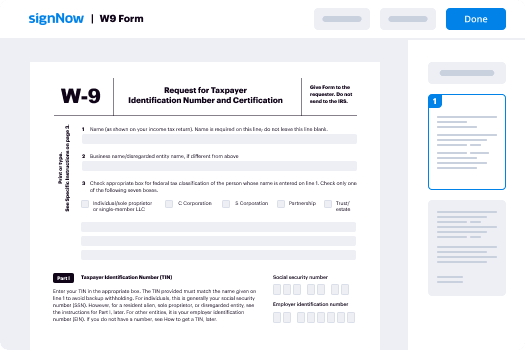
Save time on document management with airSlate SignNow and get your decided in the court of appeals form eSigned quickly from anywhere with our fully compliant eSignature tool.
How to Sign a PDF Online How to Sign a PDF Online

How to complete and sign paperwork online

Previously, coping with paperwork took lots of time and effort. But with airSlate SignNow, document management is quick and easy. Our powerful and user-friendly eSignature solution lets you effortlessly complete and electronically sign your decided in the court of appeals form online from any internet-connected device.

Follow the step-by-step guide to eSign your decided in the court of appeals form template online:

  • 1.Register for a free trial with airSlate SignNow or log in to your account with password credentials or SSO authentication.
  • 2.Click Upload or Create and import a form for eSigning from your device, the cloud, or our form catalogue.
  • 3.Click on the document name to open it in the editor and use the left-side toolbar to fill out all the empty fields properly.
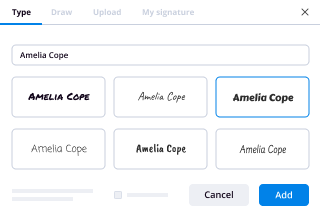
  • 4.Place the My Signature field where you need to eSign your form. Type your name, draw, or import a picture of your handwritten signature.
  • 5.Click Save and Close to finish modifying your completed document.

After your decided in the court of appeals form template is ready, download it to your device, export it to the cloud, or invite other parties to electronically sign it. With airSlate SignNow, the eSigning process only takes a few clicks. Use our powerful eSignature solution wherever you are to deal with your paperwork efficiently!
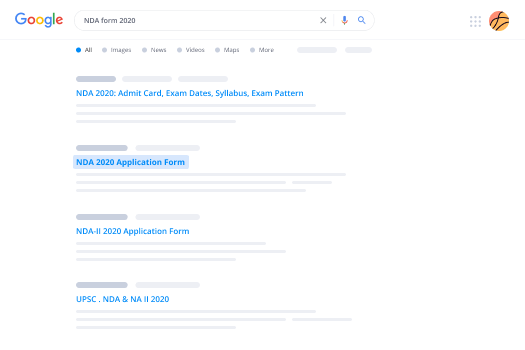
How to Sign a PDF Using Google Chrome How to Sign a PDF Using Google Chrome

How to complete and sign forms in Google Chrome

Completing and signing documents is easy with the airSlate SignNow extension for Google Chrome. Installing it to your browser is a quick and beneficial way to deal with your forms online. Sign your decided in the court of appeals form template with a legally-binding electronic signature in just a couple of clicks without switching between tools and tabs.

Follow the step-by-step guide to eSign your decided in the court of appeals form template in Google Chrome:

  • 1.Navigate to the Chrome Web Store, find the airSlate SignNow extension for Chrome, and add it to your browser.
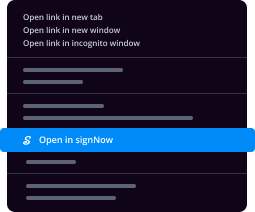
  • 2.Right-click on the link to a document you need to eSign and choose Open in airSlate SignNow.
  • 3.Log in to your account using your credentials or Google/Facebook sign-in buttons. If you don’t have one, sign up for a free trial.
  • 4.Utilize the Edit & Sign menu on the left to complete your sample, then drag and drop the My Signature field.
  • 5.Insert a picture of your handwritten signature, draw it, or simply enter your full name to eSign.
  • 6.Verify all information is correct and click Save and Close to finish modifying your form.

Now, you can save your decided in the court of appeals form template to your device or cloud storage, email the copy to other people, or invite them to electronically sign your document via an email request or a protected Signing Link. The airSlate SignNow extension for Google Chrome enhances your document processes with minimum effort and time. Try airSlate SignNow today!
How to Sign a PDF in Gmail How to Sign a PDF in Gmail How to Sign a PDF in Gmail

How to complete and sign paperwork in Gmail

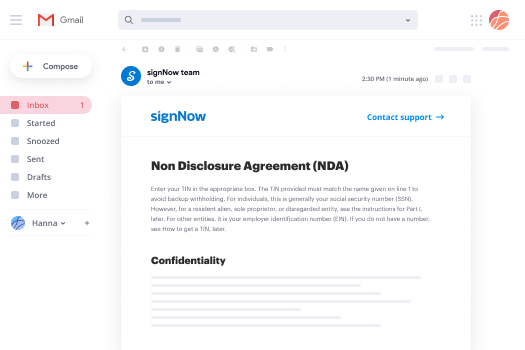
Every time you receive an email containing the decided in the court of appeals form for approval, there’s no need to print and scan a file or save and re-upload it to another program. There’s a much better solution if you use Gmail. Try the airSlate SignNow add-on to quickly eSign any paperwork right from your inbox.

Follow the step-by-step guidelines to eSign your decided in the court of appeals form in Gmail:

  • 1.Navigate to the Google Workplace Marketplace and look for a airSlate SignNow add-on for Gmail.
  • 2.Set up the program with a corresponding button and grant the tool access to your Google account.
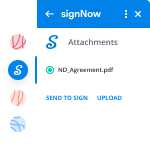
  • 3.Open an email with an attachment that needs approval and utilize the S key on the right sidebar to launch the add-on.
  • 4.Log in to your airSlate SignNow account. Select Send to Sign to forward the document to other parties for approval or click Upload to open it in the editor.
  • 5.Drop the My Signature field where you need to eSign: type, draw, or import your signature.

This eSigning process saves efforts and only requires a few clicks. Take advantage of the airSlate SignNow add-on for Gmail to update your decided in the court of appeals form with fillable fields, sign forms legally, and invite other parties to eSign them al without leaving your inbox. Enhance your signature workflows now!
How to Sign a PDF on a Mobile Device How to Sign a PDF on a Mobile Device How to Sign a PDF on a Mobile Device

How to fill out and sign forms in a mobile browser

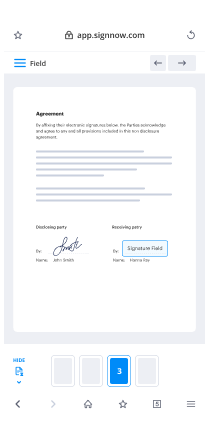
Need to quickly fill out and sign your decided in the court of appeals form on a smartphone while doing your work on the go? airSlate SignNow can help without the need to set up extra software applications. Open our airSlate SignNow tool from any browser on your mobile device and create legally-binding electronic signatures on the go, 24/7.

Follow the step-by-step guidelines to eSign your decided in the court of appeals form in a browser:

  • 1.Open any browser on your device and go to the www.signnow.com
  • 2.Create an account with a free trial or log in with your password credentials or SSO option.
  • 3.Click Upload or Create and pick a file that needs to be completed from a cloud, your device, or our form collection with ready-to go templates.
  • 4.Open the form and fill out the empty fields with tools from Edit & Sign menu on the left.
  • 5.Place the My Signature field to the sample, then enter your name, draw, or add your signature.

In a few simple clicks, your decided in the court of appeals form is completed from wherever you are. When you're done with editing, you can save the file on your device, generate a reusable template for it, email it to other people, or invite them eSign it. Make your paperwork on the go quick and efficient with airSlate SignNow!
How to Sign a PDF on iPhone How to Sign a PDF on iPhone

How to fill out and sign documents on iOS

In today’s business community, tasks must be accomplished rapidly even when you’re away from your computer. With the airSlate SignNow mobile app, you can organize your paperwork and sign your decided in the court of appeals form with a legally-binding eSignature right on your iPhone or iPad. Install it on your device to conclude contracts and manage forms from anyplace 24/7.

Follow the step-by-step guidelines to eSign your decided in the court of appeals form on iOS devices:

  • 1.Go to the App Store, find the airSlate SignNow app by airSlate, and install it on your device.
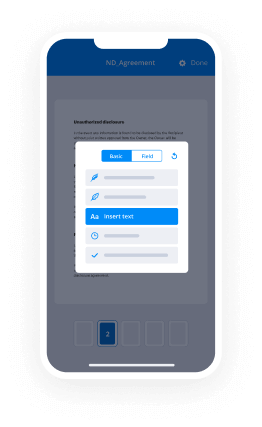
  • 2.Open the application, tap Create to upload a form, and choose Myself.
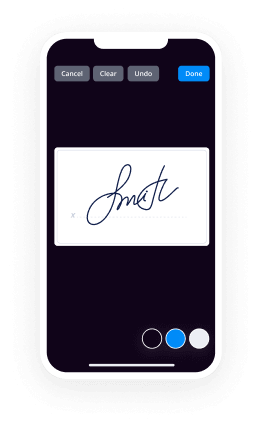
  • 3.Choose Signature at the bottom toolbar and simply draw your autograph with a finger or stylus to eSign the form.
  • 4.Tap Done -> Save after signing the sample.
  • 5.Tap Save or use the Make Template option to re-use this document in the future.

This process is so easy your decided in the court of appeals form is completed and signed in just a few taps. The airSlate SignNow application works in the cloud so all the forms on your mobile device remain in your account and are available whenever you need them. Use airSlate SignNow for iOS to improve your document management and eSignature workflows!
How to Sign a PDF on Android How to Sign a PDF on Android

How to complete and sign forms on Android

With airSlate SignNow, it’s easy to sign your decided in the court of appeals form on the go. Install its mobile app for Android OS on your device and start boosting eSignature workflows right on your smartphone or tablet.

Follow the step-by-step guidelines to eSign your decided in the court of appeals form on Android:

  • 1.Go to Google Play, search for the airSlate SignNow application from airSlate, and install it on your device.
  • 2.Log in to your account or register it with a free trial, then add a file with a ➕ option on the bottom of you screen.
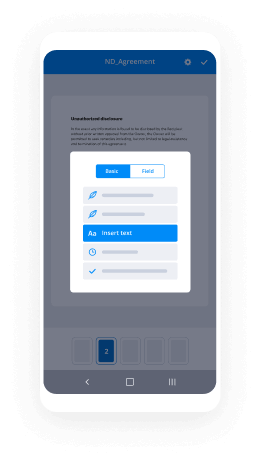
  • 3.Tap on the uploaded document and choose Open in Editor from the dropdown menu.
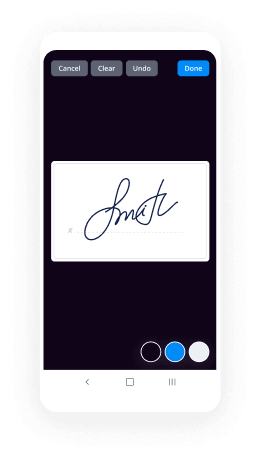
  • 4.Tap on Tools tab -> Signature, then draw or type your name to eSign the sample. Complete empty fields with other tools on the bottom if necessary.
  • 5.Utilize the ✔ key, then tap on the Save option to end up with editing.

With an intuitive interface and full compliance with major eSignature requirements, the airSlate SignNow app is the best tool for signing your decided in the court of appeals form. It even works offline and updates all form adjustments once your internet connection is restored and the tool is synced. Complete and eSign documents, send them for eSigning, and generate re-usable templates anytime and from anywhere with airSlate SignNow.

Sign up and try Decided in the court of appeals form
  • Close deals faster
  • Improve productivity
  • Delight customers
  • Increase revenue
  • Save time & money
  • Reduce payment cycles