Purchase and Sale
Defines number and class of shares, price per share, total consideration, payment method, and any adjustments or escrows that affect funds transferred at closing.
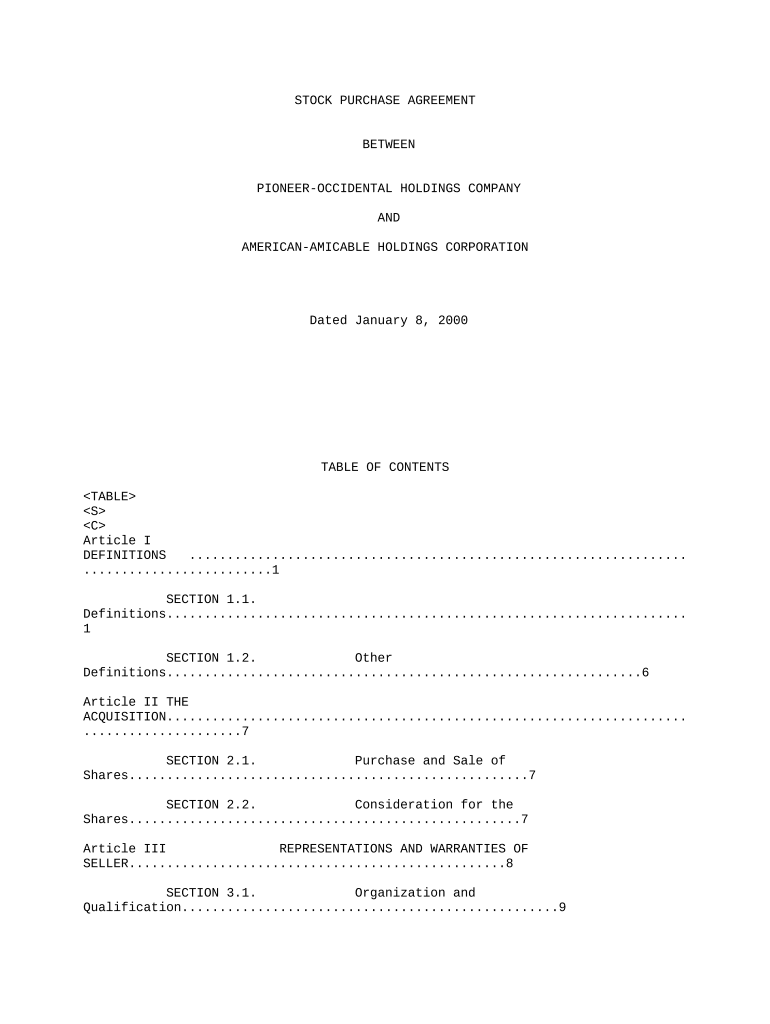
A precise Stock Purchase Agreement allocates risk, fixes economic terms, and documents approvals and consents that make the transfer enforceable under state contract law and federal e-signature statutes such as the ESIGN Act (15 U.S.C. ch. 96) and applicable UETA provisions.

Typical participants include the selling shareholder(s), buyer(s), the company (for consent/transfer restrictions), and any approving board or special committee; legal counsel and accountants often assist with closing conditions.
Roles and responsibilities should be documented in the agreement to ensure signatory authority and to avoid post-closing disputes over title, escrow, or indemnity obligations.
An individual shareholder signs to transfer legal title to the shares and to give representations about ownership, authority, and absence of liens. Their signature links the seller to indemnity and tax representations that survive closing.
The buyer signs to accept purchase terms, deliver consideration, and make representations (capacity, source of funds). Buyer signatures also trigger closing obligations, escrow instructions, and any post-closing covenants.
Defines number and class of shares, price per share, total consideration, payment method, and any adjustments or escrows that affect funds transferred at closing.
Specifies closing date, deliverables (stock certificates, board minutes, officer certificates), escrow arrangements, and conditions precedent for each party’s obligations at closing.
Seller and buyer promises about authority, ownership, capitalization, financial statements, tax status, and absence of undisclosed liabilities, with survival periods and materiality qualifiers.
Pre- and post-closing obligations, including non-compete or non-solicit clauses, regulatory filings, transfer restrictions, and cooperation on consents or third-party approvals.
Allocation of loss handling, baskets, caps, procedures for claims, defense control, and whether indemnity rights survive termination or closing.
Choice of law, venue, arbitration or litigation preferences, and severability language that determines how disputes will be resolved under state law.
| Field | Configuration |
|---|---|
| Signer Order | Sequential or parallel based on closing conditions |
| Authentication | Email + optional SMS or knowledge-based verification |
| Required Attachments | Board consents, officer certificates, or W-9s |
| Audit Trail | Enable detailed logs (IP, timestamp, actions) |
Use secure channels that preserve chain of custody and support audit trails, particularly when documents affect ownership and tax reporting.
Where possible, retain a tamper-evident signed PDF and a platform audit log to demonstrate intent, attribution, and consent in compliance with ESIGN and UETA.
Set the agreed date in MM/DD/YYYY; this triggers transfer and many reporting obligations.
Provide W-9 upon request; follow IRS deadlines for any required information returns (consult 26 U.S.C. deadlines).
Specify conditions and dates for escrow release and dispute windows.
Define how long reps and indemnities remain enforceable post-closing.
Retain executed agreements according to corporate and tax retention policies.
| signNow | DocuSign | Adobe Sign | PandaDoc | HelloSign | |
|---|---|---|---|---|---|
| Starting Price | $8/user/mo | $15/user/mo | $14/user/mo | $19/user/mo | $15/user/mo |
| Free Trial | 7-day free trial | Varies by promotion | Varies by promotion | Varies by promotion | Varies by promotion |
| Bulk Send | Yes | Yes | Yes | Yes | No |
| Audit Trail | Yes | Yes | Yes | Yes | Yes |
| Envelope Cap | No cap | 100 envelopes/user/year | Varies by plan | Varies by plan | Varies by plan |
A founder sells 40% of shares to a strategic investor
A minority investor acquires preferred shares with protective provisions