Establishing secure connection…Loading editor…Preparing document…

Revocable Trust Form

This template is fully customizable. Edit the text, fill out the fields, and send it for signature. Give it a try!
Revocable Trust Form

What the Revocable Trust Form Is and When It’s Used

A Revocable Trust Form creates a revocable living trust that holds assets under terms you set while you remain alive and competent. It names a grantor (creator), trustee (manager), and beneficiaries who receive trust property after incapacity or death. Unlike a will, the trust can be funded during life to help avoid probate and allow managed asset transfers. The document is amendable or revokeable by the grantor and typically includes powers, successor trustee provisions, distribution instructions, and guidance for incapacity.

Why a Revocable Trust Form Matters

A properly completed Revocable Trust Form simplifies estate administration, provides continuity if you become incapacitated, and can reduce time and cost associated with probate. It preserves flexibility because the grantor retains amendment and revocation rights while alive.

Why a Revocable Trust Form Matters

Who Commonly Prepares and Signs Revocable Trusts

Professional advisors — attorneys, financial planners, and trust officers — often assist to ensure funding, tax coordination, and compliance with state formalities.

  • Elder individuals planning incapacity protection and streamlined asset transfer.
  • Property owners funding real estate to avoid probate in probate-heavy jurisdictions.
  • Families establishing successor trustee arrangements for minor or special-needs beneficiaries.

Typical Roles and Responsibilities

Grantor / Settlor

The person who creates the trust, transfers assets into it, and retains the right to amend or revoke while competent. The grantor must sign and clearly express intent for the document to operate as a revocable trust.

Trustee / Successor

The trustee manages trust property according to the trust terms. A successor trustee steps in on incapacity or death. Trustees have fiduciary duties and must follow trust provisions and applicable state law.

Security and Compliance Essentials for Trust Documents

Encryption: TLS 1.2/1.3 in transit; AES-256 at rest
Audit Trail: Timestamped events, signer attribution
HIPAA: BAA required for health data
Authentication: Email, SMS, or advanced signer verification
Certifications: SOC 2 Type II, ISO 27001
Retention: Tamper-evident storage and export

Key Risks and Legal Consequences of Errors

Unfunded Trust: Probate exposure
Incorrect Beneficiary: Distribution disputes
Missing Notarization: Probate challenges
Improper Execution: Voidable instrument
Tax Errors: Reporting complications
Creditor Claims: Asset vulnerability

Common Preparation Pitfalls to Avoid

  • Failing to transfer titles into the trust leaves assets subject to probate and defeats a primary purpose of the document.
  • Using informal or nonstandard beneficiary descriptions increases the risk of ambiguity and post-death litigation among heirs.
  • Neglecting to appoint a clearly identified successor trustee can cause administrative delay and court involvement during incapacity.
  • Overlooking state-specific execution formalities, notarization, or witness rules can render the trust difficult to admit in probate.

Step-by-Step: Completing a Revocable Trust Form

Follow these steps to complete and make the trust effective; sequence matters for validity and funding.

  • 01
    Identify Parties: Enter grantor, trustee, and beneficiaries with full legal names.
  • 02
    Set Terms: Specify distribution rules, powers, and incapacity procedures.
  • 03
    Sign & Notarize: Grantor signs before a notary and any required witnesses.
  • 04
    Fund the Trust: Transfer titles or retitle assets into the trust name.

Where to Send or Store the Completed Form

After execution, route the trust document to trustees, attorneys, and custodians; retain originals and distribute certified copies.

  • Attorney: Original kept by counsel for legal recordkeeping.
  • Successor Trustee: Provide a certified copy for immediate access.
  • Financial Institutions: Deliver copies when funding accounts or retitling assets.
  • Personal Records: Store original in secure physical or digital safe.

Core Sections to Include in a Professional Revocable Trust Form

A complete Revocable Trust Form covers identity, powers, successor arrangements, distribution plans, incapacity procedures, and administrative provisions to reduce future dispute and simplify fiduciary action.

Grantor Identification

Full legal name, date of birth, and residency to establish grantor identity and tie the document to governing law; avoid initials or nicknames.
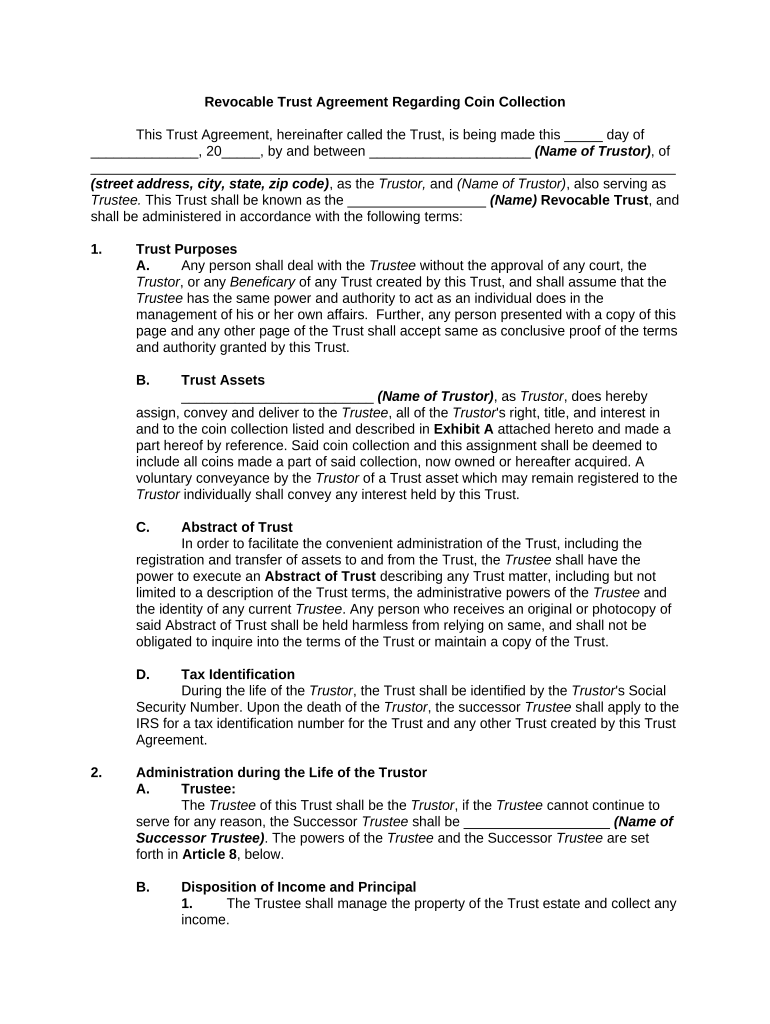
Trust Name

Unique trust title and effective date to distinguish the trust from other instruments and determine the operative timeline for funding and administration.

Trustee Powers

Clear enumeration of trustee authorities such as investment, distribution, and tax elections to enable efficient management and reduce court supervision.

Successor Trustee

Designate successor(s) and alternates with contact details and acceptance provisions for smooth transition on incapacity or death.

Beneficiary Terms

Specify primary and contingent beneficiaries, distribution conditions, and age-based or milestone vesting to prevent ambiguity.

Revocation & Amendment

Describe how the grantor may amend or revoke the trust while competent, including required formality and delivery method for revocation.

Timelines and When to Complete Key Actions

Some trust actions are time-sensitive; plan execution, funding, and notifications to align with tax and property transfer requirements.

Effective Date:

Set on the document; governs when grantor powers and funding take effect.

Funding/Recording:

Transfer titles promptly; record deeds when real property moves into trust.

Notarization:

Complete at signing to satisfy state execution formalities.

Beneficiary Updates:

Notify financial institutions within weeks of changes to avoid delays.

Tax Reporting:

Coordinate with tax preparer for any trust tax filing obligations.

How a Revocable Trust Compares with an Irrevocable Trust

A side-by-side comparison highlights control, tax treatment, amendment ability, and creditor protection differences between these trust types.

Criteria Revocable Trust Irrevocable Trust
Control during lifetime
Probate avoidance
Tax treatment grantor taxed separate tax entity
Amendable

eSignature Platform Comparison for Executing Trust Documents

Selected vendor pricing and capabilities to consider when choosing an electronic signing solution for execution and document management.

signNow DocuSign Adobe Sign PandaDoc HelloSign
Starting Price $8/user/mo $15/user/mo $14/user/mo $19/user/mo $15/user/mo
Free Trial Yes, 7-day trial Varies by plan Varies by plan Varies by plan Varies by plan
Bulk Send Yes Yes Yes Yes Yes
Audit Trail Yes Yes Yes Yes Yes
HIPAA Compliant Yes Yes Yes No No

Frequently Asked Questions About the Revocable Trust Form

Answers to common questions about execution, funding, modification, and practical administration of revocable trusts.


Need help? Contact support

be ready to get more
Join over 28 million airSlate SignNow users