Establishing secure connection…Loading editor…Preparing document…

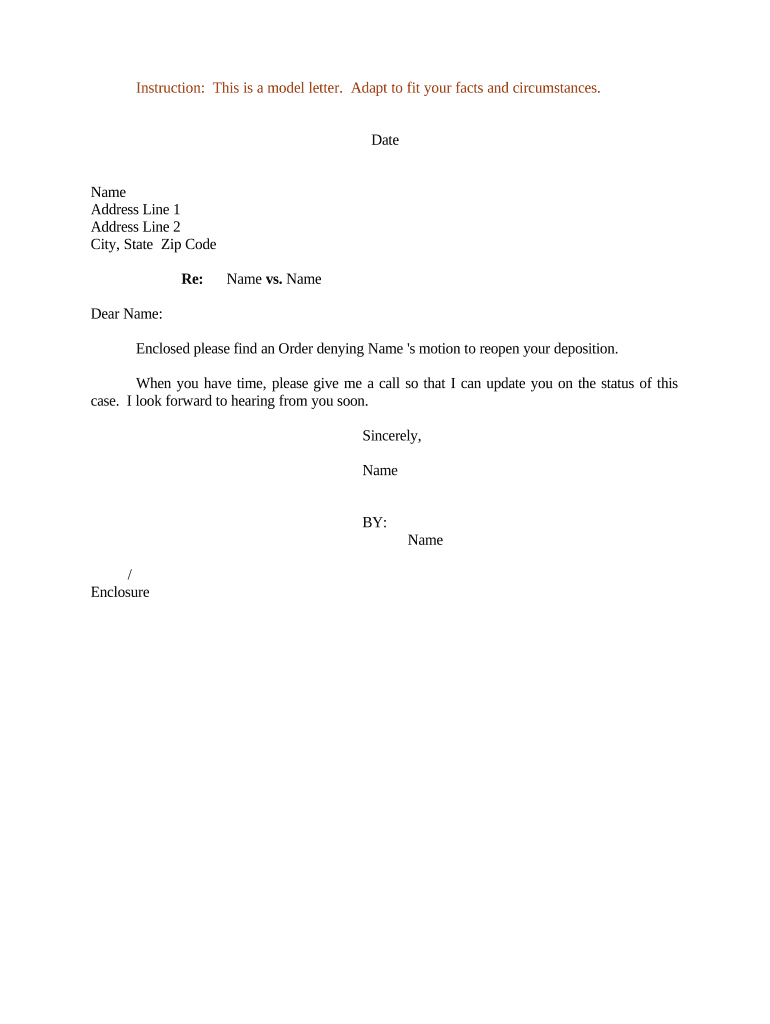
Sample Letter Motion to Reopen

This template is fully customizable. Edit the text, fill out the fields, and send it for signature. Give it a try!
Sample Letter Motion to Reopen

What the Sample Letter Motion to Reopen Is

A Sample Letter Motion to Reopen is a written request submitted to a court or administrative body asking that a previously closed case, hearing, or administrative decision be reopened for further consideration. The letter explains the factual or legal basis for reopening, identifies newly discovered evidence or changed circumstances, and requests the specific relief sought. It typically references the original case number, prior order date, and any deadline provisions. Drafting should be clear, cite relevant authority where applicable, and include supporting exhibits or declarations that justify the reopening request.

Why a Well‑Prepared Motion Matters

A precise, well-supported motion increases the chance the court or agency will authorize reopening by showing new facts, excusable neglect, or other legal grounds. Clear structure and supporting evidence reduce processing time and avoid unnecessary denials.

Why a Well‑Prepared Motion Matters

Who Typically Prepares and Files This Letter

Parties, attorneys, and authorized representatives commonly prepare motions to reopen to address newly discovered evidence, clerical errors, or jurisdictional defects.

  • Self-represented litigants seeking to correct omissions or present new facts to the decision-maker.
  • Defense or plaintiff counsel filing a procedural or substantive reopening on behalf of clients.
  • Administrative representatives or petitioners in immigration, benefits, or licensing matters.

Choose the signer and filer who have authority and access to supporting exhibits; when in doubt, consult counsel to avoid forfeiting rights.

Step‑by‑Step: Drafting and Submitting Your Motion

Follow these steps to prepare a complete, timely motion to reopen and avoid procedural dismissal.

  • 01
    Collect case documents: Gather the judgment, prior motions, and order relevant to the reopening request.
  • 02
    Identify legal grounds: Select the applicable statutory or rule-based reason for reopening with authority support.
  • 03
    Draft declarations and exhibits: Attach sworn declarations or evidence demonstrating the changed circumstance or new facts.
  • 04
    File and serve: Submit to the court or agency per local filing rules and serve all parties according to procedure.

Where to File and How the Process Moves

The filing destination and routing depend on the original tribunal and local rules; follow the sequence below to ensure correct submission and service.

  • Determine jurisdiction: File with the same court or administrative office that issued the original order.
  • Prepare filing packet: Include motion, exhibits, proof of service, and any required filing cover sheet.
  • Method of submission: Use the court’s e‑filing system, physical filing clerk, or agency portal per local rules.
  • Service on parties: Serve opposing parties electronically or by mail as required and include proof of service with the filing.

Customizing an Electronic Workflow for Filing

Set up an e‑filing or eSubmission workflow to route the motion, collect signatures, and preserve a clear audit trail.

Field Configuration
Document upload PDF/A preferred for long-term preservation
Signature type Electronic signature (ESIGN/UETA compliant) or scanned wet signature
Authentication Email link or SMS code for signer verification
Retention Archive signed packet with audit trail and exhibits

Technical Considerations for eSubmission

Ensure the eSignature and filing platform supports required file formats, signer authentication, and audit trails before submitting.

  • File formats: Accepts PDF, DOCX; PDF/A recommended for exhibits
  • Integrations: Supports integrations such as NetSuite, Salesforce, Microsoft 365
  • Authentication: Offers email/SMS auth, two‑factor options, and audit logs

Preserve signed copies and the platform’s audit trail for service proof and any subsequent enforcement or appeals process.

Essential Parts of a Professional Motion to Reopen

Include these core elements to present a persuasive, procedurally correct motion that a court or agency can act upon.

Caption and Docket

Full case caption with docket/case number so the clerk can immediately identify the original matter and associated files.
Statement of Jurisdiction

Short explanation of why the court or agency retains authority to reopen under the governing rule or statute.

Grounds for Relief

Explicit legal grounds (new evidence, excusable neglect, mistake, fraud) with citation to supporting law or rules.

Factual Support

Concise factual narrative plus sworn declarations and exhibit references demonstrating the changed circumstances or new evidence.

Requested Relief

Clear, specific remedy sought (reopen, schedule hearing, vacate order) to guide the court’s response.

Service and Proof

Certificate of service and any required filing fee receipt or cover sheet to meet procedural requirements.

Required Case and Contact Details

Case Number: Exact docket identifier
Court/Agency: Name of issuing body
Prior Order Date: MM/DD/YYYY format
Party Names: Full legal names of all parties
Attorney Contact: Name, bar number, phone, email
Service Address: Physical or electronic service address

Critical Timing and Filing Deadlines

Timeliness is often dispositive. Confirm any statutory or local court deadlines that limit motions to reopen and tie your filing date to those deadlines.

Statutory Windows:

Some rules impose short windows (e.g., 14–30 days) for reconsideration or reopening.

Court Rules:

Local rules may require motions within a specific term following notice of the order.

Service Requirements:

Proof of service often due at filing or within a short follow-up window.

E‑filing Cutoffs:

Electronic systems may have business‑hour restrictions affecting filing date.

Appeal vs Reopen:

Filing an appeal may foreclose reopening in some contexts; check the governing rules.

Key Milestones After Filing the Motion

A typical timeline shows what parties and the court can expect once the motion is submitted; timelines vary by forum and local rule.

01

Filing Submitted

Court or agency clerk accepts filing and assigns internal processing status.

02

Service Confirmed

Proof of service filed; parties receive notice and response deadline.

03

Opposition Period

Opposing party may file a response per the local schedule, commonly 14–30 days.

04

Decision or Hearing

Court issues an order or schedules a hearing; timing depends on calendar and complexity.

Common Mistakes That Delay or Defeat Reopening

  • Missing or misnumbered docket/case citations that prevent clerks from locating the original file and cause processing delays.
  • Failing to attach sworn declarations and exhibits that substantiate newly discovered evidence or excusable neglect.
  • Late filing outside the court’s permitted time window without a compelling justification or statutory basis.
  • Improper service on parties or omission of a certificate of service, leading to procedural rejection.

Consequences of an Incorrect or Untimely Motion

Dismissal Risk: Motion may be denied as untimely or procedurally defective
Waiver: Parties can forfeit issues by missing reopening windows
Sanctions: Frivolous filings risk court sanctions or fee awards
Appeal Limitation: Incorrect process can prevent later appellate review
Costs: Additional attorney fees and court costs may be assessed
Record Gaps: Missing exhibits can undermine credibility and relief prospects

eSignature Vendor Pricing Snapshot for Filing and Signing

Compare common vendor pricing and features relevant to preparing, signing, and submitting a Motion to Reopen; signNow is listed first per vendor comparison guidelines.

signNow DocuSign Adobe Sign PandaDoc HelloSign
Starting Price $8/user/mo $15/user/mo $14/user/mo $19/user/mo $15/user/mo
Free Trial 7-day free trial Varies Varies Varies Varies
Bulk Send Yes (Business Premium) Yes Yes Yes Yes
Audit Trail Yes Yes Yes Yes Yes
HIPAA Compliant Yes Yes Yes No No

Real‑World Examples of Reopening Motions

Two representative scenarios illustrate common factual bases and how supporting evidence is presented.

Medical Evidence Example

Patient obtained new diagnostic imaging after an administrative denial

  • Imaging shows previously unavailable findings
  • The motion attached the new report and a physician declaration explaining why it changes the case outcome and requests reopening for reconsideration.

Clerical Error Example

Clerical error omitted a key exhibit from the record

  • Error discovered during case review
  • The motion submits the missing exhibit, explains the clerical mistake, and asks the court to reopen the case to consider the omitted evidence.

Frequently Asked Questions About Motions to Reopen

Answers to common procedural and drafting questions to help avoid delays and rejection.


Need help? Contact support

be ready to get more
Join over 28 million airSlate SignNow users