Discover how to change the footer in Outlook with airSlate SignNow





We spread the word about digital transformation
signNow empowers users across every industry to embrace seamless and error-free eSignature workflows for better business outcomes.






Free 7-day trial. Choose the plan you need and try it risk-free.

Honest pricing for full-featured plans. airSlate SignNow offers subscription plans with no overages or hidden fees at renewal.

Enterprise-grade security. airSlate SignNow helps you comply with global security standards.
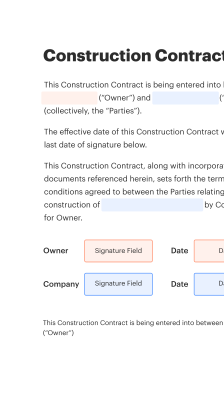

Place electronic signatures and send records in moments instead of hours. Our eSignatures have the identical legal power as wet-ink ones.

Take advantage of the signature tips function and improve your files without any concerns about the safety of your information.

Modify existing forms and save changes, and airSlate SignNow will immediately inform your entire crew that there are updated templates.

Place fillable areas, create or collect electronic signatures, get supplementary documents and payments, and discover different ways to boost your workflows.

Use airSlate SignNow API, the easiest way to create and collect eSignatures. Do so within your CRM systems, on your website, or even in specific apps.

Generate a public link for your template and collect signatures while not having to directly send your document to specific consumer email addresses.
Your complete how-to guide - how to change the footer in outlook
Self-sign documents and request signatures anywhere and anytime: get convenience, flexibility, and compliance.
How to Change the Footer in Outlook
In this guide, you will learn how to customize the footer in your Outlook email messages to reflect your personal or business information. Follow the step-by-step instructions below to easily make this change.
Instructions:
- Launch Outlook and go to the 'File' menu.
- Select 'Options' and then click on 'Mail'.
- Scroll down to the 'Signatures' section and click on 'Signatures'.
- Choose the email account for which you want to change the footer.
- Edit the text in the 'Edit signature' box to create your custom footer.
- Click 'Save' to apply the changes to your email signature.
By following these steps, you can easily customize the footer in your Outlook emails to better represent yourself or your business. Enhance your email communication with a personalized touch!
If you have any questions or need further assistance, feel free to signNow out to our support team for help.
How it works


Electronic Signature Legality
Understanding the footer in Outlook
The footer in Outlook is an essential component of your email signature. It typically contains information such as your name, job title, company name, contact information, and any legal disclaimers or promotional messages. Customizing your footer can enhance your professional image and ensure that recipients have all the necessary information at their fingertips. By changing the footer, you can maintain consistency in your communications and align your email signature with your branding.
Steps to change the footer in Outlook
To change the footer in Outlook, follow these straightforward steps:
- Open Outlook and navigate to the "File" tab.
- Select "Options" from the menu.
- In the Outlook Options window, click on "Mail."
- Click on "Signatures" to open the Signatures and Stationery dialog box.
- In the "Select signature to edit" section, choose the signature you want to modify or create a new one.
- In the "Edit signature" box, you can add or modify the content of your footer.
- Once you have made your changes, click "OK" to save your signature.
These steps will ensure that your footer is updated and reflects your current information.
Legal considerations for email footers
When changing the footer in Outlook, it is important to consider legal implications. Including a disclaimer in your footer can protect your business from liability. Common elements in legal footers include confidentiality notices, disclaimers about the accuracy of information, and copyright notices. Ensure that your footer complies with industry regulations and best practices to maintain professionalism and legal safety.
Best practices for email footers
Creating an effective email footer involves several best practices:
- Keep it concise: Limit the amount of text to essential information.
- Use legible fonts: Choose fonts that are easy to read on various devices.
- Include contact information: Ensure that recipients can easily reach you.
- Maintain branding: Use colors and logos that align with your company’s branding.
- Update regularly: Review and update your footer as needed to reflect any changes in your position or contact details.
By following these best practices, you can create a footer that is both informative and visually appealing.
Security and compliance guidelines
When using email footers, especially those containing sensitive information, it is crucial to adhere to security and compliance guidelines. Ensure that your footer does not disclose confidential information that could be misused. Utilize encryption for emails that contain sensitive data, and consider implementing policies regarding the sharing of information in footers. Compliance with regulations such as GDPR or HIPAA may also be necessary depending on your industry.
Examples of effective email footers
Here are a few examples of effective email footers:
- Professional Footer: John Doe, Marketing Manager, ABC Corp,, john.doe@abccorp.com
- Footer with Legal Disclaimer: Jane Smith, Legal Advisor, XYZ Ltd,, This email may contain confidential information.
- Footer with Social Media Links: Tom Brown, Sales Executive, Sales Co,, Follow us on LinkedIn and Twitter.
These examples illustrate how to convey essential information while maintaining professionalism and clarity.
 Best ROI. Our customers achieve an average 7x ROI within the first six months.
 Scales with your use cases. From SMBs to mid-market, airSlate SignNow delivers results for businesses of all sizes.
 Intuitive UI and API. Sign and send documents from your apps in minutes.
FAQs
Here is a list of the most common customer questions. If you can't find an answer to your question, please don't hesitate to reach out to us.
What is the process to change the footer in Outlook?
To change the footer in Outlook, you need to access the 'Options' menu, then select 'Mail' and click on 'Signatures.' From there, you can edit your existing footer or create a new one. This allows you to customize your email footer to reflect your brand or personal preferences.
Can I use airSlate SignNow to manage my email footers?
While airSlate SignNow primarily focuses on document signing and management, it does not directly manage email footers. However, knowing how to change the footer in Outlook can enhance your email communications when sending documents through our platform.
Is there a cost associated with changing the footer in Outlook?
Changing the footer in Outlook is a free feature included with your Outlook account. You can easily modify your footer settings without any additional costs, making it a simple way to personalize your email communications.
What benefits does customizing my footer in Outlook provide?
Customizing your footer in Outlook allows you to include important information such as your contact details, company logo, or legal disclaimers. This not only enhances your professional image but also ensures that recipients have all the necessary information at their fingertips.
Are there any integrations that can help with email footers?
While airSlate SignNow does not directly integrate with email footer management, it does offer integrations with various email platforms. Knowing how to change the footer in Outlook can complement these integrations by ensuring your email communications are consistent and professional.
How can I ensure my footer looks good on all devices?
To ensure your footer looks good on all devices, use simple formatting and avoid excessive graphics. Test your footer by sending emails to yourself and viewing them on different devices. This way, you can confirm that your footer appears as intended across various platforms.
Can I include images in my Outlook footer?
Yes, you can include images in your Outlook footer by using the 'Insert Picture' option in the signature settings. This is a great way to add your company logo or other branding elements. Just remember to keep the image size optimized for email to ensure quick loading times.




airSlate SignNow is committed to protecting your sensitive information by complying with global industry-specific.

Discover powerful features with airSlate SignNow
Click the “Signature” dropdown in the new email message, and choose “Signatures…” from the dropdown menu. 3. Click “New” to create a new signature, add your ...
Header/Footer Settings - Windows. You can select any of the Header/Footer Settings options to add headers or footers when you print. The items are available ...
1. Start a new message. · 2. Click on "Signature" option under "Include" section of ribbon. · 3. Click "Signatures" from drop-down menu. · 4. Click "New" button to ...
