Templates
Create reusable templates with predefined expiration fields so recurring documents retain consistent expiration behavior; templates can include default periods, reminder schedules, and signer roles to reduce setup time and errors.




Setting the pdf document expiration date reduces exposure to outdated agreements, automates lifecycle control and reminders, and supports compliance and recordkeeping. It minimizes the risk of using stale documents and streamlines administrative oversight across teams.

Account Admins configure organization-wide expiration defaults, control who may override expiration settings, and set archival policies. They are responsible for approval workflows, audit trail access, and ensuring expiration rules meet regulatory requirements across business units.
Team Members prepare documents and apply template-level expirations within assigned permissions. They follow preset reminder schedules and cannot change organization defaults, preserving consistency while enabling operational use within delegated boundaries.
Create reusable templates with predefined expiration fields so recurring documents retain consistent expiration behavior; templates can include default periods, reminder schedules, and signer roles to reduce setup time and errors.
Define automatic reminder schedules tied to expiration dates, including frequency and recipient subsets; reminders can be suppressed for certain roles and logged in the audit trail to support compliance reporting and follow-up.
Assign expiration management privileges to specific roles so only authorized users can change expiration or disable enforcement, supporting separation of duties and centralized policy application across teams.
Integration with cloud storage preserves expiration metadata when documents are archived, ensuring that retention policies and access controls remain intact across Google Drive, Dropbox, and internal repositories.
Every expiration change, reminder, and access attempt is recorded in the audit trail with timestamps and actor identity, enabling post-event review and meeting regulatory recordkeeping obligations.
Configure organization-level default expiration windows, grace periods, and post-expiration handling such as locking or archival, enabling consistent policy enforcement for different document classes and compliance regimes.
Two-way sync preserves expiration metadata when importing or exporting documents between Google Docs and signNow; expiration fields created in templates persist across edits and respect team default policies to prevent stale agreements.
Push expiration metadata into CRM records so contract lifecycles are visible within account timelines; triggers can launch renewal workflows or restrict contract-related actions after expiration to reduce administrative errors.
Automatic metadata mapping stores expiration attributes with archived PDFs in Dropbox, enabling coordinated retention and retrieval while maintaining the original expiration enforcement settings for stored agreements.
Centralized template library with predefined expiration rules, variable placeholders, and permission controls lets teams apply consistent expiration behavior across hundreds of documents and speeds mass preparation.

| Workflow Configuration and Setting Name | Configured value or default configuration |
|---|---|
| Primary Document Expiration Field Identifier | expiration_date field; user-visible as Expiration Date |
| Default Expiration Period for New Templates | 30 days by default; adjustable per template |
| Reminder Frequency and Notification Recipients | 48 hours before expiration; daily until signed |
| Post-Expiration Handling and Archival Policy | Lock document access and mark archived |
| User Override Permissions and Audit Controls | Admins can extend or cancel expirations; logged |
The set the pdf document expiration date feature is available across modern desktop browsers and mobile apps, with minimal local requirements for users.
For mobile and tablet use, ensure the signNow app is updated to the current release; for desktop, use the latest versions of Chrome, Edge, or Safari and enable JavaScript. Offline viewing may not enforce expirations until the device reconnects and syncs with the service.
A brokerage uses expiration dates on buyer agreements to prevent outdated offers from being relied on while listings change quickly.
Resulting in clearer transaction timelines, fewer invalid agreements in circulation, and an auditable record that supports disclosures and compliance with state real estate regulations, improving client trust and internal controls.
An HR team applies expirations to offer letters and policy acknowledgements to ensure only current terms remain active during onboarding windows.
Leading to cleaner personnel records, faster audits, and automatic revocation of outdated agreements across HR systems, which eases compliance with employment regulations and reduces the risk of legacy policy enforcement.
| Expiration Feature Support by Vendor | signNow (Recommended) | DocuSign | Adobe Sign |
|---|---|---|---|
| Document Expiration Controls and Enforcement | |||
| Configurable Default Periods per Template | |||
| Post-Expiration Access Restriction Options | Lock | Restrict | Read-only |
| Integration with Storage Retention Policies | Limited |
Recommend 7 years for contract records unless shorter statutory period applies.
Retain for duration required by federal and state laws.
Follow FERPA guidance and institutional policies for retention.
Comply with HIPAA state-specific retention schedules.
Retain for IRS-required periods, often three to seven years.
| Pricing Metric and Notes | signNow (Featured) | DocuSign | Adobe Sign | Dropbox Sign | OneSpan Sign |
|---|---|---|---|---|---|
| Starting Monthly Price per User | $8 per user per month (annual billing) | $10–15 per user per month (entry) | $12–14 per user per month (estimate) | $8.25 per user per month (approx) | $20 per user per month (enterprise focus) |
| Free Trial Availability | 7-day trial typically available | 30-day trial commonly offered | Trial available via Adobe accounts | Free trial for new users | Trial available on request |
| Per-signature Pricing Option | Yes, pay-per-sign options exist | Yes, pay-per-use available | Available for some Adobe plans | Limited per-sign options | Enterprise quotes only |
| Team Plan Features Included | Templates, Shared libraries, Basic SSO | Advanced workflows, Bulk send | Enterprise templates and integrations | Team templates and Dropbox sync | Enterprise integrations and SSO |
| Enterprise Security & Compliance | SSO, SOC 2, optional HIPAA support | SSO, SOC 2, HIPAA options | Enterprise compliance features, FedRAMP for some customers | SOC 2, SSO options | Strong enterprise security, compliance focus |
| Support and SLA options | Email and priority support tiers, paid SLAs | Tiered support and SLAs available | Enterprise support and SLAs | Email support with paid tiers | Dedicated enterprise support and SLAs |
When sending documents for signing, specify an expiration date for your invite. Your recipients will see the deadline and eSign the document on time. Once expired, your document will no longer be available for signing.
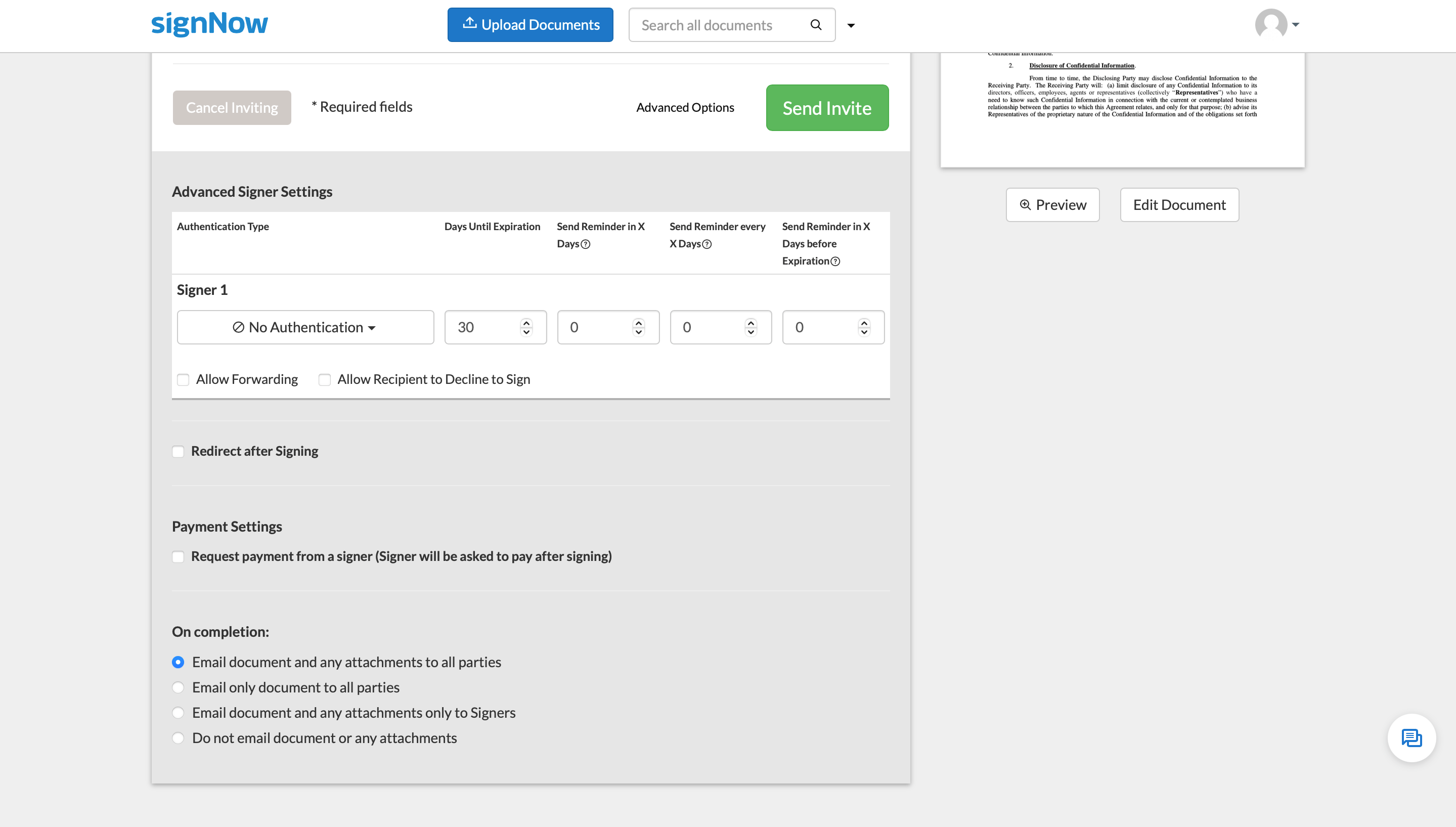
Click Invite to Sign next to the name of the document you want eSigned.
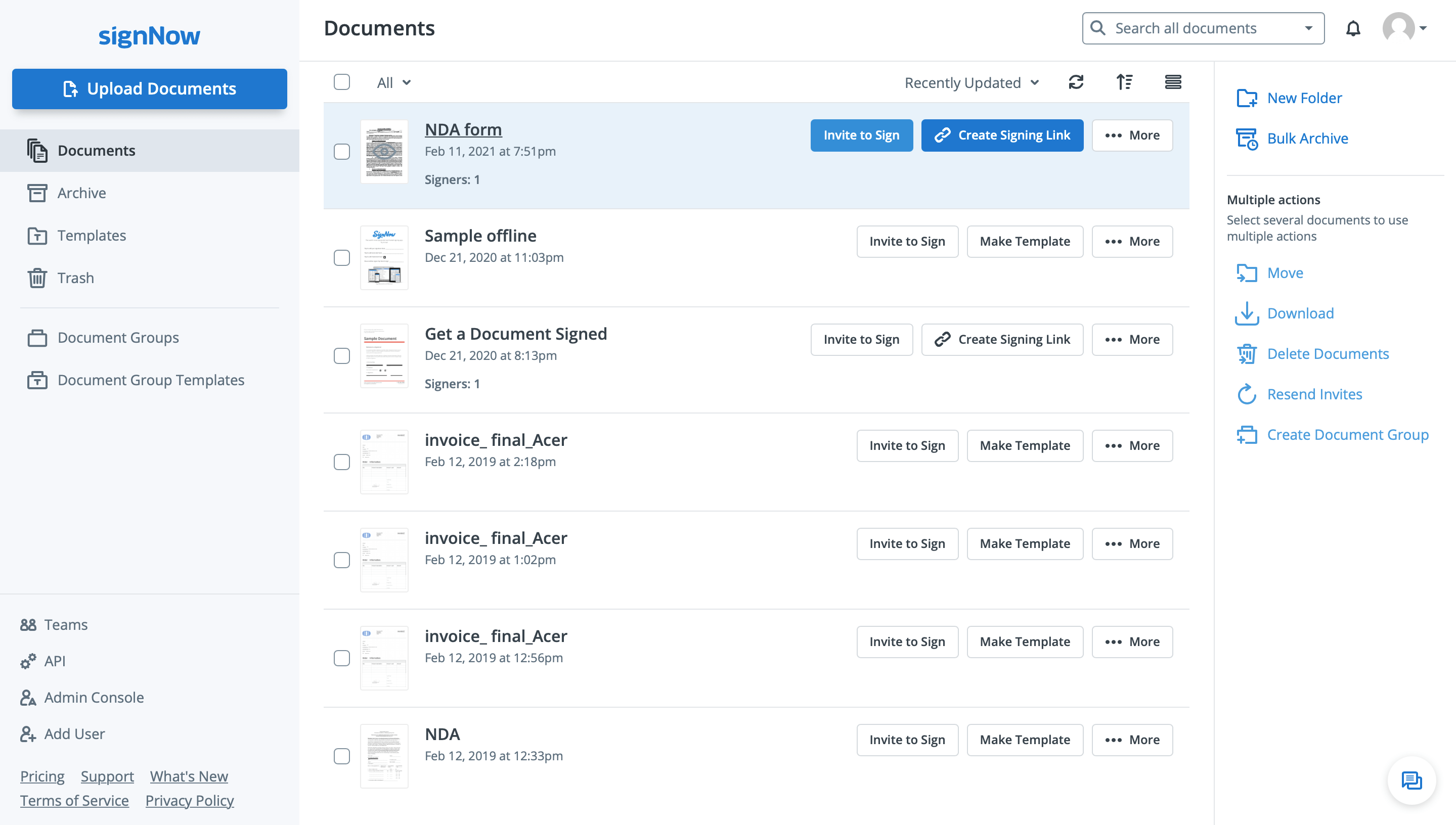
Click Advanced Options at the bottom of the from-to form.
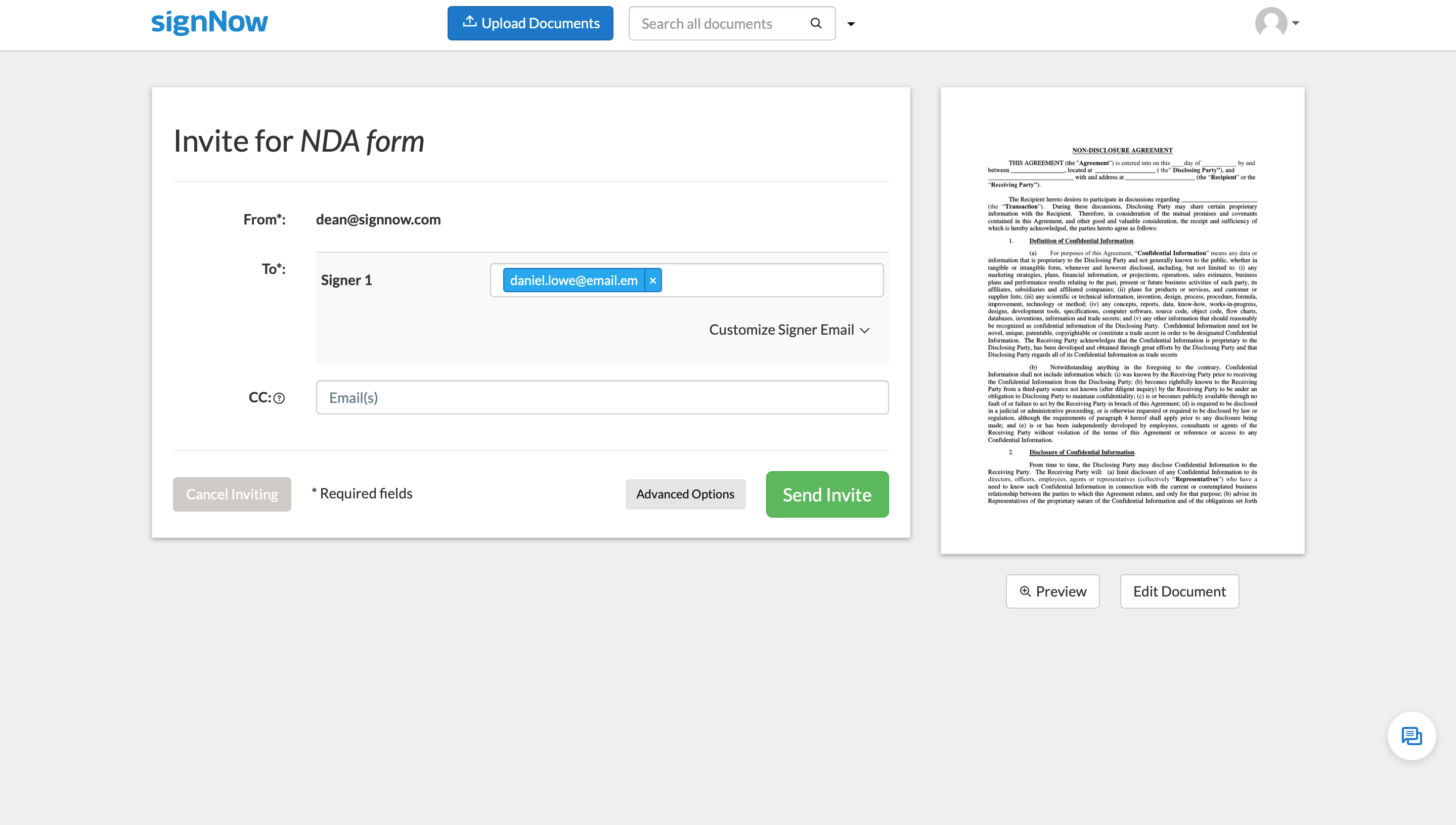
In the Days Until Expiration field, set the number of days you want your signing invite to remain active. You can also set notifications to remind recipients about your signing request and when it is nearing expiration. To do so, set the required values in the adjacent fields.