Establishing secure connection…Loading editor…Preparing document…

Acknowledgement Letter

This template is fully customizable. Edit the text, fill out the fields, and send it for signature. Give it a try!
Acknowledgement Letter

What an Acknowledgement Letter Is

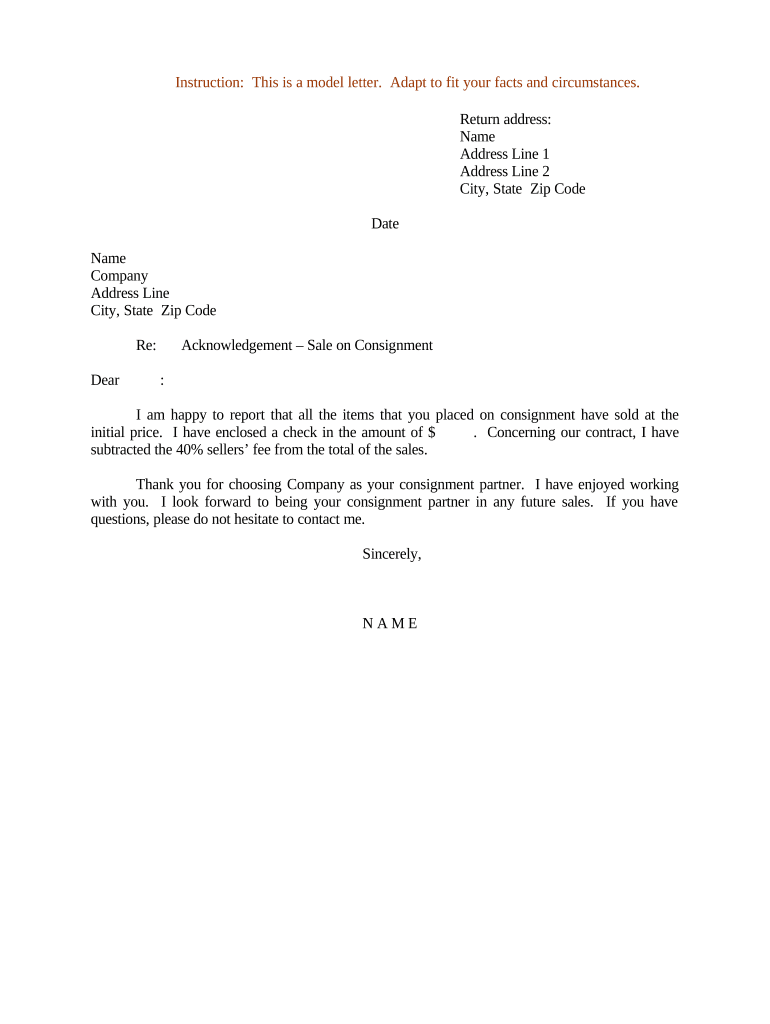
An Acknowledgement Letter is a brief written statement confirming receipt or acceptance of specified documents, payments, goods, or information. It identifies the sender and recipient, cites the items acknowledged, and records the date and any next steps or reference numbers. Organizations use these letters to create a written record of delivery or notice, reduce disputes about whether an item was received, and provide a traceable audit trail for internal or external review.

Why an Acknowledgement Letter Matters

An Acknowledgement Letter creates a dated, attributable record that reduces ambiguity, supports compliance with contractual or regulatory notice requirements, and protects both parties by documenting what was delivered and when.

Why an Acknowledgement Letter Matters

Who Typically Prepares or Receives One

Common authors include administrative staff, contract managers, human resources, legal teams, and vendors; recipients include clients, counterparties, employees, and agencies.

  • Contract Managers: Confirms delivery of contract amendments and records acceptance dates for milestones.
  • HR & Payroll: Acknowledges receipt of signed offer letters, onboarding documents, or tax forms.
  • Vendors & Suppliers: Confirms delivery of invoices, shipments, or service completion notices.

Use the letter to create a clear record tied to dates, reference numbers, and signatory authority so future disputes can be resolved quickly.

Who Signs and What Their Role Is

Authorized Representative

A named individual with delegated authority (director, manager, or officer) signs on behalf of the organization. Their signature establishes organizational assent and may be relied on for contractual or administrative purposes; include title and contact details.

Recipient or Witness

The recipient or an independent witness may sign to confirm receipt. In some contexts, a witness or notary increases evidentiary weight and helps meet state or industry-specific requirements.

Essential Parts of an Effective Acknowledgement Letter

A professional Acknowledgement Letter is concise but complete: identify parties, list items received, reference related agreements or invoice numbers, state the receipt date, specify next steps or conditions, and include a signature block with authority and contact information.

Heading

A one-line heading that identifies the document as an Acknowledgement Letter and references the matter (e.g., "Acknowledgement of Delivery — Invoice 2026-001").
Recipient Details

Full legal name and address of the party acknowledging receipt plus any internal reference or account number used to track the transaction.

Items Acknowledged

A clear, itemized description of documents, goods, payments, or dates being acknowledged, including invoice numbers, file names, or document titles where applicable.

Date and Method

The exact receipt date in MM/DD/YYYY format and the method of receipt (email, courier, in-person, portal upload, RON session) to establish the event timeline.

Next Steps

Any conditional actions, deadlines, or instructions following the acknowledgement, such as processing timelines, dispute windows, or follow-up requirements.

Signature Block

Name, title, organization, signature, and signature date; include a notary or witness block if required by jurisdiction or internal policy.

Step-by-Step: How to Complete an Acknowledgement Letter

Follow these sequential steps to create a clear, enforceable acknowledgement that can be validated by internal reviewers or third parties.

  • 01
    Prepare Header: Enter the document title and matter reference for quick identification.
  • 02
    Identify Parties: Add full legal names, addresses, and contact details for sender and recipient.
  • 03
    List Items: Itemize documents, invoices, or goods with unique identifiers.
  • 04
    Sign and Date: Have an authorized signer sign, note title and sign date, and add notarization if required.

Typical Flow for Issuing and Recording an Acknowledgement Letter

Understanding the common workflow helps ensure the acknowledgement is routed, executed, and archived consistently across teams.

  • Create Document: Draft acknowledgement with itemized details and reference numbers.
  • Obtain Signature: Send to authorized signer via secure channel or eSignature provider.
  • Record Receipt: Store signed copy in records system and log metadata for audit.
  • Notify Parties: Email signed copy to recipient and update the relevant case or purchase order.

Configuring a Digital Acknowledgement Workflow

Set up fields and authentication to match the document’s risk profile and recordkeeping requirements before sending for signature.

Field Configuration
Signature Block Required field with signatory name and date validation
Authentication Email + SMS code or stronger KBA for higher-risk matters
Retention Auto-save signed PDF to records repository with metadata
Audit Trail Enable full event logging (IP, timestamp, actions)

Delivery Channels and Technical Requirements

Choose distribution and signing options based on security needs, signer convenience, and legal requirements.

  • File Formats: PDF and DOCX supported for consistent archiving
  • Integrations: Connectors for Google Workspace and Microsoft 365
  • Authentication: Email, SMS, or two-factor options available

For regulated contexts (healthcare, finance, legal) enforce stronger authentication and retention rules; choose a platform that supports audit trails, secure storage, and your preferred integrations.

Typical Timelines and Processing Expectations

Processing times vary by organization; define internal SLAs so senders and recipients know when the acknowledgement will be issued and archived.

Acknowledgement Issued:

Within 1–3 business days after receipt for routine documents

Expedited Requests:

Same-day acknowledgement possible if documented as urgent

Retention Logging:

Archive signed copy immediately upon execution

Dispute Window:

Specify the period for disputing receipt (commonly 7–30 days)

Record Availability:

Make copies available to authorized parties within 24–48 hours

Key Milestones from Receipt to Archival

A clear milestone plan helps operations teams meet expectations and demonstrate control over document handling.

01

Receipt Logged

Document intake logged with timestamp and initial reviewer assigned

02

Acknowledgement Drafted

Draft prepared with item list and reference numbers

03

Authorized Signature

Signed by authorized representative and dated

04

Archive & Notify

Signed copy archived and recipients notified of availability

Common Mistakes to Avoid

  • Omitting unique identifiers such as invoice or PO numbers, which makes cross-referencing records difficult and increases dispute risk.
  • Failing to record the method of receipt (email, portal, courier), which can reduce evidentiary weight in later disputes.
  • Using informal signer titles or no capacity statement for agents, which may cloud whether the signer had authority to bind the organization.
  • Not saving the audit trail or metadata (IP, timestamps), making it harder to prove the timing or authenticity of the acknowledgement.

Risks and Consequences of an Incorrect Acknowledgement

Contractual Dispute: Creates uncertainty over performance obligations
Regulatory Noncompliance: May fail industry notice requirements
Tax Withholding Risk: Missing records can trigger withholding issues
Privacy Exposure: Incorrect handling risks HIPAA violations
Evidentiary Weakness: Incomplete records weaken proof in litigation
Operational Delay: Errors can delay downstream processing

How signNow and Other eSignature Vendors Compare on Pricing and Compliance

This concise comparison focuses on starting price, trial availability, bulk-sending capability, audit trails, HIPAA compliance, and envelope limits so you can match platform attributes to document risk and volume.

signNow DocuSign Adobe Sign PandaDoc HelloSign
Starting Price $8/user/mo $15/user/mo $14/user/mo $19/user/mo $15/user/mo
Free Trial 7-day free trial Varies by plan Varies by plan Varies by plan Varies by plan
Bulk Send Yes Yes Yes Yes Yes
Audit Trail Yes Yes Yes Yes Yes
HIPAA Compliant Yes Yes Yes No No
Envelope Cap No envelope cap 100 envelopes/user/year Varies by plan Varies by plan Varies by plan

Formats, Supporting Documents, and Certificates to Keep

Store signed acknowledgements in durable formats and bundle any supporting evidence to create a complete record for audits or disputes.

File Formats

Save the signed acknowledgement as a PDF/A for archival and a DOCX for editable internal records; store both if revisions are tracked.

Supporting Documents

Attach copies of deliveries, invoices, shipping receipts, emails, or portal upload confirmations to corroborate the items acknowledged.

Certificate of Completion

Include the eSignature provider’s audit trail or completion certificate showing timestamps, IP addresses, and signer authentication details.

Notary Record

When notarized or RON-signed, retain the notary acknowledgement, journal entry, and any audio-video record per state rules.

Real-World Examples of Acknowledgement Letters in Practice

These use cases show how organizations adapt acknowledgement letters for business workflows and compliance.

Optica Ventures (Operations)

A VC firm uses acknowledgements to confirm receipt of investor paperwork and deal documents, improving turnaround and auditability.

  • Streamlines investor onboarding and recordkeeping.
  • "The interface is simple and easy-to-use for our team; more importantly, it is just as easy for our customers." — Brian Fitzgibbons, COO, Optica Ventures LLC.

Martin Properties (Real Estate)

A property manager sends acknowledgements for signed leases and tenant payments to reduce disputes and speed processing.

  • Ensures consistent tenant records and faster closings.
  • "I can process and execute all of these documents online with 100% compliance and built-in security." — Tim Martin, Founder, Martin Properties.

Frequently Asked Questions About Acknowledgement Letters

Answers to common questions about validity, signature methods, changes, and recordkeeping for Acknowledgement Letters.


Need help? Contact support

be ready to get more
Join over 28 million airSlate SignNow users