Establishing secure connection…Loading editor…Preparing document…

Media Agreement

This template is fully customizable. Edit the text, fill out the fields, and send it for signature. Give it a try!
Media Agreement

What a Media Agreement Covers

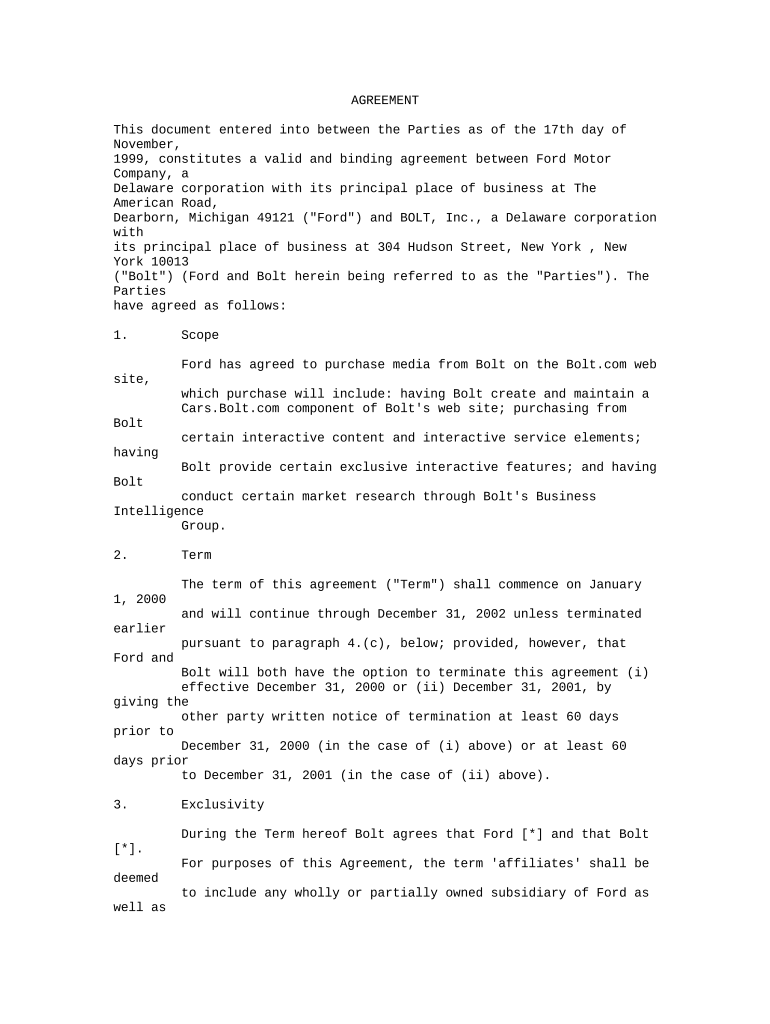
A Media Agreement is a written contract that grants, limits, or transfers rights to use audio, video, photographic, or other media assets. Typical terms define the licensed media, permitted uses, territory, duration, compensation, crediting requirements, warranties, and any rights reversion or termination clauses. The agreement clarifies who owns intellectual property, who may sublicense, and how third‑party clearances or moral‑rights issues will be handled. Properly drafted, it reduces disputes about scope, payment, and future exploitation of the content.

Why a Clear Media Agreement Matters

A concise Media Agreement reduces legal uncertainty, preserves intellectual property, and creates measurable expectations for distribution, monetization, and crediting.

Why a Clear Media Agreement Matters

Who Commonly Prepares and Signs Media Agreements

Media Agreements are used by creators, rights holders, and organizations that commission, distribute, or repurpose media assets.

  • Independent creators and freelancers who license photos, video clips, or music to businesses or publishers.
  • Marketing and production teams that commission shoots, influencer content, or branded material for campaigns.
  • Agencies, broadcasters, and streaming platforms managing distribution rights and territorial exclusivity.

Parties should involve legal counsel when large budgets, exclusive rights, or third‑party clearances are required.

Essential Clauses in a Professional Media Agreement

A robust Media Agreement organizes rights and obligations so each party can analyze exposure, monetization options, and termination triggers.

Grant of Rights

Define expressly which rights are transferred or licensed (e.g., reproduction, distribution, public performance), including exclusivity and sublicensing permissions.
Scope of Use

Specify permitted uses by channel, format, and purpose (advertising, editorial, social media), and restrict uses not intended by the parties.

Territory and Term

Set geographic limits and effective dates; include renewal mechanics, notice periods, and post‑term asset handling.

Compensation

Describe one‑time fees, royalties, revenue share, payment schedule, and responsibility for taxes or reporting obligations.

Warranties and Clearances

Require that the licensor owns rights or obtained releases for people, music, and trademarks; allocate responsibility for third‑party claims.

Indemnity and Limitation

Define indemnification scope for IP infringement and set caps or exclusions on consequential damages where appropriate.

Step-by-Step: Completing and Executing a Media Agreement

Follow these steps to prepare, review, and finalize a Media Agreement with clear rights and obligations.

  • 01
    Draft Terms: Assemble grant, term, territory, and payment terms in plain language.
  • 02
    Confirm Clearances: Obtain talent releases, music licenses, and property releases before finalizing.
  • 03
    Review and Negotiate: Circulate to legal and business stakeholders and resolve open items.
  • 04
    Execute and Distribute: Sign with electronic or wet signatures and provide copies to all parties.

Configuring an Online Signing Workflow

Set clear routing, authentication, and file requirements before sending a Media Agreement for signature.

Field Configuration
Signature Authentication Email link plus optional SMS code
File Format PDF/A preferred for long‑term preservation
Routing Order Sequential signer order with reminders
Notifications Email confirmations and completed PDF distribution

Where to Send and How to Route a Completed Agreement

After execution, distribute the final agreement to internal and external stakeholders and archive copies with version control.

  • Talent/Creator Copy: Deliver an executed PDF to the individual or agency that contributed the media.
  • Business Records: Store a master copy in legal or contract repository with metadata tags.
  • Finance & Accounting: Send invoice and payment instructions to accounts payable.
  • Distribution Partners: Provide licensing terms and copies to third‑party distributors where required.

Digital Signing and File Format Considerations

Choose platforms that preserve the signed PDF, capture an audit trail, and support your needed authentication level.

  • Supported Formats: PDF, DOCX, HTML
  • Integrations: CRM, cloud storage, and project systems
  • Authentication Options: Email, SMS code, or advanced verification

Ensure chosen tools produce an unambiguous record of signature events and a time‑stamped certificate of completion for audit purposes.

Common eSignature Options for Executing a Media Agreement

Compare basic pricing and feature availability across popular eSignature providers; signNow is listed first per platform comparison convention.

signNow DocuSign Adobe Sign PandaDoc HelloSign
Starting Price $8/user/mo $15/user/mo $14/user/mo $19/user/mo $15/user/mo
Free Trial 7-day free trial Varies Varies Varies Varies
Bulk Send Yes Yes Yes Yes No
Audit Trail Yes Yes Yes Yes Yes
HIPAA Compliant Yes Yes Yes No No

Key Dates and Deadlines to Track in a Media Agreement

Track effective dates, delivery milestones, payment due dates, and notice windows to avoid inadvertent breaches.

Effective Date Entry:

MM/DD/YYYY format; governs term start

Delivery Milestones:

Specify delivery dates for final masters

Payment Due Dates:

Net terms and penalty triggers

Renewal Notice:

Include required advance notice period

Termination Notice:

State notice period and cure rights

Notarization and Witnessing: Practical Execution Steps

If notarization or witness signatures are required, follow a clear sequence to verify identity and record the act.

01

Confirm Requirement

Determine whether the Media Agreement needs notarization

02

Schedule Notary

Arrange in-person or RON session depending on state

03

Verify ID

Signers present government ID for identity proofing

04

Conduct RON Session

Use audio‑visual proofing and retain recording

05

Witness Signatures

Witnesses sign where state law requires

06

Notary Acknowledgement

Notary completes journal and certificate

07

Record Retention

Store notarial records for required period

08

Distribute Copies

Provide executed version to all parties

Common Mistakes When Preparing a Media Agreement

  • Using vague language like "all uses" without specifying channels or timeframes, which creates enforcement ambiguity and licensing disputes.
  • Failing to secure releases for recognizable persons, third‑party music, or trademarks, leading to infringement claims and content takedowns.
  • Omitting payment schedules or late fees, which complicates collection and may delay distribution or exploitation of the media.
  • Neglecting to define ownership of raw footage and derivative works, causing conflict over future edits and monetization.

Potential Consequences of an Incorrect or Missing Agreement

Copyright Liability: Statutory damages under 17 U.S.C. §504
Contract Damages: Monetary damages and injunctive relief
Injunctions: Court orders to stop distribution
Reputational Harm: Loss of partners or clients
Tax Reporting: Misreported payments may trigger penalties
Clearance Costs: Retroactive licenses or settlements

Required Information to Include in the Media Agreement

Legal Parties: Full legal names
Contact Details: Address, email, phone
Media Identifiers: File names and descriptions
Rights Scope: Uses, territory, duration
Payment Terms: Amounts and schedule
Signatory Authority: Title and date

Practical Tips for an Accurate, Enforceable Agreement

Follow these drafting and execution practices to reduce risk and speed approvals.

Use plain, specific grant language
Avoid broad catchall phrases. Describe permitted channels, territories, and timeframes precisely so both parties understand the license boundaries and avoid future litigation over interpretation.
Attach exhibits and technical specs
Include a schedule listing all media files, formats, resolution requirements, and delivery checkpoints so the agreement references concrete deliverables rather than abstract descriptions.
Address third‑party clearances explicitly
Require proof of releases for music, recognizable persons, and locations; allocate responsibility for clearing fees and indemnification for third‑party claims.
Preserve execution evidence
Retain the signed PDF, audit trail, and any notarization or RON recordings to substantiate authenticity if a dispute arises.

Real-World Examples of Media Agreement Use

These customer scenarios illustrate how organizations use signed agreements to streamline media usage and compliance.

Optica Ventures — COO

Optica used standardized agreements to collect content licenses across clients quickly

  • Streamlined approvals cut turnaround time for client deliverables
  • "The interface is simple and easy‑to‑use for our team; more importantly, it is just as easy for our customers."

Martin Properties — Founder

A real estate firm centralized photo and video releases for listings

  • Centralization prevented duplicate licensing and rights conflicts
  • "I can process and execute all of these documents online with 100% compliance and built‑in security."

Frequently Asked Questions About Media Agreements

Answers to common execution, validity, and post‑execution questions that arise when working with Media Agreements.


Need help? Contact support

be ready to get more
Join over 28 million airSlate SignNow users