Establishing secure connection…Loading editor…Preparing document…

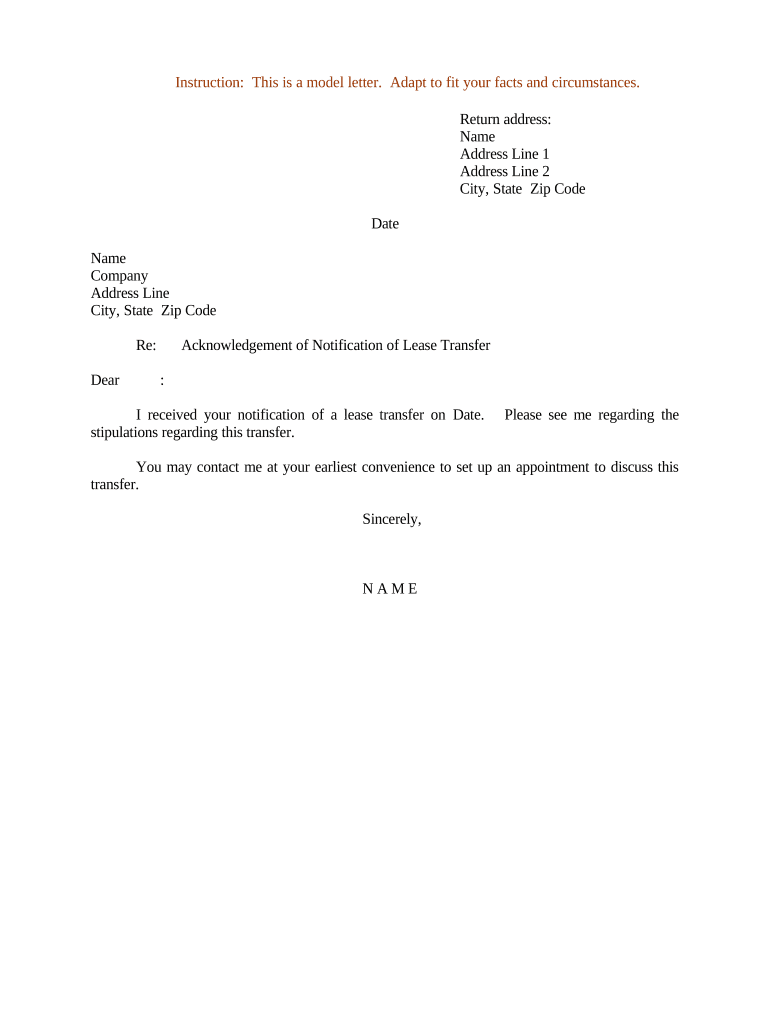
Letter Acknowledging Lease Transfer

This template is fully customizable. Edit the text, fill out the fields, and send it for signature. Give it a try!
Letter Acknowledging Lease Transfer

What a Letter Acknowledging Lease Transfer Is and When it’s Used

A Letter Acknowledging Lease Transfer is a short, formal notice confirming that a landlord, property manager, or landlord’s agent has received and accepted a tenant assignment or transfer of an existing lease to a new tenant. It documents the parties, the original lease reference, the effective date of the transfer, any conditions or approvals, and any changes to security deposit handling or payment instructions. The letter creates a record that the transfer was noticed and accepted and can be used to avoid later disputes about tenant identity, liability, or rent accounting.

Why a Clear Acknowledgement Letter Matters

A concise acknowledgement creates an evidentiary record of consent, clarifies who is liable under the lease after transfer, and reduces disputes over deposits, rent, and property condition. It also supports administrative tracking for property managers and lenders.

Why a Clear Acknowledgement Letter Matters

Who Typically Prepares or Receives this Letter

Common users include landlords, property managers, tenants assigning leases, and receiving tenants; legal counsel may review where liability or subordination issues exist.

  • Landlords and property managers handling lease assignments and tenant lists for operational and accounting records.
  • Outgoing tenants who need written confirmation that they were released from future lease obligations.
  • Incoming tenants who require evidence of the landlord’s acceptance to show to guarantors or lenders.

Keep a dated copy in the lease file and distribute to accounting, property operations, and any guarantor named in the original agreement.

Step-by-Step: Completing the Letter

Follow these four steps to create a clear, enforceable acknowledgement letter that works with electronic workflows.

  • 01
    Step 1: Reference the original lease and identify parties.
  • 02
    Step 2: State the transfer effective date and any conditions.
  • 03
    Step 3: Confirm release or continued liability for the assignor.
  • 04
    Step 4: Obtain signatures and distribute dated copies to stakeholders.

How the Letter Moves Through Approval and Records

Typical routing ensures that approval, signature, and recordkeeping steps are completed and documented.

  • Draft: Create the letter with lease reference and transfer terms.
  • Review: Landlord or counsel checks for lease compliance and conditions.
  • Sign: Parties sign physically or electronically with audit trail.
  • File: Distribute dated copies to accounting and property records.

Suggested Digital Workflow Settings for Online Completion

Configure a repeatable workflow to reduce errors and preserve audit trails for each lease transfer letter.

Field Configuration
Signer Order Landlord first, assignor second, assignee third
Authentication Email link plus SMS code for tenants
Required Fields Effective Date, names, lease reference, signature
Retention Save signed PDF with audit trail in document store

Technical Needs for Secure Electronic Acknowledgement

Ensure the signing platform supports authenticated signatures, audit trails, and secure storage.

  • Authentication: Email, SMS code, or stronger methods
  • Audit Trail: Timestamp, IP, signer actions
  • Storage: Encrypted at rest

Confirm the platform complies with ESIGN (15 U.S.C. ch. 96) and UETA where applicable, and that copies are retained for your records.

Common Timing Considerations and Deadlines

Timing affects liability transfer, deposit handling, and notice obligations; account for lease-specific notice periods and any lender or HOA approvals.

Effective Transfer Date:

Date when new tenant assumes obligations; enter MM/DD/YYYY.

Landlord Notice Period:

Follow any lease-required approval timelines, often 10–30 days.

Security Deposit Handling:

Specify whether deposit transfers or reimbursements occur on transfer date.

Accounting Cutoff:

Record rent responsibilities by calendar or lease payment cycle.

Third-Party Approvals:

Allow extra time if lender, insurer, or HOA sign-off is required.

Key Stages from Request to Final Record

Use this milestone sequence to ensure approvals, signatures, and records are completed in order.

01

Request Submitted

Assignor provides documents and asks landlord for transfer approval.

02

Approval Decision

Landlord confirms acceptance or conditions in writing.

03

Signatures Executed

All parties sign acknowledgement and any release forms.

04

Records Updated

Property records, accounting, and tenant registers updated.

Six Elements a Professional Acknowledgement Letter Should Include

Include these elements to create a clear, enforceable record that aligns with the original lease terms and parties’ expectations.

Lease Reference

Cite the original lease date, unit, and any amendment references so the acknowledgement ties directly to the governing agreement.
Parties Identified

List assignor, assignee, and landlord by full legal name and include contact information for each party.

Effective Date

State the exact MM/DD/YYYY when the transfer becomes effective and when responsibility for rent and obligations shifts.

Conditions

Note any landlord conditions, such as inspection, proof of insurance, or guarantor acceptance that govern the transfer.

Release Language

Clarify whether the assignor is released from future liabilities or remains secondarily liable under a guaranty or original lease.

Signature Blocks

Include printed name, signature, title (if corporate), and date for each party, and indicate capacity for corporate signers.

Security and Compliance Elements to Preserve Validity

Encryption: TLS 1.2/1.3 in transit, AES-256 at rest
Audit Trail: Comprehensive timestamps and action logs
Certifications: SOC 2 Type II, ISO 27001
Privacy: GDPR and CCPA compliance
Regulatory: ESIGN and UETA support for e-sign validity
Health Data: HIPAA available with BAA

Risks and Potential Consequences of an Incorrect Letter

Invalid Transfer: May be unenforceable
Continued Liability: Outgoing tenant may remain liable
Deposit Disputes: Misapplied security deposits
Accounting Errors: Rent misallocation
Third-Party Claims: Guarantor disputes
Regulatory Risk: Noncompliance with consumer notice rules

Common Mistakes to Avoid When Preparing the Letter

  • Failing to cite the original lease accurately, which makes it harder to verify that the transfer complies with lease terms.
  • Using informal language that omits whether the assignor is released from liability, creating ambiguity on future obligations.
  • Neglecting to include signatures, dates, or signer capacities for corporate entities, which can invalidate the acknowledgement.
  • Forgetting to notify accounting and update tenant ledgers, which leads to rent misallocation and billing disputes.

Comparing eSignature Pricing and Caps for Lease Transfer Letters

Basic pricing and envelope limits affect per-document cost and fit for high-volume lease management; signNow is listed first for comparison.

signNow DocuSign Adobe Sign PandaDoc HelloSign
Starting Price $8/user/mo $15/user/mo $14/user/mo $19/user/mo $15/user/mo
Free Trial 7-day free trial Varies Varies Varies Varies
Bulk Send Yes (Business Premium) Varies Varies Varies Varies
Audit Trail Yes Yes Yes Yes Yes
HIPAA Compliant Yes Yes Yes No No
Envelope Cap No cap 100 envelopes/user/year Varies Varies Varies

Frequently Asked Questions About Lease Transfer Acknowledgement Letters

Answers to common operational and legal questions about preparing, signing, and storing a Letter Acknowledging Lease Transfer.


Need help? Contact support

be ready to get more
Join over 28 million airSlate SignNow users