Parties
Full legal names, dates of birth, and contact or last-known addresses for petitioner and respondent so the court can identify parties and effect service.
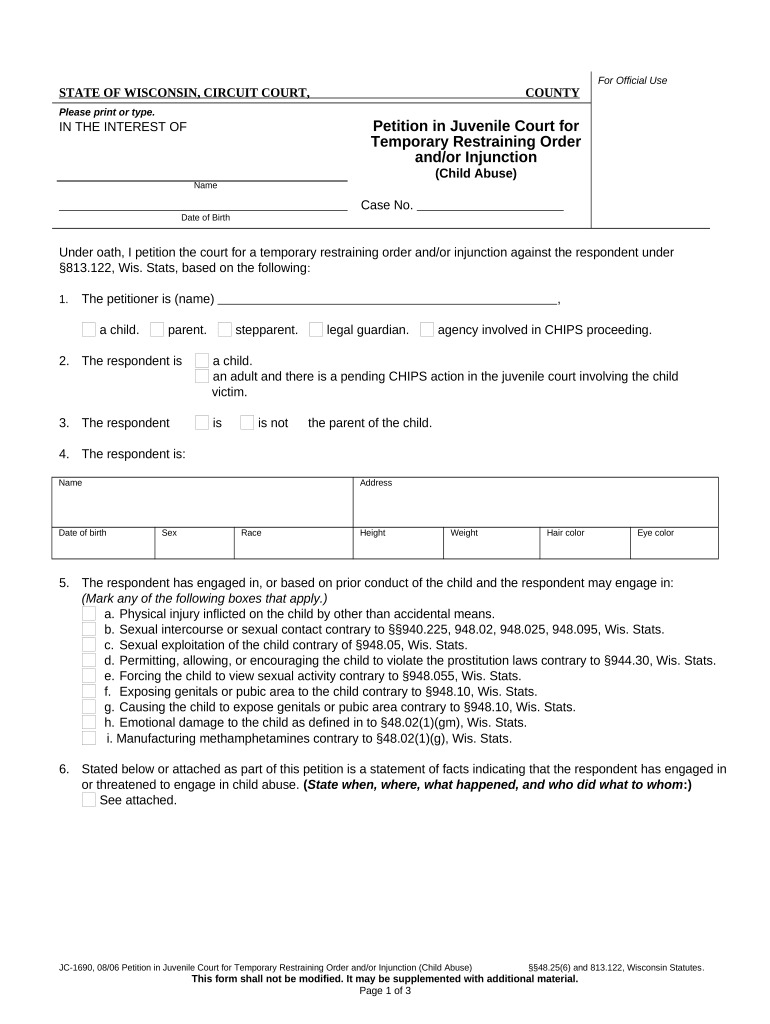
A restraining order can provide timely separation, prohibit harassment or contact, and create enforceable boundaries backed by law enforcement.

Common users include individuals seeking protection, attorneys, court clerks, and victim advocates assisting with paperwork and service.
The petitioner is the person requesting protection from the court. They provide factual statements of incidents, request specific prohibitions, and must sign or verify the petition under penalty of perjury.
Authorized signers include petitioners, their attorneys, or appointed advocates. Judges sign orders; law enforcement serves and enforces them after entry.
Full legal names, dates of birth, and contact or last-known addresses for petitioner and respondent so the court can identify parties and effect service.
Statement explaining the court's authority over the parties and the locality where the incidents occurred, establishing the proper venue for the petition.
Chronological factual narrative with specific dates, locations, and witness names to substantiate the need for immediate and longer-term protection.
Clear list of prohibitions and required actions the petitioner seeks, such as no-contact directives, stay-away distances, and temporary custody or possession of property.
References to attached exhibits: police reports, medical records, photographs, messages, or witness affidavits that corroborate the petitioner’s account.
Preferred method and address for service, plus any available alternate locations, to help the sheriff or process server locate the respondent quickly.
Save a flattened, paginated PDF/A with judge’s signature, court stamp, and embedded audit trail for filing and service.
Retain an editable DOCX copy for internal edits or attorney review, then produce a final PDF for filing.
Distribute certified copies to law enforcement, the petitioner, and any relevant agencies after the order is entered and served.
Keep a separate log of timestamps, signer IPs, and service attempts to document chain of custody and enforceability.
Available same day in emergency cases where immediate harm is alleged.
Often scheduled within days to a few weeks, depending on court backlog and urgency.
Respondent must be personally served before many orders become fully enforceable.
Temporary orders last until the court’s final hearing or a date specified by the judge.
Petitioners may seek extensions or renewal at or before final order expiration.
| signNow | DocuSign | Adobe Sign | PandaDoc | HelloSign | |
|---|---|---|---|---|---|
| Starting Price | $8/user/mo | $15/user/mo | $14/user/mo | $19/user/mo | $15/user/mo |
| Free Trial | 7-day free trial | Varies by vendor | Varies by vendor | Varies by vendor | Varies by vendor |
| Bulk Send | Yes | Yes | Yes | Yes | No |
| Audit Trail | Yes | Yes | Yes | Yes | Yes |
| HIPAA Compliant | Yes | Yes | Yes | No | No |
| Envelope Cap | No envelope cap | 100 envelopes/user/year | Varies | Varies | Varies |